Historical context
The world of Genesis
Geography, narrative chronology, ancient objects and the limits of historical reconstruction.
Follow the named places
The ancestral journeys connect Mesopotamia, Canaan and Egypt. Ur, Haran, Shechem, Bethel, Hebron, Beersheba, Gerar, the Jabbok, Dothan and Goshen are important narrative waypoints. The route diagram below is a reading aid, not a scale map or a claim to recover every road.
Haran belongs in upper Mesopotamia. Ur is commonly identified with the southern Mesopotamian city at Tell el-Muqayyar, while alternatives have been argued. Eden's exact location, the site of the tower in Genesis 11 and the location of a surviving ark are not established by this study.
Sources: Serge Frolov, TheTorah.com, 2024: In Search of Abraham's Birthplace: Between Urfa and Ur
Use the ages Genesis actually gives
Abram leaves Haran at 75. Ishmael is born when he is 86. The covenant scene of chapter 17 occurs when Abraham is 99, and Isaac is born when he is 100. Sarah dies at 127. Isaac is 40 at marriage and 60 when the twins are born. Joseph is 17 at the start of chapter 37 and 30 when he enters Pharaoh's service.
Jacob tells Pharaoh he is 130, lives seventeen years in Egypt and dies at 147. Joseph dies at 110. These statements support relative chronology. Assigning a particular BCE year requires additional assumptions about chronology, textual traditions and historical identifications. This study therefore keeps explicit ages separate from debated absolute dates.
Ancient Near Eastern comparison
Genesis speaks within a world of households, kings, cities, temples, agriculture and pastoral migration. Comparing its creation and flood narratives with ancient Near Eastern texts can clarify both shared questions and distinctive theological claims. Literary resemblance alone does not settle whether one text directly borrowed from another, the direction of dependence or the date of a narrated event.
Historical-critical scholarship and confessional interpretation ask overlapping but different questions. Keep the question visible: are we examining a surviving text, reconstructing its composition, describing an ancient practice or considering a theological claim?
Sources: Christine Hayes, Open Yale Courses, RLST 145, lecture 3: Genesis 1-4 in context; Christine Hayes, Open Yale Courses, RLST 145, lecture 4: Genesis 5-11 and source criticism
Historical comparison
A flood text as a comparison
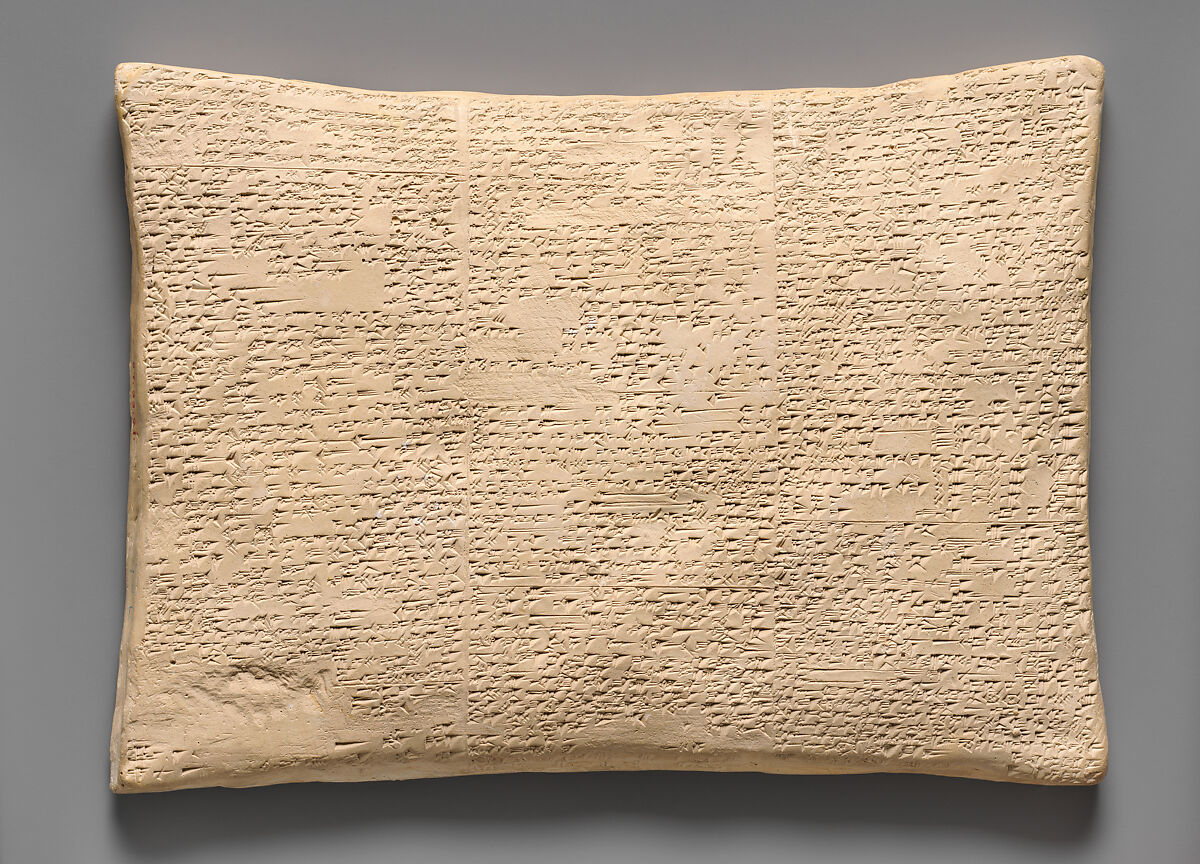
The Met's object shown here is a nineteenth-century plaster reconstruction of a Babylonian flood tablet, after a seventh-century BCE original. The underlying text belongs to the Gilgamesh tradition. It demonstrates that flood traditions circulated in the ancient Near East; it does not establish the date, extent or archaeological verification of the flood in Genesis.
Compare the questions raised by the narratives: why judgment comes, who preserves life, how humans relate to the divine and what follows survival. Avoid claiming that a similarity automatically proves or disproves the biblical account.
Sources: The Metropolitan Museum of Art, object 87.33.21: Cast reconstruction of Babylonian Flood Tablet
Historical comparison
Grain storage and record keeping
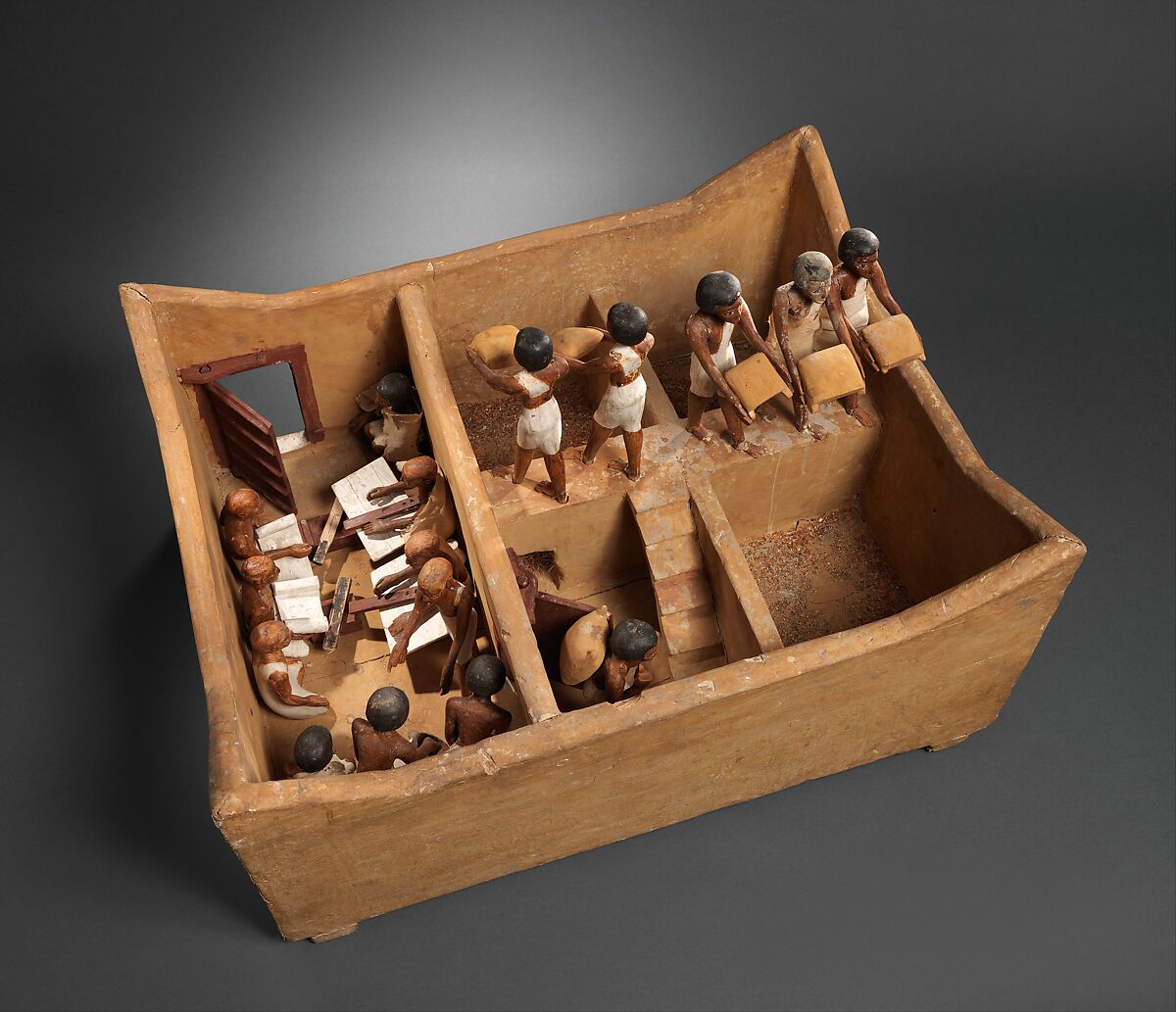
The Met's model granary comes from the tomb of Meketre and is dated about 1981-1975 BCE. It depicts storage alongside measuring and accounting. It helps readers visualize why collecting grain requires workers, organization and records, not simply a large pile of food.
This is a funerary model made for a particular Egyptian burial context. ARCE explains why such models must be understood in relation to their funerary purpose. The object is not Joseph's granary, and its date does not establish Joseph's lifetime or Pharaoh's identity.
Sources: The Metropolitan Museum of Art, object 20.3.11: Model of a Granary with Scribes; American Research Center in Egypt: Wooden Funerary Models: A Snapshot in Time?
Households, kinship and unequal power
A patriarchal household could include relatives, workers, enslaved people, herds and substantial resources. Genesis names servants and people acquired with money, marriage negotiations, inheritance arrangements and obligations concerning offspring. These social settings explain the pressures characters face; description does not make every practice morally exemplary.
Modern family labels can obscure the text. Bilhah and Zilpah are named mothers, Hagar is an Egyptian servant with a divine promise, and Joseph remains enslaved even when trusted with management. Ask how a person's status affects the choices available to them.
What our illustrations can and cannot show
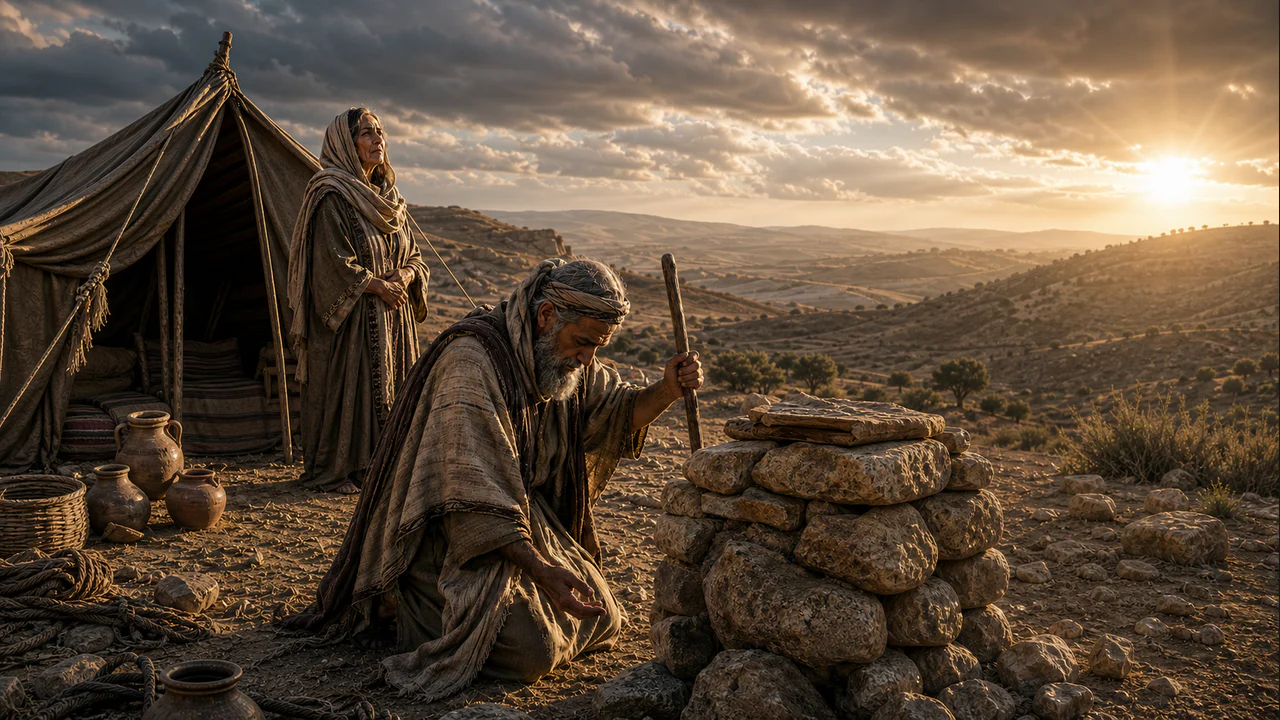
The patriarchal landscape image is an artistic reconstruction. Faces, clothing colors, tent layouts and exact terrain are interpretive choices unless a passage specifies them. Museum images show real objects with stated provenance. The route, family and timeline diagrams summarize textual relationships; they are not archaeological reconstructions.
Recurring character references are being documented separately with age variants, garments, props and source notes. No image should quietly decide an unresolved question, identify an unnamed Pharaoh or give God the Father a bodily portrait.
Follow the movement of the story
These are narrative waypoints, not a scale map. Abraham, Jacob and Joseph take different journeys.
- Ur and HaranTerah's household; Abram departs
- CanaanShechem, Bethel, Hebron and Beersheba
- Haran and the JabbokJacob leaves, forms a family and returns
- Egypt and GoshenJoseph is taken; the household later migrates
- Canaan, still promisedBurial instructions anticipate return