
El panorama
Génesis 2 abre con “Thus the heavens and the earth were finished, and all the host of them.”, cambia cerca del versículo 13 con “And the name of the second river is Gihon: the same is it that compasseth the whole land…” y termina con “And they were both naked, the man and his wife, and were not ashamed.”. Estos puntos trazan el movimiento propio del capítulo desde su inicio hasta su conclusión.
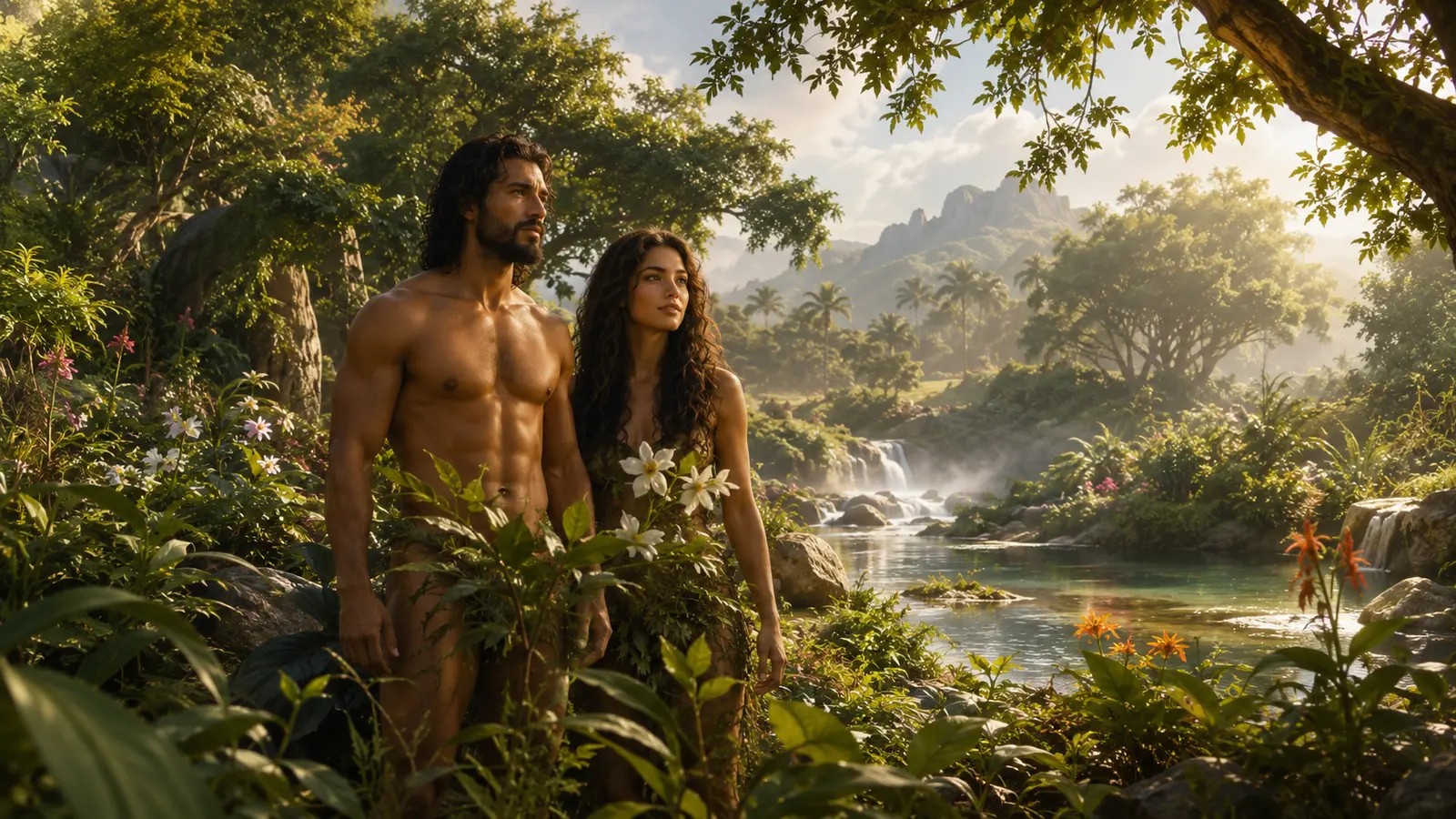
Las Escrituras junto al resumen
Génesis · Versión King James · 25Génesis 2:1-7
Versículos 1–7: Thus the heavens and the earth were finished, and all the host of them.
Génesis 2:1–7 abre con “Thus the heavens and the earth were finished, and all the host of them.” y llega a “And the LORD God formed man of the dust of the ground, and breathed into his nostrils the breath…” en su último versículo. Ese recorrido desarrolla Dios trae un mundo ordenado de las tinieblas, lo llena de vida y da a la humanidad la dignidad y responsabilidad de reflejar su imagen.
Contexto que da vida al pasaje
“Thus the heavens and the earth were finished, and all the host of them.” Los términos propios de esta línea incluyen earth, finished, heavens. Su relación con los versículos 2 permite comprobar su función dentro del pasaje.
“And on the seventh day God ended his work which he had made; and he rested on the seventh day from all his work which…” El versículo nombra a God en vez de dejar la acción sin una fuente. Observa si la línea siguiente continúa, responde o contrasta esa acción.
Génesis 2:1-7
Versión King James1Thus the heavens and the earth were finished, and all the host of them.
2And on the seventh day God ended his work which he had made; and he rested on the seventh day from all his work which he had made.
3And God blessed the seventh day, and sanctified it: because that in it he had rested from all his work which God created and made.
4These are the generations of the heavens and of the earth when they were created, in the day that the LORD God made the earth and the heavens,
5And every plant of the field before it was in the earth, and every herb of the field before it grew: for the LORD God had not caused it to rain upon the earth, and there was not a man to till the ground.
6But there went up a mist from the earth, and watered the whole face of the ground.
7And the LORD God formed man of the dust of the ground, and breathed into his nostrils the breath of life; and man became a living soul.
Génesis 2:8-14
Versículos 8–14: The LORD God planted a garden eastward in Eden; and there he put the man…
Génesis 2:8–14 abre con “And the LORD God planted a garden eastward in Eden; and there he put the man whom he had formed.” y llega a “And the name of the third river is Hiddekel: that is it which goeth toward the east of Assyria…” en su último versículo. Ese recorrido desarrolla Dios trae un mundo ordenado de las tinieblas, lo llena de vida y da a la humanidad la dignidad y responsabilidad de reflejar su imagen.
Contexto que da vida al pasaje
“And the LORD God planted a garden eastward in Eden; and there he put the man whom he had formed.” Nombrar a Eden mantiene el relato unido a personas o lugares concretos. Sigue dónde reaparece el nombre y qué cambia a su alrededor.
“And out of the ground made the LORD God to grow every tree that is pleasant to the sight, and good for food; the tree…” El versículo nombra a God en vez de dejar la acción sin una fuente. Observa si la línea siguiente continúa, responde o contrasta esa acción.
Génesis 2:8-14
Versión King James8And the LORD God planted a garden eastward in Eden; and there he put the man whom he had formed.
9And out of the ground made the LORD God to grow every tree that is pleasant to the sight, and good for food; the tree of life also in the midst of the garden, and the tree of knowledge of good and evil.
10And a river went out of Eden to water the garden; and from thence it was parted, and became into four heads.
11The name of the first is Pison: that is it which compasseth the whole land of Havilah, where there is gold;
12And the gold of that land is good: there is bdellium and the onyx stone.
13And the name of the second river is Gihon: the same is it that compasseth the whole land of Ethiopia.
14And the name of the third river is Hiddekel: that is it which goeth toward the east of Assyria. And the fourth river is Euphrates.
Génesis 2:15-21
Versículos 15–21: The LORD God took the man, and put him into the garden of Eden to dress…
Génesis 2:15–21 abre con “And the LORD God took the man, and put him into the garden of Eden to dress it and to keep it.” y llega a “And the LORD God caused a deep sleep to fall upon Adam, and he slept: and he took one of his…” en su último versículo. Ese recorrido desarrolla Dios trae un mundo ordenado de las tinieblas, lo llena de vida y da a la humanidad la dignidad y responsabilidad de reflejar su imagen.
Contexto que da vida al pasaje
“And the LORD God took the man, and put him into the garden of Eden to dress it and to keep it.” Nombrar a Eden mantiene el relato unido a personas o lugares concretos. Sigue dónde reaparece el nombre y qué cambia a su alrededor.
“And the LORD God commanded the man, saying, Of every tree of the garden thou mayest freely eat:” El mandato no se entiende solo por el verbo. El destinatario, el propósito y su lugar dentro del pacto o argumento definen la responsabilidad.
Génesis 2:15-21
Versión King James15And the LORD God took the man, and put him into the garden of Eden to dress it and to keep it.
16And the LORD God commanded the man, saying, Of every tree of the garden thou mayest freely eat:
17But of the tree of the knowledge of good and evil, thou shalt not eat of it: for in the day that thou eatest thereof thou shalt surely die.
18And the LORD God said, It is not good that the man should be alone; I will make him an help meet for him.
19And out of the ground the LORD God formed every beast of the field, and every fowl of the air; and brought them unto Adam to see what he would call them: and whatsoever Adam called every living creature, that was the name thereof.
20And Adam gave names to all cattle, and to the fowl of the air, and to every beast of the field; but for Adam there was not found an help meet for him.
21And the LORD God caused a deep sleep to fall upon Adam, and he slept: and he took one of his ribs, and closed up the flesh instead thereof;
Génesis 2:22-25
Versículos 22–25: The rib, which the LORD God had taken from man, made he a woman, and…
Génesis 2:22–25 abre con “And the rib, which the LORD God had taken from man, made he a woman, and brought her unto the…” y llega a “And they were both naked, the man and his wife, and were not ashamed.” en su último versículo. Ese recorrido desarrolla Dios trae un mundo ordenado de las tinieblas, lo llena de vida y da a la humanidad la dignidad y responsabilidad de reflejar su imagen.
Génesis 2:22-25
Versión King James22And the rib, which the LORD God had taken from man, made he a woman, and brought her unto the man.
23And Adam said, This is now bone of my bones, and flesh of my flesh: she shall be called Woman, because she was taken out of Man.
24Therefore shall a man leave his father and his mother, and shall cleave unto his wife: and they shall be one flesh.
25And they were both naked, the man and his wife, and were not ashamed.
Detalles que vale la pena notar
La imagen inicial
Genesis 2:1 comienza con “Thus the heavens and the earth were finished, and all the host of them.”
Dónde cambia el capítulo
Genesis 2:17 forma un giro natural: “But of the tree of the knowledge of good and evil, thou shalt not eat of it: for in the day that thou eatest thereof thou shalt surely die.”
La nota final
Genesis 2:25 deja al lector con “And they were both naked, the man and his wife, and were not ashamed.”
Un recorrido de palabras por el capítulo
Las palabras LORD, Adam, earth, garden, good, ground ayudan a revelar las preocupaciones que se repiten en el capítulo.
Primero el texto
Donde difieren los lectores
El resumen comienza con lo que dice el pasaje y cómo se relacionan sus partes. No supone que una denominación ya haya resuelto cada pregunta. Toda dependencia de una tradición, teoría literaria o reconstrucción histórica se identifica con claridad.
El texto KJV aparece primero. Las conclusiones interpretativas se identifican, y las diferencias se presentan cuando ayudan a explicar por qué las comunidades serias no siempre llegan a la misma respuesta.
¿Cómo deben entenderse los días de la creación?
Los cristianos interpretan los días de varias maneras, entre ellas días sucesivos ordinarios, un marco literario y períodos más largos. El patrón de tarde y mañana, el séptimo día y la relación con el sábado forman parte del debate. Toda lectura responsable debe explicar la estructura real del capítulo, no limitarse a imponerle una postura moderna.
Genesis 1:1-31 · Genesis 2:1-3 · Exodus 20:8-11
¿Por qué Génesis 1 y 2 tienen enfoques diferentes?
Génesis 1 contempla la creación ordenada del mundo, mientras Génesis 2 se concentra en el jardín, el trabajo humano, el mandamiento y la compañía. Algunos lectores los entienden como perspectivas complementarias; otros estudian tradiciones distintas reunidas en el texto final. La diferencia de enfoque debe reconocerse sin asumir que por sí sola demuestra una contradicción.
Genesis 1:26-31 · Genesis 2:1-25