
Ang malaking larawan
Nagbubukas ang 1 Samuel 1 sa “Now there was a certain man of Ramathaim-zophim, of mount Ephraim, and his name was…”, nagbabago malapit sa talata 14 sa “And Eli said unto her, How long wilt thou be drunken? put away thy wine from thee.”, at nagtatapos sa “Therefore also I have lent him to the LORD ; as long as he liveth he shall be lent to…”. Sinusundan ng mga puntong ito ang sariling galaw ng kabanata mula simula hanggang wakas.
Kasulatan sa tabi ng buod
1 Samuel · Bersiyong King James · 281 Samuel 1:1-7
Mga talata 1–7: There was a certain man of Ramathaim-zophim, of mount Ephraim, and his…
Nagbubukas ang 1 Samuel 1:1–7 sa “Now there was a certain man of Ramathaim-zophim, of mount Ephraim, and his name was Elkanah, the…” at umaabot sa “And as he did so year by year, when she went up to the house of the LORD , so she provoked her…” sa huling talata. Binubuo ng galaw na iyon ang Kilalanin ang mga tao, lugar, tawag, at pangangailangang nagpapasimula sa 1 Samuel.
Kontekstong nagbibigay-buhay sa sipi
“Now there was a certain man of Ramathaim-zophim, of mount Ephraim, and his name was Elkanah, the son of Jeroham, the…” Ang pagbanggit sa Elihu at Elkanah ay nag-uugat sa salaysay sa tiyak na tao o lugar. Sundan kung saan bumabalik ang pangalan at ano ang nagbabago sa paligid nito.
“And he had two wives; the name of the one was Hannah, and the name of the other Peninnah: and Peninnah had children…” Ginagawang kongkreto ng bilang na two ang ulat. Bago tukuyin ang bigat nito, pansinin kung sinusukat nito ang oras, tao, layo, pag-uulit, o kabuuan.
1 Samuel 1:1-7
Bersiyong King James1Now there was a certain man of Ramathaim-zophim, of mount Ephraim, and his name was Elkanah, the son of Jeroham, the son of Elihu, the son of Tohu, the son of Zuph, an Ephrathite:
2And he had two wives; the name of the one was Hannah, and the name of the other Peninnah: and Peninnah had children, but Hannah had no children.
3And this man went up out of his city yearly to worship and to sacrifice unto the LORD of hosts in Shiloh. And the two sons of Eli, Hophni and Phinehas, the priests of the LORD , were there.
4And when the time was that Elkanah offered, he gave to Peninnah his wife, and to all her sons and her daughters, portions:
5But unto Hannah he gave a worthy portion; for he loved Hannah: but the LORD had shut up her womb.
6And her adversary also provoked her sore, for to make her fret, because the LORD had shut up her womb.
7And as he did so year by year, when she went up to the house of the LORD , so she provoked her; therefore she wept, and did not eat.
1 Samuel 1:8-14
Mga talata 8–14: Said Elkanah her husband to her, Hannah, why weepest thou? and why…
Nagbubukas ang 1 Samuel 1:8–14 sa “Then said Elkanah her husband to her, Hannah, why weepest thou? and why eatest thou not? and why…” at umaabot sa “And Eli said unto her, How long wilt thou be drunken? put away thy wine from thee.” sa huling talata. Binubuo ng galaw na iyon ang Kilalanin ang mga tao, lugar, tawag, at pangangailangang nagpapasimula sa 1 Samuel.
Kontekstong nagbibigay-buhay sa sipi
May 2 mga tanong sa bahaging ito. Hindi lamang bantas ang mga ito: ipinakikita nila kung saan naghahanap, humahamon, natatakot, o umuunawa ang isang tinig.
“Then said Elkanah her husband to her, Hannah, why weepest thou? and why eatest thou not? and why is thy heart grieved…” Pinababagal ng tanong ang sipi. Pansinin kung sino ang kailangang sumagot, ano ang ipinapalagay nito, at kung may tugon sa mga susunod na linya.
“So Hannah rose up after they had eaten in Shiloh, and after they had drunk. Now Eli the priest sat upon a seat by a…” Nagbibigay ang linyang ito ng dahilan, bunga, o konklusyon. Dapat itong manatiling kaugnay ng pahayag o kilos na nagbibigay rito ng kahulugan.
1 Samuel 1:8-14
Bersiyong King James8Then said Elkanah her husband to her, Hannah, why weepest thou? and why eatest thou not? and why is thy heart grieved? am not I better to thee than ten sons?
9So Hannah rose up after they had eaten in Shiloh, and after they had drunk. Now Eli the priest sat upon a seat by a post of the temple of the LORD .
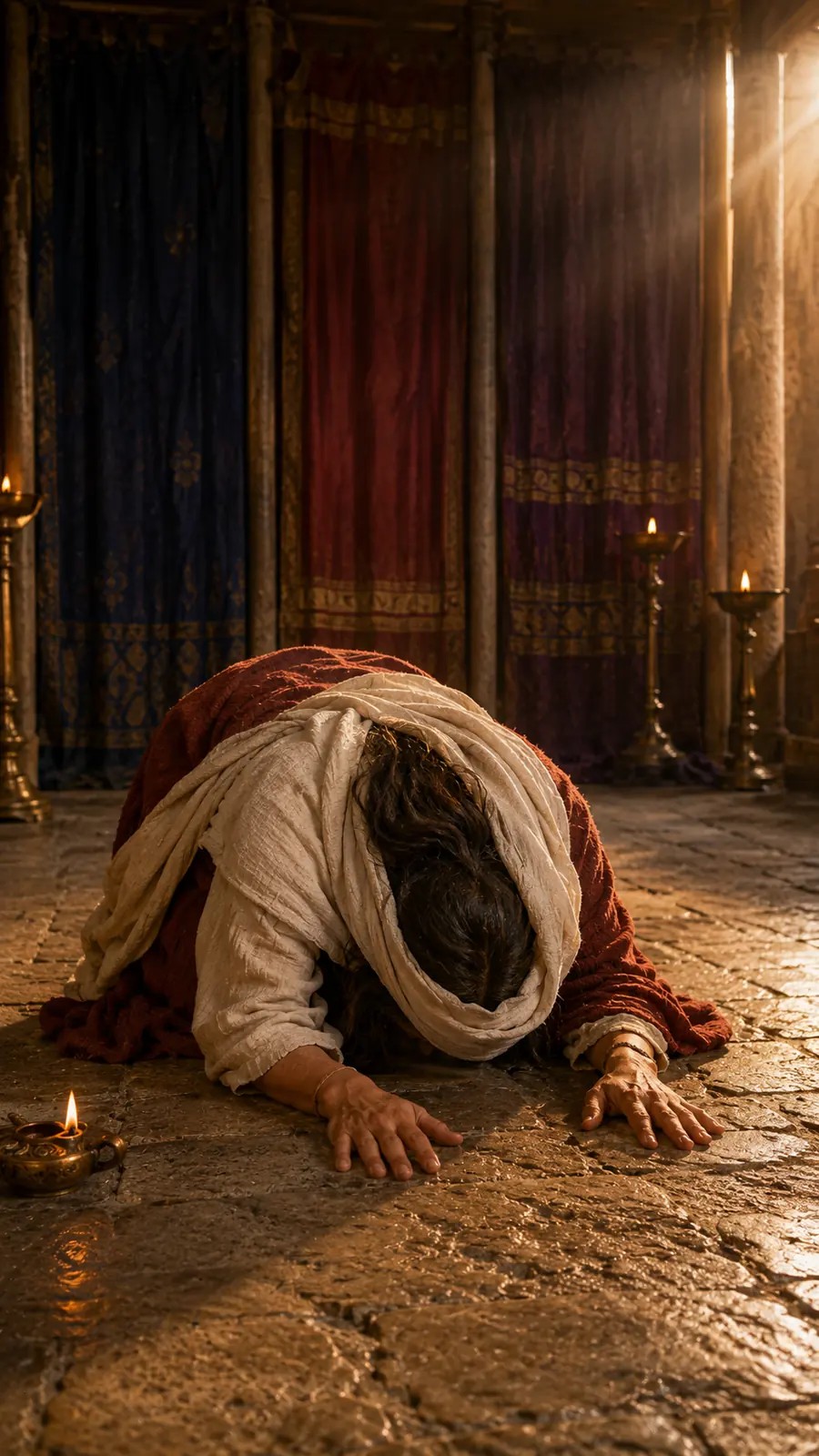
10And she was in bitterness of soul, and prayed unto the LORD , and wept sore.
11And she vowed a vow, and said, O LORD of hosts, if thou wilt indeed look on the affliction of thine handmaid, and remember me, and not forget thine handmaid, but wilt give unto thine handmaid a man child, then I will give him unto the LORD all the days of his life, and there shall no razor come upon his head.
12And it came to pass, as she continued praying before the LORD , that Eli marked her mouth.
13Now Hannah, she spake in her heart; only her lips moved, but her voice was not heard: therefore Eli thought she had been drunken.
14And Eli said unto her, How long wilt thou be drunken? put away thy wine from thee.
1 Samuel 1:15-21
Mga talata 15–21: Hannah answered and said, No, my lord, I am a woman of a sorrowful…
Nagbubukas ang 1 Samuel 1:15–21 sa “And Hannah answered and said, No, my lord, I am a woman of a sorrowful spirit: I have drunk…” at umaabot sa “And the man Elkanah, and all his house, went up to offer unto the LORD the yearly sacrifice, and…” sa huling talata. Binubuo ng galaw na iyon ang Kilalanin ang mga tao, lugar, tawag, at pangangailangang nagpapasimula sa 1 Samuel.
Kontekstong nagbibigay-buhay sa sipi
“And Hannah answered and said, No, my lord, I am a woman of a sorrowful spirit: I have drunk neither wine nor strong…” Ang pagbanggit sa Hannah ay nag-uugat sa salaysay sa tiyak na tao o lugar. Sundan kung saan bumabalik ang pangalan at ano ang nagbabago sa paligid nito.
“Count not thine handmaid for a daughter of Belial: for out of the abundance of my complaint and grief have I spoken…” Ang pagbanggit sa Belial at Count ay nag-uugat sa salaysay sa tiyak na tao o lugar. Sundan kung saan bumabalik ang pangalan at ano ang nagbabago sa paligid nito.
1 Samuel 1:15-21
Bersiyong King James15And Hannah answered and said, No, my lord, I am a woman of a sorrowful spirit: I have drunk neither wine nor strong drink, but have poured out my soul before the LORD .
16Count not thine handmaid for a daughter of Belial: for out of the abundance of my complaint and grief have I spoken hitherto.
17Then Eli answered and said, Go in peace: and the God of Israel grant thee thy petition that thou hast asked of him.
18And she said, Let thine handmaid find grace in thy sight. So the woman went her way, and did eat, and her countenance was no more sad.
19And they rose up in the morning early, and worshipped before the LORD , and returned, and came to their house to Ramah: and Elkanah knew Hannah his wife; and the LORD remembered her.
20Wherefore it came to pass, when the time was come about after Hannah had conceived, that she bare a son, and called his name Samuel, saying, Because I have asked him of the LORD .
21And the man Elkanah, and all his house, went up to offer unto the LORD the yearly sacrifice, and his vow.
1 Samuel 1:22-28
Mga talata 22–28: Hannah went not up; for she said unto her husband, I will not go up…
Nagbubukas ang 1 Samuel 1:22–28 sa “But Hannah went not up; for she said unto her husband, I will not go up until the child be…” at umaabot sa “Therefore also I have lent him to the LORD ; as long as he liveth he shall be lent to the LORD …” sa huling talata. Binubuo ng galaw na iyon ang Kilalanin ang mga tao, lugar, tawag, at pangangailangang nagpapasimula sa 1 Samuel.
Kontekstong nagbibigay-buhay sa sipi
“But Hannah went not up; for she said unto her husband, I will not go up until the child be weaned, and then I will…” Ang pagbanggit sa Hannah ay nag-uugat sa salaysay sa tiyak na tao o lugar. Sundan kung saan bumabalik ang pangalan at ano ang nagbabago sa paligid nito.
“And Elkanah her husband said unto her, Do what seemeth thee good; tarry until thou have weaned him; only the LORD…” Ang pagbanggit sa Elkanah ay nag-uugat sa salaysay sa tiyak na tao o lugar. Sundan kung saan bumabalik ang pangalan at ano ang nagbabago sa paligid nito.
1 Samuel 1:22-28
Bersiyong King James22But Hannah went not up; for she said unto her husband, I will not go up until the child be weaned, and then I will bring him, that he may appear before the LORD , and there abide for ever.
23And Elkanah her husband said unto her, Do what seemeth thee good; tarry until thou have weaned him; only the LORD establish his word. So the woman abode, and gave her son suck until she weaned him.
24And when she had weaned him, she took him up with her, with three bullocks, and one ephah of flour, and a bottle of wine, and brought him unto the house of the LORD in Shiloh: and the child was young.
25And they slew a bullock, and brought the child to Eli.
26And she said, Oh my lord, as thy soul liveth, my lord, I am the woman that stood by thee here, praying unto the LORD .
27For this child I prayed; and the LORD hath given me my petition which I asked of him:
28Therefore also I have lent him to the LORD ; as long as he liveth he shall be lent to the LORD . And he worshipped the LORD there.
Mga detalyeng dapat mapansin
Ang pambungad na larawan
Nagsisimula ang 1 Samuel 1:1 sa “Now there was a certain man of Ramathaim-zophim, of mount Ephraim, and his name was Elkanah, the son of Jeroham, the son of Elihu, the son of Tohu, the son…”
Kung saan nagbabago ang kabanata
Nagiging likas na pagbabago ang 1 Samuel 1:14: “And Eli said unto her, How long wilt thou be drunken? put away thy wine from thee.”
Ang huling himig
Iniiwan ng 1 Samuel 1:28 sa mambabasa ang “Therefore also I have lent him to the LORD ; as long as he liveth he shall be lent to the LORD . And he worshipped the LORD there.”
Landas ng mga salita sa kabanata
Tinutulungan ng mga salitang LORD, Hannah, Elkanah, child, handmaid, house na makita ang paulit-ulit na alalahanin ng kabanata.
Unahin ang teksto
Kung saan nagkakaiba ang mga mambabasa
Nagsisimula ang buod sa sinasabi ng sipi at sa ugnayan ng mga bahagi nito. Hindi nito ipinapalagay na nalutas na ng isang denominasyon ang lahat ng tanong. Malinaw na tinutukoy kung ang konklusyon ay nakasalalay sa tradisyon, teoryang pampanitikan, o rekonstruksiyong pangkasaysayan.
Unang inihaharap ang tekstong KJV. Nilalagyan ng malinaw na pangalan ang mga interpretasyon, at ipinapakita lamang ang mga pagkakaiba kapag nakatutulong ang mga ito upang maunawaan kung bakit hindi palaging iisa ang sagot ng mga seryosong komunidad.
Inihahanda pa ang paghahambing ng mga interpretasyon para sa kabanatang ito. Habang wala pa ang mga nasuring tala, malinaw na pinaghihiwalay ng pahinang ito ang teksto ng KJV, buod, at aplikasyon nang hindi sinasabing nagkakasundo ang lahat ng responsableng mambabasa sa bawat tanong.