
Ang malaking larawan
Nagbubukas ang Genesis 2 sa “Thus the heavens and the earth were finished, and all the host of them.”, nagbabago malapit sa talata 13 sa “And the name of the second river is Gihon: the same is it that compasseth the whole land…”, at nagtatapos sa “And they were both naked, the man and his wife, and were not ashamed.”. Sinusundan ng mga puntong ito ang sariling galaw ng kabanata mula simula hanggang wakas.
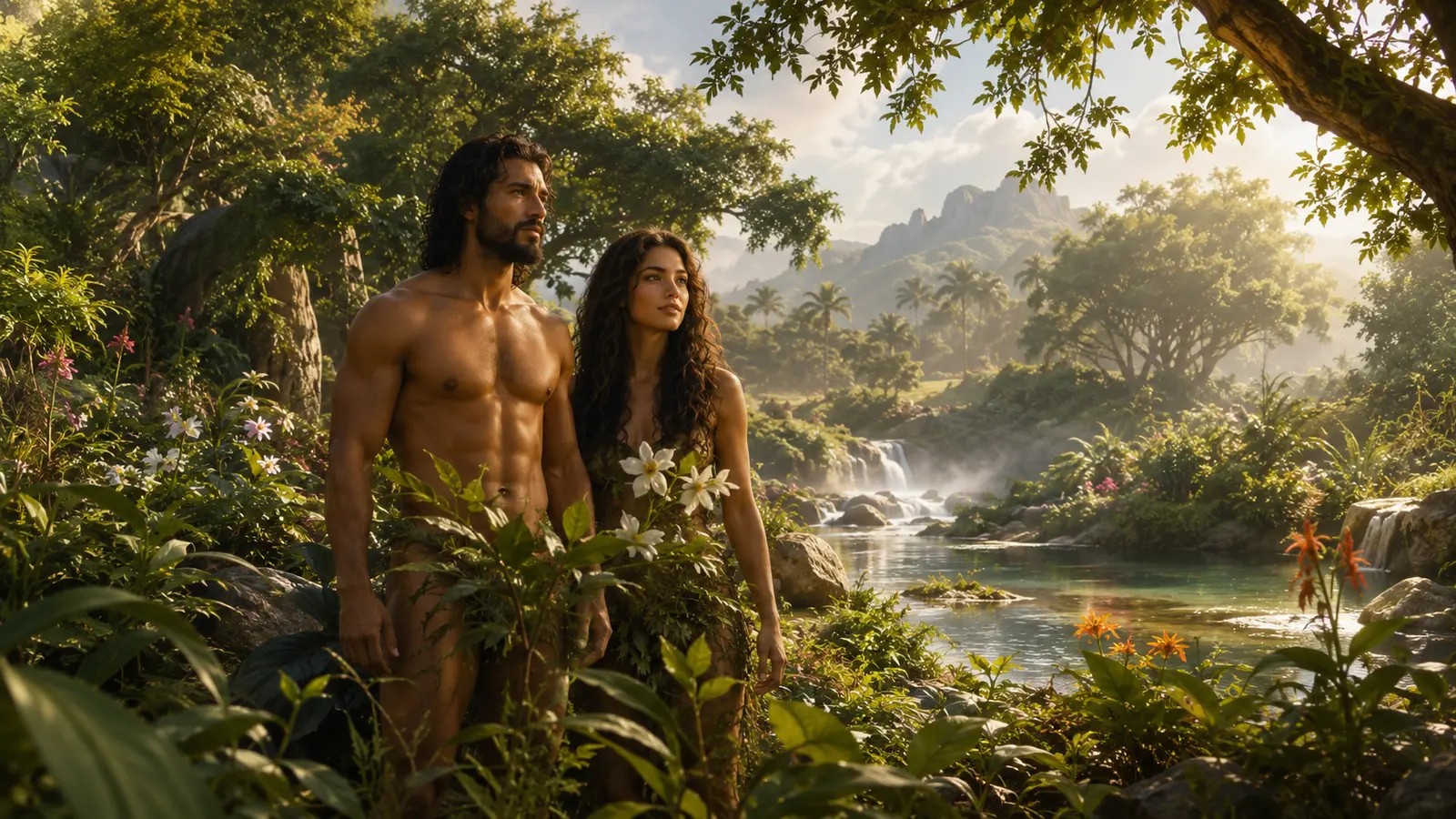
Kasulatan sa tabi ng buod
Genesis · Bersiyong King James · 25Genesis 2:1-7
Mga talata 1–7: Thus the heavens and the earth were finished, and all the host of them.
Nagbubukas ang Genesis 2:1–7 sa “Thus the heavens and the earth were finished, and all the host of them.” at umaabot sa “And the LORD God formed man of the dust of the ground, and breathed into his nostrils the breath…” sa huling talata. Binubuo ng galaw na iyon ang Mula sa kadiliman ay lumikha ang Diyos ng maayos na daigdig, pinuno ito ng buhay, at binigyan ang tao ng dangal at pananagutang maglarawan ng kanyang wangis.
Kontekstong nagbibigay-buhay sa sipi
“Thus the heavens and the earth were finished, and all the host of them.” Kabilang sa mga natatanging salita sa linyang ito ang earth, finished, heavens. Masusuri ang gawain nito sa sipi sa ugnayan nito sa mga talata 2.
“And on the seventh day God ended his work which he had made; and he rested on the seventh day from all his work which…” Pinapangalanan ng talata ang God sa halip na iwanang walang pinagmulan ang kilos. Pansinin kung ipinagpapatuloy, sinasagot, o inihahambing ito ng susunod na linya.
Genesis 2:1-7
Bersiyong King James1Thus the heavens and the earth were finished, and all the host of them.
2And on the seventh day God ended his work which he had made; and he rested on the seventh day from all his work which he had made.
3And God blessed the seventh day, and sanctified it: because that in it he had rested from all his work which God created and made.
4These are the generations of the heavens and of the earth when they were created, in the day that the LORD God made the earth and the heavens,
5And every plant of the field before it was in the earth, and every herb of the field before it grew: for the LORD God had not caused it to rain upon the earth, and there was not a man to till the ground.
6But there went up a mist from the earth, and watered the whole face of the ground.
7And the LORD God formed man of the dust of the ground, and breathed into his nostrils the breath of life; and man became a living soul.
Genesis 2:8-14
Mga talata 8–14: The LORD God planted a garden eastward in Eden; and there he put the man…
Nagbubukas ang Genesis 2:8–14 sa “And the LORD God planted a garden eastward in Eden; and there he put the man whom he had formed.” at umaabot sa “And the name of the third river is Hiddekel: that is it which goeth toward the east of Assyria…” sa huling talata. Binubuo ng galaw na iyon ang Mula sa kadiliman ay lumikha ang Diyos ng maayos na daigdig, pinuno ito ng buhay, at binigyan ang tao ng dangal at pananagutang maglarawan ng kanyang wangis.
Kontekstong nagbibigay-buhay sa sipi
“And the LORD God planted a garden eastward in Eden; and there he put the man whom he had formed.” Ang pagbanggit sa Eden ay nag-uugat sa salaysay sa tiyak na tao o lugar. Sundan kung saan bumabalik ang pangalan at ano ang nagbabago sa paligid nito.
“And out of the ground made the LORD God to grow every tree that is pleasant to the sight, and good for food; the tree…” Pinapangalanan ng talata ang God sa halip na iwanang walang pinagmulan ang kilos. Pansinin kung ipinagpapatuloy, sinasagot, o inihahambing ito ng susunod na linya.
Genesis 2:8-14
Bersiyong King James8And the LORD God planted a garden eastward in Eden; and there he put the man whom he had formed.
9And out of the ground made the LORD God to grow every tree that is pleasant to the sight, and good for food; the tree of life also in the midst of the garden, and the tree of knowledge of good and evil.
10And a river went out of Eden to water the garden; and from thence it was parted, and became into four heads.
11The name of the first is Pison: that is it which compasseth the whole land of Havilah, where there is gold;
12And the gold of that land is good: there is bdellium and the onyx stone.
13And the name of the second river is Gihon: the same is it that compasseth the whole land of Ethiopia.
14And the name of the third river is Hiddekel: that is it which goeth toward the east of Assyria. And the fourth river is Euphrates.
Genesis 2:15-21
Mga talata 15–21: The LORD God took the man, and put him into the garden of Eden to dress…
Nagbubukas ang Genesis 2:15–21 sa “And the LORD God took the man, and put him into the garden of Eden to dress it and to keep it.” at umaabot sa “And the LORD God caused a deep sleep to fall upon Adam, and he slept: and he took one of his…” sa huling talata. Binubuo ng galaw na iyon ang Mula sa kadiliman ay lumikha ang Diyos ng maayos na daigdig, pinuno ito ng buhay, at binigyan ang tao ng dangal at pananagutang maglarawan ng kanyang wangis.
Kontekstong nagbibigay-buhay sa sipi
“And the LORD God took the man, and put him into the garden of Eden to dress it and to keep it.” Ang pagbanggit sa Eden ay nag-uugat sa salaysay sa tiyak na tao o lugar. Sundan kung saan bumabalik ang pangalan at ano ang nagbabago sa paligid nito.
“And the LORD God commanded the man, saying, Of every tree of the garden thou mayest freely eat:” Hindi mauunawaan ang utos sa pandiwa lamang. Ang tumatanggap, layunin, at lugar nito sa mas malaking tipan o pangangatwiran ang nagtatakda ng pananagutan.
Genesis 2:15-21
Bersiyong King James15And the LORD God took the man, and put him into the garden of Eden to dress it and to keep it.
16And the LORD God commanded the man, saying, Of every tree of the garden thou mayest freely eat:
17But of the tree of the knowledge of good and evil, thou shalt not eat of it: for in the day that thou eatest thereof thou shalt surely die.
18And the LORD God said, It is not good that the man should be alone; I will make him an help meet for him.
19And out of the ground the LORD God formed every beast of the field, and every fowl of the air; and brought them unto Adam to see what he would call them: and whatsoever Adam called every living creature, that was the name thereof.
20And Adam gave names to all cattle, and to the fowl of the air, and to every beast of the field; but for Adam there was not found an help meet for him.
21And the LORD God caused a deep sleep to fall upon Adam, and he slept: and he took one of his ribs, and closed up the flesh instead thereof;
Genesis 2:22-25
Mga talata 22–25: The rib, which the LORD God had taken from man, made he a woman, and…
Nagbubukas ang Genesis 2:22–25 sa “And the rib, which the LORD God had taken from man, made he a woman, and brought her unto the…” at umaabot sa “And they were both naked, the man and his wife, and were not ashamed.” sa huling talata. Binubuo ng galaw na iyon ang Mula sa kadiliman ay lumikha ang Diyos ng maayos na daigdig, pinuno ito ng buhay, at binigyan ang tao ng dangal at pananagutang maglarawan ng kanyang wangis.
Genesis 2:22-25
Bersiyong King James22And the rib, which the LORD God had taken from man, made he a woman, and brought her unto the man.
23And Adam said, This is now bone of my bones, and flesh of my flesh: she shall be called Woman, because she was taken out of Man.
24Therefore shall a man leave his father and his mother, and shall cleave unto his wife: and they shall be one flesh.
25And they were both naked, the man and his wife, and were not ashamed.
Mga detalyeng dapat mapansin
Ang pambungad na larawan
Nagsisimula ang Genesis 2:1 sa “Thus the heavens and the earth were finished, and all the host of them.”
Kung saan nagbabago ang kabanata
Nagiging likas na pagbabago ang Genesis 2:17: “But of the tree of the knowledge of good and evil, thou shalt not eat of it: for in the day that thou eatest thereof thou shalt surely die.”
Ang huling himig
Iniiwan ng Genesis 2:25 sa mambabasa ang “And they were both naked, the man and his wife, and were not ashamed.”
Landas ng mga salita sa kabanata
Tinutulungan ng mga salitang LORD, Adam, earth, garden, good, ground na makita ang paulit-ulit na alalahanin ng kabanata.
Unahin ang teksto
Kung saan nagkakaiba ang mga mambabasa
Nagsisimula ang buod sa sinasabi ng sipi at sa ugnayan ng mga bahagi nito. Hindi nito ipinapalagay na nalutas na ng isang denominasyon ang lahat ng tanong. Malinaw na tinutukoy kung ang konklusyon ay nakasalalay sa tradisyon, teoryang pampanitikan, o rekonstruksiyong pangkasaysayan.
Unang inihaharap ang tekstong KJV. Nilalagyan ng malinaw na pangalan ang mga interpretasyon, at ipinapakita lamang ang mga pagkakaiba kapag nakatutulong ang mga ito upang maunawaan kung bakit hindi palaging iisa ang sagot ng mga seryosong komunidad.
Inihahanda pa ang paghahambing ng mga interpretasyon para sa kabanatang ito. Habang wala pa ang mga nasuring tala, malinaw na pinaghihiwalay ng pahinang ito ang teksto ng KJV, buod, at aplikasyon nang hindi sinasabing nagkakasundo ang lahat ng responsableng mambabasa sa bawat tanong.