
O panorama
Gênesis 2 abre com “Thus the heavens and the earth were finished, and all the host of them.”, muda perto do versículo 13 com “And the name of the second river is Gihon: the same is it that compasseth the whole land…” e termina com “And they were both naked, the man and his wife, and were not ashamed.”. Esses pontos traçam o movimento próprio do capítulo, da abertura à conclusão.
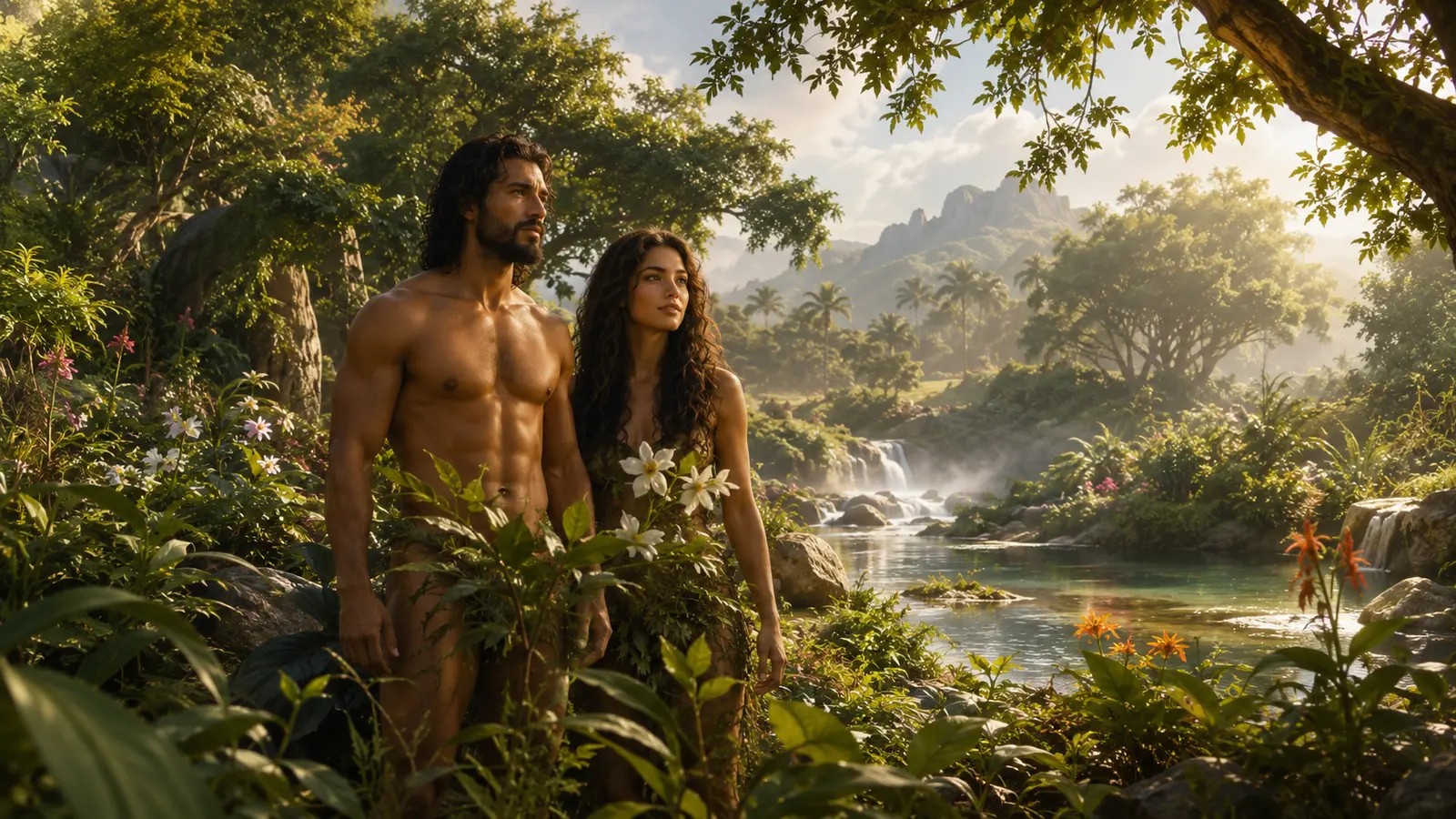
A Escritura ao lado do resumo
Gênesis · Versão King James · 25Gênesis 2:1-7
Versículos 1–7: Thus the heavens and the earth were finished, and all the host of them.
Gênesis 2:1–7 abre com “Thus the heavens and the earth were finished, and all the host of them.” e chega a “And the LORD God formed man of the dust of the ground, and breathed into his nostrils the breath…” no último versículo. Esse percurso desenvolve Deus traz um mundo ordenado das trevas, enche-o de vida e dá à humanidade a dignidade e a responsabilidade de refletir sua imagem.
Contexto que dá vida à passagem
“Thus the heavens and the earth were finished, and all the host of them.” Os termos próprios desta linha incluem earth, finished, heavens. A relação com os versículos 2 permite verificar sua função na passagem.
“And on the seventh day God ended his work which he had made; and he rested on the seventh day from all his work which…” O versículo nomeia God em vez de deixar a ação sem uma fonte. Observe se a linha seguinte continua, responde ou contrasta essa ação.
Gênesis 2:1-7
Versão King James1Thus the heavens and the earth were finished, and all the host of them.
2And on the seventh day God ended his work which he had made; and he rested on the seventh day from all his work which he had made.
3And God blessed the seventh day, and sanctified it: because that in it he had rested from all his work which God created and made.
4These are the generations of the heavens and of the earth when they were created, in the day that the LORD God made the earth and the heavens,
5And every plant of the field before it was in the earth, and every herb of the field before it grew: for the LORD God had not caused it to rain upon the earth, and there was not a man to till the ground.
6But there went up a mist from the earth, and watered the whole face of the ground.
7And the LORD God formed man of the dust of the ground, and breathed into his nostrils the breath of life; and man became a living soul.
Gênesis 2:8-14
Versículos 8–14: The LORD God planted a garden eastward in Eden; and there he put the man…
Gênesis 2:8–14 abre com “And the LORD God planted a garden eastward in Eden; and there he put the man whom he had formed.” e chega a “And the name of the third river is Hiddekel: that is it which goeth toward the east of Assyria…” no último versículo. Esse percurso desenvolve Deus traz um mundo ordenado das trevas, enche-o de vida e dá à humanidade a dignidade e a responsabilidade de refletir sua imagem.
Contexto que dá vida à passagem
“And the LORD God planted a garden eastward in Eden; and there he put the man whom he had formed.” Nomear Eden mantém o relato ligado a pessoas ou lugares concretos. Acompanhe onde o nome retorna e o que muda ao redor dele.
“And out of the ground made the LORD God to grow every tree that is pleasant to the sight, and good for food; the tree…” O versículo nomeia God em vez de deixar a ação sem uma fonte. Observe se a linha seguinte continua, responde ou contrasta essa ação.
Gênesis 2:8-14
Versão King James8And the LORD God planted a garden eastward in Eden; and there he put the man whom he had formed.
9And out of the ground made the LORD God to grow every tree that is pleasant to the sight, and good for food; the tree of life also in the midst of the garden, and the tree of knowledge of good and evil.
10And a river went out of Eden to water the garden; and from thence it was parted, and became into four heads.
11The name of the first is Pison: that is it which compasseth the whole land of Havilah, where there is gold;
12And the gold of that land is good: there is bdellium and the onyx stone.
13And the name of the second river is Gihon: the same is it that compasseth the whole land of Ethiopia.
14And the name of the third river is Hiddekel: that is it which goeth toward the east of Assyria. And the fourth river is Euphrates.
Gênesis 2:15-21
Versículos 15–21: The LORD God took the man, and put him into the garden of Eden to dress…
Gênesis 2:15–21 abre com “And the LORD God took the man, and put him into the garden of Eden to dress it and to keep it.” e chega a “And the LORD God caused a deep sleep to fall upon Adam, and he slept: and he took one of his…” no último versículo. Esse percurso desenvolve Deus traz um mundo ordenado das trevas, enche-o de vida e dá à humanidade a dignidade e a responsabilidade de refletir sua imagem.
Contexto que dá vida à passagem
“And the LORD God took the man, and put him into the garden of Eden to dress it and to keep it.” Nomear Eden mantém o relato ligado a pessoas ou lugares concretos. Acompanhe onde o nome retorna e o que muda ao redor dele.
“And the LORD God commanded the man, saying, Of every tree of the garden thou mayest freely eat:” A ordem não pode ser entendida apenas pelo verbo. O destinatário, o propósito e seu lugar na aliança ou argumento definem a responsabilidade.
Gênesis 2:15-21
Versão King James15And the LORD God took the man, and put him into the garden of Eden to dress it and to keep it.
16And the LORD God commanded the man, saying, Of every tree of the garden thou mayest freely eat:
17But of the tree of the knowledge of good and evil, thou shalt not eat of it: for in the day that thou eatest thereof thou shalt surely die.
18And the LORD God said, It is not good that the man should be alone; I will make him an help meet for him.
19And out of the ground the LORD God formed every beast of the field, and every fowl of the air; and brought them unto Adam to see what he would call them: and whatsoever Adam called every living creature, that was the name thereof.
20And Adam gave names to all cattle, and to the fowl of the air, and to every beast of the field; but for Adam there was not found an help meet for him.
21And the LORD God caused a deep sleep to fall upon Adam, and he slept: and he took one of his ribs, and closed up the flesh instead thereof;
Gênesis 2:22-25
Versículos 22–25: The rib, which the LORD God had taken from man, made he a woman, and…
Gênesis 2:22–25 abre com “And the rib, which the LORD God had taken from man, made he a woman, and brought her unto the…” e chega a “And they were both naked, the man and his wife, and were not ashamed.” no último versículo. Esse percurso desenvolve Deus traz um mundo ordenado das trevas, enche-o de vida e dá à humanidade a dignidade e a responsabilidade de refletir sua imagem.
Gênesis 2:22-25
Versão King James22And the rib, which the LORD God had taken from man, made he a woman, and brought her unto the man.
23And Adam said, This is now bone of my bones, and flesh of my flesh: she shall be called Woman, because she was taken out of Man.
24Therefore shall a man leave his father and his mother, and shall cleave unto his wife: and they shall be one flesh.
25And they were both naked, the man and his wife, and were not ashamed.
Detalhes que merecem atenção
A imagem de abertura
Genesis 2:1 começa com “Thus the heavens and the earth were finished, and all the host of them.”
Onde o capítulo muda
Genesis 2:17 forma uma mudança natural: “But of the tree of the knowledge of good and evil, thou shalt not eat of it: for in the day that thou eatest thereof thou shalt surely die.”
A nota final
Genesis 2:25 deixa o leitor com “And they were both naked, the man and his wife, and were not ashamed.”
Um caminho de palavras pelo capítulo
As palavras LORD, Adam, earth, garden, good, ground ajudam a revelar as preocupações repetidas do capítulo.
Primeiro o texto
Onde os leitores divergem
O resumo começa com o que a passagem diz e como suas partes se relacionam. Ele não presume que uma denominação já resolveu todas as questões. A dependência de uma tradição, teoria literária ou reconstrução histórica é claramente identificada.
O texto KJV aparece primeiro. As conclusões interpretativas são identificadas, e as diferenças surgem quando ajudam a explicar por que comunidades sérias nem sempre chegam à mesma resposta.
Como os dias da criação devem ser entendidos?
Os cristãos interpretam os dias de maneiras diferentes, incluindo dias sucessivos comuns, uma estrutura literária e períodos mais longos. O padrão de tarde e manhã, o sétimo dia e a relação com o sábado fazem parte do debate. Toda leitura responsável precisa explicar a estrutura real do capítulo, e não apenas impor a ele uma posição moderna.
Genesis 1:1-31 · Genesis 2:1-3 · Exodus 20:8-11
Por que Gênesis 1 e 2 têm focos diferentes?
Gênesis 1 contempla a criação ordenada do mundo, enquanto Gênesis 2 se concentra no jardim, no trabalho humano, no mandamento e na parceria. Alguns leitores os entendem como perspectivas complementares; outros estudam tradições distintas reunidas no texto final. A diferença de foco deve ser reconhecida sem presumir que, por si só, prove uma contradição.
Genesis 1:26-31 · Genesis 2:1-25