
1 Peter

5 Chapters
1 Peter: The Whole Book, Chapter by Chapter
An Inheritance That Exile Cannot Spoil
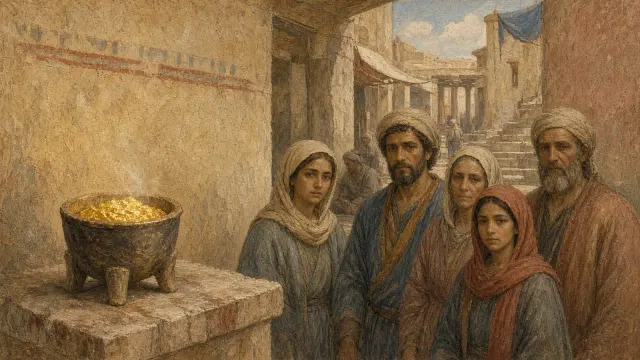
The first chapter refuses to choose between present heaviness and future hope. Peter names scattered strangers as elect, then grounds their identity in the Father's foreknowledge, the Spirit's sanctifying work, and Jesus Christ. New birth opens onto a living hope and an inheritance protected from decay, while the heirs themselves are kept through faith. Trials test something more precious than perishing gold, and love reaches toward a Christ not yet seen. Prophets searched the grace now announced, and angels desire to look into it. From there, the chapter turns to conduct: prepared minds, sobriety, holiness, reverence, and a redemption priced not in silver or gold but in Christ's blood. It closes where new birth becomes visible, in fervent love rooted in a word that outlasts human glory.
One complete chapter pageOpen chapter →
A Living House in a World That Rejects Its Cornerstone
The second chapter takes the new birth of chapter 1 and gives it appetite, architecture, public visibility, and a Shepherd. Malice, deceit, hypocrisy, envy, and evil speaking do not belong beside sincere love, so Peter pictures newborn desire for pure nourishment. Christ is then the living stone rejected by people but chosen by God, and believers become living stones built around him. Their identity as a chosen generation and royal priesthood is explained by mercy, not superiority. In public life, freedom is denied the right to become a cover for wrongdoing, and the king receives honor while God receives fear. The difficult household instruction that follows still names wrongful suffering as wrongful. Christ finally stands both as the pattern of nonretaliation and as the one who bears sins, heals straying, and returns sheep to their Shepherd.
One complete chapter pageOpen chapter →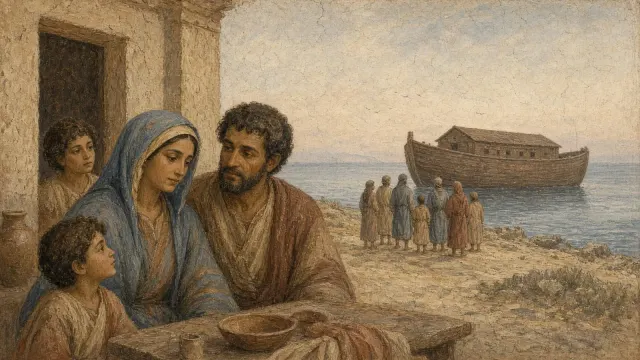
An Answer Carried by Conduct, and a Victory Beyond Suffering
The third chapter keeps conduct and hope together under pressure. Wives with unbelieving husbands are addressed through the power of visible conduct and an inward adornment that does not decay. Husbands are told to live with knowledge and honor, and their wives are explicitly named as fellow heirs whose mistreatment can hinder prayer. The address then widens to everyone: compassion, brotherly love, blessing instead of retaliation, and an active pursuit of peace. Peter does not promise that good conduct prevents all suffering. He prepares the believers to explain their hope with meekness, reverence, and a good conscience when accusation comes. Christ's once-for-sins suffering gives the chapter its center, while the spirits in prison remain a difficult interpretive question. Noah, baptism, conscience, resurrection, and Christ's heavenly supremacy then carry the chapter to its close.
One complete chapter pageOpen chapter →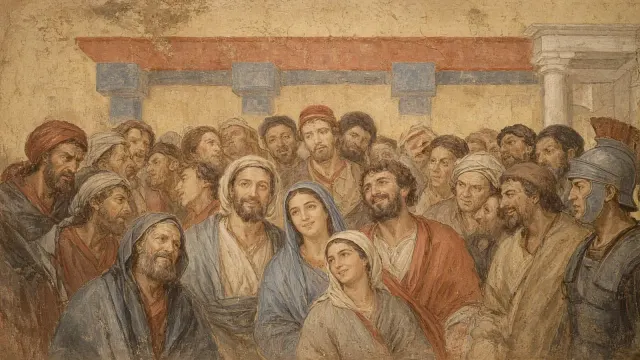
The Name That Brings Reproach, and the Care That Holds Its Bearers
The fourth chapter begins with a break that former companions find strange. Peter describes the old pattern of excess as time already spent, and the believers' refusal to rejoin it now draws slander. The living and the dead alike remain before God's judgment. Yet the approaching end does not produce spectacle or date setting. It produces sober prayer, fervent love, hospitality without complaint, and gifts handled as stewardship of God's varied grace. The chapter then sharpens its distinctions around suffering. Reproach for the name of Christ is not placed in the same category as consequences for murder, theft, evil conduct, or intrusive meddling. Judgment begins at God's own house, so the community is not pictured as watching reckoning from a safe distance. The final movement is quiet but weighty: those suffering according to God's will entrust their lives to a faithful Creator while continuing in well doing.
One complete chapter pageOpen chapter →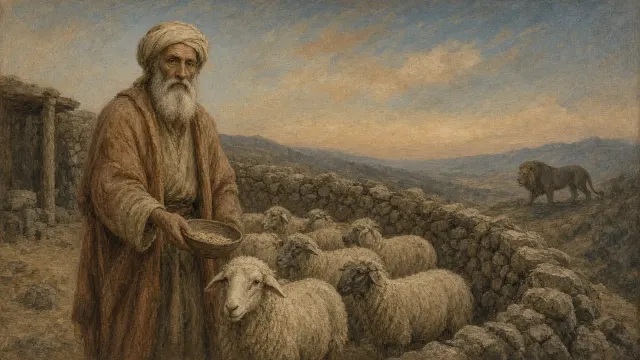
A Flock Under Care, Not Under Ownership
The final chapter places every form of human oversight under a greater one. Peter addresses elders as a fellow elder and tells them to tend God's flock willingly, without greed and without domination, because the chief Shepherd will appear. The younger are addressed next, but humility immediately expands to include everyone. God's mighty hand and God's care stand together, allowing anxious weight to be cast upon the one who cares. Vigilance is still required. The adversary is compared to a roaring lion seeking prey, and resistance is described through steadfast faith within a brotherhood that knows similar affliction. Even here, the adversary does not control the ending. The God of all grace is the one who restores, establishes, strengthens, and settles. Silvanus, Babylon, Marcus, mutual greeting, and final peace then reconnect the scattered recipients to a wider fellowship.
One complete chapter pageOpen chapter →Source: eBible.org · eng-kjv2006