
Ephesians

6 Chapters
Ephesians: The Whole Book, Chapter by Chapter
The Blessing Keeps Returning to Christ
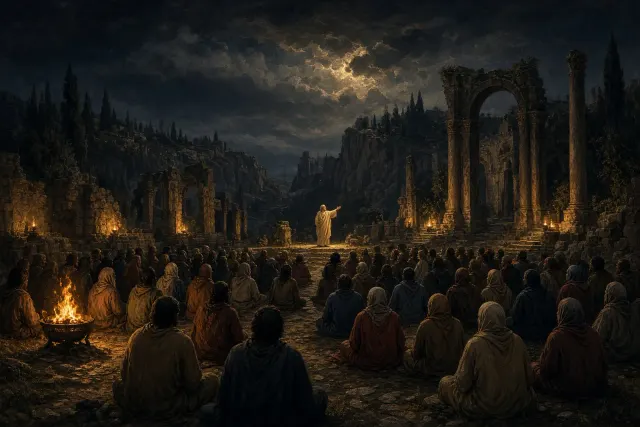
The Book of Ephesians opens in a rush of blessing that keeps returning to the same center: Christ. Paul moves from God's purpose before the world's foundation to adoption, redemption, forgiveness, inheritance, and the Spirit's seal without treating any of them as disconnected favors. The scale grows from the recipients' own salvation to God's purpose to gather all things in Christ, in heaven and on earth. Then the chapter turns from praise to prayer. Paul does not ask that they receive a different spiritual status, but that "the eyes of your understanding" be enlightened to the hope, riches, and power already at work. That power is not left undefined. Its measure is Christ raised from the dead, exalted above every authority, and given as head over all things to the church.
One complete chapter pageOpen chapter →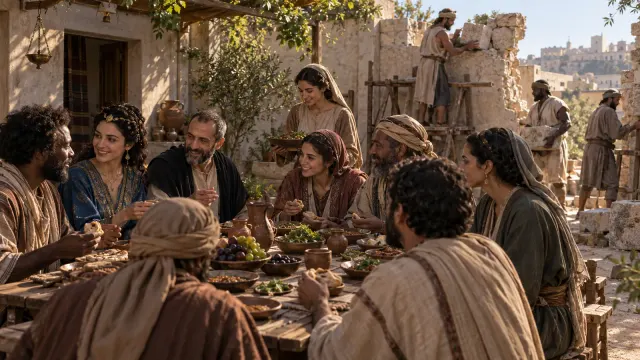
The Far Off Are Brought Into the House
Death, mercy, grace, workmanship, peace, citizenship, household, temple: the Book of Ephesians keeps changing images because one picture is not enough for what chapter 2 is doing. It begins with people dead in sins yet actively walking in them, then lets "But God" reverse the direction. Salvation is gift rather than a platform for boasting, and good works return only after they have been removed from the role of earning it. The second half makes the same grace social. Gentiles once outside Israel's covenant privileges are brought near through Christ's blood, but reconciliation does not produce a favored host and a tolerated guest. Christ makes "both one" and reconciles both to God. By the end, those once called strangers are fellow citizens, members of God's household, and part of a living structure being built into a habitation of God through the Spirit.
One complete chapter pageOpen chapter →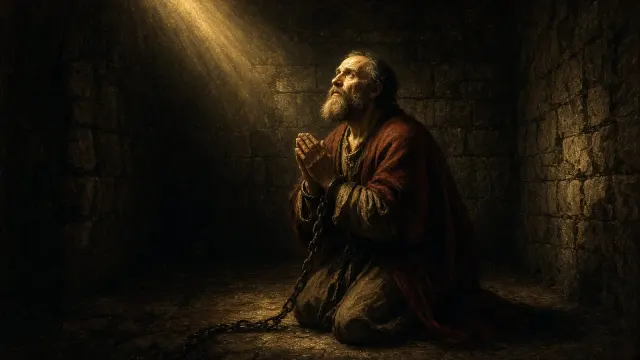
The Prisoner Explains a Purpose Larger Than His Prison
The prisoner keeps explaining something too large for the prison to interpret. In chapter 3, the Book of Ephesians names the "mystery" plainly: Gentiles are fellow heirs, members of the same body, and partakers of the promise in Christ through the gospel. Revelation moves toward communication, not toward an elite circle guarding a secret. Paul describes his own commission as grace, then says the church itself makes God's manifold wisdom known even to heavenly powers. His tribulations therefore do not define the success or failure of the purpose he serves. The chapter then resumes the prayer interrupted at its opening. Paul asks for inward strength through the Spirit, Christ's settled dwelling, roots and foundations in love, and a shared comprehension of a love that "passeth knowledge." The doxology expands beyond asking and thinking, yet remains tied to the very prayer it has just finished.
One complete chapter pageOpen chapter →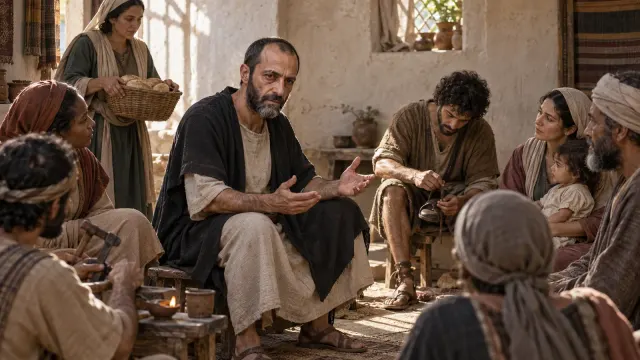
Unity Is Given, and Maturity Has Work to Do
The Book of Ephesians turns from the calling it has described to the walk that fits it, but the change is not from theology to an unrelated list of manners. Unity is already given "of the Spirit," and the work is to keep it with humility, patience, love, and peace. Difference remains inside that unity because the ascended Christ gives different gifts for the body's growth. The goal is not a congregation impressed by gifted leaders, but a mature body in which "every part" contributes and truth is spoken in love. Paul then contrasts the former Gentile manner of life with what it means to have "learned Christ." Putting off the old and putting on the new reaches the mind, desires, speech, anger, labor, generosity, and forgiveness. By the chapter's end, cosmic unity has arrived in ordinary words, hands, tempers, and relationships.
One complete chapter pageOpen chapter →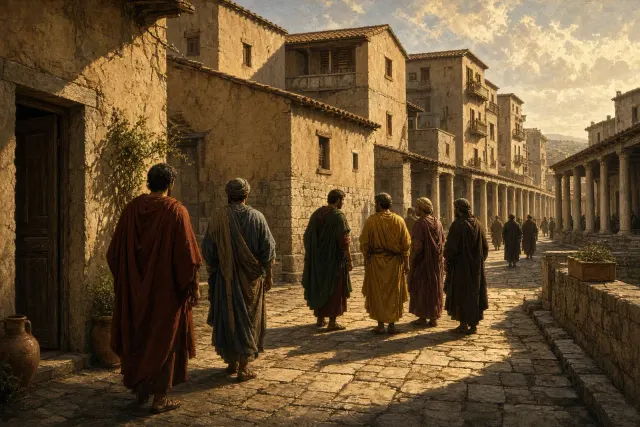
Love Gives Itself Instead of Consuming
Chapter 5 keeps returning to the difference between self-giving and grasping. The Book of Ephesians begins with Christ walking in love and giving himself, then sets sexual wrongdoing, uncleanness, covetousness, and corrupt speech against that pattern. The light imagery moves the recipients from merely being in light to being "light in the Lord," while wisdom becomes careful use of opportunity and understanding of the Lord's will. Spirit-filled life then sounds communal: psalms, hymns, spiritual songs, thanksgiving, and mutual submission. The household material grows out of that setting. Wives and husbands are addressed through the relation of Christ and the church, with the longest emphasis falling on a husband's duty to love by giving himself for the other's good. The one-flesh language of Genesis then makes care for the wife incompatible with detached self-interest and opens into the "great mystery" of Christ and the church.
One complete chapter pageOpen chapter →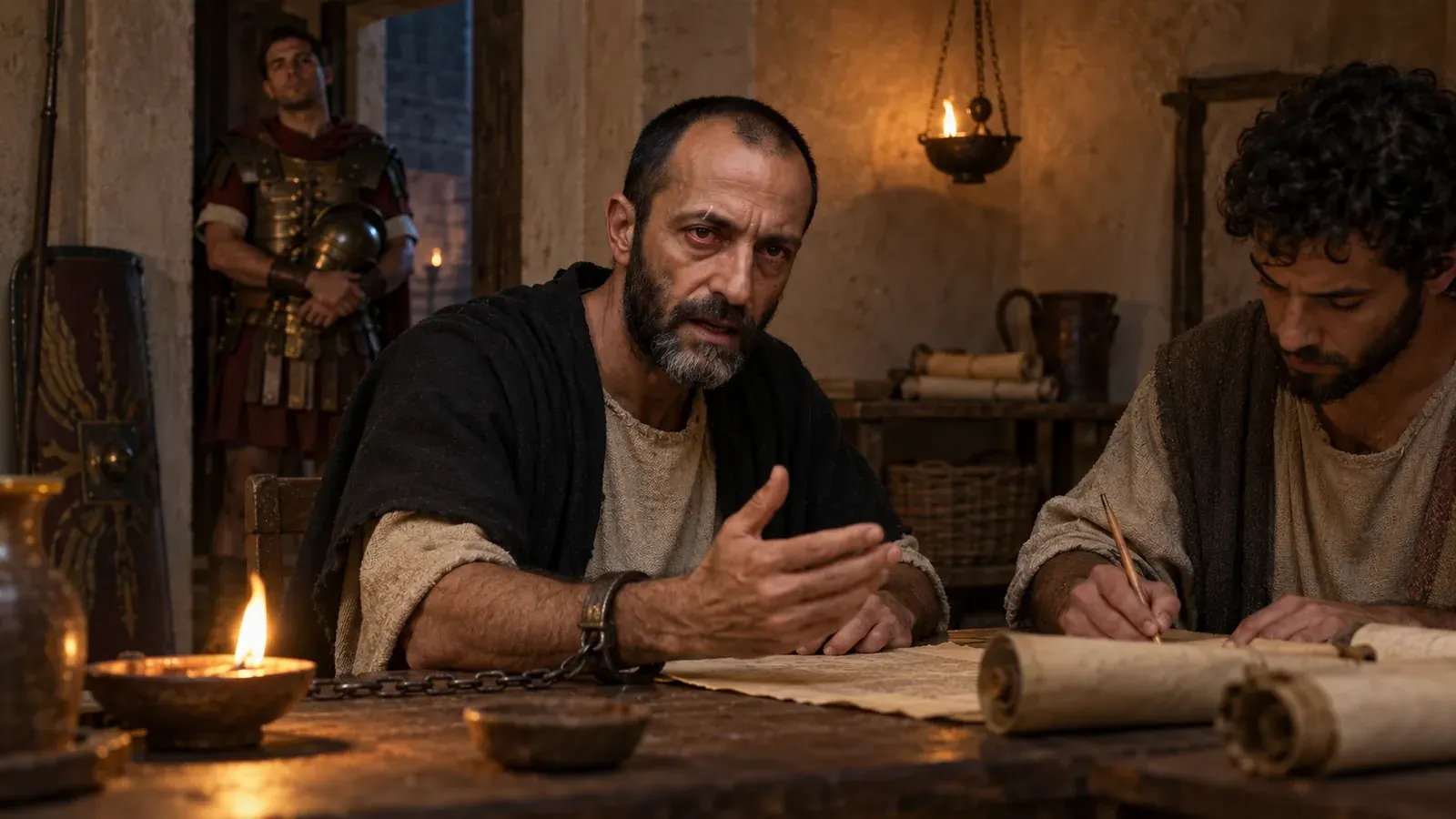
The Armor Ends with an Ambassador in Chains
The Book of Ephesians finishes by moving from household relationships to spiritual conflict and then back to named people and greetings. Children are addressed directly, while fathers are commanded not to provoke them. Enslaved people are told to render service before Christ, and masters are told to stop threatening because they also answer to a Master who shows no partiality. The armor section then sounds martial while sharply limiting what that imagery can mean. The struggle is "not against flesh and blood," the repeated command is to stand, and the equipment includes truth, righteousness, faith, salvation, God's word, and a gospel of peace. Prayer keeps the armored community dependent, and Paul asks for boldness as an "ambassador in bonds." Tychicus then carries the unwritten personal news. The letter ends not with conflict but with peace, love with faith, and grace.
One complete chapter pageOpen chapter →Source: eBible.org · eng-kjv2006