
Hebrews

13 Chapters
Hebrews: The Whole Book, Chapter by Chapter
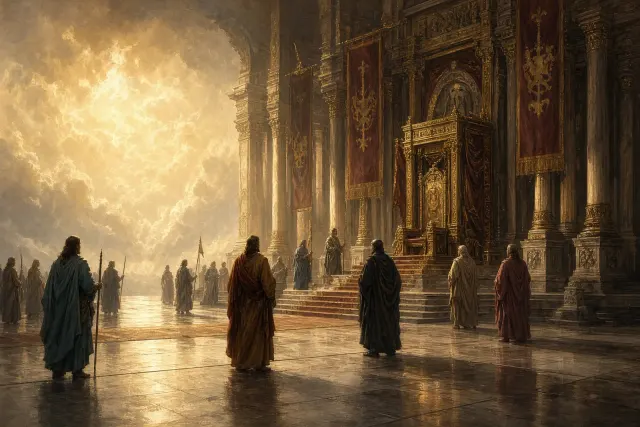
The Son Speaks, Creates, and Takes His Seat
The Book of Hebrews begins at full height. God has spoken before, truly and repeatedly, but the opening sentence places the Son at the climax of that speech and then keeps widening the frame until creation, providence, purification, and enthronement all belong to him. The comparison with angels is not built by making angels small. They remain glorious ministers. The distinction comes from what Scripture says of the Son: he is addressed in the language of royal sonship, worship, an everlasting throne, creation, and the seat at God's right hand. Even the heavens become temporary beside him, garments that can wear out and be folded away. The chapter closes by giving angels their proper dignity while making their limit unmistakable. They serve those who will inherit salvation. The Son is the heir, creator, purifier, and enthroned Lord around whom that service makes sense.
One complete chapter pageOpen chapter →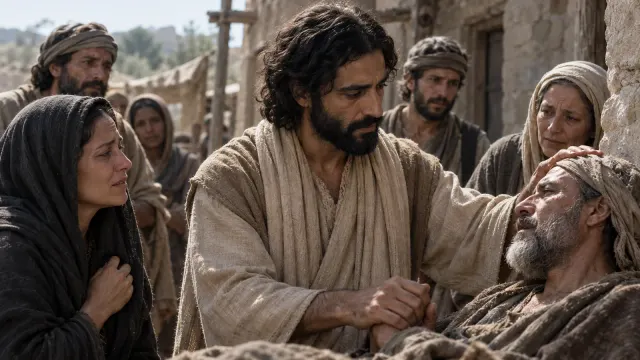
The Exalted Son Enters the Place of Human Weakness
The Book of Hebrews turns the Son's superiority into a question of hearing. A greater speaker makes neglect more serious, not less. From there the chapter faces a difficult contrast: Psalm 8 describes humanity crowned with glory and dominion, yet the visible world does not look fully subjected to human rule. The answer is not denial of that gap but Jesus entering it. He becomes lower than the angels in order to suffer death, then appears crowned with glory and honour. His path to glory runs through the human condition he came to save. The chapter keeps tightening that solidarity until it reaches flesh and blood, fear of death, temptation, and priesthood. Jesus is not ashamed to call the sanctified his brethren, and his ability to help is grounded in suffering actually undergone. The exalted Son of chapter 1 is therefore not distant from weakness. His greatness includes entering it completely without surrendering his holiness.
One complete chapter pageOpen chapter →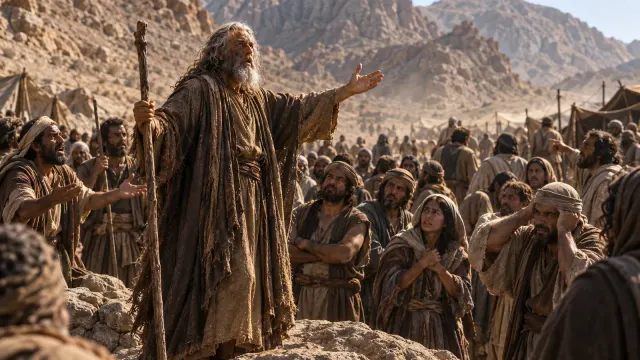
A Faithful Son and a Generation That Would Not Hear
The Book of Hebrews honors Moses before it surpasses him. Moses is called faithful twice, so the distinction is not created by turning Israel's servant into a failure. The difference is between serving within God's house and standing over that house as Son. From there, Psalm 95 brings the wilderness into the room. A generation that saw God's works for forty years still hardened its heart, and the old warning is spoken in the present tense: "To day." Hearing, belonging to the delivered community, and even leaving Egypt did not by themselves guarantee entrance into rest. The chapter therefore makes unbelief visible in conduct and treats hardening as a danger that can spread through a community unless there is daily mutual encouragement. Its closing questions strip away every substitute explanation. Those who failed had heard, had experienced deliverance, and had travelled under Moses. They did not enter because of unbelief, and that conclusion opens the question of the rest that still remains.
One complete chapter pageOpen chapter →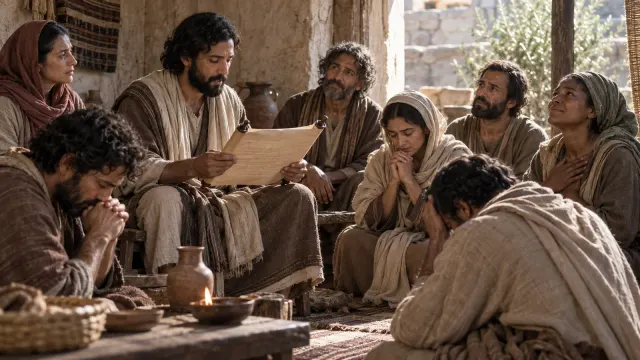
The Rest Still Promised and the Throne Still Open
The Book of Hebrews keeps the promise of rest open by reading creation, the wilderness, and Psalm 95 together. Canaan did not exhaust the word, because a later psalm could still say "To day" and speak of entrance. The rest reaches back further than Joshua to God's own completed work on the seventh day and forward to a Sabbath rest that remains for the people of God. The chapter then turns from promise to exposure. God's word is living and penetrating, able to discern what public appearance cannot reveal, and every creature stands open before the one to whom account is owed. Yet exposure is not the chapter's final note. The same people who cannot hide are given a high priest who can sympathize with weakness without sharing sin. Jesus has passed into the heavens, and the throne before which people stand uncovered is named as the throne of grace. The chapter joins seriousness and access without softening either one.
One complete chapter pageOpen chapter →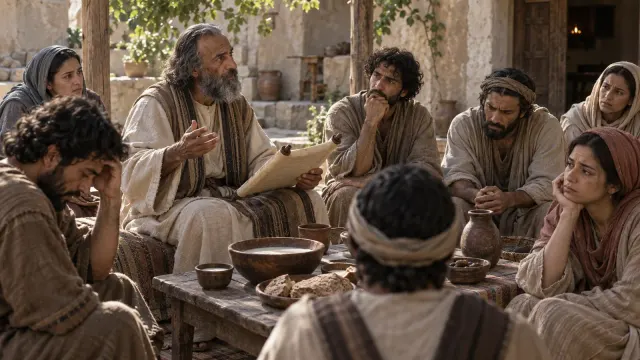
The Priest Learns Obedience; the Hearers Need Milk Again
The Book of Hebrews explains priesthood by beginning with ordinary human priests: they are taken from among people, appointed for people, able to deal compassionately with weakness because they share it, and unable to appoint themselves. Christ fulfills that structure while also breaking its limitation. He does not seize priestly honor, but receives appointment through God's word. His Sonship does not make obedience painless or suffering imaginary. "Strong crying and tears" belong to the description, and his completion as the source of eternal salvation comes through the path actually endured. Just as the argument reaches Melchisedec, however, the letter stops and looks at its hearers. The problem is not simply that the subject is difficult. They have become dull of hearing. Enough time has passed for maturity, but the class has regressed to milk. The chapter therefore makes priestly depth and human responsiveness part of the same issue. Difficult teaching requires trained hearing, not permanent retreat to the foundation.
One complete chapter pageOpen chapter →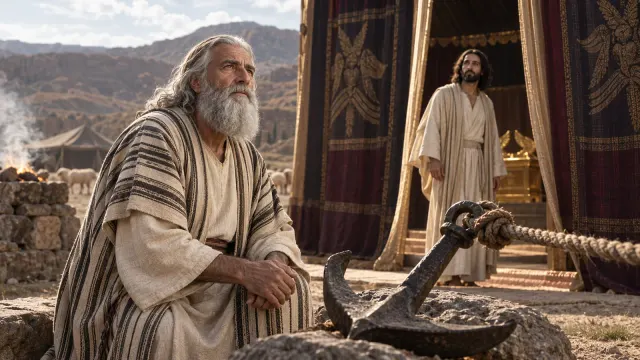
The Warning Is Severe, and the Anchor Is Secure
The Book of Hebrews moves from immaturity into one of its severest warnings, but it does not stay there. The call is to build above the foundation rather than lay it endlessly, and the danger described is not a shallow encounter with religion. The people in view have been enlightened, have tasted heavenly gift and God's good word, have shared in the Holy Ghost, and have known powers of the coming age. The agricultural image makes the question one of response to rain genuinely received. Yet the chapter then turns with "beloved" and speaks differently about the actual hearers, pointing to their continuing work and love as grounds for confidence. Hope is not left hanging on their emotional steadiness. God's promise to Abraham and God's oath by himself provide the objective support. By the end, hope has become an anchor fastened beyond the veil, where Jesus has already entered as forerunner and eternal high priest. Warning and assurance are allowed their full force without being made to cancel each other.
One complete chapter pageOpen chapter →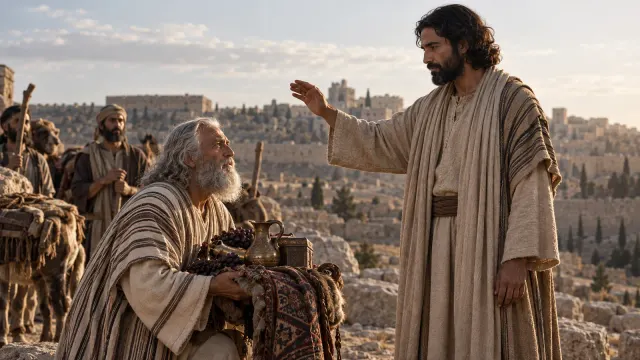
A Priesthood That Does Not End at a Grave
The Book of Hebrews takes a tiny Genesis appearance and makes it bear a large priestly argument. Melchisedec arrives without the genealogy and death notice expected around a priestly line, receives Abraham's tithe, and blesses the patriarch who already holds the promises. That encounter lets the letter imagine a priesthood outside Levi before Levi exists. Psalm 110 then supplies the decisive later word: another priest will arise "after the order of Melchisedec." If the Levitical arrangement had brought the final perfection, that promise would be difficult to explain. Jesus comes from Judah, so his priesthood cannot be ordinary succession within Aaron's line. Its basis is instead "the power of an endless life," strengthened by God's oath. Mortality made the former priests many; Jesus' continuing life removes the succession problem entirely. The chapter ends where its logic has been heading: the priest is also the offering. He does not repeatedly sacrifice himself. His one self-offering and his unending intercession belong together without confusion.
One complete chapter pageOpen chapter →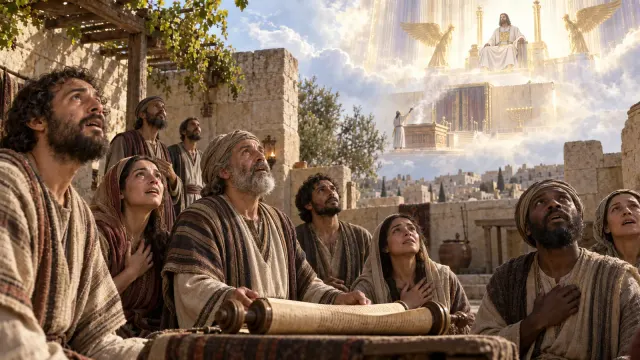
The Sanctuary Is Heavenly, and the Covenant Reaches the Heart
The Book of Hebrews finally states the controlling point of its long priesthood argument: the high priest it has described is already seated at God's right hand and ministers in the true sanctuary. The earthly tabernacle is not mocked as false. It was made according to a divine pattern, which is precisely why its status as copy and shadow can point beyond itself. Christ's ministry belongs to the heavenly reality and to a better covenant. Jeremiah then provides the chapter's central evidence. A new covenant is promised because the former arrangement does not reach the final goal, yet the failure is also located in the people who did not continue in it. The newness is not amnesia about Israel's history. It comes through a promise made to Israel and Judah. Its marks are inwardly written law, covenant-wide knowledge of God, and sins no longer remembered against the people. Hebrews then draws a conclusion from one adjective: if Jeremiah calls it "new," the first has become old.
One complete chapter pageOpen chapter →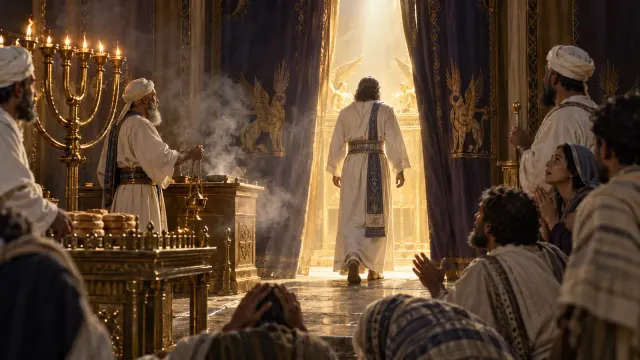
The Way Into the Holiest Is Opened by One Offering
The Book of Hebrews walks through the tabernacle in order to show where the boundary is. Lamps, bread, ark, mercyseat, and sacred furnishings matter, but the second veil matters more because access beyond it is narrow, annual, and blood-marked. The earthly arrangement is real worship, yet its repetition and restriction expose what it cannot complete, especially at the level of conscience. Christ answers that limitation with his own blood, a once-for-all entrance, and eternal redemption. The chapter then layers covenant, testament, inheritance, death, and sacrificial blood until they converge in the necessity of Christ's self-offering. Even the first covenant was inaugurated with blood, so the argument is not importing sacrifice from nowhere. The final paragraph gives the chapter its temporal shape: Christ has appeared to put away sin, now appears in God's presence for his people, and will appear again for salvation. Those appearances are distinct, and none requires a second sacrifice. His future coming does not reopen work already completed.
One complete chapter pageOpen chapter →
One Sacrifice Opens the Way and Sharpens the Warning
The Book of Hebrews brings the sacrificial argument to its sharpest point. Repetition itself becomes evidence that the former offerings could not finally remove sin: year after year remembers what has not yet been completed. Christ's coming is then read through Psalm 40 as obedient bodily self-offering, and one sacrifice does what repetition could not. The contrast becomes visible in posture. Priests stand daily because their work recurs; Christ sits after offering once. From that completed work come confidence to enter, a call to hold fast, and responsibility for one another in the gathered community. The same sufficiency that opens access also makes repudiation severe. If the only effective sacrifice is rejected, there is no second one waiting behind it. Yet the chapter does not treat the hearers as already lost. It recalls their earlier endurance under public shame, imprisonment, and material loss, then points them toward the same patient faith. Warning and confidence continue side by side rather than canceling each other.
One complete chapter pageOpen chapter →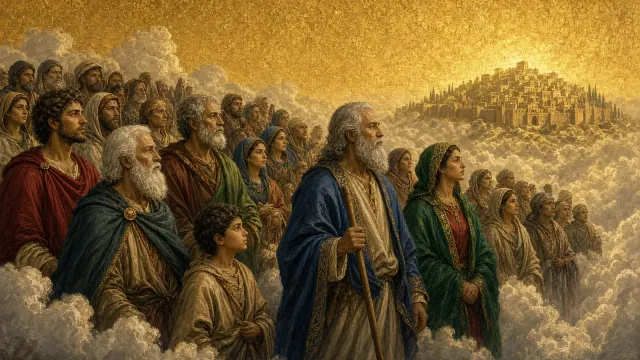
Faith Reaches Beyond Possession, Victory, and Even Death
The Book of Hebrews turns faith into a long record of action under conditions where the promised outcome is not fully visible. Creation itself begins the pattern because what is seen comes from God's unseen word. Abel, Enoch, Noah, Abraham, Sara, Moses, Rahab, judges, kings, prophets, unnamed sufferers, and displaced believers then fill out the range. Some receive spectacular deliverance. Others die violently. The chapter refuses to let one outcome become the measure of genuine faith. A person may escape the sword or be slain by it and still receive the same commendation. The patriarchs live in the promised land as strangers, die without full possession, and direct blessings, bones, and hopes toward a future beyond themselves. By the end, even the honored witnesses remain incomplete without the later people of God. Faith therefore reaches across generations as well as beyond sight. The chapter is less a hall of finished heroes than a gathered company whose confidence points toward a fulfillment none of them possesses privately.
One complete chapter pageOpen chapter →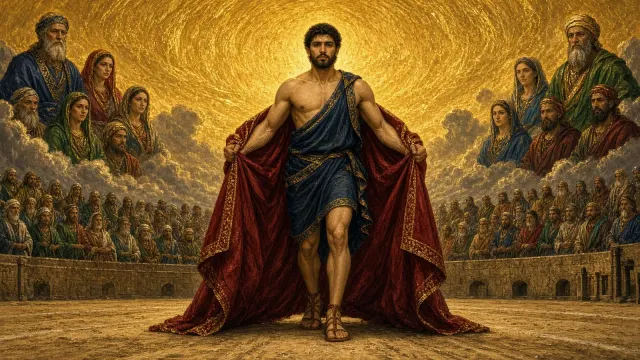
The Race Leads to a Kingdom That Cannot Be Shaken
The Book of Hebrews carries the witnesses of chapter 11 into a race whose decisive focus is Jesus. The surrounding examples matter, but the eyes are directed to the one who endured the cross, disregarded its shame, and sat down at God's right hand. The chapter then interprets present hardship through the language of fatherly discipline, carefully admitting that chastening is grievous while it happens. Endurance is not built by renaming pain as pleasure. Communal responsibility follows: weak hands and knees are to be strengthened, straight paths made, and bitter roots watched before they spread. Esau shows the irreversible cost that can follow when inheritance is traded for immediate appetite. The final movement contrasts Sinai and Sion without turning holiness into softness. The heavenly city includes God as Judge as well as Jesus the mediator. A promised shaking removes what can be moved so that the enduring kingdom remains, and the chapter ends with the same God described as "a consuming fire."
One complete chapter pageOpen chapter →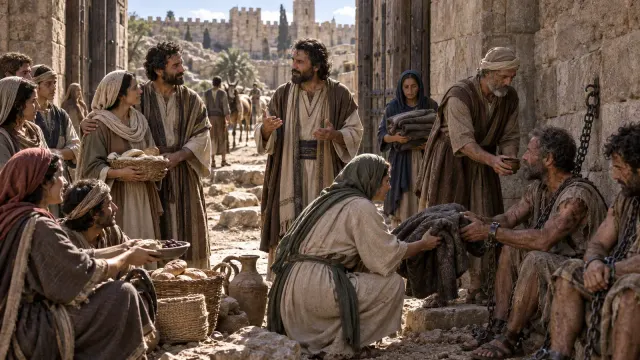
The Heavenly Calling Reaches the Household, Prison, and City Gate
The Book of Hebrews ends by bringing its lofty priesthood into rooms, prisons, marriages, bank balances, leadership relationships, city gates, and ordinary greetings. Brotherly love becomes hospitality and solidarity with people in bonds. Contentment is linked to God's abiding presence. Leaders are remembered through the word they spoke and the course of their faith, while Jesus Christ remains the fixed point "yesterday, and to day, and for ever." The sacrificial argument then moves outside the gate, where Jesus suffered and where identification with him includes reproach rather than established security. Praise, doing good, and sharing are called sacrifices, not as replacements for his sin-bearing offering but as worship flowing from it. Leadership is paired with accountability, and the otherwise commanding voice asks the community for prayer. The closing benediction gathers resurrection, covenant blood, divine workmanship, and the great shepherd before Timothy, travel plans, Italy, greetings, and grace return the dense theological work to an unmistakably human correspondence.
One complete chapter pageOpen chapter →Source: eBible.org · eng-kjv2006