
Nehemiah

13 Chapters
Nehemiah: The Whole Book, Chapter by Chapter
A Ruined City Reaches the Royal Table
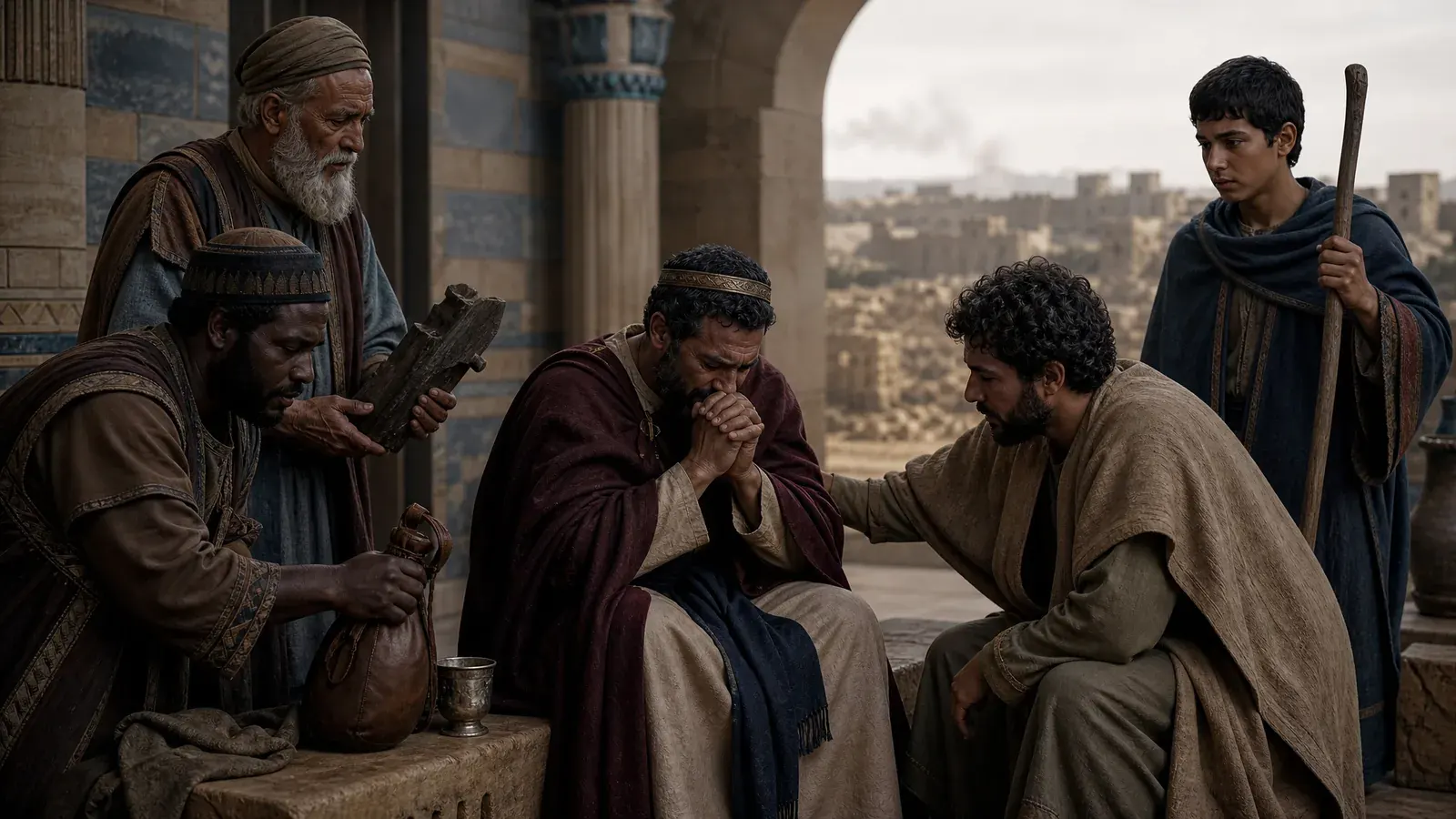
Nehemiah begins in Shushan with news, not masonry. Hanani reports that the returned community remains in affliction and reproach and that Jerusalem's wall and gates are still ruined. Nehemiah's first response is deliberately slow: he sits, weeps, fasts, and prays for days. His confession refuses the comfort of blaming people at a distance, because he includes both himself and his father's house in Israel's disobedience. The prayer then reaches back to the same covenant that explains scattering and insists that gathering belongs to that remembered word as well. Only in the closing line does the political possibility appear. Nehemiah asks for mercy "in the sight of this man," then identifies his office. He is the king's cupbearer, standing close to the authority his mission will require.
One complete chapter pageOpen chapter →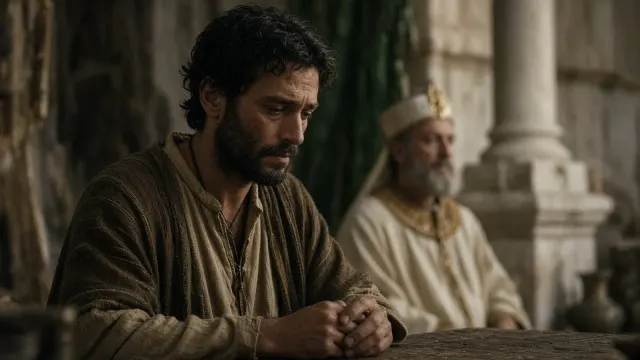
Permission in the Palace, Rubble in the Dark
Months after Hanani's report, Nehemiah's grief becomes visible at the royal table. Artaxerxes asks what is wrong, and Nehemiah answers with both fear and preparation. A brief, unrecorded prayer sits inside the conversation, followed by precise requests for travel, letters, timber, and a return schedule. Jerusalem receives him quietly. After three days he inspects the ruined wall at night with only a few companions, and the rubble becomes so physical that his mount cannot pass. Only after seeing the damage does he call the leaders to build. They answer by strengthening their hands for the work. Sanballat, Tobiah, and Geshem answer differently, with ridicule and an accusation of rebellion. The chapter therefore ends before a single new course of stone is described, with royal permission secured and the lines of support and opposition clearly drawn.
One complete chapter pageOpen chapter →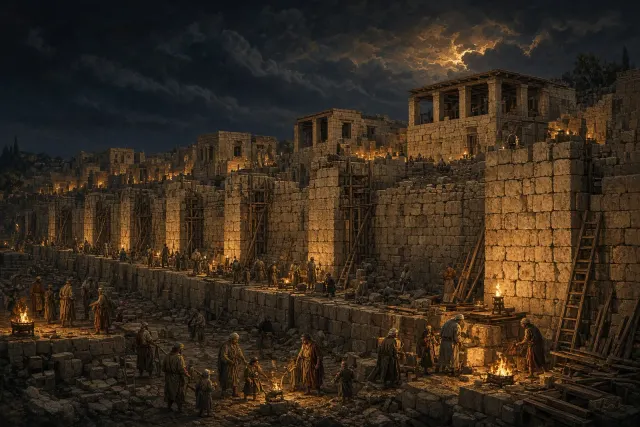
The Wall Acquires Names
Nehemiah 3 reads like a construction register, but its repetition is the point. The wall acquires names, occupations, households, gates, towers, pools, and adjoining stretches. Priests begin at the Sheep Gate, while goldsmiths, an apothecary, officials, merchants, families, and people from neighboring towns take their places around the circuit. "Next unto" becomes the chapter's working rhythm, because one repaired portion matters only when it meets another. The register also refuses to flatten everybody into the same kind of participant. Tekoite nobles decline the work while their people take on more, Shallum's daughters are named, Baruch is singled out for earnest labor, and several workers repair near their own houses. The circuit finally returns to the Sheep Gate, making the list itself resemble the connected wall it records.
One complete chapter pageOpen chapter →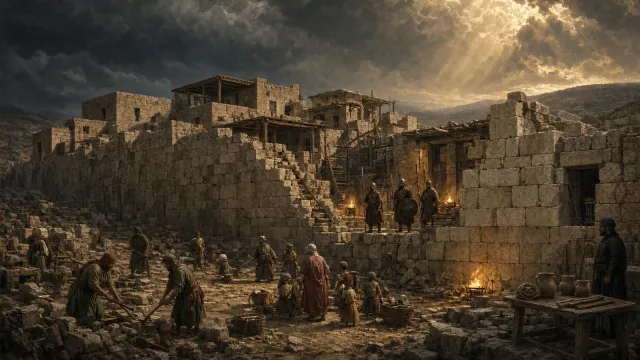
The Builders Learn to Work Under Guard
As the wall rises, ridicule hardens into threat. Sanballat mocks the builders before an audience that includes Samaria's army, and Tobiah supplies the fox that supposedly could break their stonework. Nehemiah answers the insult in prayer while the people continue building. When a wider coalition plans violence, the danger is matched by fatigue inside Jerusalem: strength is failing, rubble is everywhere, and warnings keep arriving. Nehemiah responds with prayer and a watch, then with armed family groups, divided labor, weapons at the worksite, and a trumpet signal for crews stretched across a long perimeter. The chapter never gives them a battle to win. Its closing pressure is endurance. Work runs from morning until the stars appear, laborers sleep inside Jerusalem as guards, and ordinary evening routines are reduced because the city must be rebuilt while remaining ready for attack.
One complete chapter pageOpen chapter →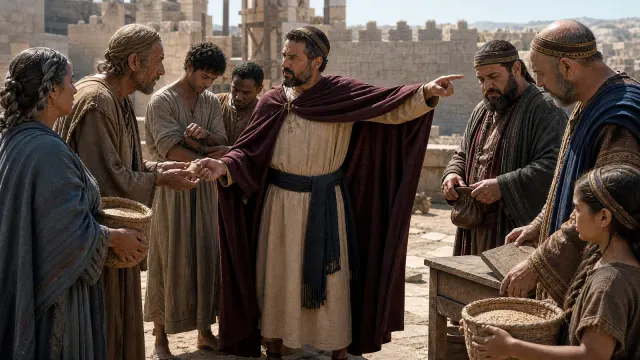
A Breach That No Wall Can Close
Nehemiah 5 turns away from hostile armies and finds a crisis the wall cannot keep outside. Jewish families cry out against fellow Jews over food, mortgages, royal taxes, debt, and children entering bondage. Nehemiah becomes angry, but he first consults with himself and then brings the nobles and rulers into a public reckoning. His argument exposes the contradiction of redeeming Jews from foreign bondage while creating new bondage at home. The required repair is tangible: fields, vineyards, oliveyards, houses, and continuing exactions must be restored or stopped. An oath and a symbolic shaking of Nehemiah's garment give the promise public weight. The chapter then widens into a twelve-year account of his governorship, where he contrasts his own refusal of the governor's allowance with burdens already pressing on the people and asks God to remember his conduct for good.
One complete chapter pageOpen chapter →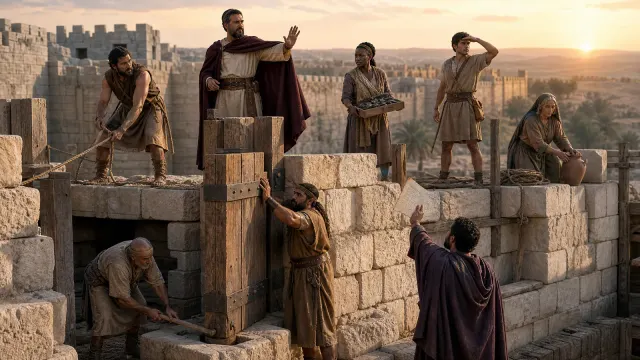
The Wall Closes, but the Letters Keep Coming
With the wall almost closed, Nehemiah's opponents change tactics. Sanballat and Geshem repeatedly invite him away from Jerusalem, then circulate an open letter accusing him of rebellion and royal ambition. Nehemiah refuses the meetings and names the charge as fabrication intended to weaken the builders' hands. A second attempt comes through Shemaiah, whose warning sounds protective but would draw Nehemiah into conduct that could be used against him. Nehemiah identifies the prophecy as hired intimidation. The wall is then finished in fifty-two days, and surrounding opponents lose confidence when they recognize God's hand in the work. Yet the chapter refuses a clean victory scene. Tobiah remains connected to Judah through marriages, sworn loyalties, private letters, and advocates among the nobles. The masonry closes, but the correspondence keeps moving through it.
One complete chapter pageOpen chapter →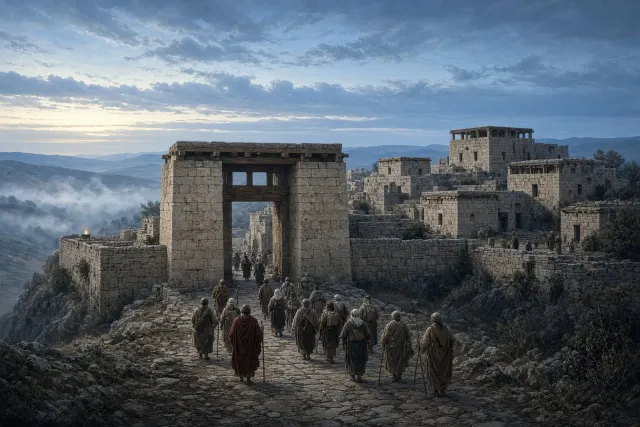
A Guarded City Needs a People
The wall and its gates are finally in place, but Nehemiah 7 immediately exposes what stone cannot supply. Jerusalem needs trustworthy oversight, disciplined watches, inhabited houses, and enough people to make a large city live. Nehemiah appoints Hanani and Hananiah, restricts the opening of the gates, and places residents on watch near their homes. Then he confronts the city's thin population and turns to genealogy. An earlier register of returnees brings families, towns, priests, Levites, singers, gatekeepers, temple servants, uncertain ancestry, transport animals, and contributions into view. The list is not a detour from restoration. It shows what the wall exists to contain and serve. A defended capital without a rooted population remains unfinished. By the close, Israel is settled in its cities as the seventh month approaches, preparing the public gathering that will dominate chapter 8.
One complete chapter pageOpen chapter →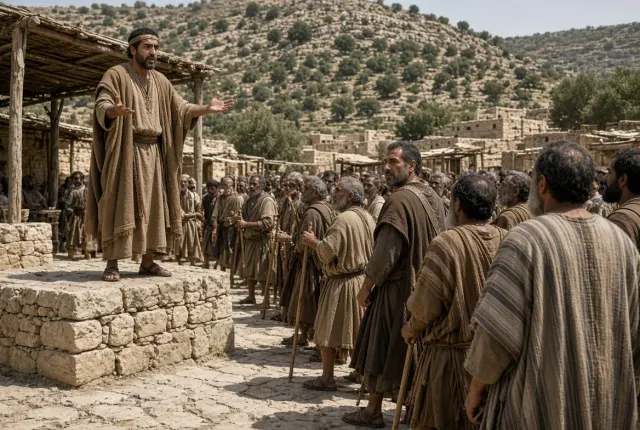
The Book Is Opened, and the City Listens
Nehemiah 8 moves the center of action from wall and register to a public reading. The people themselves ask Ezra to bring the law of Moses. Men, women, and all able to understand listen from morning until midday while Ezra stands on a prepared platform and the Levites help make the reading clear. The first response is tears, but the leaders insist that this holy day is to be marked by food, sweet drink, shared portions, and joy. Understanding produces both grief and celebration without making either response permanent. Further study the next day uncovers the command to dwell in booths during the seventh-month feast. Soon roofs, courts, streets, and temple spaces are covered with temporary shelters inside the newly strengthened city. Scripture continues to be read throughout the feast, so the chapter ends with celebration still tied to sustained hearing and understanding.
One complete chapter pageOpen chapter →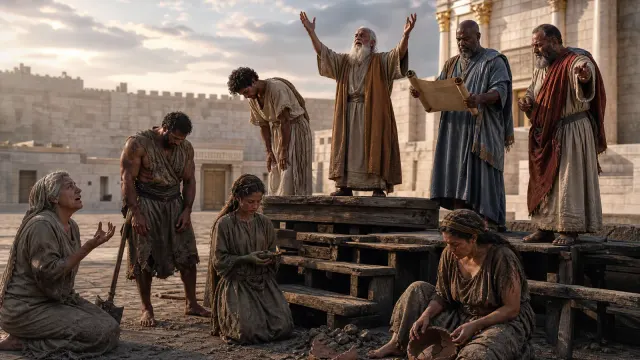
The Prayer That Will Not Edit the Past
The calendar changes, and so does the community's posture. After the feast, Israel gathers in fasting, sackcloth, confession, and extended reading of the law. The Levites then lead a prayer that refuses to edit either side of Israel's past. God creates, calls Abraham, delivers from Egypt, gives law, food, guidance, land, and repeated mercy. Israel answers repeatedly with pride, forgetfulness, rebellion, and rejection of prophetic warnings. The prayer traces cycles of rescue without turning rescue into proof that disobedience had no consequences. Its final turn is painfully present tense. The returned people are in the land promised to their fathers, yet they call themselves servants there, under kings who take its produce and exercise dominion over bodies and cattle. That unresolved condition, joined to the remembered pattern of failure and mercy, leads directly to a written and sealed commitment.
One complete chapter pageOpen chapter →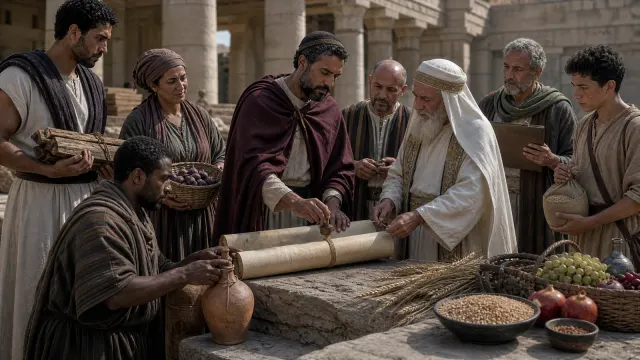
The Covenant Reaches the Household and the Storehouse
Nehemiah 10 gives the long prayer a set of signatures and then gives the signatures consequences. Nehemiah, priests, Levites, and leaders seal the commitment, while the wider community joins through a curse and an oath to walk in God's law. The promises reach directly into recurring decisions: marriage, Sabbath buying, seventh-year obligations, annual support for the temple, firewood, firstfruits, tithes, and the distribution of resources to those who serve. The chapter's great strength is its refusal to let covenant remain a mood produced by a moving gathering. Worship needs a budget, an altar needs wood, workers need portions, produce needs collection points, and storehouses need oversight. The closing promise, "we will not forsake the house of our God," therefore has a supply chain behind it. Chapter 13 will show how measurable that promise becomes when the chain breaks.
One complete chapter pageOpen chapter →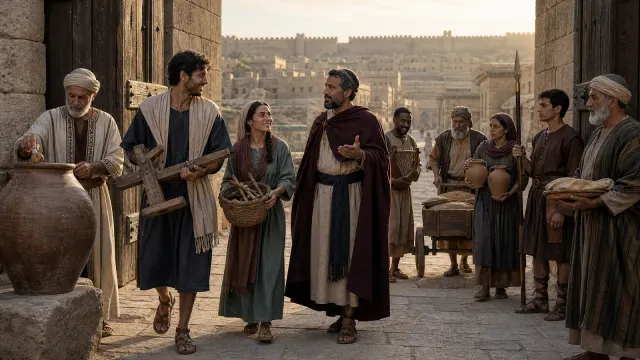
The Holy City Must Become an Inhabited City
The problem first named in chapter 7 finally receives an organized response: Jerusalem has walls but too few residents. Rulers already live there, lots designate one in ten of the wider population for the city, and volunteers receive the people's blessing. The chapter then fills the holy city with households and offices from Judah and Benjamin, priests, Levites, gatekeepers, Nethinims, singers, overseers, and people connected to royal administration. Its registers are not confined to Jerusalem, however. The closing verses spread back across towns, villages, fields, and regions belonging to Judah and Benjamin. The capital is therefore populated without swallowing the countryside that sustains the larger community. The Book of Nehemiah presents settlement as another form of reconstruction. A wall can be completed in fifty-two days; a functioning city requires people who sleep there, work there, worship there, administer it, and remain connected to the land beyond its gates.
One complete chapter pageOpen chapter →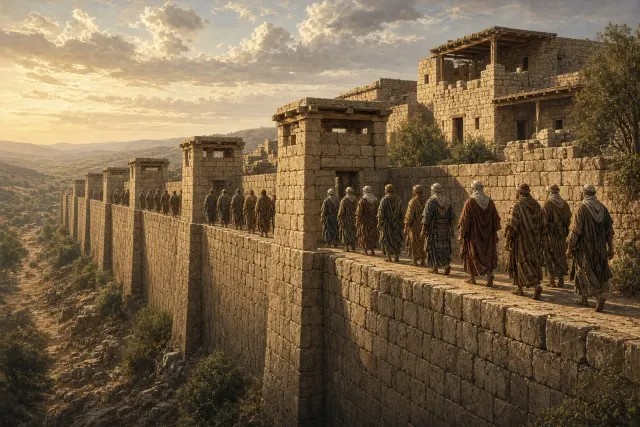
The Wall Becomes a Place for Thanksgiving
Nehemiah 12 begins with records rather than celebration, placing priests, Levites, and leaders of thanksgiving in a line of service that reaches back to the return with Zerubbabel and Jeshua and forward through later generations. Only after that continuity is established does the wall become a stage for dedication. Levites and singers come in from surrounding settlements, purification prepares ministers, people, gates, and wall, and two great thanksgiving companies move in opposite directions around Jerusalem before meeting at the house of God. Trumpets, instruments, sacrifices, wives, children, and loud singing fill the city with joy that can be heard afar off. Then the chapter returns to storehouses, portions, singers, porters, and daily provision. The great public day is not allowed to become the whole achievement. Dedication is joined to the routines that must keep worship functioning after the music fades.
One complete chapter pageOpen chapter →
The Promises Are Tested After the Celebration
The final chapter tests the promises made after the wall was built and the law was heard. Nehemiah has been away at the royal court, and his return exposes failures in precisely the areas the community had pledged to maintain. Tobiah occupies a temple chamber once used for offerings and portions. Levites and singers have gone back to their fields because support has failed. Sabbath trade has resumed, with local buyers as implicated as outside merchants. Marriage commitments have also broken down, reaching even into the high priest's family through a connection to Sanballat. Nehemiah's responses range from administrative reorganization to physical severity, and the Book of Nehemiah reports them without softening them into cheerful leadership anecdotes. The ending is deliberately ordinary: priests, Levites, wood offerings, firstfruits, and another prayer to be remembered. The wall still stands, but maintenance, boundaries, provision, and mercy remain unfinished work.
One complete chapter pageOpen chapter →Source: eBible.org · eng-kjv2006