
Romans

16 Chapters
Romans: The Whole Book, Chapter by Chapter

A Gospel Wide Enough for Rome, an Indictment Wide Enough for Humanity
Romans 1 opens with a greeting that already carries the letter's architecture: Israel's promised Scriptures, Davidic descent, resurrection power, apostleship, and a mission among the nations all meet in Jesus Christ. Paul's hoped-for visit to Rome is not a celebrity appearance. He expects the Romans' faith to strengthen him as well. The governing announcement then arrives: the gospel is God's power unto salvation, revealing righteousness by faith to Jew first and also to Greek. From that height Paul turns to the human refusal of the Creator. The descent begins in worship before it appears in conduct. Glory is exchanged for images, truth for a lie, and proper relations for disordered desire. Three times God "gave them up," and the final list widens the indictment far beyond sexual sin to envy, deceit, pride, cruelty, and approval of wrongdoing.
One complete chapter pageOpen chapter →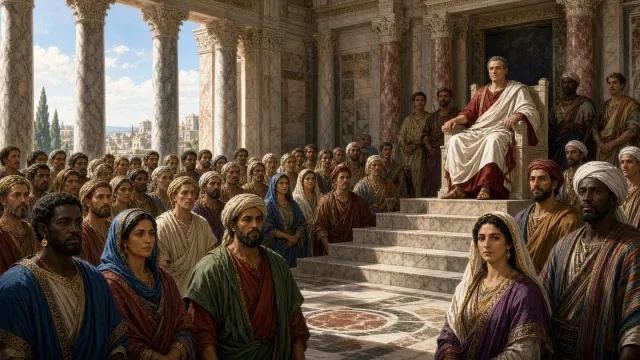
The Judge Steps Into the Dock
Romans 2 turns the indictment toward the person who found chapter 1 easy to condemn. Accurate moral judgment does not become an exemption from the standard being applied. God's patience points toward repentance, and his judgment is described without ethnic favoritism. Paul then distinguishes possessing the law from doing what it requires, allowing Gentile conscience to testify even where the Mosaic law is not possessed. When the specifically Jewish interlocutor comes into view, the advantages are substantial: knowledge, instruction, guidance, and the law itself. Yet the teacher is examined by the syllabus he teaches. Circumcision receives the same treatment. Paul does not call the sign worthless, but he denies that an outward mark can substitute for covenant obedience. The chapter ends at the heart, where praise from God rather than praise from people becomes the decisive approval.
One complete chapter pageOpen chapter →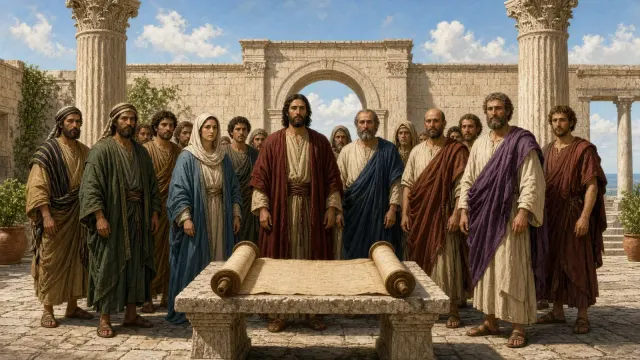
Every Mouth Stopped, Righteousness Disclosed
Romans 3 answers the obvious question raised by chapter 2: if outward privilege does not acquit, has Jewish advantage disappeared? Paul says no, beginning with the entrusting of God's oracles, but privilege cannot convert unbelief into an excuse or make God unfaithful. A chain of scriptural accusations then sweeps across speech, movement, thought, and desire until "every mouth" is stopped and both Jew and Gentile stand under sin. At that point the letter turns with "But now." God's righteousness is manifested apart from works of law while still being witnessed by the law and prophets. Grace, redemption, Christ's blood, and faith answer a real charge rather than pretending there was none. Boasting is excluded not by better manners but by the way justification is received. One God justifies circumcised and uncircumcised through faith, and Paul closes by insisting that this does not make the law void.
One complete chapter pageOpen chapter →
Abraham's Faith Comes Before the Boundary Marker
Romans 4 lets Abraham's chronology do theology. Genesis says he believed God and was counted righteous before Genesis records his circumcision, so the sign cannot be made the cause of the righteousness it later seals. David supplies the companion image of forgiven and uncharged sin, keeping righteousness in the category of gift rather than debt. Paul then widens Abraham's fatherhood across the boundary marker without erasing the history in which that marker arose. Promise rests on faith so that it may rest on grace and remain secure to the whole family God intends. The chapter's closing image is death answered by divine life: Abraham trusts God in the face of his aged body and Sarah's barrenness, and Paul carries that logic directly to the God who raised Jesus from the dead. Abraham is not preserved as a monument to optimism. He becomes a witness to the character of the God who promises and gives life.
One complete chapter pageOpen chapter →
Peace with God and the Reach of Two Men
Romans 5 begins with what justification by faith produces: peace with God, access into grace, and hope of glory. That peace is immediately placed beside tribulation, so reconciliation cannot be confused with a promise of easy circumstances. God's love is then measured by its timing. Christ dies for people described as weak, ungodly, sinful, and hostile, and Paul uses that earlier hostility to argue for the security of those now reconciled. The second half widens from individual standing to two representative men. Adam introduces sin and death into the human field, and death reigns even before Sinai. Christ answers Adam, but not as an equal and opposite force. Paul repeatedly says the gift is "much more." One trespass brings condemnation; grace answers many offenses with justification. Sin reigns toward death, while grace reigns through righteousness toward eternal life.
One complete chapter pageOpen chapter →
Grace Changes the Master, Not Merely the Sentence
Romans 6 hears the dangerous inference from chapter 5 and rejects it immediately: abundant grace is not permission to continue under sin's rule. Paul answers through union with Christ. Baptism identifies believers with Christ's death and burial so that resurrection life, not former allegiance, defines their new direction. The body remains present and morally significant, but it is no longer to be yielded as sin's instrument. Paul then changes metaphors from death and resurrection to slavery. Freedom from one master is not an empty zone without belonging. The believers have moved from service to sin toward service to righteousness and God. The final contrast sharpens the whole chapter: sin pays "wages," namely death, while eternal life is not a salary for superior religious labor. It is "the gift of God" through Jesus Christ. Grace changes both the sentence and the master.
One complete chapter pageOpen chapter →
The Good Command and the Divided Self
Romans 7 carefully separates the law from the deadly work sin performs through it. Death releases a former legal bond so that believers belong to the risen Christ and bear fruit to God. When Paul asks whether the law itself is sin, he answers with the strongest possible denial. The command is holy, just, and good, but sin can seize that good command as an opportunity. The chapter's first-person language then tightens into a repeated conflict between willing and doing. The speaker recognizes the good, even delights in God's law, yet another power in the members frustrates performance and produces captivity. Interpretations differ over whose precise experience is being voiced, but the problem itself is clear. Better information cannot rescue a will that already agrees with the command and still fails. The final cry therefore asks "who shall deliver me," and thanksgiving names Jesus Christ before Romans 8 unfolds the Spirit's answer.
One complete chapter pageOpen chapter →
No Condemnation, Creation Groaning, Love Unbroken
Romans 8 answers the captivity of chapter 7 with "no condemnation" and the life-giving rule of the Spirit, but it does not pretend mortality or suffering has vanished. God's Son enters the sphere sin dominated, sin is condemned in the flesh, and the Spirit's indwelling points toward the future resurrection of mortal bodies. Adoption brings the cry "Abba, Father," yet heirs with Christ also suffer with Christ. The frame then widens until creation itself is groaning in labor, believers groan while awaiting bodily redemption, and the Spirit intercedes in groanings beyond speech. God's purpose is defined as conformity to the Son and moves toward glory. The chapter's final courtroom and battlefield language returns to assurance: charges cannot overturn God's justification, and tribulation cannot cut believers loose from Christ's love. Victory does not mean the sword never falls. It means the sword cannot accomplish separation.
One complete chapter pageOpen chapter →
Israel's Promises and the Freedom of Mercy
Romans 9 begins with sorrow rather than abstraction. Paul names Israel's adoption, covenants, law, worship, promises, fathers, and the human descent of Christ before asking whether God's word has failed. His answer turns to Isaac and Jacob, where promise and calling have never been reducible to physical descent alone. Moses and Pharaoh then bring mercy and hardening into view, and the potter image presses the creature's claim to place the Creator in the dock. Yet the paragraph also speaks of longsuffering and prepares the inclusion of Gentiles. Hosea and Isaiah supply the closing scriptural voices: people once called "not my people" receive a new name, while Israel is preserved as a remnant rather than secured by numbers alone. The chapter ends by bringing divine purpose and human response together at the stumblingstone, where righteousness pursued as though by works misses what faith receives.
One complete chapter pageOpen chapter →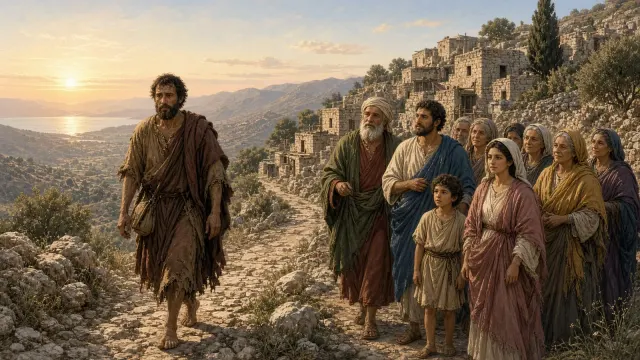
A Near Word for Every People
Romans 10 keeps Israel in view through prayer rather than resignation. Paul acknowledges zeal for God but distinguishes zeal from accurate knowledge of God's righteousness in Christ. He then rereads the nearness language of Deuteronomy through the accomplished descent and resurrection of Christ: salvation does not await a heroic expedition into heaven or the deep. The word is near, and heart-belief and spoken confession belong together. That nearness widens through "whosoever" without dissolving the concrete response of believing and calling on the Lord. Paul then works backward through proclamation: calling requires belief, belief hearing, hearing a herald, and the herald a sending. Yet hearing is not an automatic machine, because Isaiah already knows a report can be refused. The chapter closes with Israel described not as wholly uninformed, but as a people before whom God has held out his hands while resistance continued.
One complete chapter pageOpen chapter →
The Branches Do Not Support the Root
Romans 11 asks the question chapter 10 leaves hanging: has God cast away his people? Paul answers "God forbid" and points first to himself, then to Elijah's overlooked remnant. Israel's present condition therefore includes both grace-preserved belief and real hardening. The argument then refuses to make stumbling the last movement. Gentile salvation has entered the picture, yet Paul's Gentile ministry still aims toward Israel's response. The olive tree makes the warning concrete. Wild branches share a root they did not grow, so Gentile inclusion provides no basis for boasting over Jewish branches. Unbelief can break branches, faith sustains standing, and natural branches can be grafted in again. The mystery of partial hardening and "all Israel shall be saved" remains debated, but Paul states its practical purpose clearly: Gentile conceit must stop. Both groups have known disobedience, both depend on mercy, and the chapter ends with God as debtor to none.
One complete chapter pageOpen chapter →
Mercy Takes Bodily and Social Form
Romans 12 turns the mercies of the previous chapters into a bodily and social form of life. The appeal begins with a "living sacrifice," joining the offered body to a renewed mind rather than treating embodiment as something spirituality must escape. Paul then moves immediately to sober self-assessment. Different gifts belong to one body and are given for actual service, not as badges in a contest for importance. Love is likewise pulled out of abstraction and placed among honor, diligence, prayer, material need, and hospitality. The final movement addresses hostility. Sympathy, humility, refusal of retaliation, and practical care for an enemy all resist the temptation to let evil determine the shape of the response. Peace is pursued "if it be possible," acknowledging that one person cannot control another's behavior. Vengeance belongs to God, while the believer's assigned actions include food for a hungry enemy and drink for a thirsty one.
One complete chapter pageOpen chapter →
Authority, the Continuing Debt of Love, and the Coming Day
Romans 13 places public authority, financial obligation, neighbor love, and eschatological wakefulness in one moral frame. Governing powers are described as servants of God whose assigned work concerns good conduct, wrongdoing, order, and the collection of what is due. Paul does not identify rulers with God or provide an exhaustive treatment of abusive government, but he does connect authority with an accountable function. The language of debts then turns toward the obligation that is never finally discharged: love. Commandments against adultery, murder, theft, false witness, and coveting converge on the principle that love works no harm to the neighbor. The chapter closes by looking at the hour. Salvation is nearer, night is advanced, and day approaches. Believers are told to wake, cast off darkness, put on the armor of light, and finally "put ye on the Lord Jesus Christ," refusing to arrange life around disordered desire.
One complete chapter pageOpen chapter →
A Brother Is Not a Dietary Problem
Romans 14 treats disagreement over food and days as a test of whether believers understand who owns the people on both sides of the dispute. The weak are to be received without turning welcome into an interrogation of disputed opinions. Paul identifies different temptations for each side: the eater despises, while the abstainer judges. Both are corrected by the fact that God has received the other person. Christ's lordship over living and dying then removes the fantasy that one believer occupies another's judgment seat. Paul himself is persuaded that food is not unclean in itself, but he gives the confident party a heavier responsibility. A correct theory of food does not make every exercise of liberty loving. Peace, edification, conscience, and the welfare of the person "for whom Christ died" matter more than displaying freedom at the table. The moral question is not only what may be eaten, but what the eating does to a brother.
One complete chapter pageOpen chapter →
One Welcome, a Wide Mission, and Unfinished Travel Plans
Romans 15 completes the food-and-days argument by redefining strength as the ability to carry another person's weakness rather than display personal liberty. Christ's refusal to please himself supplies the pattern, and Scripture supplies patience, comfort, and hope until one divided community can glorify God "with one mind and one mouth." Paul then connects that welcome to the letter's larger Jew-Gentile argument. Christ confirms the promises to the fathers, while Gentiles glorify God for mercy, and a chain of quotations makes both belong inside the same scriptural horizon. The chapter then becomes increasingly personal. Paul explains his Gentile mission, his desire to preach where Christ has not been named, his plan to reach Spain through Rome, and the collection he must first deliver to Jerusalem. The confident itinerary ends in requested prayer for danger and uncertain reception, showing a theology carried through roads, money, communities, and circumstances Paul cannot control.
One complete chapter pageOpen chapter →
The Argument Has Names, Households, and a Borrowed Pen
Romans 16 reveals that the grand theological argument has names, homes, coworkers, women and men who labored, people who risked their lives, and even the hand of the person who wrote the words down. Phebe is commended for reception and assistance, Priscilla and Aquila for costly service and hospitality, and a long chain of believers for labor, affection, approval, kinship, and fellowship. The greetings resist any picture of the Roman churches as a single anonymous audience. Paul then warns against divisive deception carried by smooth speech, distinguishing it from the disputable differences that required welcome in chapter 14. Tertius briefly steps forward as the penman, and Gaius, Erastus, Quartus, and others send greetings. The final doxology returns deliberately to the beginning: the gospel promised and now manifested through prophetic Scriptures goes to all nations "for the obedience of faith." The opening commission becomes the closing horizon.
One complete chapter pageOpen chapter →Source: eBible.org · eng-kjv2006