The big picture
Chapter 9 completes the long opening instruction by placing two houses and two invitations opposite each other. Wisdom has built, prepared, furnished, and sent servants before she calls the inexperienced to eat. Folly occupies a prominent seat and copies the wording of the invitation, but her appeal depends on secrecy and the supposed sweetness of what is stolen. Between the two meals comes a test of teachability. A wise person can become wiser because correction is admitted, while the scorner turns the same reproof into hatred of the one who gives it. The fear of the LORD remains the beginning of wisdom, showing that the choice of table is also a choice of authority. The last verse finally reveals Folly's hidden company. The dead are already there, so the danger was never an unfortunate side effect added after the meal.
Central truth
Proverbs 9 closes the opening wisdom discourses with two rival hostesses offering meals, revealing that teachability, fear of the LORD, and chosen company determine which table the simple will enter.
The study notes have a page of their own
The movement by movement analysis, the words to trace, the verse by verse notes and where readers differ are written for someone studying alone. They are on the Deep Personal Reflections page for this chapter. This page is the lesson.
A chapter-specific teaching brief
These anchors come from this chapter itself. They help a teacher use the Level 1 overview, the Level 2 study, and the Scripture text as one lesson.
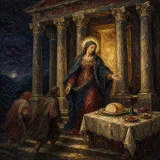
Open with the chapter’s first image
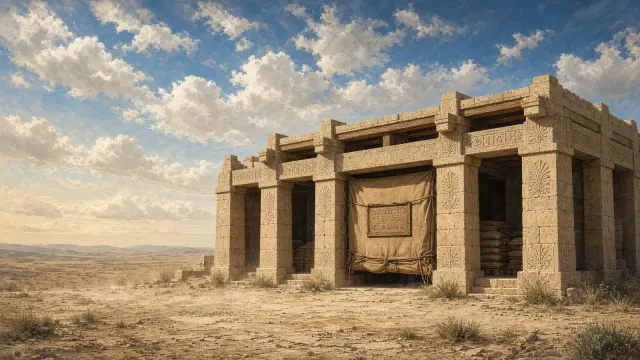
Proverbs 9:1: “Wisdom hath builded her house, she hath hewn out her seven pillars:”
Slow down at the turning point
Proverbs 9:18: “But he knoweth not that the dead are there; and that her guests are in the depths of hell.”
Keep this word trail visible
understanding, wise, simple, bread, city, foolish
What to explain, in order
Teach the passage in this order. Each step names the verses it rests on, so every point can be shown in the text before it is applied.
Proverbs 9:1-6
Wisdom's banquet
Read verses 1-6 and describe Wisdom's house and feast. Explain the seven pillars as a picture of a complete, well-built house, and mingled wine as wine mixed with spices for a feast. Point out that she sends maidens to call from the high places. Then read the invitation to the simple and the call to "Forsake the foolish, and live". Teach this first because it shows the generosity of Wisdom: she has prepared everything, and the guest only needs to turn in and eat.
Proverbs 9:7-9
Who accepts the invitation
Read verses 7-9 and explain scorner as a mocker who despises correction. Show how the verses explain the difference between guests. Correcting a scorner brings shame and hatred, while correcting a wise person brings love and growth. Teach this second because it reveals that the key to the two banquets is teachability. The wise are those who can be corrected. This is a searching question for every learner: how do I respond when someone corrects me?
Proverbs 9:10-12
The motto returns
Read verse 10 and point out that it repeats the idea of 1:7, framing the whole of chapters 1-9. Explain "the holy" as the Holy One. Then read verses 11-12: wisdom lengthens life, and each person bears the result of their own choice. Teach this at the centre of the chapter because it is the hinge between the two banquets, just as the fear of the LORD is the hinge of the whole book. The motto stands between the two tables, telling the guest which to choose.
Proverbs 9:13-18
Folly's doorstep
Read verses 13-18 and describe Folly: loud, simple and knowing nothing. She sits at her door and calls to people passing by who are going straight on their way. Point out that she uses Wisdom's own invitation word for word. Then read her offer of stolen water and secret bread, and the final verse about the dead. Teach this last because the chapter ends with the hidden destination, the depths of the grave. The class should leave seeing both tables clearly.
Where learners get stuck
The misreadings this passage tends to produce, and how to answer each from the text.
"Folly's offer is obviously bad, so no one would accept it."
Folly uses the same words as Wisdom (9:16), and her offer promises sweetness and pleasure (9:17). It does not look bad from the doorway. That is why verse 18 says the guest "knoweth not". Teach that temptation imitates wisdom's language and that the difference is seen in the destination, not always in the invitation.
"Verse 8 means I should never correct anyone."
The verse warns about correcting a scorner, someone set on mocking. It encourages rebuking a wise person, who will love you for it. Teach discernment about when correction will be received, and do not let the class conclude that correction is always pointless. Galatians 6:1 calls for gentle restoration.
"Verse 11 means wise people never die young."
Verse 11 describes how wisdom tends to lengthen life, by keeping people from folly that shortens it. Proverbs is general wisdom, not a guarantee. Faithful people sometimes die young, and Scripture says so. Teach the promise as a general truth and be gentle with anyone grieving.
Learning objectives
- Compare Wisdom’s and Folly’s houses.
- Identify the simple as both audiences.
- Explain the mocker-wise contrast.
- Connect fear of the LORD with knowledge.
- Compare the two meals.
- State what Folly conceals.
Teacher preparation
- Place verses 1–6 and 13–18 side by side before class and mark every deliberate parallel: woman, house, high places, simple hearer, invitation, food, and destination.
- Prepare the seven pillars of verse 1 as an image of a substantial, completed house.
- Note the inserted teaching on correction in verses 7–12.
- Clarify “fear of the LORD” in verse 10 as reverent orientation toward God, not panic, and connect it with knowledge of the holy.
- Let verse 18 remain the decisive disclosure about Folly’s feast: her guest does not know who is already there or where the house leads.
Evidence and interpretation checks
Explicit
Verses 4 and 16 explicitly show Wisdom and Folly calling to the same “simple” person, making the chapter a contest for the undecided learner.
Scripture-supported
Verses 7–9 support using response to correction as a diagnostic distinction: the scorner hates the reprover, while the wise person becomes wiser.
Strong inference
The strong verbal parallels between the two invitations imply deliberate imitation.
Possible or traditional reading
The seven pillars in verse 1 have received many symbolic readings, including seven virtues or gifts. Proverbs 9 does not explain them, so treat such associations as later interpretations.
Limit
The passage does not say every pleasant meal or private invitation is suspect. The moral distinction lies in the source, content, teachability, and destination of the invitation.
Discussion with answer guidance
1. What work has Wisdom done before she sends invitations?
What a good answer contains
"Wisdom hath builded her house, she hath hewn out her seven pillars" (9:1). She has "killed her beasts", "mingled her wine", "furnished her table" (9:2), and "sent forth her maidens" (9:3). Everything is prepared before the invitation goes out. The seven pillars suggest a complete and well-made house. A good answer notices that Wisdom's hospitality is costly and generous: she has done all the work. A weak answer jumps to the invitation and misses the effort that went into the feast.
Show teacher guidance
Verses 1–3 show building, hewing pillars, killing beasts, mingling wine, furnishing a table, and sending maidens.
2. Who receives both invitations?
What a good answer contains
Both women use almost the same words: "Whoso is simple, let him turn in hither: as for him that wanteth understanding, she saith to him" (9:4; compare 9:16). The same people are invited by both. A good answer sees that the simple are at a crossroads; both tables are open to them, and they must choose. A weak answer misses the identical wording, which is the most striking feature of the chapter and the reason the choice is so serious.
Show teacher guidance
The “simple” and the one who wants understanding are addressed in verses 4 and 16.
3. Why do verses 7–9 sit between the two banquets?
What a good answer contains
Verses 7-9 interrupt the two invitations with sayings about correction: "He that reproveth a scorner getteth to himself shame" (9:7), "Reprove not a scorner, lest he hate thee: rebuke a wise man, and he will love thee" (9:8), and "Give instruction to a wise man, and he will be yet wiser" (9:9). They explain who accepts which invitation. The scorner rejects correction and will choose Folly's table; the wise welcome correction and grow. A good answer sees that teachability decides the choice. A weak answer treats verses 7-9 as an unrelated insertion.
Show teacher guidance
They expose teachability.
4. How does verse 10 define the beginning of wisdom?
What a good answer contains
"The fear of the LORD is the beginning of wisdom: and the knowledge of the holy is understanding" (9:10). This echoes 1:7 and brackets chapters 1-9. A good answer keeps both halves: reverence for the LORD starts wisdom, and knowing the Holy One is understanding itself. The holy may be read as the Holy One, God himself. A weak answer quotes only the first half and misses that wisdom is finally knowledge of a person, not only of rules.
Show teacher guidance
Keep both halves: fear of the LORD is the beginning of wisdom, and knowledge of the holy is understanding.
5. What is different about Folly’s meal in verses 17–18?
What a good answer contains
Folly says "Stolen waters are sweet, and bread eaten in secret is pleasant" (9:17). Her meal is water and bread, not meat and wine, and it is stolen and secret. Its sweetness comes from being forbidden. A good answer contrasts the generous, prepared feast of Wisdom with the cheap, stolen snack of Folly, and notices that Folly has built nothing; she only sits at her door (9:14). A weak answer misses that the attraction of Folly's offer is the thrill of the forbidden.
Show teacher guidance
Her water is stolen and her bread secret.
6. What does the guest fail to know?
What a good answer contains
"But he knoweth not that the dead are there; and that her guests are in the depths of hell" (9:18). The guest does not know where the meal ends. Folly's house is full of the dead. A good answer sees that ignorance of the end is the guest's danger, echoing the bird in 7:23 that "knoweth not that it is for his life". A weak answer stops at verse 17, which is exactly what Folly wants her guests to do.
Show teacher guidance
Verse 18 says the dead are there and her guests are in the depths of hell.
Responsible application
Inspect the kitchen, not only the invitation
Evaluate attractive offers by asking what preparation, truth, cost, and destination stand behind the invitation rather than judging by confidence alone.
Use correction as a wisdom test
When teaching or leading, observe whether reproof produces increased understanding or hostility, then adjust the next teaching move accordingly.
Name counterfeit abundance
Use the contrast between Wisdom’s prepared table and Folly’s stolen meal to expose shortcuts that imitate blessing while depending on secrecy or wrongdoing.
Session plans
Two timings of the same lesson. The shorter keeps the reading, the central discussion and one response; the longer gives the confusions and the application their own time.
45 minutes
Wisdom's house
Read 9:1-6 and ask question one.
The same invitation
Read 9:4 and 9:16 side by side and ask question two.
Who will accept
Read 9:7-9 and ask question three. Address confusion two.
The motto
Read 9:10-12 and ask question four. Address confusion three.
Folly's table
Read 9:13-18 and ask questions five and six. Address confusion one.
Response
Read the key verse, hand out the sheet and pray.
90 minutes
Two invitations
Ask the group to imagine receiving two invitations for the same evening. How would they choose?
The feast
Read 9:1-6 with question one. Compare Isaiah 55:1-2 and Luke 14:16-17.
Same words
Read 9:4 and 9:16 together and ask question two.
Teachability
Read 9:7-9 with question three and confusion two. Ask how each person responds to correction.
The hinge
Read 9:10-12 with question four and confusion three. Read 1:7 alongside.
Folly's doorstep
Read 9:13-18 with questions five and six and confusion one.
Application
In small groups, choose one application and identify one stolen-water temptation and how to refuse it.
Handout and prayer
Read the key verse together and pray.
Adapting the lesson
Children
Set up two tables: one with a real snack and drink nicely laid out, and one empty with a sign. Read Wisdom's invitation and Folly's. Ask which table they would choose. Explain that God's wisdom gives good things. Keep verse 18 simple: Folly's way hurts us in the end.
Youth
Read both invitations aloud with two readers and let them notice the identical words. Talk about how the stolen water of verse 17 describes the attraction of doing something forbidden. Discuss how they respond to correction, using verses 7-9. Keep the conversation honest and avoid shaming.
Adults
Discuss the structure of chapters 1-9 and how chapter 9 summarises it. Spend time on verses 7-9 and on how teachable adults remain. Discuss forms of stolen water in adult life, such as secret spending, hidden habits, dishonest gain. Let the group see the generosity of Wisdom's feast.
One to one
Read the chapter together and ask which table seems most inviting to them right now, and why. Listen carefully. Read verse 10 and talk about what it means to know the Holy One. If they are struggling with a secret, gently read verses 17-18 and offer support. Pray together.
Song and video learning lab
A song or video may interpret, compress, or dramatize the text. Its value becomes clearer when its choices are compared with Scripture.
- Before the media: the exact passage and its central movement.
- During the media: the words, people, events, and emotions the artist emphasizes.
- After the media: what it clarifies, what it leaves out, and what belongs back in the biblical text.
Handout
One page for learners to take home. The print button prints this section alone.
Proverbs 9:1–18
The passage in brief
Proverbs 9 shows two women inviting people to dinner. Wisdom has built a house and prepared a feast, and she invites the inexperienced to come and live. Folly sits at her door and calls the same people, offering stolen water and secret bread. Wise people accept correction and grow wiser. The fear of the LORD is where wisdom starts. Folly's guests do not know that her house leads to death.
A verse to keep
The fear of the LORD is the beginning of wisdom: and the knowledge of the holy is understanding.
Proverbs 9:10 · King James Version
Questions to take home
What has Wisdom prepared in verses 1-2?
What does Folly offer in verse 17, and why is it attractive?
How do you usually respond when someone corrects you?
This week
When someone corrects you this week, thank them before you answer.
Music and video connected to the passage
Related media appears when its Scripture reference overlaps this study. Music and video can illuminate a theme while the biblical text remains the foundation.