The big picture
Psalm 44 sets inherited memory against present experience and refuses to make the contradiction easy. The community has heard how God planted the fathers in the land, and it explicitly denies that the earlier victories came by sword or human arm. That confession makes the present defeat harder, not easier, because the same God is addressed as the one who has now cast the people off, scattered them, and made them a byword. The speakers then reject the explanation that they simply abandoned the covenant, placing that claim before the God who knows the secrets of the heart. Their suffering is even described as occurring “for thy sake.” The ending asks God to awake, arise, and redeem “for thy mercies’ sake.” No answer follows. The psalm preserves faithful allegiance and devastating defeat in one unresolved appeal.
Central truth
Psalm 44 turns remembered national victories into a painful corporate question: the same people who confess that former conquest came from God's favor now experience defeat, scattering, ridicule, and slaughter while claiming they have not abandoned the covenant, so they appeal for God to awake and redeem for his mercies' sake.
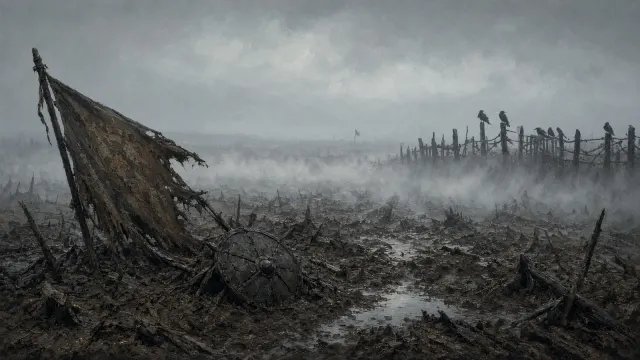

The study notes have a page of their own
The movement by movement analysis, the words to trace, the verse by verse notes and where readers differ are written for someone studying alone. They are on the Deep Personal Reflections page for this chapter. This page is the lesson.
A chapter-specific teaching brief
These anchors come from this chapter itself. They help a teacher use the Level 1 overview, the Level 2 study, and the Scripture text as one lesson.
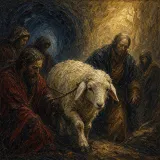
Open with the chapter’s first image
Psalms 44:1: “We have heard with our ears, O God, our fathers have told us, what work thou didst in their days, in the times of old.”
Slow down at the turning point
Psalms 44:9: “But thou hast cast off, and put us to shame; and goest not forth with our armies.”
Keep this word trail visible
didst, heathen, makest, name, people, shame
What to explain, in order
Teach the passage in this order. Each step names the verses it rests on, so every point can be shown in the text before it is applied.
Psalm 44:1-8
What the fathers told us
Begin with memory. The people have heard from their fathers how God planted Israel in the land, and they repeat the lesson: not by our sword, but by "thy right hand, and thine arm, and the light of thy countenance" (44:3). Then they make it their own in verses 4-8: "Thou art my King", "I will not trust in my bow", "In God we boast all the day long". Teach this first and fully, because the lament that follows only hurts as much as this confidence was real.
Psalm 44:9-16
But thou hast cast off
Read verse 9 and let the word "But" land. Every line now reverses the first half: no God with the armies, retreat, plunder, sheep for slaughter, scattering, a people sold cheap, mockery from neighbours, "a byword among the heathen". Explain "a shaking of the head" as a gesture of contempt. Notice that God remains the subject of the verbs: they do not say God was absent, they say God did this. Teach this step without hurrying to an answer.
Psalm 44:17-22
We have not forgotten thee
This is the boldest part of the psalm. The people claim covenant faithfulness and invite God, who "knoweth the secrets of the heart" (44:21), to examine them. Explain "the place of dragons" (44:19) as a desolate haunt of wild creatures, jackals in many translations. Then verse 22: "for thy sake are we killed all the day long". Read Romans 8:35-39 here. Teach this so the class learns that the Bible itself makes room for suffering that is not punishment.
Psalm 44:23-26
Awake, arise, redeem
Read the closing cries: "Awake, why sleepest thou, O Lord?" (44:23), "Wherefore hidest thou thy face" (44:24), the people bowed to the dust (44:25). Explain that asking God to wake is bold poetry, not a belief that God literally sleeps (compare Psalm 121:4). Then verse 26, the turn to "thy mercies' sake". Teach this last so the class sees how faith can argue with God and still end by throwing itself on his love.
Where learners get stuck
The misreadings this passage tends to produce, and how to answer each from the text.
"If God's people are defeated, it must be because they sinned."
Sometimes the Bible does say that, as in Judges and Lamentations. Psalm 44 is written to say that it is not always so. The people insist, "All this is come upon us; yet have we not forgotten thee" (44:17), and "for thy sake are we killed" (44:22). The Book of Job and Romans 8:36 stand beside it. Do not hand a sufferer a verdict the text itself refuses.
"It is disrespectful to tell God to wake up."
God placed this prayer in Scripture. "Awake, why sleepest thou, O Lord?" (44:23) is the language of a covenant people pleading with their King (44:4), not mocking him. It is the same faith that says "In God we boast all the day long" (44:8). Psalm 121:4 says God never sleeps; Psalm 44 speaks as it feels. Honest complaint addressed to God is an act of trust, not of rebellion.
"Verses 5-7 mean God will always give us victory over people we oppose."
Verses 5-7 recall what God did in Israel's past and express trust in him rather than in weapons (44:6). Verse 9 immediately reports a defeat in spite of that trust. The psalm does not promise victory on demand, and it is about Israel's covenant history, not any modern group or nation. Its lesson is where to put trust, and how to keep trusting when victory does not come.
Learning objectives
- Trace the pronoun movement from what our fathers told us to what has happened to us now.
- Explain why verses 1–8 deny that Israel's former victories came from sword, arm, or military self-sufficiency.
- List the reversals in verses 9–16 that make present defeat feel incompatible with remembered favor.
- Handle the covenant-faithfulness claim in verses 17–22 without turning it into a claim that Israel was sinless in every respect.
- Explain why Romans 8:36 quotes Psalm 44:22 in a passage about suffering that does not separate believers from God's love.
- Describe how the closing plea appeals to divine mercy when no simple explanation for the defeat is supplied.
Teacher preparation
- Divide Psalm 44 into remembered victory, present defeat, claimed fidelity, and final appeal.
- Mark the reversals from former victory to retreat, spoil, scattering, and reproach.
- Read Romans 8:35–39 and note its quotation of Psalm 44:22.
- Explain awake and why sleepest thou as bold covenant lament, not a claim that God literally sleeps.
- Do not solve the psalm with an accusation the text itself does not make.
Evidence and interpretation checks
Explicit
Verses 1–3 explicitly say the fathers reported God's acts and that the land was not gained by Israel's own sword or arm but by God's right hand, arm, countenance, and favor.
Scripture-supported
Reading verse 22 as compatible with faithful suffering is directly supported by Romans 8:36–39, where Paul quotes it and then declares believers more than conquerors amid the very sufferings named.
Strong inference
The force of the lament depends on a real contrast between remembered divine favor and present defeat.
Possible or traditional reading
Many historical settings have been proposed for Psalm 44, including periods of national military disaster.
Limit
The claim we have not forgotten thee in verses 17–18 concerns the crisis being prayed about; it should not be expanded into a declaration that the nation or every individual had never sinned.
Discussion with answer guidance
1. According to verses 1–3, who told the present generation about the former works, and who actually won the land?
What a good answer contains
"our fathers have told us" (44:1): the history came down by word of mouth from one generation to the next. But the fathers' account gave the credit away. "For they got not the land in possession by their own sword, neither did their own arm save them: but thy right hand, and thine arm, and the light of thy countenance, because thou hadst a favour unto them" (44:3). A good answer sees both: the parents told, and what they told was that God won. A weak answer stops at the fathers' faithfulness.
Show teacher guidance
The fathers transmitted the memory, but verses 2–3 insist that God's hand, arm, countenance, and favor won the land.
2. What does the line through thee will we push down our enemies in verse 5 reveal about the confidence of verses 4–8?
What a good answer contains
That the people's confidence is real but borrowed. They will act, "Through thee will we push down our enemies: through thy name will we tread them under" (44:5), but "I will not trust in my bow, neither shall my sword save me" (44:6). The confession of verses 4-8 is exactly what the fathers taught in verses 1-3. A good answer notices that this makes the defeat of verse 9 harder: these are people who trusted God, not their weapons.
Show teacher guidance
The people expect to act, but the power is through God.
3. How many reversals appear when verse 9 begins But thou hast cast off?
What a good answer contains
At least eight. God has "cast off" and "put us to shame" and "goest not forth with our armies" (44:9); the army turns back and is plundered (44:10); they are "like sheep appointed for meat" and scattered (44:11); sold "for nought" (44:12); a reproach, scorn and derision (44:13); "a byword among the heathen, a shaking of the head" (44:14). Each line reverses something in verses 1-8. A good answer notes that every verb has God as subject, as in the victories.
Show teacher guidance
Trace not going with armies, retreat before enemies, spoil, sheep for food, scattering, selling, reproach, scorn, byword, and head-shaking.
4. What do verses 17–21 claim the people have not done, and what test do they invite from God?
What a good answer contains
They have not forgotten God, not "dealt falsely in thy covenant" (44:17), their heart has not turned back and their steps have not "declined from thy way" (44:18). Then they invite inspection: "If we have forgotten the name of our God, or stretched out our hands to a strange god; Shall not God search this out? for he knoweth the secrets of the heart" (44:20-21). A good answer sees this is not boasting of sinlessness but a protest that this defeat is not the punishment for idolatry that Deuteronomy warned of.
Show teacher guidance
They say they have not forgotten God, dealt falsely with the covenant, turned back in heart, or declined in steps.
5. Why is for thy sake are we killed all the day long in verse 22 especially difficult and important?
What a good answer contains
Because it says their suffering is because of their faithfulness. "Yea, for thy sake are we killed all the day long; we are counted as sheep for the slaughter" (44:22). It is the opposite of the simple rule that trouble always means sin. Paul quotes this verse in Romans 8:36 and then says nothing can separate believers from the love of God in Christ. A good answer holds both: the psalm's pain is real, and Romans places it inside God's love.
Show teacher guidance
The suffering is not described as the obvious result of abandoning God.
6. What does the final verse make the ground of rescue when the psalm has not solved the mystery of defeat?
What a good answer contains
God's steadfast love, not the people's record. "Arise for our help, and redeem us for thy mercies' sake" (44:26). After arguing their faithfulness in 44:17-21, they finally rest their plea on God's mercy. A good answer notes that the mystery is not solved, God has not explained the defeat, but the people still turn to God rather than away from him, and the last word in their mouth is mercy.
Show teacher guidance
Verse 26 asks God to arise for our help and redeem for thy mercies' sake.
Responsible application
Do not read outcomes backward
Use Psalm 44 to evaluate a fictional congregation that suffers a major loss.
Let memory sharpen the question
Use verses 1–8 and 9–16 to show that remembering past faithfulness can sometimes intensify present confusion.
Appeal to mercy without inventing an explanation
Use verses 23–26 to model prayer when the cause of suffering is unclear.
Session plans
Two timings of the same lesson. The shorter keeps the reading, the central discussion and one response; the longer gives the confusions and the application their own time.
45 minutes
What our fathers told us
Read 44:1-8. Ask questions one and two, and underline every phrase that gives credit to God.
But thou hast cast off
Read 44:9-16 and ask question three. List the reversals beside the victories of 44:1-8.
We have not forgotten thee
Read 44:17-22. Ask questions four and five and take confusion one. Read Romans 8:36-37.
Awake, O Lord
Read 44:23-26. Ask question six and take confusion two.
Handout and prayer
Hand out the sheet, read the key verse together and pray for believers who suffer for their faith.
90 minutes
What we were told
Ask the group what account of God's help they first heard from parents or older believers. Keep each answer to a sentence.
Not by our sword
Read 44:1-8 and Joshua 24:12-13. Ask questions one and two, and take confusion three.
The reversal
Read 44:9-16. Ask question three. Put the verses of victory and the verses of defeat in two columns on the board.
Faithful and still suffering
Read 44:17-21. Ask question four and take confusion one. Compare Deuteronomy 28:15 to show what the people deny.
Sheep for the slaughter
Read 44:22 and Romans 8:31-39. Ask question five. Let the group see how Paul answers the psalm without erasing it.
Awake and redeem
Read 44:23-26. Ask question six and take confusion two. Read Psalm 121:4 beside verse 23.
Praying for the persecuted and handout
Pray for believers who suffer for their faith, using 44:26. Read the key verse together and point to the take-home line.
Adapting the lesson
Children
Tell the children that God's people remembered how God had helped them long ago, and then a very hard time came even though they still loved God. Read verse 1 and verse 26. Teach them that when something sad happens it does not always mean someone was bad, and that we can always ask God for help. Leave out the violent images of 44:11 and 44:22.
Youth
Ask whether they have ever done the right thing and still had it go badly. Read 44:17-22 and Romans 8:36-39. Let them say honestly what feels unfair. Make the point that the psalm keeps talking to God through the confusion, and that Christians suffering for their faith today can pray it.
Adults
Adults can hold the theological weight: a protest of innocence that challenges a simple reading of Deuteronomy, and Paul's use of verse 22. Discuss how the church responds to believers whose faithfulness has brought loss. Keep the psalm with Israel's covenant history and the persecuted church; do not map it onto any modern nation's wars.
One to one
If the person is suffering in spite of faithfulness, they may already feel what verse 9 says. Do not argue them out of it. Read 44:17 and 44:23-24 and let them recognise their own prayer, then read verse 26 and Romans 8:38-39. Pray the last verse with them.
Song and video learning lab
A song or video may interpret, compress, or dramatize the text. Its value becomes clearer when its choices are compared with Scripture.
- Before the media: the exact passage and its central movement.
- During the media: the words, people, events, and emotions the artist emphasizes.
- After the media: what it clarifies, what it leaves out, and what belongs back in the biblical text.
Handout
One page for learners to take home. The print button prints this section alone.
Psalms 44:1–26
The passage in brief
Psalm 44 begins with what parents had told their children: God, not Israel's sword, gave them the land. The people trust God the same way. Then a terrible defeat comes, though they have not forgotten God or broken his covenant. They say they suffer for God's sake, ask him why he hides his face, and end by asking him to rise and redeem them because of his mercy.
A verse to keep
Arise for our help, and redeem us for thy mercies’ sake.
Psalms 44:26 · King James Version
Questions to take home
What did the fathers say won the land in 44:3?
What do the people say in 44:17 about their faithfulness?
Who do you know who suffers for following God, and how can you pray for them?
This week
Pray this week for one believer who is suffering for their faith, using the words of verse 26.
Music and video connected to the passage
Related media appears when its Scripture reference overlaps this study. Music and video can illuminate a theme while the biblical text remains the foundation.