Everything under heaven is given its own hour;
Nothing arrives before the season made for it.
We are born, and we are gathered in again;
What we set into the ground, we later pull away.
Wounds are opened, and wounds are closed.
Walls come down so better walls can rise.
Grief takes its hour; laughter takes another.
Mourning ends, and the feet begin to move.
Stones are scattered, then gathered in;
Arms hold close, then learn to let go.
We search for what was lost and lose what we were searching;
We keep a thing, then find we must release it.
Cloth is torn, and cloth is mended.
Silence has its use, and so does speech.
There is an hour to love, an hour to refuse;
An hour for battle, and an hour to set it down.
God makes each thing lovely in its hour
And sets the sense of forever in us.
Still the whole design stays past our reading,
From its first line to its last.
So take the gladness where it comes: bread, work, company;
These arrive as gifts and never as wages.
What His hand establishes endures;
No one adds to it, and no one takes it away.
Judgment waits where wickedness has flourished;
Both the righteous and the wrong will face their time.
Humans and the animals return to dust together;
Who can see where every spirit climbs?
Receive the work appointed to your hands;
This is the portion given for your life.
About the passage
Ecclesiastes 3: Times appointed, the whole beyond reach
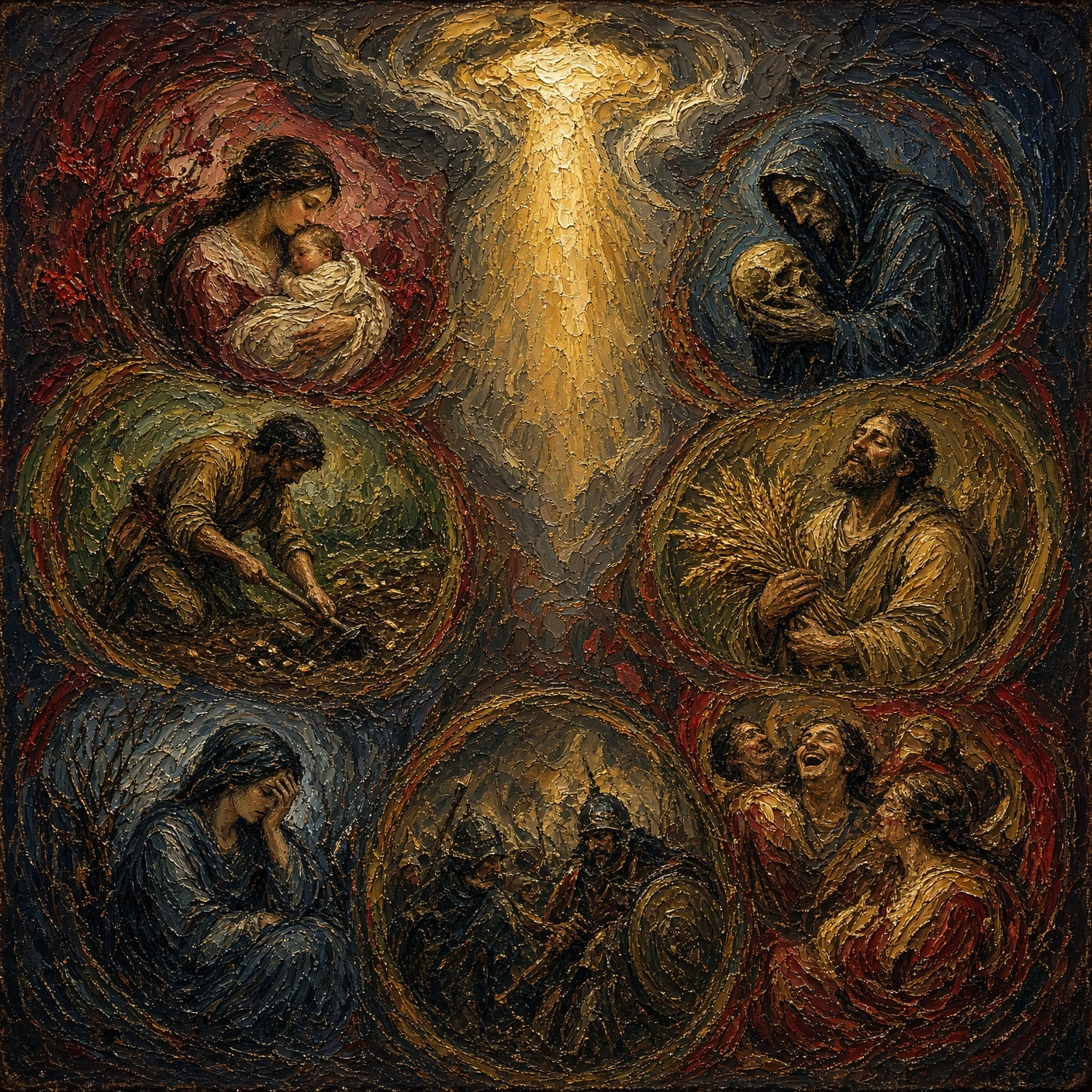
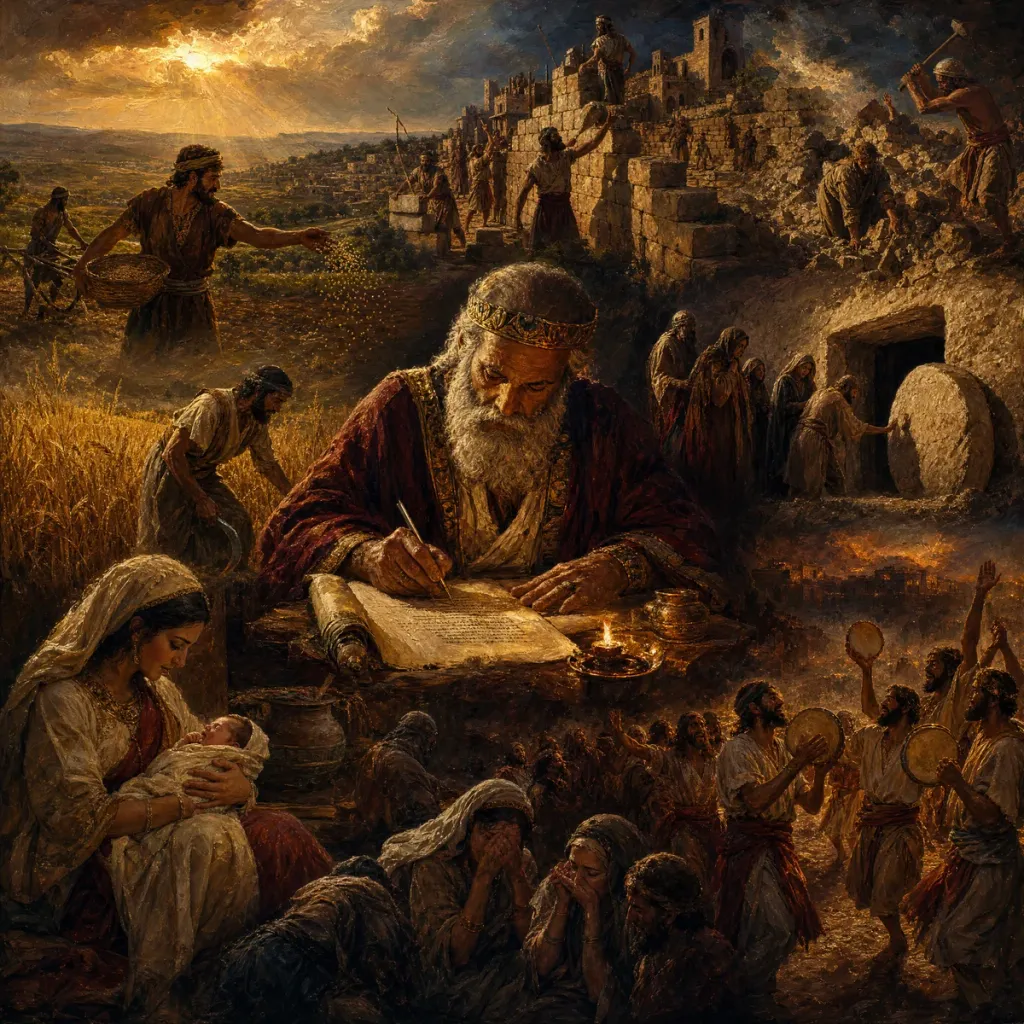
The chapter's famous poem gives time a beautiful symmetry that human beings do not possess. Birth and death, mourning and dancing, silence and speech, war and peace all have their place, yet the poem does not hand anyone a master schedule. Ecclesiastes immediately returns to the question of profit and describes humanity as aware of a larger horizon while still unable to discover God's whole work from beginning to end. Enjoyment and doing good remain possible inside that limit. The chapter then refuses sentimentality: wickedness can occupy the very place assigned to judgment, and confidence in God's judgment stands beside that visible corruption. Finally, people and animals share breath, death, and dust, bringing the grand language of appointed times down to the common boundary of mortality.