


Lyrics · Ezekiel
The Merchant City Sank
Ezekiel 26:1-28:26
Lyrics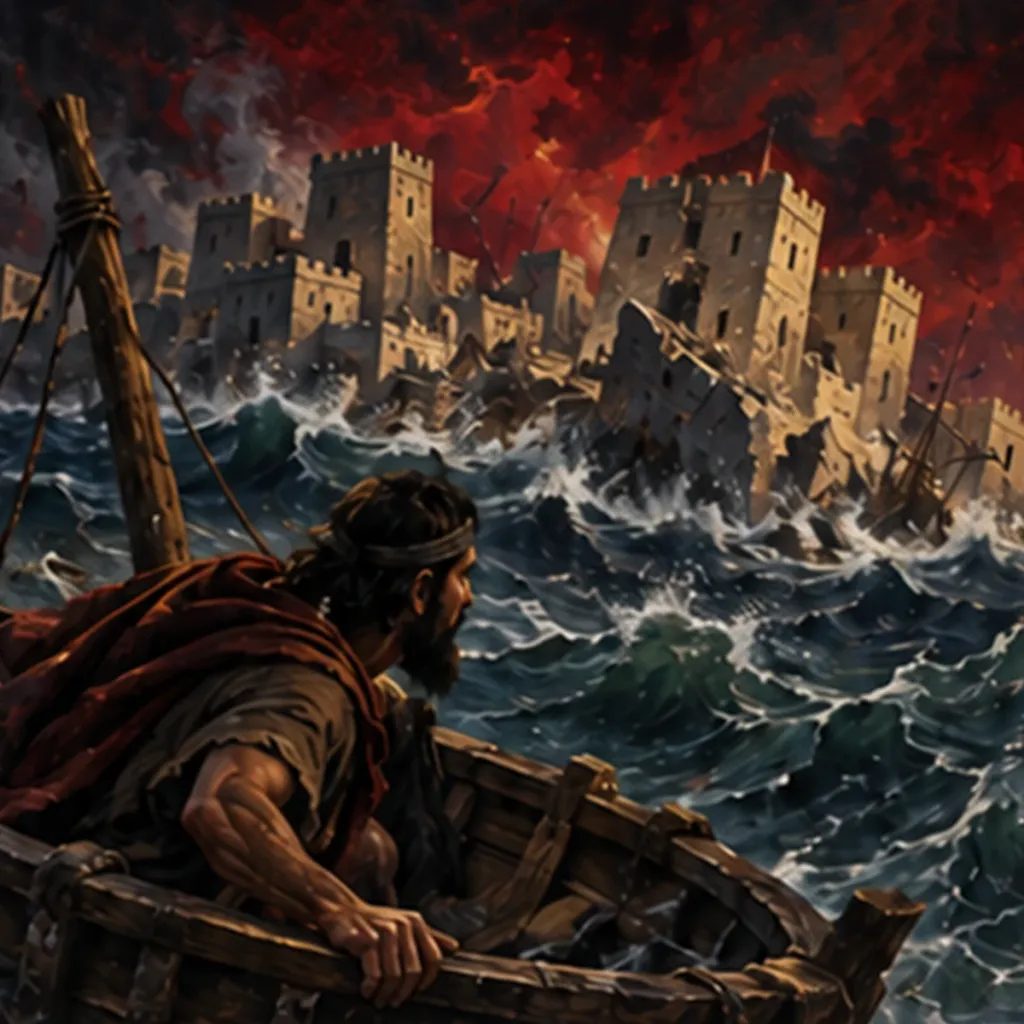
Playing next
About this song
About this song
This song belongs to the Ezekiel collection. One recording is available to play here, with the complete lyrics below.
- Bible book
- Ezekiel
- Collection
- Ezekiel
- Musical styles
- Uncategorized
About the passage
Ezekiel 26: Tyre hears the sound of its own fall
Tyre hears that Jerusalem's gates are broken and immediately calculates the commercial advantage. Ezekiel answers that expectation with a long dismantling of the city's confidence. Nations rise like waves, walls and towers come down, and the rocky site once supporting maritime strength is reduced to a place for spreading nets. Nebuchadrezzar is then named within the assault, with the machinery of siege, dust, hooves, shattered buildings, seized merchandise, and silenced music making the destruction tangible. The wording later broadens beyond one named commander, leaving room for the wider succession of attackers already announced. Tyre's maritime princes respond by descending from thrones, stripping off embroidered clothing, and sitting in trembling on the ground. The final movement goes deeper still: waters cover the city, the imagery descends into the pit, and Tyre's confident future is replaced by disappearance from the land of the living.
Study Ezekiel 26 in depthEzekiel 27: The magnificent ship that carried a world
Tyre becomes a ship so magnificent that Ezekiel spends most of the chapter loading it before he wrecks it. Timber, linen, ivory, colors, skilled sailors, pilots, repairers, soldiers, animals, metals, food, spices, precious stones, fabrics, and goods from a wide network of peoples accumulate until the vessel appears full and glorious in the sea. The catalogue is not decorative delay. It shows how much of the world is tied to the city's prosperity, including the disturbing appearance of human beings among its merchandise. Then the east wind breaks the ship. Wealth, cargo, crew, craftsmen, soldiers, and the structure holding them all go down together. Those who remain at sea or on shore become mourners. The same merchants and rulers once enriched by Tyre now measure the size of the loss, and the chapter ends with fear, astonishment, and hissing where commercial acclaim once stood.
Study Ezekiel 27 in depthEzekiel 28: The ruler who mistook wealth for divinity
Tyre's ruler has converted real achievements into an impossible claim. Wisdom and commerce have produced wealth, but the prince lets those results lift his heart until he speaks as though a throne in the sea had made him divine. Ezekiel answers not by denying his brilliance but by insisting on the mortal body that swords can reach. A second lament then rises into far stranger language: Eden, precious stones, God's mountain, a covering cherub, beauty, corruption, and expulsion. Interpretations differ over how far that imagery extends beyond the king of Tyre, but the stated addressee and the commercial language remain in view. Sidon follows with a shorter judgment, and the chapter finally turns away from magnificent rulers toward ordinary restoration. Israel is gathered, hostile thorns are removed, and the future is pictured through houses, vineyards, settled land, and secure dwelling.
Study Ezekiel 28 in depth