
1 Timothy

6 Chapters
1 Timothy: The Whole Book, Chapter by Chapter
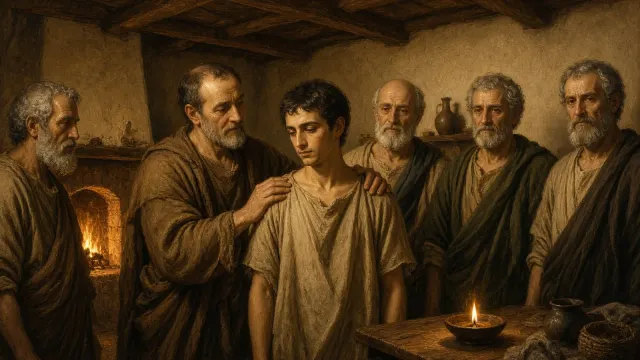
Sound Teaching Is Measured by More Than Confident Speech
The Book of 1 Timothy opens by measuring teaching according to where it leads. Timothy is to restrain voices that multiply fables, genealogies, questions, and "vain jangling" while missing love, a good conscience, and sincere faith. The law itself is not blamed for its misuse; properly handled, it exposes wrongdoing in agreement with the gospel entrusted to Paul. Paul then places his own former blasphemy, persecution, and injury inside the chapter as evidence of mercy rather than personal deserving. The charge returns to Timothy with the paired demands of faith and a good conscience. Hymenaeus and Alexander show the danger in reverse: once conscience is thrust away, faith can end in shipwreck, and discipline is directed toward correction rather than spectacle.
One complete chapter pageOpen chapter →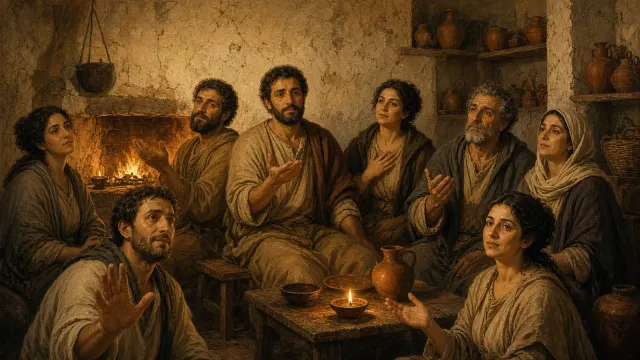
Prayer for All and Disputed Instructions for the Gathered Community
The Book of 1 Timothy widens the community's prayer before narrowing into some of the letter's most disputed instructions. Supplications, intercessions, and thanksgivings reach rulers and all people, a breadth grounded in one God, one mediator, and Christ's ransom. Public devotion is then tested by what accompanies it: holy hands are incompatible with wrath and disputing, while costly display is displaced by good works. The chapter next commands a woman to learn and restricts teaching and authority over a man, grounding the instruction in Adam and Eve. Because the key language and the scope of that appeal are disputed, the passage does not support invented certainty beyond what it states. Its closing reference to salvation and childbearing is equally difficult, with continued faith, love, holiness, and sobriety clearer than the exact mechanism described.
One complete chapter pageOpen chapter →
A Good Work Requires a Life That Can Bear Examination
The Book of 1 Timothy treats church office as work exposed to examination rather than status protected from it. The overseer's qualifications dwell on self-control, hospitality, teaching, gentleness, freedom from greed, household care, maturity, and reputation outside the congregation. Deacons are tested in the same practical territory, including speech, appetite, money, conscience, and household life, while the reference to women or wives remains grammatically disputed. Appointment follows proof rather than replacing it. Paul then explains why these instructions matter during his possible delay: the community is "the house of God," the church of the living God and the pillar and ground of truth. The chapter closes with a compact confession of Christ, placing every office and every rule of household conduct under a mystery of godliness larger than the people entrusted with administering it.
One complete chapter pageOpen chapter →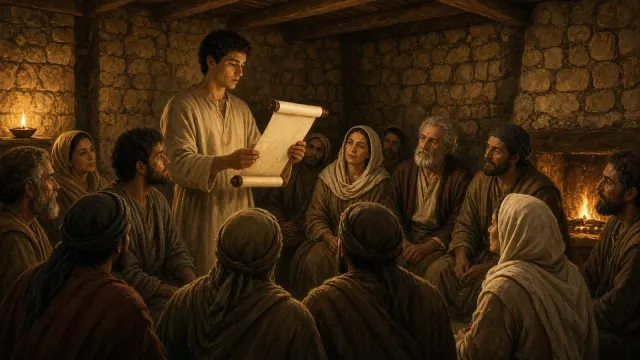
Godliness Is Trained Through Truth, Not Manufactured by Prohibitions
The Book of 1 Timothy warns that religious severity can be counterfeit. The predicted departure from faith includes teachers who forbid marriage and foods, turning rejection of created gifts into a badge of devotion. Paul's answer is thankful reception of what God created, followed by a different kind of discipline: nourishment in sound teaching and exercise toward godliness. Timothy is not merely a distributor of instruction. He must be formed by the words he teaches, answer contempt for his youth with an exemplary life, continue in public reading and doctrine, and use the gift recognized in him. The chapter ends by making progress visible rather than pretending Timothy has already arrived. Attention to himself and to the teaching remain joined, and perseverance matters because his ministry carries the saving message to those who hear him.
One complete chapter pageOpen chapter →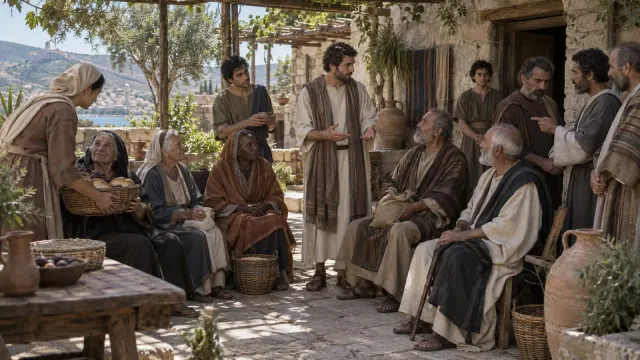
The Household's Care Requires Both Generosity and Discernment
The Book of 1 Timothy turns household language into practical obligations. Older and younger believers are to be treated with familial respect, while widows bring questions of real need, family responsibility, church support, enrollment, reputation, and good works. The chapter refuses to confuse organized care with indiscriminate classification: relatives have duties, the church has duties, and a recognized list has criteria without exhausting compassion. Elders who labor well are worthy of honor that includes material support, yet the same office receives no immunity from evidence, correction, or impartial judgment. Timothy is warned against hasty recognition because other people's failures can implicate the person who endorses them. A personal instruction concerning his recurring infirmities then interrupts the administrative material before the chapter closes by admitting that both sins and good works become visible at different speeds.
One complete chapter pageOpen chapter →
The Faith Is Entrusted, Not Traded for Gain
The Book of 1 Timothy closes by putting social inequality, money, endurance, generosity, and doctrine under the same entrusted charge. Enslaved believers are instructed within a real and unequal social order, including when masters share their faith, without turning the passage into either a complete defense or a complete abolition program. False teachers then expose another distortion: they treat godliness as a route to profit. Paul answers with contentment, warning that determination to become rich can end in traps, drowning, wandering, and self-inflicted sorrow. Timothy is told to flee that pattern and pursue righteousness, faith, love, patience, and meekness before God and the coming Christ. Those already rich are redirected toward generous good works. The letter ends where it began, with Timothy guarding what was entrusted to him against impressive-sounding claims that have wandered from the faith.
One complete chapter pageOpen chapter →Source: eBible.org · eng-kjv2006