
The big picture
Warnings about false teaching now give way to instructions for shared worship. Paul, the letter's speaker and a messenger of Jesus Christ, tells Timothy, his trusted younger worker, how believers should gather. Jesus is the Lord who gave himself to rescue people. Prayer must reach wider than the church itself, even to rulers. Paul then addresses men and women. His rules about women teaching and his words about childbirth have long divided Christian readings. Paul appeals to creation, then ends with a brief statement about childbearing.
In this chapter
- Prayer Reaches to Everyone 1 Timothy 2:1-7
Paul urges prayer, requests, and thanks for all people.
- Conduct Matters More Than Display 1 Timothy 2:8-10
Men are to pray with hands raised, a bodily sign of prayer.
- A Restriction on Women Teaching 1 Timothy 2:11-14
Women are told to learn quietly and accept authority.
- A Difficult Word About Childbearing 1 Timothy 2:15
The final sentence turns from Eve's failure to a promise linked with childbearing.
Central truth
Prayer reaches toward all people, while Paul sets rules for worship that Christians differ over applying to women today.

Scripture beside the summary
1 Timothy · King James Version · 151 Timothy 2:1-7
Prayer Reaches to Everyone
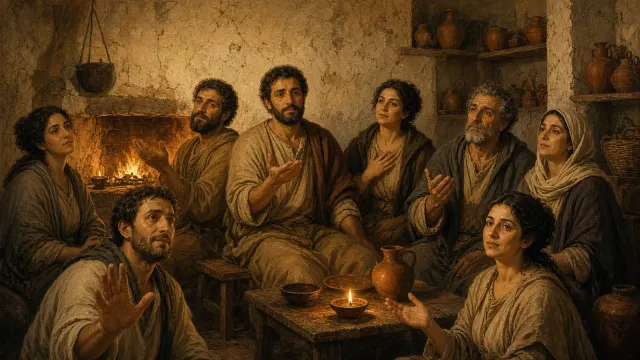
Paul urges prayer, requests, and thanks for all people. Rulers belong within that wide concern. Peace under their rule allows believers to live with dignity and serve God openly. God desires people to be saved and know the truth. Paul gives the reason prayer reaches so widely: one God made all people, and Jesus stands between God and humanity. Jesus gave his life as the price of release for all. Paul says his own task serves that message. He teaches the Gentiles, people outside the Jewish people, about faith and truth.
In everyday life
An apartment resident carries a large pot into the courtyard for a shared meal. She sets places for the quiet tenant, the loud family, and the caretaker everyone blames for delays. The table is not reserved for her friends. Each household receives an invitation. Paul calls for prayer and speaks of rescue through Jesus.
Notice
1 Timothy 2:2 Rulers are included among the people receiving prayer. Paul connects this with peaceful life, rather than asking believers to treat political power as sacred.
1 Timothy 2:1-7
King James Version1I exhort therefore, that, first of all, supplications, prayers, intercessions, and giving of thanks, be made for all men;
2For kings, and for all that are in authority; that we may lead a quiet and peaceable life in all godliness and honesty.
3For this is good and acceptable in the sight of God our Saviour;
4Who will have all men to be saved, and to come unto the knowledge of the truth.
5For there is one God, and one mediator between God and men, the man Christ Jesus;
6Who gave himself a ransom for all, to be testified in due time.
7Where unto I am ordained a preacher, and an apostle, (I speak the truth in Christ, and lie not;) a teacher of the Gentiles in faith and verity.
1 Timothy 2:8-10
Conduct Matters More Than Display
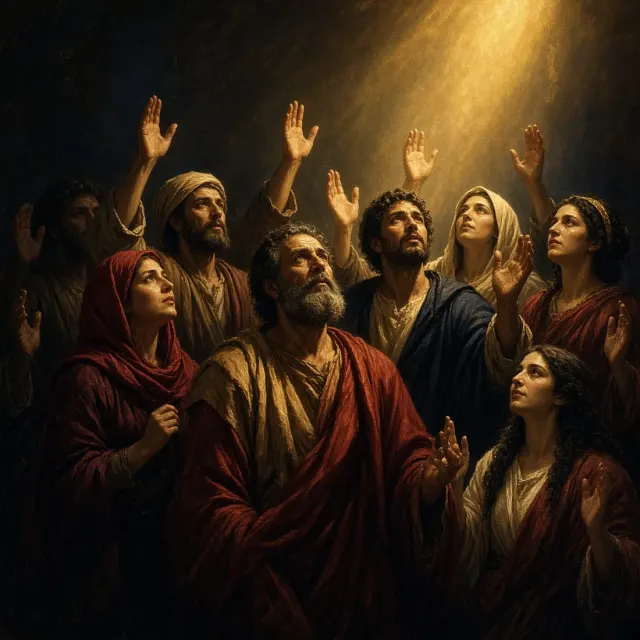
Men are to pray with hands raised, a bodily sign of prayer. Paul pairs that gesture with lives free from anger and quarrelling. Clean-looking hands cannot replace peace with others. He then tells women to dress with modesty and sound judgement. Braided hair, gold, pearls, and costly clothes must not become their main claim to respect. Good deeds should mark women who say they honour God. The paired instructions deal with more than appearance. Paul links public worship with the way people act toward each other.
In everyday life
Two orchestra players arrive for a school concert in polished shoes and fine jackets. One snaps at the page turner and refuses to share a stand. The conductor stops the rehearsal and settles the quarrel before the audience enters. Their smart clothes cannot make the group sound united. Paul addresses conduct in worship, not stage discipline.
Notice
1 Timothy 2:8 Raised hands appear beside a demand for freedom from anger. The visible act of prayer is tied to conduct that other people experience.
1 Timothy 2:8-10
King James Version8I will therefore that men pray every where, lifting up holy hands, without wrath and doubting.
9In like manner also, that women adorn themselves in modest apparel, with shamefacedness and sobriety; not with broided hair, or gold, or pearls, or costly array;
10But (which becometh women professing godliness) with good works.
1 Timothy 2:11-14
A Restriction on Women Teaching
Women are told to learn quietly and accept authority. Paul says he does not permit a woman to teach or exercise authority over a man. The command places learning under authority and limits who teaches whom in the church. His reasons reach back to Adam, the first man, and Eve, the first woman. Adam was formed first, and Eve was deceived into breaking God's command. Christians differ over whether this rule applies to all churches or addresses a local problem. Paul does not explain that distinction here.

In everyday life
A glassblowing instructor asks a new learner to watch while an experienced worker guides the molten glass. She is told to learn before taking charge of the shared tools. The rule gives authority to one person and requires the other to listen. Paul bases his restriction on sex and creation, not a learner's lack of skill.
Notice
1 Timothy 2:11 The command includes learning, though it requires silence and submission. Those parts belong together; leaving either out changes the force of what Paul says.
1 Timothy 2:11-14
King James Version11Let the woman learn in silence with all subjection.
12But I suffer not a woman to teach, nor to usurp authority over the man, but to be in silence.
13For Adam was first formed, then Eve.
14And Adam was not deceived, but the woman being deceived was in the transgression.
1 Timothy 2:15
A Difficult Word About Childbearing
The final sentence turns from Eve's failure to a promise linked with childbearing. It speaks first of a woman being saved, then of a plural group continuing in faith, love, holiness, and self-control. Paul does not explain how childbirth and being saved fit together. Christians read this differently: as help through childbirth, faith lived in motherhood, or a link to Jesus' birth. The verse is too brief to settle those readings here. Paul states a condition of continuing faith, love, holiness, and self-control. The identity of the plural group is not fully clear.
In everyday life
An expectant mother unfolds a note from her late grandmother at a prenatal support meeting. Its brief words link hope with motherhood, but leave much unsaid. The group reads carefully without turning it into a guarantee of safe delivery. The note offers family comfort; Paul makes a disputed claim about being saved.
Notice
1 Timothy 2:15 The sentence changes from a single woman to a plural group. That shift helps explain why readers differ over exactly who is meant and how childbirth relates to salvation.
1 Timothy 2:15
King James Version15Notwithstanding she shall be saved in childbearing, if they continue in faith and charity and holiness with sobriety.
Details worth noticing
The opening image
1 Timothy 2:1 begins with “I exhort therefore, that, first of all, supplications, prayers, intercessions, and giving of thanks, be made for all men;”
Where the chapter turns
1 Timothy 2:10 forms a natural hinge: “But (which becometh women professing godliness) with good works.”
The final note
1 Timothy 2:15 leaves the reader with “Notwithstanding she shall be saved in childbearing, if they continue in faith and charity and holiness with sobriety.”
A word trail through the chapter
The words woman, Adam, authority, Christ, deceived, faith help reveal the chapter’s repeated concerns.
KJV words made clear
- supplications
- Earnest requests for help, here made to God in prayer.
- mediator
- One who stands between two parties to bring them together.
- broided
- Braided or woven together, here describing hair arranged for display.
- shamefacedness
- A modest manner that does not seek attention or display wealth.
Music and video connected to the passage
Related media appears when its Scripture reference overlaps this study. Music and video can illuminate a theme while the biblical text remains the foundation.