
2 Corinthians

13 Chapters
2 Corinthians: The Whole Book, Chapter by Chapter
Comfort, a Near Death, and a Changed Itinerary
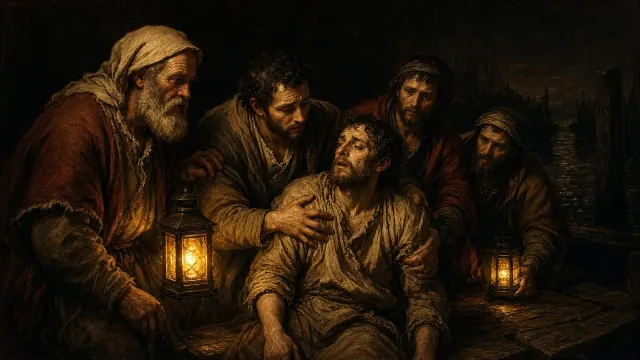
Second Corinthians opens by making comfort communal. God comforts Paul and his companions so that what they receive can travel outward to others, and Paul quickly gives that theology a hard edge by admitting that trouble in Asia pressed them "above strength" until they despaired of life. Resurrection trust, prayer, and thanksgiving all grow out of that pressure. The second half of the chapter turns from mortal danger to damaged credibility. A changed itinerary has been interpreted as evidence that Paul's word cannot be trusted. He answers by distinguishing a revised travel plan from a divided message: Christ is not "yea and nay," and God's promises remain "yea" and "Amen" in him. Paul finally explains that he delayed coming to spare the Corinthians, then limits his own authority with a striking qualification: he is not lord over their faith, but a helper of their joy.
One complete chapter pageOpen chapter →
The Painful Letter and the Man Who Must Not Be Swallowed by Sorrow
Paul explains the painful distance between himself and Corinth without pretending that severity cost him nothing. The earlier letter came "with many tears," and its purpose was not grief for grief's sake but the disclosure of love. That same concern governs his treatment of the disciplined offender: punishment has reached its limit, so the next faithful act is forgiveness, comfort, and the visible confirmation of love before sorrow swallows the man. The travel account then resumes with Paul finding an open door at Troas and still being too restless to remain because Titus is absent. Out of that unfinished anxiety comes the chapter's sudden thanksgiving. God spreads "the savour of his knowledge" through a ministry received as life by some and death by others. The weight of that task raises the question of sufficiency and rules out one answer immediately: God's word is not merchandise to be adjusted for the seller's advantage.
One complete chapter pageOpen chapter →
A Living Letter and an Unveiled Face
The Corinthians become Paul's answer to the question of credentials. They are a living "epistle of Christ," written not with ink or on stone but by the Spirit on human hearts, which makes the community itself a witness to a ministry whose source lies beyond the minister. Paul then answers the question left hanging in chapter 2: "our sufficiency is of God." From there he contrasts the Mosaic ministry with the new covenant ministry of the Spirit. The former glory was real, or the comparison would have no force, but the later glory exceeds it in both character and permanence. The veil then moves from Moses' face to the understanding and finally to the heart, where its removal is located in Christ. The chapter ends by widening a once singular image: "we all" behold with open face and are changed "from glory to glory" by the Spirit of the Lord.
One complete chapter pageOpen chapter →
Treasure in Clay, and a Weight That Cannot Be Seen
Paul describes a ministry that refuses manipulation precisely because its content is not the messenger. He renounces craftiness and deceitful handling of God's word, preaching "Christ Jesus the Lord" while calling the ministers servants. The light belongs to God, yet it is carried in "earthen vessels" whose fragility makes the source of the power easier, not harder, to identify. Pressure, perplexity, persecution, and bodily exposure to death are real, but they do not have the final effect they threaten. Paul speaks because he believes in resurrection, and even that hope includes the Corinthians: God will "present us with you." The chapter closes by setting visible loss against an unseen future. Outward decay and inward renewal occur together, while present affliction is called "light" only beside the "eternal weight of glory" with which Paul compares it. The suffering is not denied. Its scale is changed.
One complete chapter pageOpen chapter →
Clothed with Life and Entrusted with Reconciliation
Paul's hope for life beyond mortality is not a wish to remain bodiless. He longs to be "clothed upon" so that mortality may be swallowed by life, and the Spirit serves as God's pledge of that future. Yet confidence about being with the Lord immediately leads into accountability: what is done in the body matters before "the judgment seat of Christ." Judgment and love then converge in Paul's explanation of ministry. "The love of Christ constraineth us" because the one who died for all has changed the direction of the lives that remain. That same death and resurrection change how people are known, so that anyone "in Christ" belongs to new creation rather than merely to old measures of recognition. The source of the change is God, who reconciles through Christ and entrusts "the word of reconciliation" to ambassadors. Their authority is representative, and their message rests on Christ's sinlessness and the righteousness given in him.
One complete chapter pageOpen chapter →
The Ministry’s Credentials Include Scars and an Open Heart
The appeal of reconciliation becomes urgent without becoming theatrical. Paul takes Isaiah's accepted time and says, "behold, now is the day of salvation," while placing equal pressure on the integrity of the ministers who carry that message. His credentials then look unlike polished success: afflictions, imprisonments, labor, sleeplessness, patience, purity, kindness, truth, divine power, and a series of paradoxes in which public appearance never tells the whole truth. After that long catalogue he addresses Corinth directly: "our heart is enlarged." The defense of ministry is ultimately aimed at relational room, not merely at winning an argument. The final section turns to incompatible allegiances, climaxing in the claim, "ye are the temple of the living God." Separation from idols is grounded not in isolation for its own sake but in God's promise to dwell with, receive, and be Father to his people. The next chapter will build directly from those promises.
One complete chapter pageOpen chapter →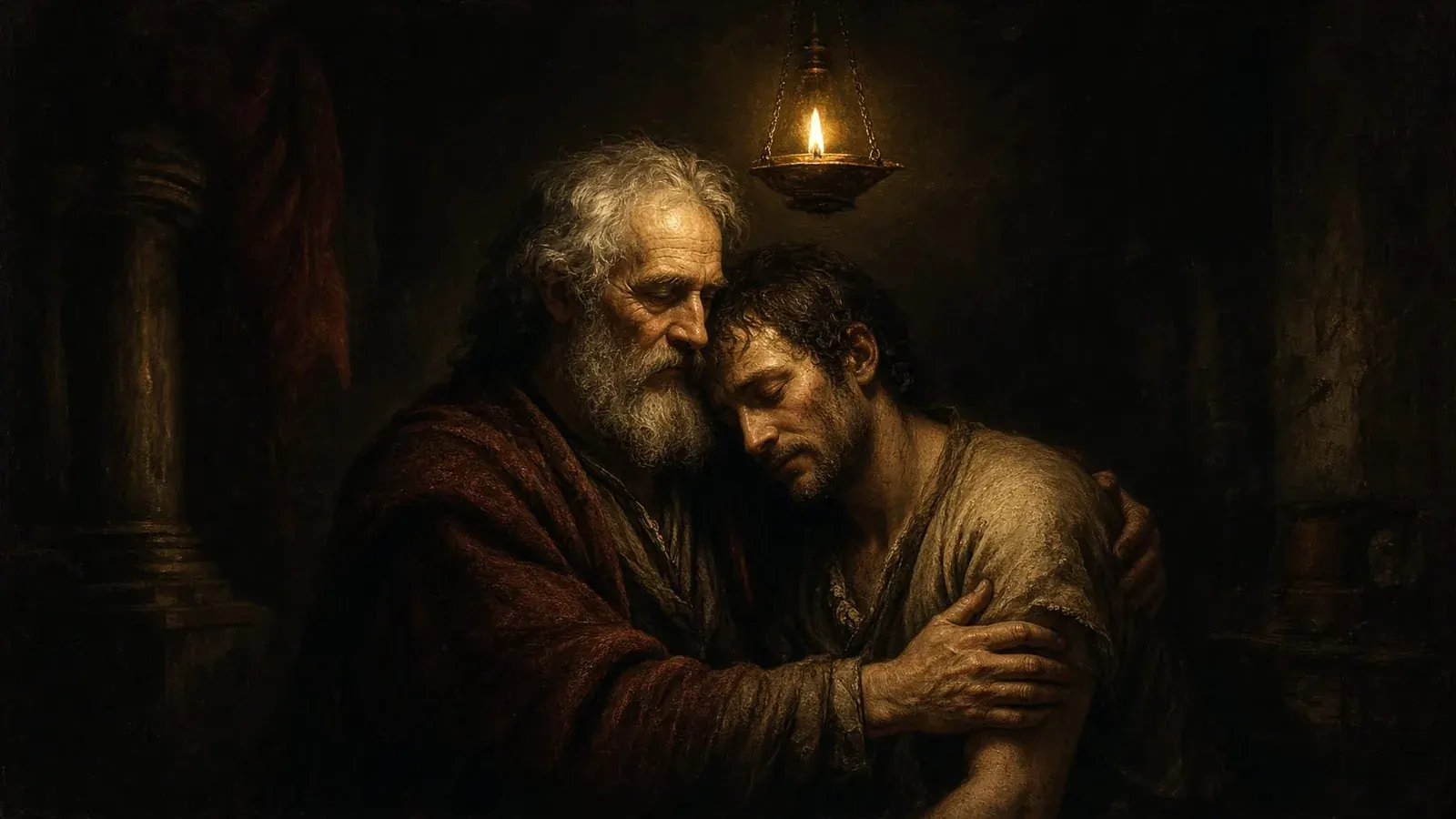
Titus Arrives, and Sorrow Proves to Have Changed Something
Paul joins the promises of divine belonging to a call for comprehensive holiness, then immediately returns to the damaged relationship with Corinth: "Receive us." The long interruption in the travel account finally closes when Titus arrives in Macedonia. Paul's fears and outward troubles remain real, but God's comfort comes through a human messenger carrying good news about the Corinthians' concern. That report lets Paul revisit the painful letter with unusual candor. He had regretted sending it, but no longer does because the sorrow did not end as sorrow. It produced repentance, visible in carefulness, zeal, fear, longing, and action concerning the wrong. The chapter closes with comfort moving in several directions at once. Titus has been refreshed by the Corinthians, Paul rejoices in Titus's joy, and earlier confidence about the church has proved true in practice. The renewed trust is genuine even though later chapters will show that not every problem has disappeared.
One complete chapter pageOpen chapter →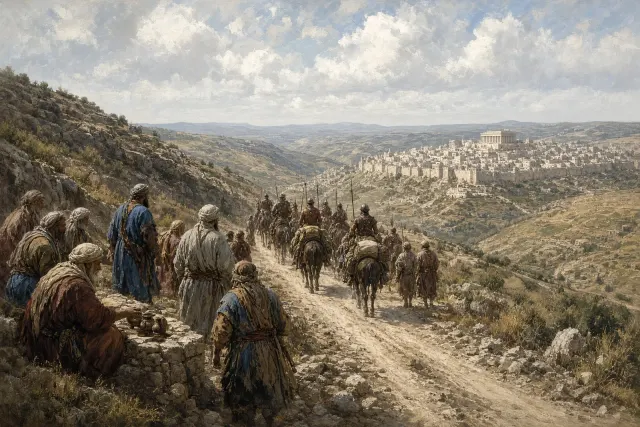
Grace Becomes a Gift That Is Actually Delivered
Paul turns the collection for needy saints into a study in grace that refuses to float above practical details. The Macedonian churches combine deep poverty with remarkable generosity and even ask to participate, while the Corinthians are urged to complete what they had already wanted to do. Christ's self-giving supplies the theological center, but Paul also draws a firm boundary around the appeal: readiness is accepted "according to that a man hath," not according to resources he does not possess. Equality means present abundance relieving present lack without simply transferring misery to the giver, and the manna account supplies an image of sufficiency rather than spectacle. The chapter then becomes almost administrative. Titus and other trusted brothers are assigned clear responsibilities so that a substantial gift will be handled honorably "not only in the sight of the Lord, but also in the sight of men." Grace ends up with travel companions, accountability, and a well-managed bag of money.
One complete chapter pageOpen chapter →
The Harvest Includes Thanksgiving
Paul wants the Corinthians' promised contribution ready before visitors arrive, because generosity produced under the embarrassment of the moment would undercut the very willingness he has been praising. The brothers therefore go ahead to prepare the gift "as a matter of bounty, and not as of covetousness." Sowing and harvest language follows, but Paul keeps it from becoming a formula for private enrichment. Giving is to be purposeful and cheerful, not compelled, and God's abundance supplies sufficiency "to every good work." The quotation about giving to the poor keeps the harvest tied to actual need. In the final section material relief expands into something money cannot contain. The service supplies the saints' lack, generates thanksgiving to God, creates prayer and affection between communities, and demonstrates obedience to the gospel. Paul ends the entire collection appeal by looking away from the donors: "Thanks be unto God for his unspeakable gift."
One complete chapter pageOpen chapter →
The Measuring Stick Cannot Be the Person Holding It
Paul answers the contrast between his supposedly weak presence and forceful letters by beginning with "the meekness and gentleness of Christ." His authority is real, and the military imagery is severe, but the weapons are "not carnal" and the objects under attack are arguments and resistance to the knowledge of God. Even authority capable of tearing down is defined as given "for edification, and not for your destruction." The same ministry stands behind both Paul's letters and his coming presence. He then attacks the measuring system behind his rivals' confidence. People who measure themselves by themselves can always arrange a flattering result. Paul's own claim is bounded by a field assigned by God, one that includes Corinth because the gospel actually reached them through his work. He refuses to boast in another person's labor and closes by moving the final standard outside the circle altogether: "he that glorieth, let him glory in the Lord."
One complete chapter pageOpen chapter →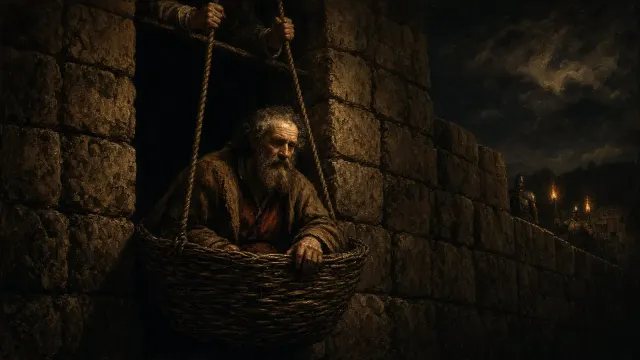
The Boast Ends in a Basket
Paul enters the boasting contest only after repeatedly calling it foolish, then proceeds to ruin its usual categories. His first concern is that the Corinthians belong to Christ, not to the messenger, and that polished presentation not smuggle in "another Jesus," "another spirit," or "another gospel." He defends his refusal to burden Corinth financially and exposes opponents whose impressive appearance masks exploitation. The irony sharpens when he notes how readily the Corinthians tolerate leaders who enslave, consume, seize, exalt themselves, and strike. Then the boast changes shape entirely. Paul matches ancestry claims in a few lines but spends far more space on labor, beatings, imprisonment, shipwreck, hunger, danger, and the daily care of the churches. Finally he states that he will glory in weakness and proves it with an unforgettable credential: in Damascus he escapes not in triumph but "through a window in a basket." The boast ends by going down the wall.
One complete chapter pageOpen chapter →
The Revelation Is High, but the Thorn Remains
Paul mentions an extraordinary ascent to the third heaven, yet the account is marked as much by restraint as by revelation. He does not know whether it occurred in or out of the body, and the words heard in paradise are not lawful to repeat. The chapter then spends more space on the thorn that followed. Its identity remains undisclosed, Paul's repeated requests for removal are real, and Christ's answer is not removal but "My grace is sufficient for thee." Power is made perfect in weakness, keeping the revelation from becoming a platform for self-sufficiency. Paul's defense then returns to practical Corinthian disputes. He points to apostolic signs, repeats his refusal to become a financial burden, and says plainly, "I seek not yours, but you." The final section rejects the charge that delegates secretly profited from the church and ends with Paul's fear that an upcoming visit may uncover unrepented disorder and turn his hoped-for reunion into mourning.
One complete chapter pageOpen chapter →
The Final Test Is Not a Victory Over the Corinthians
The letter's final warning is serious but carefully bounded. Paul invokes the requirement for "two or three witnesses" before threatening action against persistent sin, then answers the demand for proof of Christ speaking through him by returning once more to crucified weakness and divine power. The examination does not remain pointed at Paul. "Examine yourselves, whether ye be in the faith," he tells the Corinthians, tying the reality of his ministry to the congregation formed through it. His preferred outcome is revealing: he prays that they will do right even if that leaves him looking weak and without an occasion to demonstrate severity. Their restoration matters more than his public vindication. Authority exists "to edification, and not to destruction." The closing lines fit that purpose. Paul calls for restoration, comfort, shared purpose, and peace, then blesses the entire congregation with the grace of Christ, the love of God, and the communion of the Holy Ghost, "with you all."
One complete chapter pageOpen chapter →Source: eBible.org · eng-kjv2006