

The big picture
Paul, the messenger writing to this church, has urged peace with God. He now presses the believers to respond while help is being offered. Christ, the Lord whose work he serves, has shaped a life of hardship and care. Paul describes that costly work as evidence of his honesty. Then he asks the church for warmth in return. A final warning sets their bond with God against shared worship with idols, images treated as gods.
In this chapter
- The Time to Receive Help 2 Corinthians 6:1-3
Working with God, Paul and his companions urge the church not to waste his kindness.
- Hardship Does Not Cancel Faithfulness 2 Corinthians 6:4-10
Paul points to patient endurance as proof of genuine service.
- Room for Love in Return 2 Corinthians 6:11-13
Speaking directly to the Corinthians, the believers receiving his letter, Paul says his words and heart are open.
- Loyalty That Refuses Idols 2 Corinthians 6:14-18
Paul warns against binding believers to unbelievers in a shared course opposed to God.
Central truth
Paul calls for a full response to God’s kindness, open love toward his workers, and loyalty that rejects worship of idols.


Scripture beside the summary
2 Corinthians · King James Version · 182 Corinthians 6:1-3
The Time to Receive Help
Working with God, Paul and his companions urge the church not to waste his kindness. Paul draws on God’s promise to hear and help at the right time. He says that time has now arrived. Rescue is being offered, so the response matters now rather than at some distant date. At the same time, the workers watch their own conduct. They do not want to place an obstacle in anyone’s way. Careless behaviour would bring blame on the work through which God’s help is announced.
In everyday life
A relief worker lifts the hatch of a food van as families form a queue. The meals are ready now, and she calls people forward. She also clears loose crates from the path so that nobody trips while coming for help. The offer and her conduct belong together. Paul announces God’s rescue, not temporary food aid.
Notice
2 Corinthians 6:3 Paul pairs urgency with care about his own behaviour. The people offering help must not create barriers that undermine the message they bring.
2 Corinthians 6:1-3
King James Version1We then, as workers together with him, beseech you also that ye receive not the grace of God in vain.
2(For he saith, I have heard thee in a time accepted, and in the day of salvation have I succoured thee: behold, now is the accepted time; behold, now is the day of salvation.)
3Giving no offence in any thing, that the ministry be not blamed:
2 Corinthians 6:4-10
Hardship Does Not Cancel Faithfulness
Paul points to patient endurance as proof of genuine service. His workers have faced need, beatings, prison, unrest, exhausting work, sleepless nights, and hunger. Yet he also names purity, knowledge, patience, kindness, and real love. The Holy Ghost, God’s Spirit, sustains their service with truth and strength. Public opinion swings between praise and blame. They are treated as false but remain honest, and as dying but still live. Sorrow does not end their joy. Their poverty does not stop them making others rich through what they share.
In everyday life
Two mountain rescuers pull off wet boots after a night search. Their packs are empty, their hands shake, and an angry caller has blamed them for the delay. The missing walker is safe. They rest beside the stove with both grief and relief still present. Paul’s service also gives people spiritual wealth through God.
Notice
2 Corinthians 6:10 Opposite descriptions stand together rather than cancel each other out. Paul claims real sorrow and real joy at once, not a life free from pain.
2 Corinthians 6:4-10
King James Version4But in all things approving ourselves as the ministers of God, in much patience, in afflictions, in necessities, in distresses,
5In stripes, in imprisonments, in tumults, in labours, in watchings, in fastings;
6By pureness, by knowledge, by longsuffering, by kindness, by the Holy Ghost, by love unfeigned,
7By the word of truth, by the power of God, by the armour of righteousness on the right hand and on the left,
8By honour and dishonour, by evil report and good report: as deceivers, and yet true;
9As unknown, and yet well known; as dying, and, behold, we live; as chastened, and not killed;
10As sorrowful, yet alway rejoicing; as poor, yet making many rich; as having nothing, and yet possessing all things.
2 Corinthians 6:11-13
Room for Love in Return
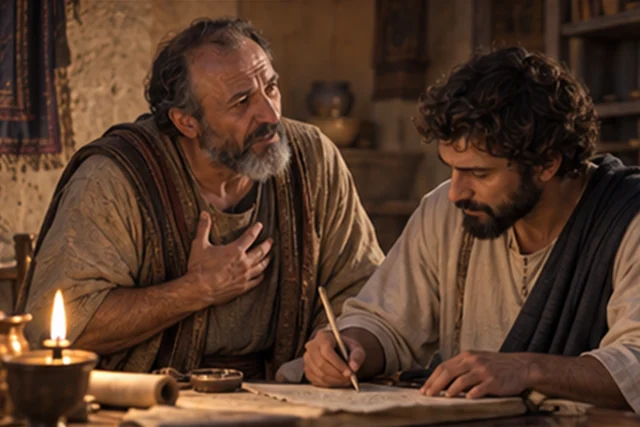
Speaking directly to the Corinthians, the believers receiving his letter, Paul says his words and heart are open. They do not lack room in his affection. The narrowness lies in their response to him. He asks them to open their own hearts in return. Paul speaks as a parent would speak to children. This appeal makes the dispute personal without reducing it to wounded pride. After defending his costly service, he asks for a restored bond of love between them.

In everyday life
An estranged sister places an extra bowl beside her brother’s plate. She tells him the seat has remained his through the months of silence. He has come to the meal but still holds back every warm word. She asks for affection in return. Paul’s appeal includes his responsibility as their spiritual teacher.
Notice
2 Corinthians 6:12 Paul locates the lack of space in their affection, not his own. The image of an open heart makes his request about relationship.
2 Corinthians 6:11-13
King James Version11O ye Corinthians, our mouth is open unto you, our heart is enlarged.
12Ye are not straitened in us, but ye are straitened in your own bowels.
13Now for a recompence in the same, (I speak as unto my children,) be ye also enlarged.
2 Corinthians 6:14-18
Loyalty That Refuses Idols
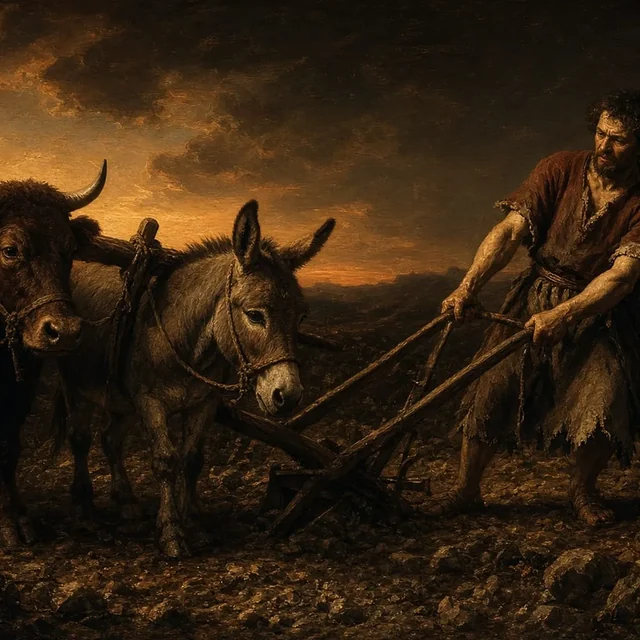
Paul warns against binding believers to unbelievers in a shared course opposed to God. A yoke joins animals for the same work. He asks how light can share with darkness, or Christ with Belial, a name for evil. Their community is God’s temple, his dwelling place, so idols do not belong there. Paul recalls God’s promise to live among his people and receive them as children. Christians differ over which partnerships this warning rules out. Its demand for loyal worship and separation from impurity remains clear.

In everyday life
The tug-of-war captain watches two teammates pull opposite ends of the same rope. Each effort defeats the other, and the rope strains between them. No amount of greater force gives them a shared direction. A binding partnership needs an agreed purpose. Paul’s concern is loyalty to God, especially where idols are involved.
Notice
2 Corinthians 6:16 The temple here is the gathered people, not a building they enter. Paul makes the community’s identity the reason idols cannot share its worship.
2 Corinthians 6:14-18
King James Version14Be ye not unequally yoked together with unbelievers: for what fellowship hath righteousness with unrighteousness? and what communion hath light with darkness?
15And what concord hath Christ with Belial? or what part hath he that believeth with an infidel?
16And what agreement hath the temple of God with idols? for ye are the temple of the living God; as God hath said, I will dwell in them, and walk in them; and I will be their God, and they shall be my people.
17Wherefore come out from among them, and be ye separate, saith the Lord, and touch not the unclean thing; and I will receive you,
18And will be a Father unto you, and ye shall be my sons and daughters, saith the Lord Almighty.
Details worth noticing
The opening image
2 Corinthians 6:1 begins with “We then, as workers together with him, beseech you also that ye receive not the grace of God in vain.”
Where the chapter turns
2 Corinthians 6:13 forms a natural hinge: “Now for a recompence in the same, (I speak as unto my children,) be ye also enlarged.”
The final note
2 Corinthians 6:18 leaves the reader with “And will be a Father unto you, and ye shall be my sons and daughters, saith the Lord Almighty.”
A word trail through the chapter
The words accepted, enlarged, Lord, receive, report, righteousness help reveal the chapter’s repeated concerns.
KJV words made clear
- succoured
- Helped or came to the aid of someone in need.
- bowels
- Inner feelings or affections, pictured through the organs within the body.
Music and video connected to the passage
No exact media match is cataloged for this passage yet. New material can be connected when it becomes available.