
2 Thessalonians

3 Chapters
2 Thessalonians: The Whole Book, Chapter by Chapter
Faith Grows Under Pressure
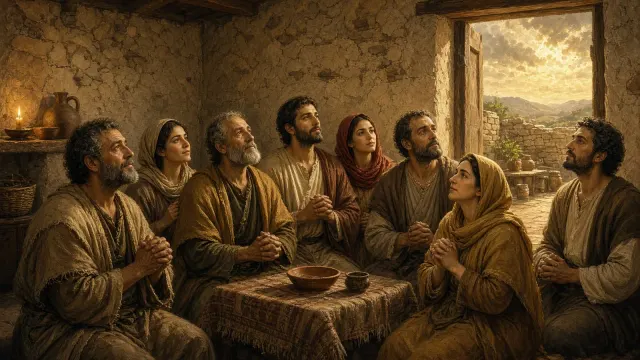
The first chapter refuses to let persecution become the Thessalonians' whole identity. Paul, Silvanus, and Timotheus begin with a church whose faith "groweth exceedingly" and whose mutual love is increasing while tribulation continues. Their endurance is then placed inside God's righteous judgment: present suffering is not the final verdict, and the revelation of Jesus brings both rest to the troubled and judgment upon those opposed to God and the gospel. The scene is vast, with mighty angels, flaming fire, and Christ glorified in his saints, yet the chapter returns directly to the congregation's present life. Paul prays that God would count them worthy of their calling and fulfill "the work of faith with power." Future glory therefore does not empty present work of meaning. It gives that work its horizon.
One complete chapter pageOpen chapter →
A False Alarm and a Rebellion Under Restraint
Chapter 2 begins with a congregation shaken by a claim about the day of Christ and ends by directing them back to what they had already been taught. Paul keeps Christ's coming and the believers' gathering to him in view, but he rejects the destabilizing message and the authority falsely attached to it. He then recalls rebellion, the man of sin, an unnamed restraint, the already working mystery of iniquity, deceptive signs, and judicial delusion. Some details remain obscure because the written letter assumes oral teaching the Thessalonians remembered. Yet the outcome is clear before the antagonist's activity is fully described: the Lord destroys him at his coming. The chapter then reverses its vocabulary. Against perishing, unrighteousness, and belief of a lie stand salvation, sanctification, and belief of the truth. The final emphasis is not fascination with the lawless figure, but steadfastness in received teaching, comfort, good words, and good work.
One complete chapter pageOpen chapter →
Quiet Work and the Lord of Peace
The final chapter turns from Paul's prayer for the Thessalonians to his request that they pray for the word to run freely and be glorified elsewhere as it has among them. Opposition remains real, but the contrast is immediate: "all men have not faith," yet "the Lord is faithful." That faithfulness frames the chapter's practical correction. Paul addresses disorderly believers who refuse to work, recalling that he and his companions labored night and day rather than burden the congregation, not because they lacked a right to support, but to provide an example. The problem is deliberate refusal, and it has produced meddling in other people's affairs. Quiet work and eating one's own bread answer the disorder. Discipline is also required, but the offender is still to be admonished "as a brother," not treated as an enemy. The letter closes with peace, Paul's handwritten mark of authenticity, and grace, linking ordinary conduct to the earlier concern about false authority.
One complete chapter pageOpen chapter →Source: eBible.org · eng-kjv2006