
The big picture
After speaking of future relief and judgement, Paul addresses a claim that has unsettled the group. Paul, a teacher of the Christian message, speaks about Jesus Christ, the returning Lord. The believers have heard alarming reports about his day. Some claim support from a spiritual message or even a letter from the workers. Paul recalls what he taught during his visit. He gives reasons to reject the alarm, while several details remain unclear to later readers who did not hear that teaching.
In this chapter
- Do Not Trust the Alarm 2 Thessalonians 2:1-2
The gathering of believers to Jesus at his return is the shared hope behind Paul's appeal.
- A Rebel Claims Divine Honour 2 Thessalonians 2:3-5
Paul says deception must not lead them.
- Evil Faces a Set Limit 2 Thessalonians 2:6-8
Something holds the rebel back, and Paul says his hearers know what it is.
- False Wonders Meet Willing Belief 2 Thessalonians 2:9-12
The rebel's appearance works through Satan, the evil opponent of God.
- Hold the Teaching Already Received 2 Thessalonians 2:13-17
Thanks replaces the warning as Paul turns back to the believers.
Central truth
Paul rejects an alarming claim about Jesus' day and calls the believers to hold the teaching they already received.


Scripture beside the summary
2 Thessalonians · King James Version · 172 Thessalonians 2:1-2
Do Not Trust the Alarm
The gathering of believers to Jesus at his return is the shared hope behind Paul's appeal. He asks the group not to lose their balance or become afraid. They have heard that Christ's day is at hand. Such a claim carries no sure weight because it comes as a spiritual message, spoken report, or letter said to be from the workers. Paul separates those alarming claims from his own teaching. The group needs a sound basis for hope, not fear driven by an untested announcement.

In everyday life
A coach passenger reads a message saying her departure has moved to another town. She holds her ticket and asks the driver to check the dispatch sheet. The message uses the operator's name, but its claim has no support there. Paul rejects a false claim about Christ's day, not a change of travel plans.
Notice
2 Thessalonians 2:2 Even a letter claiming the workers' backing must not settle the matter by itself. Paul warns that an apparent source of authority can still mislead.
2 Thessalonians 2:1-2
King James Version1Now we beseech you, brethren, by the coming of our Lord Jesus Christ, and by our gathering together unto him,
2That ye be not soon shaken in mind, or be troubled, neither by spirit, nor by word, nor by letter as from us, as that the day of Christ is at hand.
2 Thessalonians 2:3-5
A Rebel Claims Divine Honour
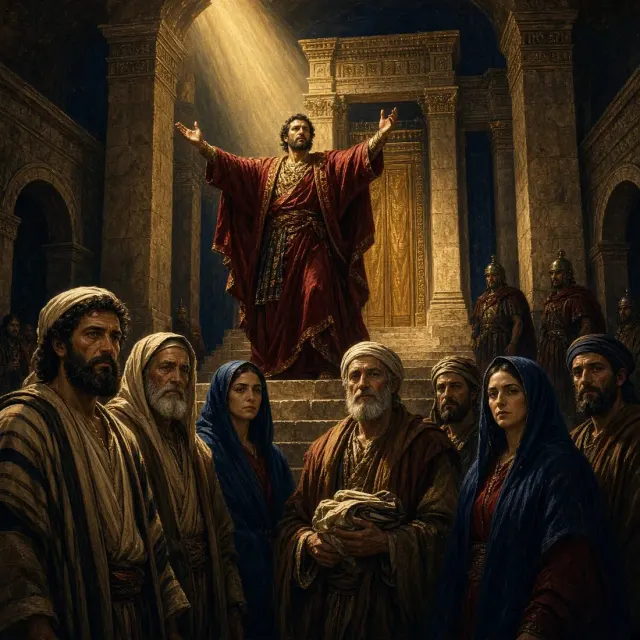
Paul says deception must not lead them. Before that day comes, there will be a falling away and the revealing of a man marked by sin and headed for ruin. This figure sets himself against God and every object of worship. He seats himself in God's temple, the place devoted to worship, and claims divine status. Paul reminds the group that he spoke of these things while with them. Christians differ over the figure's identity and how to read the temple here. Paul supplies no personal name.

In everyday life
The retreat guest watches a leader pull the group's rules from a noticeboard and replace them with his own portrait. He demands trust in every order because he claims unique spiritual status. She steps back as the room falls silent. The rebel in Paul's warning goes further by claiming to be God himself.
Notice
2 Thessalonians 2:5 The reminder points to teaching the hearers already know. Later readers lack that full spoken account, which limits how confidently the unnamed details can be filled in.
2 Thessalonians 2:3-5
King James Version3Let no man deceive you by any means: for that day shall not come, except there come a falling away first, and that man of sin be revealed, the son of perdition;
4Who opposeth and exalteth himself above all that is called God, or that is worshipped; so that he as God sitteth in the temple of God, shewing himself that he is God.
5Remember ye not, that, when I was yet with you, I told you these things?
2 Thessalonians 2:6-8
Evil Faces a Set Limit
Something holds the rebel back, and Paul says his hearers know what it is. The hidden work of evil is already active, but the restraint remains until the one restraining is removed. The wicked figure will then be revealed. Jesus will end him through the breath of his mouth and the brightness of his return. Christians differ over who or what restrains him. Paul does not name the restraint here. His clear claim is that evil's present activity will not prevent Jesus from defeating it.


In everyday life
The parking attendant stands beside a locked exit barrier while an angry driver revs his engine. She waits for the supervisor to check the dangerous load strapped to his roof. Pressure from the driver does not decide when the gate opens. Paul's unnamed restraint concerns evil and Jesus' victory, not a barrier controlled by staff.
Notice
2 Thessalonians 2:7 The old use of letteth means holding back. Reading it as permission reverses the point, since the verse describes a restraint that still limits evil.
2 Thessalonians 2:6-8
King James Version6And now ye know what withholdeth that he might be revealed in his time.
7For the mystery of iniquity doth already work: only he who now letteth will let, until he be taken out of the way.
8And then shall that Wicked be revealed, whom the Lord shall consume with the spirit of his mouth, and shall destroy with the brightness of his coming:
2 Thessalonians 2:9-12
False Wonders Meet Willing Belief
The rebel's appearance works through Satan, the evil opponent of God. It comes with displays of power and wonders that serve a lie. Those being ruined accept the deception because they refuse the truth that would bring rescue. Paul then makes a severe claim: God sends delusion so they believe the falsehood. Judgement falls on people who chose wrongdoing over truth. The account joins deceptive power with willing rejection. It does not portray the condemned as careful truth seekers who made an innocent mistake.
In everyday life
A fairgoer watches a stallholder tip the same weighted bottle back into place after each failed throw. His friend points out the trick, but he pays again because he wants the promised prize. He pushes the warning hand away. Paul describes divine judgement after rejected truth, not a customer losing money at a rigged stall.
Notice
2 Thessalonians 2:11 God sends the delusion after the refusal of truth described in the prior verse. The order matters because Paul presents judgement on rejection, not an unexplained trap.
2 Thessalonians 2:9-12
King James Version9Even him, whose coming is after the working of Satan with all power and signs and lying wonders,
10And with all deceivableness of unrighteousness in them that perish; because they received not the love of the truth, that they might be saved.
11And for this cause God shall send them strong delusion, that they should believe a lie:
12That they all might be damned who believed not the truth, but had pleasure in unrighteousness.
2 Thessalonians 2:13-17
Hold the Teaching Already Received
Thanks replaces the warning as Paul turns back to the believers. He calls them loved by the Lord and chosen by God for rescue. That rescue involves the Spirit, God's presence at work, making them holy and their trust in truth. The message called them toward sharing Jesus' glory. They must hold firm to teaching received by speech or letter. Christians differ over how that handed-on teaching relates to later church authority. Paul closes with a prayer for lasting comfort, hope, and strength for good words and deeds.

In everyday life
A beekeeper places her inspection notes beside a hive while her grandson repeats the steps she taught aloud. He checks the written list as he lifts the lid and handles each wooden rack. Spoken guidance and written notes direct the same careful work. Paul's teaching promises rescue through God, which no hive inspection can provide.
Notice
2 Thessalonians 2:15 Speech and writing both carried the teaching this group received. Paul does not treat his earlier spoken instruction as less binding because it lacked a written page.
2 Thessalonians 2:13-17
King James Version13But we are bound to give thanks alway to God for you, brethren beloved of the Lord, because God hath from the beginning chosen you to salvation through sanctification of the Spirit and belief of the truth:
14Whereunto he called you by our gospel, to the obtaining of the glory of our Lord Jesus Christ.
15Therefore, brethren, stand fast, and hold the traditions which ye have been taught, whether by word, or our epistle.
16Now our Lord Jesus Christ himself, and God, even our Father, which hath loved us, and hath given us everlasting consolation and good hope through grace,
17Comfort your hearts, and stablish you in every good word and work.
Details worth noticing
The opening image
2 Thessalonians 2:1 begins with “Now we beseech you, brethren, by the coming of our Lord Jesus Christ, and by our gathering together unto him,”
Where the chapter turns
2 Thessalonians 2:7 forms a natural hinge: “For the mystery of iniquity doth already work: only he who now letteth will let, until he be taken out of the way.”
The final note
2 Thessalonians 2:17 leaves the reader with “Comfort your hearts, and stablish you in every good word and work.”
A word trail through the chapter
The words Lord, Christ, brethren, coming, Jesus, revealed help reveal the chapter’s repeated concerns.
KJV words made clear
- perdition
- Ruin or destruction, here the end awaiting the man who opposes God.
- letteth
- Holds back or restrains, rather than allows something to happen.
- iniquity
- Wrongdoing that rejects God's rule over human conduct.
- traditions
- Teaching handed on to others, here through speech or a letter.
Music and video connected to the passage
Related media appears when its Scripture reference overlaps this study. Music and video can illuminate a theme while the biblical text remains the foundation.