
2 Timothy

4 Chapters
2 Timothy: The Whole Book, Chapter by Chapter

A Promise of Life Spoken from Confinement
The Book of 2 Timothy opens with life spoken from inside confinement. Paul remembers Timothy in prayer, remembers his tears, and names Lois and Eunice as the earlier home of the same “unfeigned faith” he now sees in Timothy. From that family memory the chapter moves directly to public responsibility: a gift must be stirred up, testimony must not become a source of shame, and the entrusted pattern of sound words must be kept through the Holy Ghost. Paul’s chains do not cancel his appointment or his confidence, because his trust rests in the one he has believed rather than in protected circumstances. The chapter then gives the charge a human face. Some have turned away, but Onesiphorus repeatedly refreshed Paul, searched for him in Rome, found him, and was “not ashamed” of the chain. Courage ends up looking remarkably practical: somebody kept looking until he found the prisoner.
One complete chapter pageOpen chapter →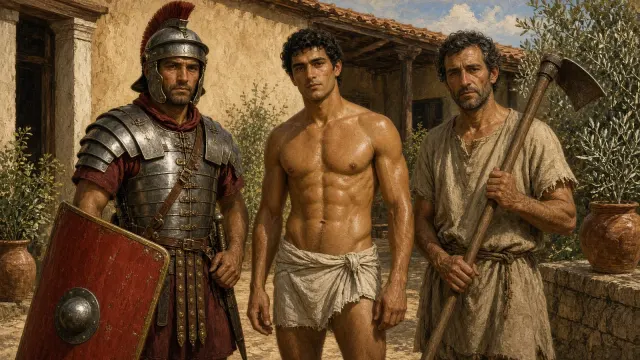
The Message Must Outlast the Messenger
The second chapter asks how the message keeps moving when its present messenger is chained. Timothy is to be strong “in the grace” of Christ and pass what he has heard to faithful people who can teach others, creating a succession rather than a one-man performance. Soldier, athlete, and farmer each add discipline to that task, but none becomes a complete rulebook by itself. Paul then gives the chapter its sharp contrast: he suffers “even unto bonds,” but “the word of God is not bound.” That freedom does not excuse sloppy teaching. Empty disputes can subvert hearers, false doctrine can spread like a canker, and the approved worker must handle the truth accurately. Yet correction is equally governed by manner. The Lord’s servant “must not strive,” but teach with gentleness, patience, and meekness. The chapter’s strongest teacher is neither passive nor combative. Truthfulness and temperament are tested together.
One complete chapter pageOpen chapter →
A Religious Appearance and a Different Kind of Formation
The third chapter begins with perilous times and then makes them uncomfortably recognizable. Its catalogue of vice is framed by disordered love, from lovers of self to lovers of pleasure more than lovers of God, and its sharpest line describes people who retain “a form of godliness” while denying its power. The danger can therefore wear religious clothing. It also works through teachers who gain access to households, exploit vulnerable people, and remain resistant to truth even while others are “ever learning.” Against them, Paul places a pattern Timothy has already watched at close range: doctrine, conduct, purpose, faith, love, endurance, persecution, and deliverance that never meant immunity from pain. The chapter then returns Timothy to the Scriptures known from childhood. Their God-breathed origin leads directly to their work in doctrine, reproof, correction, and instruction, with one destination: a person thoroughly furnished for good works. Appearance and formation are the chapter’s competing realities.
One complete chapter pageOpen chapter →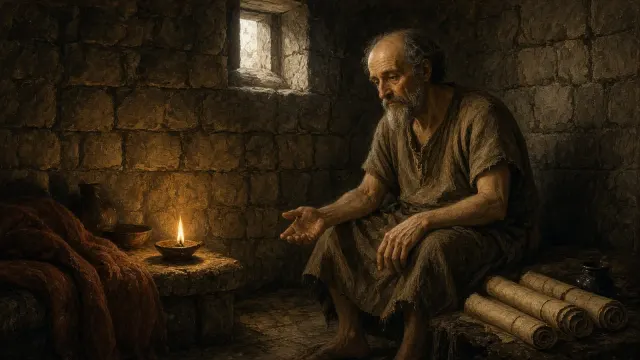
A Finished Course, an Unfinished Visit
The final chapter places Timothy’s commission beside Paul’s departure. Before God and Christ the coming judge, Timothy is charged to preach the word with urgency, patience, and doctrine even when listeners accumulate teachers to suit their own desires. Paul then speaks of himself as a poured offering and a runner at the end of the course: “I have fought a good fight, I have finished my course, I have kept the faith.” The promised crown comes from the righteous judge and is explicitly not Paul’s alone. Then the farewell becomes wonderfully concrete. Demas has forsaken him, Luke remains, Mark is wanted, Tychicus has been sent, a cloak and books are still sitting elsewhere, and Timothy is asked to come before winter. At Paul’s first defense no one stood with him, yet the Lord did. Preservation now points beyond escape from every immediate danger toward the heavenly kingdom. The letter ends with grace, greetings, sickness, travel, and an unanswered question: whether Timothy arrived in time.
One complete chapter pageOpen chapter →Source: eBible.org · eng-kjv2006