
Job

42 Chapters
Job: The Whole Book, Chapter by Chapter
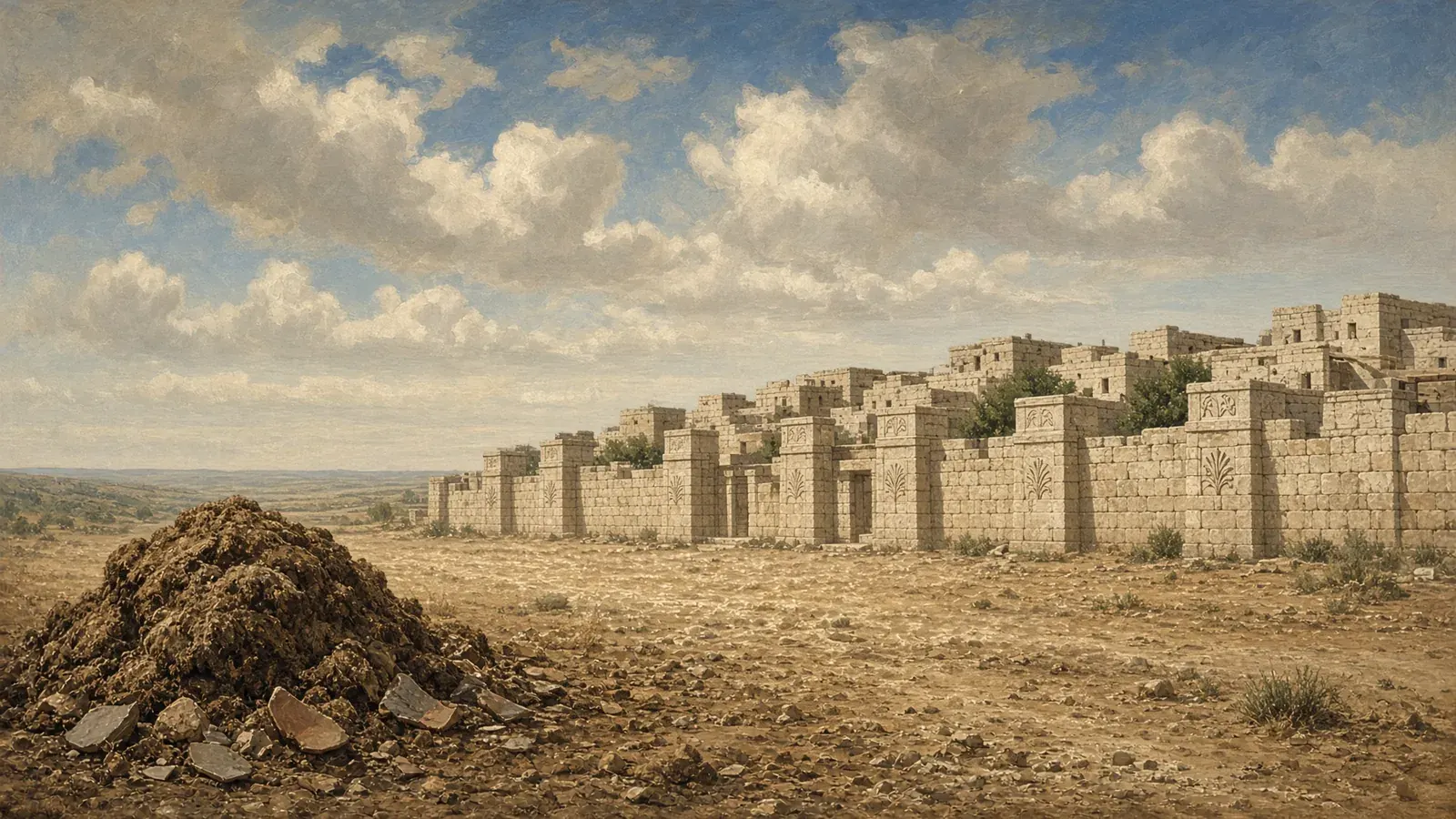
Integrity Before the Losses Begin
Job is introduced with the verdict that matters before the losses begin: he is upright, reverent, and careful to turn from evil. His prosperity follows that description but does not define it, and his repeated offerings show a father concerned even about possible inward failures among his children. The heavenly challenge then shifts the question from conduct to motive. Satan argues that Job's devotion has been purchased by protection, and permission is given to touch what he has while leaving his person untouched. The disasters arrive without pause, ending with the deaths of his children. Job's response holds mourning and worship together. He tears his clothing, shaves his head, falls down, and blesses the LORD. The chapter closes by expressly refusing to call that response sin.
One complete chapter pageOpen chapter →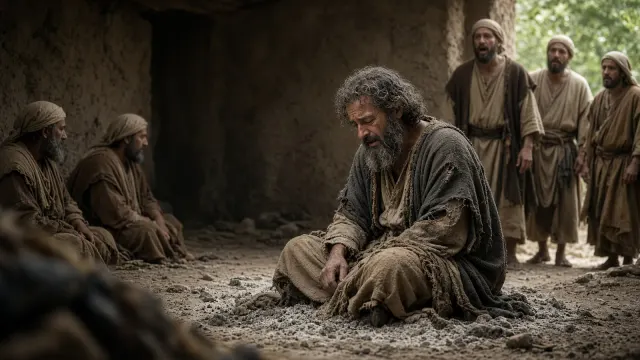
The Boundary Moves, and the Friends Sit Down
The second heavenly exchange begins with the first accusation already defeated. Job still holds fast his integrity, and the LORD describes the earlier destruction as occurring "without cause." Satan therefore changes the proposed test from possessions to person, arguing that bodily suffering will succeed where bereavement and ruin did not. Permission expands, but a boundary remains: Job's life must be spared. The sores reduce the once prosperous man to ashes and a potsherd. His wife urges the very curse Satan predicted, and Job refuses her proposal while acknowledging that calamity has come from the hand of God. Then Eliphaz, Bildad, and Zophar arrive with a stated purpose to mourn and comfort. Their first response is not argument but shared grief. Unable at first even to recognize Job, they weep, tear their garments, scatter dust, and sit beside him in silence for seven days and nights.
One complete chapter pageOpen chapter →
Job Curses the Day, Not God
After seven days of silence, Job finally gives grief a voice. He does not curse God. He curses the day of his birth and imagines that date erased from light, stars, calendar, and memory. The impossible wish turns creation backward because his present anguish makes his own beginning seem unbearable. He then imagines death as release from rank, labour, oppression, and command, a place where kings, prisoners, servants, and the exhausted lie beyond the structures that govern ordinary life. The lament broadens into a question about why life continues when a sufferer longs for its end. The hedge that Satan described as protection now feels to Job like confinement because his path cannot be seen. He closes not with explanation but with bodily grief: sighing before food, roaring like water, no safety, no quiet, no rest. Trouble has arrived before the sentence can settle.
One complete chapter pageOpen chapter →
Eliphaz Brings Experience and a Night Vision
Eliphaz begins with real knowledge of Job's former life. The man now collapsed in grief once strengthened weak hands and steadied people who were falling. Yet Eliphaz turns that memory into pressure, suggesting that the former comforter should already possess the words needed to manage his own suffering. He then moves from personal observation to a rule: those who plow iniquity reap it, while the innocent are not cut off. The image is orderly, but its application assumes that ruin can identify guilt. A frightening night vision supplies a second source of authority, emphasizing human frailty before the Maker. The vision may speak truly about mortal limitation, but it does not identify Job's offence. Eliphaz therefore crosses from broad truths about divine power and human weakness to a particular diagnosis without supplying the evidence that would make that diagnosis fit the man before him.
One complete chapter pageOpen chapter →
Eliphaz Promises a Repaired World
Eliphaz develops his first speech into a complete remedy. He warns that wrath and envy consume the foolish, describes the collapse of a fool's household, and urges Job to seek God. He then praises divine acts that raise the lowly, frustrate the crafty, and give hope to the poor. The praise has substance, but it becomes part of an argument that treats Job's suffering as correction before identifying what needs correcting. From there Eliphaz promises repeated deliverance, peace with the world, a secure home, many descendants, and a full life ending in old age. The warmth of the promise cannot remove the unsupported diagnosis beneath it. He closes by saying the matter has been searched and settled, leaving little room for Job's own testimony to alter the conclusion. The speech offers an orderly repaired world, but it assumes it already knows why Job's world broke.
One complete chapter pageOpen chapter →
Job Asks for Weight, Evidence, and Friendship
Job answers by putting grief and speech on the same set of scales. His words cannot be judged as though they arose in a vacuum; the calamity that produced them feels heavier than the sand of the sea. He rejects the assumption that he has strength like stone or flesh like brass and says that the future Eliphaz promises may lie beyond his ability to endure. The reply then shifts from divine affliction to failed friendship. Job compares his companions to seasonal streams that look abundant until heat makes water necessary, only to vanish when travellers depend on them. He has not asked for money, ransom, or rescue from an enemy. He asks for loyalty and for correction supported by evidence. His final challenge is exact: teach him where he has erred and he will listen. Desperate speech is not enough to prove the guilt his friends are beginning to infer from it.
One complete chapter pageOpen chapter →
A Life Too Brief for Such Relentless Scrutiny
Job turns from the friends toward God and describes time as working against him in two opposite ways. Individual nights drag through sleeplessness and bodily misery, while life as a whole races away like a weaver's shuttle. Death looks like disappearance from house, place, and familiar eyes. Divine attention, which might ordinarily suggest care, feels instead like surveillance directed at a creature too small to justify such pressure. Job compares himself to a dangerous sea force placed under guard, then says that even sleep has become hostile through frightening dreams. He does not deny that sin exists in his life, but he refuses to let that admission become proof of the great concealed offences his friends are beginning to imagine. The chapter closes with a paradox. Job asks to be left alone, yet also asks why pardon is withheld and imagines God seeking him after he has vanished into dust.
One complete chapter pageOpen chapter →
Bildad Makes the Outcome the Evidence
Bildad answers Job's anguish by defending divine justice, but he frames the problem as though only two possibilities exist: either Job's household deserved what happened or God has perverted judgment. He directly links the deaths of Job's children with transgression and then makes Job's recovery conditional on purity and uprightness, even though the book has already called Job upright. Bildad appeals to the wisdom of earlier generations and uses marsh plants, garden growth, and a spider's web to show how quickly unsupported prosperity can collapse. The images make good sense as pictures of fragile security, but they do not prove that Job has forgotten God. His final promise of laughter and restoration is warm only on the premise that Job accepts the moral diagnosis attached to it. The chapter therefore makes outcome into evidence: ruin is read backward into guilt, while future prosperity is presented as proof of restored righteousness.
One complete chapter pageOpen chapter →
The Judge Is Also the Opposing Party
Job agrees that God is wise and mighty, but he turns those very attributes into the problem of access. A mortal cannot contend with the one who moves mountains, shakes the earth, commands sun and stars, and performs wonders beyond counting. The issue is not whether God exists or possesses power. It is whether Job can obtain a hearing when the judge is also experienced as the opposing party. He complains that calamity visibly overtakes both the innocent and the wicked and speaks with dangerous severity about a world in which judgment appears compromised. Then he returns to his own case: his days race away, efforts to make himself clean seem useless, and terror makes speech impossible. The chapter ends by naming what is missing. Job wants a "daysman," an arbiter who can lay a hand on both unequal parties, remove fear, and make genuine exchange possible.
One complete chapter pageOpen chapter →
The Maker’s Care Becomes Job’s Argument
Job turns directly to God and asks for the charge behind the sentence. Divine knowledge makes the problem sharper, not easier, because God does not need the slow investigation of a human judge. Job then appeals to the care with which his body was formed: hands fashioned him, bones and sinews joined him, life was granted, and divine visitation preserved him. That remembered care becomes evidence inside the complaint. Why would the Maker now seem intent on destroying what he formed so carefully? Job imagines every possible plea closing against him. Guilt brings punishment, while righteousness appears unable to lift his head. The speech ends where earlier lament began, with regret over birth and a request that God allow a little comfort before death. Creation's careful workmanship and the darkness of the grave remain unreconciled, which is precisely why Job continues asking rather than settling for the friends' explanation.
One complete chapter pageOpen chapter →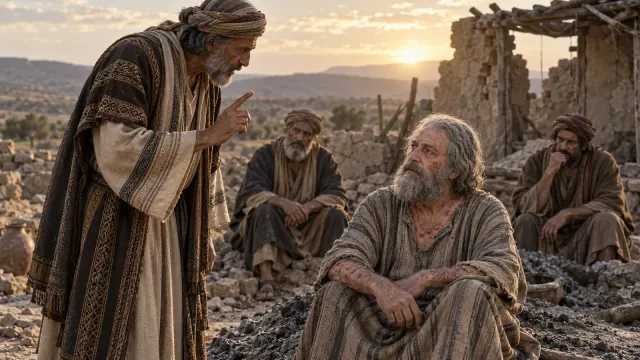
Zophar Claims to Know the Hidden Side
Zophar enters the debate with less caution than the other friends. He treats the sheer quantity of Job's words as evidence against him and sharpens Job's defence of integrity into claims easier to attack. Then he announces the conclusion he wishes God would reveal: Job is actually receiving less suffering than his iniquity deserves. The severity of that claim is matched by the absence of new evidence. Zophar praises God's wisdom as higher than heaven and deeper than the grave, yet uses that unsearchable wisdom to speak with remarkable certainty about God's hidden judgment. His closing promise resembles the other friends' offers of restoration. If Job prepares his heart, removes iniquity, and cleans wickedness from his tents, light, security, and rest can return. The future sounds attractive because it answers Job's own images of darkness and sleeplessness, but the path to it requires Job to accept a guilt Zophar has assumed rather than demonstrated.
One complete chapter pageOpen chapter →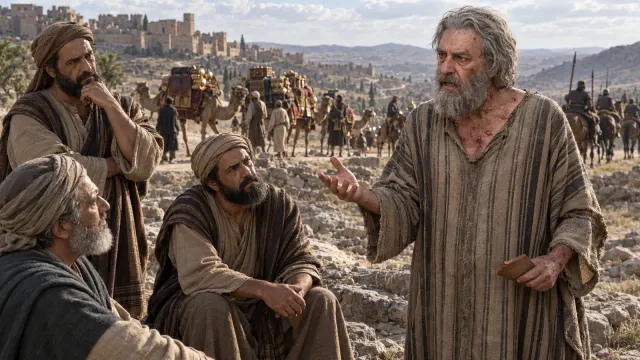
Wisdom Has Not Become the Friends’ Private Property
Job answers the friends' confidence with irony: if they are the people, perhaps wisdom will die with them. He refuses the idea that suffering has made him intellectually inferior and points to observations that do not fit their moral arithmetic. The upright can be mocked while robbers prosper. Then Job widens the discussion to creation itself. Beasts, birds, earth, and fish all testify to dependence on God's hand, which means divine sovereignty is not private information possessed by the friends. Job agrees that wisdom, counsel, strength, and understanding belong to God, but he emphasizes actions that overturn human arrangements rather than simply confirming them. Counsellors, judges, rulers, trusted speakers, elders, and nations can all lose what seemed secure. The chapter does not replace the friends' formula with another formula. It shows that God's rule is broader and more unsettling than the simple inference that visible disaster always identifies visible guilt.
One complete chapter pageOpen chapter →
Job Refuses a Defence of God Built from False Charges
Job turns his attack on the friends into an argument about honest advocacy. He knows the principles they know, but their diagnosis has not healed anything, so he calls them physicians of no value and says silence would improve their wisdom. More seriously, he accuses them of trying to defend God by partiality and deceit. A righteous God does not need false charges made on his behalf. Job then accepts the danger of bringing his case directly. The KJV's "Though he slay me, yet will I trust in him" stands beside his insistence that he will maintain his ways before God. Trust does not erase protest. Job wants the conditions of a real hearing: the crushing hand withdrawn, terror reduced, a specific account of his sins, and an answer. He would rather risk direct encounter than obtain peace by admitting a moral explanation he believes to be false.
One complete chapter pageOpen chapter →
A Tree Has a Future, and Job Asks About His Own
Job closes his first long round of replies by setting human brevity beside the surprising resilience of a tree. A mortal life is a flower cut down, a shadow that will not stay, and a hired day that Job wants permission to finish without relentless scrutiny. A felled tree has an advantage: old roots can answer the scent of water with new growth. Human death appears to Job far more final. Yet from inside that bleak contrast he imagines a daring alternative. Perhaps the grave could hide him only until wrath passes. Perhaps God could appoint a time, remember him, call, and once again desire the work of his hands. The possibility never hardens into settled certainty. Mountains fall, stones wear away, and hope can be washed out like earth under water. The chapter therefore allows hope to appear, speak clearly for a moment, and then be challenged again by the visible finality of death.
One complete chapter pageOpen chapter →
Eliphaz Hears Rebellion Where Job Asks for a Hearing
Eliphaz begins the second round by treating Job's own protest as evidence of guilt. Words once dismissed as excessive are now called irreverent, crafty, and self-condemning. He appeals again to age, inherited wisdom, and the impurity of human beings before God, but the specific charge against Job still fails to appear. The second half of the speech paints the wicked in detail: terror follows them, darkness surrounds them, destruction waits, wealth fails, homes collapse, and growth never reaches maturity. Many of those images resemble experiences Job has already described. That resemblance does the accusatory work. Eliphaz pairs a recognizable pattern of suffering with a moral portrait of rebellion and invites everyone to infer the character from the calamity. The rhetoric grows stronger while the evidence remains the same. Job's resistance to the diagnosis is itself now being used to confirm the diagnosis, making the friends' reasoning increasingly difficult for him to escape.
One complete chapter pageOpen chapter →
The Battered Man Asks Heaven to Keep His Case
Job answers the second round by naming the friends "miserable comforters." Their words have multiplied the very burden they came to relieve. He imagines reversing places and says he could easily heap up accusations from safety, but he would rather use speech to strengthen the sufferer. The chapter then becomes brutally physical. Job's wasted body seems to testify against him, human hostility and divine attack converge in his experience, and he describes himself as seized, broken, surrounded, and used as a target. Yet he continues to deny that violence in his hands or corruption in his prayer explains what has happened. From that denial the speech rises toward a new legal hope. Job asks the earth not to cover his blood or silence his cry and says that his witness is in heaven. Even as death approaches, he wants the case preserved, represented, and carried beyond the mockery of his friends.
One complete chapter pageOpen chapter →
A Pledge Sought from God, a Household Imagined in the Grave
Job sees death close enough to speak of graves as ready for him, but he still asks for legal security. No human companion has provided the support he needs, so he asks God to become the surety behind his case. That request deepens the paradox already present in his heavenly witness: the one Job experiences as the source of distress is also the only one large enough to secure vindication. Public identity has collapsed along with bodily strength. He has become a byword, his sight is dim, and his limbs feel like shadows. Yet a brief assertion interrupts the decline: the righteous can hold their way, and clean hands need not surrender because people mock them. Job then returns to darkness. Broken purposes matter as much as shortened days, and the grave is imagined as a house where corruption and worms replace family. The chapter ends with hope itself threatened by the same descent into dust.
One complete chapter pageOpen chapter →
Bildad Sets Traps Around a Portrait of the Wicked
Bildad answers Job's attack on the friends by defending not only his argument but the stability of the world's order. He portrays Job's complaint as though one man's anger demanded that earth and rock be displaced for him. From there the speech becomes an elaborate portrait of the wicked. Light goes out in the dwelling, every path becomes a trap, terror drives the feet, bodily strength is consumed, the home is taken over by death, and finally root, branch, descendants, public memory, and name disappear. The images are frightening partly because they resemble Job's actual losses. Bildad lets that resemblance imply the moral identity he has already assigned to the portrait. The problem therefore remains the same as before: suffering is being used to prove the guilt that was assumed in order to interpret the suffering. The chapter ends by calling this the dwelling of one who does not know God, directly opposing the opening description of Job as a man who feared God.
One complete chapter pageOpen chapter →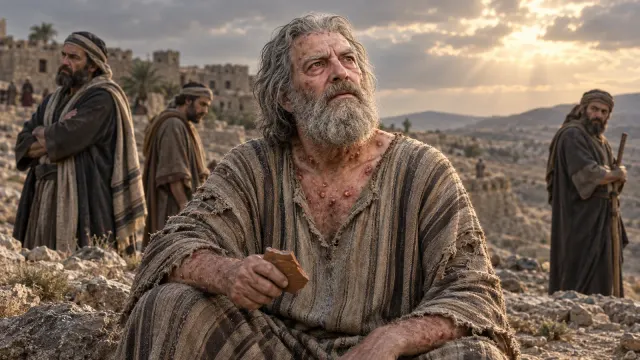
A Living Redeemer Beyond the Failed Circle of Friends
Job begins by naming words as part of his suffering. His friends have not merely observed his ruin; their repeated accusations have helped break him down while treating the ruin itself as proof. From there his world narrows under images of blocked roads, stripped honour, siege, estranged relatives, ignored pleas, and a body barely holding together. Yet the chapter does not end inside that collapse. Job asks for words durable enough to outlive him, then declares that his redeemer lives and that he himself will see God. The exact timing and manner remain open, but the confidence is unmistakably personal. He finally turns judgment back toward the accusers, reminding them that their pursuit of a suffering man is also morally accountable.
One complete chapter pageOpen chapter →
Zophar Describes Wickedness as a Meal That Turns Poisonous
Zophar answers Job's warning as though the rebuke itself demands an immediate response. His second speech gives the friends' familiar doctrine a vivid bodily form: wickedness is sweet in the mouth, poisonous in the belly, swallowed wealth that must be vomited out, and fullness interrupted at the very moment satisfaction seems complete. The moral centre of the portrait is genuine oppression, including seizure of another person's house and harm to the poor. The problem is evidentiary. Zophar supplies no witness connecting those crimes to Job. Weapons, fire, darkness, heaven, and earth finally close around the wicked person until nothing offers safety. The speech is powerful as a picture of judgment, but it still assumes the conclusion it needs to prove about the man before him.
One complete chapter pageOpen chapter →
Job Answers the Rule with the World Outside the Conversation
Job answers the friends' rule by asking them to look beyond the conversation. He describes wicked people who do not collapse on schedule: they grow old, remain powerful, see their children established, hear music in secure homes, and sometimes die after lives of ease. He is careful to reject their counsel even while insisting that their prosperity is real. The challenge then widens. One person dies strong and well supplied, another in lifelong bitterness, and both enter the same dust. Even an expected future judgment does not make present circumstances a dependable moral label. Job appeals to travellers and public experience against the friends' closed system, then ends with the practical result. Comfort built on an account that does not fit observed life cannot actually comfort the sufferer it is meant to explain.
One complete chapter pageOpen chapter →
Eliphaz Supplies the Crimes His Argument Requires
Eliphaz moves from implication to indictment. He accuses Job of taking pledges unjustly, withholding water and bread, emptying widows' hands, and crushing the fatherless, but he supplies no witnesses and no events. The accusations are not discoveries; they are the crimes his explanation requires if Job's suffering must be deserved. He also assigns Job a theology Job has not expressed, turning difficulty in finding God into a claim that God cannot see through clouds. The second half of the speech sounds more generous, offering peace, instruction, rebuilt life, heard prayer, and light. Yet every promise rests on the same unproved diagnosis that Job has departed from God through hidden iniquity. The invitation comes close to Job's deepest desires while demanding a confession the book has not established as true.
One complete chapter pageOpen chapter →
The Absent Judge Who Knows the Whole Case
Job's answer makes clear that access to God is not something he has rejected. It is exactly what he wants. He imagines finding the divine seat, ordering his cause, filling his mouth with arguments, hearing God's answer, and receiving strength rather than being crushed by unequal power. Then the search fails in every direction. God is active but invisible, beyond Job's reach. The asymmetry of knowledge becomes crucial: Job cannot locate God, yet he remains confident that God knows his path and would find his integrity genuine under examination. That confidence does not remove fear. God's purpose cannot be redirected by Job, and the calamity remains part of an appointment he cannot understand. The chapter leaves desire for the judge and dread of the judge standing side by side.
One complete chapter pageOpen chapter →
The Hungry Carry the Harvest
Job widens the argument from his own affliction to the public life of vulnerable people. Landmarks are moved, animals essential to poor households are taken, hungry workers handle another person's harvest, thirsty labourers tread winepresses, and exposed bodies endure rain without shelter. The problem is not lack of wrongdoing but the absence of a visible timetable on which wrongdoing is answered. Darkness further complicates the friends' symbolism. Criminals deliberately seek it to avoid recognition, while Job has inhabited darkness through suffering, proving that a shared circumstance does not establish a shared moral cause. The chapter's ending is difficult, speaking of the wicked eventually being removed, but even that does not erase the evidence already placed on the page. Eventual mortality or judgment is not the same claim as an immediately readable moral order.
One complete chapter pageOpen chapter →
Bildad’s Last Word Makes Humanity Very Small
Bildad's final speech is only six verses, but it reaches upward to dominion, heavenly peace, innumerable armies, universal light, and the smallness of mortal humanity before God. Job has not denied divine greatness, so the grandeur does not answer the question he has been pressing about injustice visible on earth. Bildad then asks how anyone born of woman can be clean before God and descends from moon and stars to humanity figured as a worm. The comparison emphasizes creaturely limitation, but it still does not provide evidence for the particular crimes previously charged against Job. A universal claim about human frailty cannot by itself explain why one person suffers while another prospers. The debate therefore contracts rather than resolves, leaving majesty affirmed and Job's specific case still unanswered.
One complete chapter pageOpen chapter →
The Argument Ends at the Edge of a Whisper
Job responds to Bildad by asking what his impressive language has actually accomplished for a powerless person. The sarcasm is pointed because Job does not reject the subject of divine greatness. He immediately gives a larger account of it himself. The dead, destruction, earth, clouds, sea, heavenly pillars, and the strange forces represented in ancient poetic imagery all lie within God's reach. Hidden regions are not hidden from him, even when Job cannot find him. Yet the chapter's decisive move comes at the end. After assembling a catalogue more expansive than Bildad's, Job calls it only the edges of God's ways, a faint portion of what can be heard. Divine power is real, vast, and still not exhausted by human description. The friends cannot settle the dispute merely by reminding Job of a greatness he already knows.
One complete chapter pageOpen chapter →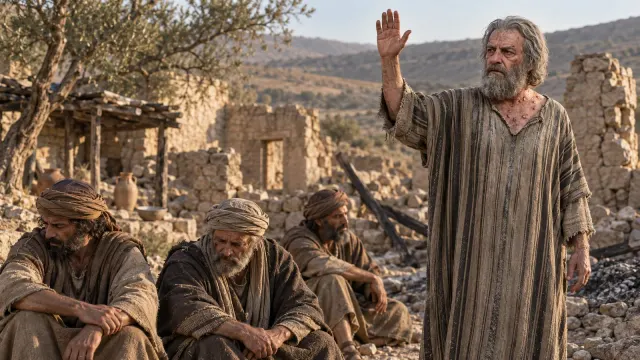
Job Will Not Purchase Agreement with a False Confession
Job places his integrity under oath and invokes the living God even while accusing that God of withholding his judgment. The tension is deliberate. He refuses to escape the argument by abandoning God, but he also refuses to reconcile with the friends through a confession he believes would be false. To "justify" them at the price of deceit would itself violate the truth he is defending. The chapter then turns toward the fate of the wicked in language close to earlier speeches from Zophar and the others. That resemblance creates interpretive difficulty, but Job continues to distinguish himself from the oppressor. He can affirm that unjust gain is fragile without conceding that every ruined household was built by injustice. His opening oath governs the chapter: traditional judgment language cannot be converted quietly into an admission of the crimes charged against him.
One complete chapter pageOpen chapter →
The Mine Reaches Treasure, but Not Wisdom
Job 28 interrupts the accusations with a poem about the reach and limit of human discovery. Miners enter darkness, overturn rock, redirect water, and bring hidden treasure into light, reaching places unknown even to sharp-eyed birds and powerful animals. The achievement is real and impressive, which makes the contrast with wisdom stronger. Wisdom has no mine, market price, or hidden address waiting to be uncovered by extending the search. Depth, sea, death, and destruction cannot claim possession of it, and gold cannot buy it. God alone knows its place because his sight reaches the whole created order. Humanity receives something different from exhaustive explanation: the fear of the Lord and departure from evil, qualities that echo the description of Job at the book's beginning.
One complete chapter pageOpen chapter →
The Life Job Expected to Keep
Job's recollection of former life begins with divine nearness, not with property. He remembers God preserving him, light guiding him, children around him, and a household marked by abundance. Public honour at the city gate then receives its explanation: Job says people respected him because he delivered the poor, aided the fatherless and widow, investigated unfamiliar cases, and used strength against exploitation. Wealth appears as a resource that could warm and help others rather than as proof of moral worth. He also remembers expecting this ordered life to continue, like a watered root and a secure nest. The chapter closes with the sharpest reversal in reserve. Job once gave counsel that fell like rain and comforted mourners. He is now the mourner whose own visitors have failed to comfort him.
One complete chapter pageOpen chapter →
But Now
The chapter opens with two devastating words: "But now." Everything Job remembered in chapter 29 is reversed. Respect becomes ridicule, social standing becomes public contempt, and a life once described as rooted and watered becomes exposed to assault like a breached defence. The collapse then moves inward. Bones, sinews, skin, sleepless pain, mire, dust, and ashes replace the robe and diadem of former honour. Job turns directly toward God and says his cries are unanswered and divine power feels like active opposition. The accusation remains Job's speech, but the anguish must not be softened. He finally compares former compassion for sufferers with the evil that met him when he expected good. Harp and organ remain, yet their sound has changed into mourning and the voice of those who weep.
One complete chapter pageOpen chapter →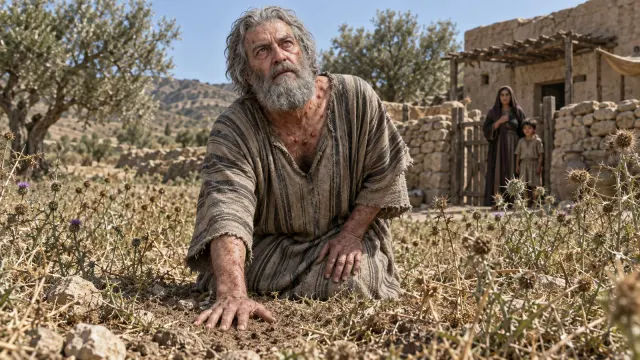
The Signed Defence
Job's final sustained defence is built from conditional oaths. He does not merely repeat that he is innocent of the friends' charges; he names areas where guilt could be tested and accepts consequences if his claims prove false. Desire, honesty, marriage, servants, widows, orphans, wealth, worship, enemies, hospitality, public influence, hidden wrongdoing, and ownership of land all come under examination. The structure matters because these are not disguised confessions. Job invites accurate weighing. He also answers Eliphaz's accusations with concrete counterclaims about feeding, clothing, defending, and hearing the vulnerable. The climax is judicial: Job wants a written charge he can carry openly and answer step by step. Even his land and furrows may testify against him if acquired unjustly. The defence ends not by silencing witnesses, but by demanding that every possible witness be heard.
One complete chapter pageOpen chapter →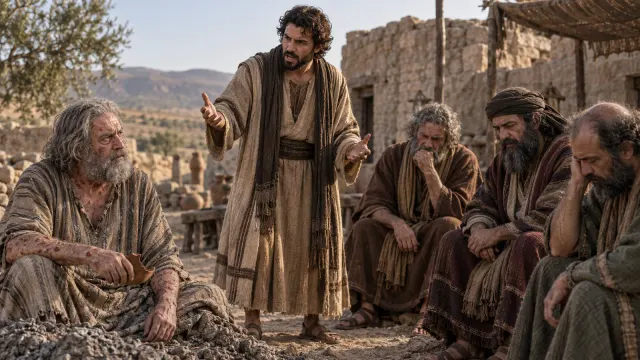
A Younger Voice Has Been Waiting
The three friends finally stop answering, but the silence is not agreement. Elihu enters angry with both sides. He believes Job has justified himself rather than God, yet he also condemns the friends for reaching a verdict when they could no longer answer Job. His youth explains why he waited, but he rejects age as an automatic guarantee of wisdom. Understanding ultimately depends on the Almighty's gift, not on seniority alone. Elihu insists that he listened carefully and will not simply repeat the earlier speeches. His urgency then becomes almost physical: words feel like fermenting wine without a vent. Still, he promises impartiality and rejects flattering titles. The chapter therefore establishes a new speaker with strong claims about posture, sincerity, and independence. Whether his argument actually improves on the debate remains to be tested by what follows.
One complete chapter pageOpen chapter →
Pain as a Possible Means of Warning
Elihu begins by offering Job something the earlier exchange rarely provided: a speaker made of the same clay, able to hear and answer without the terror of overwhelming divine power. He then challenges Job's account of God's treatment and proposes a broader explanation for divine communication. God may speak through dreams, through severe bodily affliction, and through a messenger who interprets the person's condition and announces deliverance. Suffering in this model can function preventively or restoratively rather than merely as proof of hidden past crimes. The pattern includes warning, pain, mediation, ransom, renewed life, prayer, and acknowledged wrong. Yet Elihu does not demonstrate that every element of this pattern explains Job's losses. He ends by inviting Job to answer or remain silent, while positioning himself as the teacher who can supply wisdom.
One complete chapter pageOpen chapter →
Justice Cannot Be Separated from the Ruler of All
Elihu gathers imagined wise listeners and asks them to test Job's words. His central claim is categorical: God does not do wickedly or pervert judgment, and no authority above God delegated the world to him. Every creature depends on the breath God gives, while earthly rank gives no exemption before the Maker of rich and poor alike. Elihu also insists that darkness cannot hide wrongdoing from divine sight and that the cries of afflicted people reach God. These claims directly address several concerns Job has raised, though they still do not disclose the hidden cause of Job's own suffering. The chapter grows harsher at the end. Elihu offers words of teachable repentance, then says Job has spoken without knowledge and should be tested further. His earlier desire to justify Job now stands beside a much more severe judgment on Job's speech.
One complete chapter pageOpen chapter →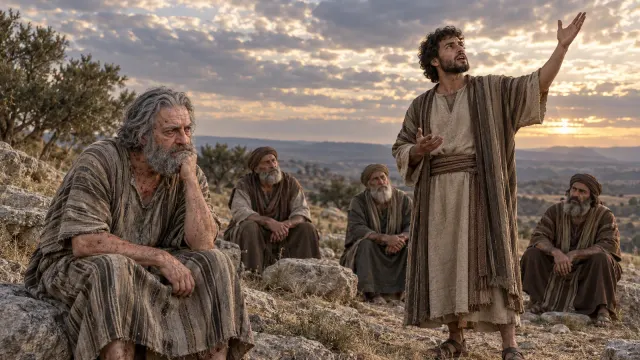
The Cry and the Answer
Elihu distinguishes God's independence from the real effects human conduct has on other people. Righteousness does not enrich God as though it were a payment, and sin does not deprive him of something needed for existence. Yet human beings can still harm or benefit one another, which keeps moral action from becoming meaningless. Elihu then turns to the cries produced by oppression and argues that pain alone is not identical with consciously seeking the Maker. That distinction may be intelligible in itself, but Job has in fact spent much of the debate addressing God, so it cannot simply be applied to him without further argument. The chapter closes by insisting that an unseen judge still has the case before him. Elihu urges trust in that interval, then again concludes that Job's multiplied words lack knowledge, preparing a phrase that will echo in the coming divine address.
One complete chapter pageOpen chapter →
The Teacher Turns Toward the Weather
Elihu begins his final movement with enormous confidence, promising to speak on God's behalf while insisting that divine might does not make the poor invisible. He then treats affliction as a place where the ear can be opened to discipline, a proposal that widens suffering beyond simple punishment without revealing the hidden circumstances of Job's losses. When he applies the scheme directly to Job, his certainty becomes more questionable: he closes off wealth, force, death, and wrongdoing as imagined exits, then calls Job's chosen course iniquity. From there the speech changes scale. God is the teacher no one has instructed, his works can be seen without being fully comprehended, and the weather becomes the field of attention. Rain, cloud, light, and thunder can nourish or judge, so the same created process already resists a one-purpose explanation.
One complete chapter pageOpen chapter →
At the Edge of the Whirlwind
Elihu's weather language reaches its peak as thunder makes even the confident teacher tremble. Snow, rain, frost, wind, and cloud interrupt human work, send animals to shelter, and continue according to a counsel people do not administer. Just as important, Elihu refuses to assign every storm the same purpose. Correction, care for the land, and mercy all appear as possibilities, making his own weather account broader than the friends' single moral formula for calamity. He then turns directly to Job with questions about clouds, heat, and the polished sky, only to include himself in the limits exposed by those questions: human beings cannot properly order their speech before God out of darkness. The chapter closes with light emerging after obscurity, but not with a complete explanation. Clarity reveals majesty, while the Almighty remains beyond exhaustive human finding.
One complete chapter pageOpen chapter →
The Lord Answers, but Not on the Proposed Terms
The decisive change is not a new argument but a new speaker: the Lord answers Job from the whirlwind. Job had wanted a hearing in which he could present his case and receive an answer, yet the encounter reverses the direction of examination. He is asked where he was when the earth was founded, whether he has governed the sea and dawn, surveyed death, stored snow and hail, watered empty wilderness, ordered the stars, commanded lightning, or fed wild creatures. The questions do not reveal the heavenly exchanges of the opening chapters, and they do not validate the friends' invented charges. They place Job's judgments inside a creation whose scale, variety, and purposes exceed one human vantage point. Especially striking is the rain that falls where no person lives and the raven whose cry is heard. Divine government includes places with no human customer and lives outside human economy.
One complete chapter pageOpen chapter →
A World That Does Not Wait for Human Permission
The Lord's questions move from weather and sky into a living world that does not wait for human supervision. Wild goats give birth beyond the keeper's count, the wild ass treats the driver's shout as irrelevant, and the powerful wild ox cannot simply be converted into dependable farm labour. The ostrich combines exposed eggs and apparent lack of wisdom with speed that can shame a horse, while the warhorse carries strength and appetite for battle its trainer did not manufacture. Finally, hawk and eagle fly, nest, see, hunt, and feed their young without receiving Job's command. None of these creatures fits a single scale of usefulness or worth. The chapter repeatedly separates observation from ownership and strength from service. It also refuses a soft picture of creation: the eagle closes the speech where the slain are, preserving predation inside the world the Lord governs.
One complete chapter pageOpen chapter →
Job’s Hand Goes to His Mouth
Job's first response to the Lord is brief because the scale of the conversation has changed. He lays his hand on his mouth and declines to continue the argument as before, yet the Lord speaks again rather than ending the encounter there. The second challenge brings justice into direct focus: will Job disannul divine judgment in order to maintain his own righteousness, and can he actually wield the universal power needed to bring every proud and wicked person low? The question does not validate the friends' accusations against Job. It exposes a different excess in Job's indictment of divine government. Behemoth then appears as a fellow creature, "made with thee," possessing enormous bodily strength and a settled place among food, shade, reeds, and water. Its scale exceeds Job's without making it a rival to the Creator who made them both.
One complete chapter pageOpen chapter →
Leviathan Does Not Become a Household Pet
Leviathan carries the challenge of creaturely power further by making ordinary human methods look almost absurd. Hooks, cords, bargaining, service, play, trade, spears, swords, arrows, and slingstones all fail to reduce the creature to a manageable object. The description gives lavish attention to tightly joined scales, terrible teeth, flashing eyes, smoke, flame, strength, and a heart hard as millstone. Whether the imagery is read around a powerful aquatic animal or in the language of a traditional sea monster, the chapter does not supply a simple modern field identification. Its argument turns instead on the difference between human fear and divine ownership. If people cannot casually confront what God has made, they cannot treat its Maker as a debtor whom they have first supplied. "Whatsoever is under the whole heaven is mine" stands at the center, keeping even leviathan inside the world of the Creator whose power the creature displays.
One complete chapter pageOpen chapter →
The Servant Is Heard, and the Friends Need His Prayer
Job's final response names the limit exposed by the whirlwind speeches: he had spoken about matters too wonderful for his understanding. The change is not a discovery that the friends were right about secret crimes. It is a recognition that his defence had reached beyond the knowledge from which he could judge the whole government of God. Hearing has become encounter, and the KJV records Job's response in the language of abhorrence and repentance in dust and ashes. Then the Lord turns to Eliphaz and overturns the social and theological posture of the debate. The three friends are rebuked for not speaking rightly of God as Job has, and the man they condemned becomes the servant whose prayer is accepted for them. Restoration follows with renewed fellowship, doubled livestock, seven sons, three named daughters who receive inheritance among their brothers, and a long life reaching four generations. The ending restores generously without erasing the earlier dead or converting suffering into a formula.
One complete chapter pageOpen chapter →Source: eBible.org · eng-kjv2006