The big picture
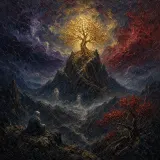
The debate over Job's suffering pauses for a poem about wisdom, the ability to know the right way to live. Job is the man whose friends have offered confident accounts of his pain. Here the focus shifts to what human skill can find and what it cannot. Miners bring hidden treasures out of the earth. Wealth buys rare and costly things. Yet neither deep digging nor a full purse can reach the wisdom that God knows.
In this chapter
- Miners Reach Beneath the Fields Job 28:1-6
Silver has a place in the ground, and gold has a place where it is refined.
- Human Hands Open Hidden Paths Job 28:7-11
Birds cannot see the path described here, and even a lion has not walked it.
- No Treasure Pays for Wisdom Job 28:12-19
A question interrupts the account of mining: where can wisdom be found?
- Even Death Has Only Heard Job 28:20-22
The question about wisdom's source returns.
- God Knows the Way Job 28:23-28
God alone knows wisdom's place and the path to it.
Central truth
Human skill uncovers hidden treasure, but wisdom comes through reverence for God and turning from evil rather than wealth or cleverness.
Scripture beside the summary
Job · King James Version · 28Job 28:1-6
Miners Reach Beneath the Fields
Silver has a place in the ground, and gold has a place where it is refined. People draw iron from earth and melt metal from rock. They carry light into dark depths, searching places far from ordinary life. The wording about water and those far from human feet is difficult, but the work clearly reaches hidden ground. Above, the earth yields food. Below, it is broken open to reveal gems and gold. Human beings possess real skill and courage in finding things the surface does not disclose.
In everyday life
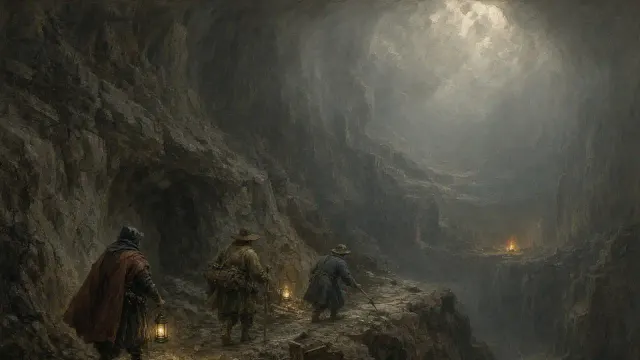
Two mine workers check their lamps at the mouth of a shaft beneath a wheat field. One lowers the sample bag while the other tests the rope. A place that looks like farmland from above contains another kind of work below. The poem honours human reach before asking about wisdom, which no shaft can uncover.
Notice
Job 28:5 Food grows on the surface while the ground below is disturbed in search of treasure. The contrast draws attention to a hidden world reached by human work.
Job 28:1-6
King James Version1Surely there is a vein for the silver, and a place for gold where they fine it.
2Iron is taken out of the earth, and brass is molten out of the stone.
3He setteth an end to darkness, and searcheth out all perfection: the stones of darkness, and the shadow of death.
4The flood breaketh out from the inhabitant; even the waters forgotten of the foot: they are dried up, they are gone away from men.
5As for the earth, out of it cometh bread: and under it is turned up as it were fire.
6The stones of it are the place of sapphires: and it hath dust of gold.
Job 28:7-11
Human Hands Open Hidden Paths
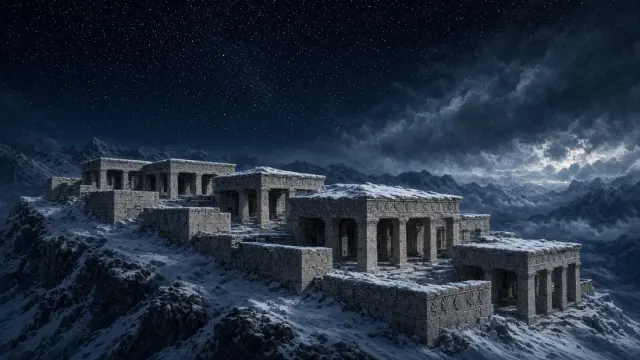
Birds cannot see the path described here, and even a lion has not walked it. The miner reaches where sharp eyes and strong animals do not. Hands break rock, cut channels and turn up the roots of mountains. Water is held back so hidden treasure can be brought into daylight. The poem does not dismiss human skill as worthless. It gives that skill a large place before naming its limit. A person can change the face of a mountain and still lack the wisdom needed to judge a life.
In everyday life
The drainage contractor cuts a narrow channel through rock while a colleague holds the lamp steady. Water changes course, and a sealed chamber comes into view. Careful work reaches a place no passing eye has found. Their skill brings hidden stone into the light. The poem asks for a kind of knowledge that digging cannot supply.
Notice
Job 28:11 Bringing hidden things to light is a real human achievement here. That praise makes the coming limit sharper: finding treasures does not mean finding wisdom.
Job 28:7-11
King James Version7There is a path which no fowl knoweth, and which the vulture’s eye hath not seen:
8The lion’s whelps have not trodden it, nor the fierce lion passed by it.
9He putteth forth his hand upon the rock; he overturneth the mountains by the roots.
10He cutteth out rivers among the rocks; and his eye seeth every precious thing.
11He bindeth the floods from overflowing; and the thing that is hid bringeth he forth to light.
Job 28:12-19
No Treasure Pays for Wisdom
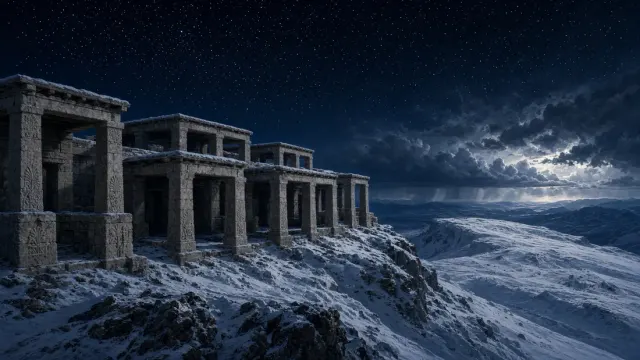
A question interrupts the account of mining: where can wisdom be found? People do not know its worth or where to obtain it. The deep and the sea are pictured denying that they hold it. Gold cannot pay for it, and weighed silver falls short. The finest gems and precious materials fail the same test. Even goods prized for their distant source do not equal wisdom. The long list strips away one possible price after another. This is not a treasure reserved for whoever can afford the largest sum.
In everyday life
An auction buyer sets down her bidding card when a family asks how to settle an old quarrel. She can price every jewel on the table, but her figures do not tell them how to act fairly. The sale catalogue has reached its limit. The poem locates wisdom in God, not in a skilled buyer's judgement.
Notice
Job 28:15 Gold and silver fail as payment before the list of gems even begins. The problem is not finding a higher price but mistaking wisdom for something sold.
Job 28:12-19
King James Version12But where shall wisdom be found? and where is the place of understanding?
13Man knoweth not the price thereof; neither is it found in the land of the living.
14The depth saith, It is not in me: and the sea saith, It is not with me.
15It cannot be gotten for gold, neither shall silver be weighed for the price thereof.
16It cannot be valued with the gold of Ophir, with the precious onyx, or the sapphire.
17The gold and the crystal cannot equal it: and the exchange of it shall not be for jewels of fine gold.
18No mention shall be made of coral, or of pearls: for the price of wisdom is above rubies.
19The topaz of Ethiopia shall not equal it, neither shall it be valued with pure gold.
Job 28:20-22
Even Death Has Only Heard
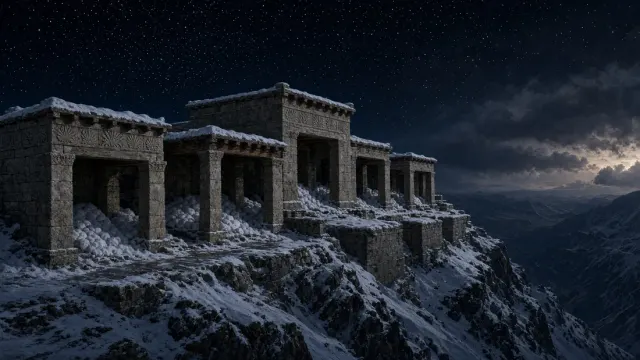
The question about wisdom's source returns. It remains hidden from living eyes, including birds that range across the sky. Death and destruction are given voices, but even they claim only to have heard a report of it. Going farther or looking from higher up does not solve the search. Nor does the realm beyond ordinary human life claim full knowledge. The poem has moved from what miners find to what no creature can seize. It now leaves the reader waiting for a source other than human reach or wealth.
In everyday life
A missing-persons researcher finishes calling the last address on a long list. Each contact has heard the name, but none has met the woman she seeks. More rumours do not amount to a known location. She closes the map without claiming success. The poem concerns wisdom hidden from living creatures, not a person whose address remains unknown.
Notice
Job 28:22 Death speaks as one that has heard a report, not as wisdom's owner. Even this farthest limit of human life does not yield the answer.
Job 28:20-22
King James Version20Whence then cometh wisdom? and where is the place of understanding?
21Seeing it is hid from the eyes of all living, and kept close from the fowls of the air.
22Destruction and death say, We have heard the fame thereof with our ears.
Job 28:23-28
God Knows the Way
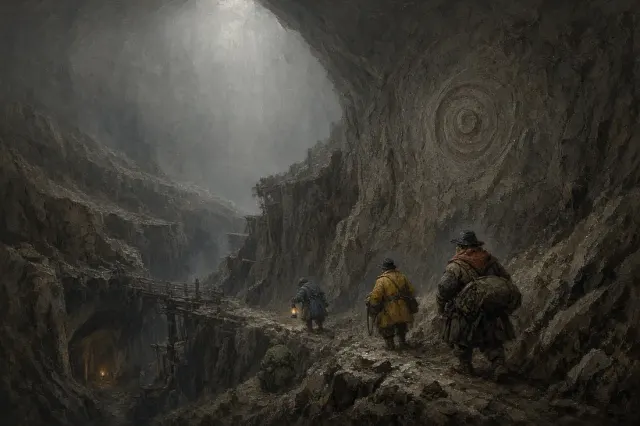
God alone knows wisdom's place and the path to it. His sight reaches the whole earth. He gives wind its weight, measures water and orders rain and lightning. Wisdom belongs with that complete knowledge of the world's workings. For human beings, the answer is stated in terms of life, not a hidden mine. To fear God means to honour him with deep respect. To understand means to leave evil behind. The poem ends with a way to live while leaving God's full knowledge beyond human possession.
In everyday life
One bridge designer puts aside a model and listens to the safety inspector who sees the whole site. She follows the limits he gives and stops a shortcut that endangers the crew. Trust changes her next action without giving her every answer. God's wisdom covers all creation, while any human inspector knows only a part.
Notice
Job 28:28 The answer for people names respect for God and departure from evil. It does not promise them the full view of creation described in the lines before it.
Job 28:23-28
King James Version23God understandeth the way thereof, and he knoweth the place thereof.
24For he looketh to the ends of the earth, and seeth under the whole heaven;
25To make the weight for the winds; and he weigheth the waters by measure.
26When he made a decree for the rain, and a way for the lightning of the thunder:
27Then did he see it, and declare it; he prepared it, yea, and searched it out.
28And unto man he said, Behold, the fear of the Lord, that is wisdom; and to depart from evil is understanding.
Details worth noticing
The opening image
Job 28:1 begins with “Surely there is a vein for the silver, and a place for gold where they fine it.”
Where the chapter turns
Job 28:12 forms a natural hinge: “But where shall wisdom be found? and where is the place of understanding?”
The final note
Job 28:28 leaves the reader with “And unto man he said, Behold, the fear of the Lord, that is wisdom; and to depart from evil is understanding.”
A word trail through the chapter
The words gold, place, wisdom, earth, knoweth, price help reveal the chapter’s repeated concerns.
KJV words made clear
- fine
- Refine or purify metal by removing what does not belong in it.
Music and video connected to the passage
Related media appears when its Scripture reference overlaps this study. Music and video can illuminate a theme while the biblical text remains the foundation.