The big picture
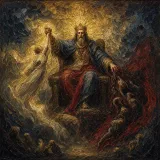
Thanksgiving opens the psalm because God's deeds make his nearness known. A voice of judgement then speaks of holding the world steady when it seems to dissolve. Proud people are warned not to lift their power against that rule. A cup of strong wine pictures the judgement the wicked must drink. The singer ends in lasting praise to the God of Jacob, the ancestor whose name represents God's people.
In this chapter
- The Judge Holds the Pillars Firm Psalms 75:1-3
The people give repeated thanks because God's name is near, made known through his wondrous works.
- Pride Cannot Appoint Its Own Rise Psalms 75:4-7
Foolish and wicked people are warned against boastful conduct.
- The Cup Must Be Drunk Psalms 75:8-10
The Lord holds a cup of strong mixed wine and pours it out.
Central truth
God holds the world steady and decides who rises or falls, so boastful power cannot escape his judgement.

Scripture beside the summary
Psalms · King James Version · 10Psalms 75:1-3
The Judge Holds the Pillars Firm
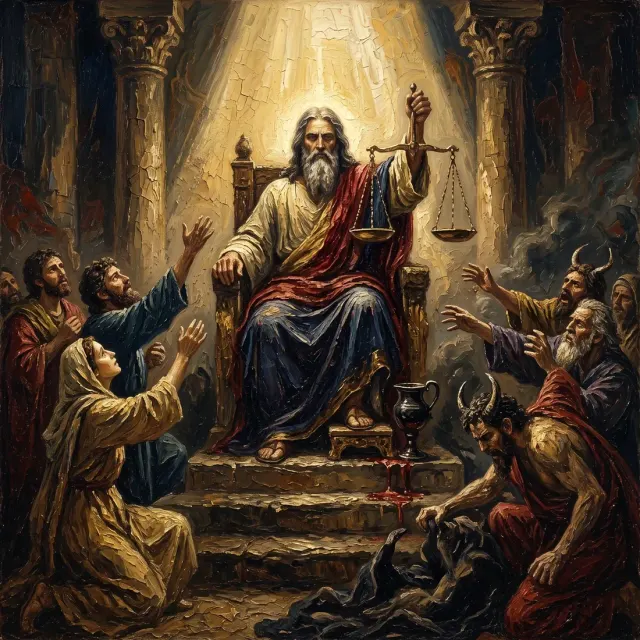
The people give repeated thanks because God's name is near, made known through his wondrous works. A judging voice then promises fair judgement when the appointed gathering is received. Even if earth and its inhabitants seem to melt away, the speaker holds its pillars steady. The image presents order sustained amid collapse. Thanksgiving is therefore answered by an assurance about rule. The world is not left to dissolve under human disorder, because the authority speaking can judge rightly and uphold what others cannot keep firm.
In everyday life
A bridge controller watches instruments register violent movement during a storm. She calls the maintenance crew to the central support points and keeps the road closed while the structure is checked. The public sees shaking, but the crew attends to what holds the span. Order requires more than reassuring words. The psalm's judge sustains the world itself.
Notice
Psalms 75:3 Pillars are pictured holding the earth when everything seems to dissolve. The claim places stable judgement beneath visible turmoil, rather than letting turmoil decide the outcome.
Psalms 75:1-3
King James Version1Unto thee, O God, do we give thanks, unto thee do we give thanks: for that thy name is near thy wondrous works declare.
2When I shall receive the congregation I will judge uprightly.
3The earth and all the inhabitants thereof are dissolved: I bear up the pillars of it. Selah.
Psalms 75:4-7
Pride Cannot Appoint Its Own Rise
Foolish and wicked people are warned against boastful conduct. Raising a horn and stiffening the neck picture defiant strength that refuses to bow. Advancement does not finally come from looking towards one region or another for support. God is the judge who lowers one person and raises another. The warning challenges those treating position as something their own force guarantees. Their gestures of power remain under a higher verdict. The psalm does not name a cleverer route to promotion; it names the one who decides rank.

In everyday life
A junior orchestra leader boasts that friends in three departments will secure the next appointment. At the audition, the chair asks him to set aside the recommendations and play. His network has not made the decision his own. He must face an assessment beyond the confidence he brought into the room. God's judgement reaches further than a musical appointment.
Notice
Psalms 75:7 God is named as judge before the lowering and raising are described. Changes in rank are placed under moral authority rather than presented as random movement.
Psalms 75:4-7
King James Version4I said unto the fools, Deal not foolishly: and to the wicked, Lift not up the horn:
5Lift not up your horn on high: speak not with a stiff neck.
6For promotion cometh neither from the east, nor from the west, nor from the south.
7But God is the judge: he putteth down one, and setteth up another.
Psalms 75:8-10
The Cup Must Be Drunk
The Lord holds a cup of strong mixed wine and pours it out. All the wicked must drink even the bitter residue at the bottom. The cup pictures unavoidable judgement, received fully rather than tasted and set aside. The singer then promises to declare God's deeds and praise him forever. The final words speak of cutting off wicked strength and raising righteous strength. The contrast completes the warning to boastful power: the horns lifted in pride cannot decide their own future before the judge who holds the cup.
In everyday life
A disciplinary clerk places a final ruling before a manager who has tried to accept only its convenient parts. She reads the full decision, including the consequences he wants omitted. He cannot treat the verdict as a menu. The complete record remains on the desk for him to receive. The psalm's cup represents God's judgement on all wickedness.
Notice
Psalms 75:8 Even the dregs must be drunk. The picture stresses completeness: the condemned cannot stop at the pleasant part or leave the hardest consequence untouched.
Psalms 75:8-10
King James Version8For in the hand of the LORD there is a cup, and the wine is red; it is full of mixture; and he poureth out of the same: but the dregs thereof, all the wicked of the earth shall wring them out, and drink them.
9But I will declare for ever; I will sing praises to the God of Jacob.
10All the horns of the wicked also will I cut off; but the horns of the righteous shall be exalted.
Details worth noticing
The opening image
Psalms 75:1 begins with “Unto thee, O God, do we give thanks, unto thee do we give thanks: for that thy name is near thy wondrous works declare.”
Where the chapter turns
Psalms 75:7 forms a natural hinge: “But God is the judge: he putteth down one, and setteth up another.”
The final note
Psalms 75:10 leaves the reader with “All the horns of the wicked also will I cut off; but the horns of the righteous shall be exalted.”
A word trail through the chapter
The words wicked, declare, earth, horn, horns, judge help reveal the chapter’s repeated concerns.
KJV words made clear
- horn
- Strength and proud power, pictured through the horn of an animal.
- dregs
- The thick residue left at the bottom of a cup.
Music and video connected to the passage
Related media appears when its Scripture reference overlaps this study. Music and video can illuminate a theme while the biblical text remains the foundation.