
Ruth

4 Chapters
Ruth: The Whole Book, Chapter by Chapter
Loss, Loyal Love, and a Return to Bethlehem
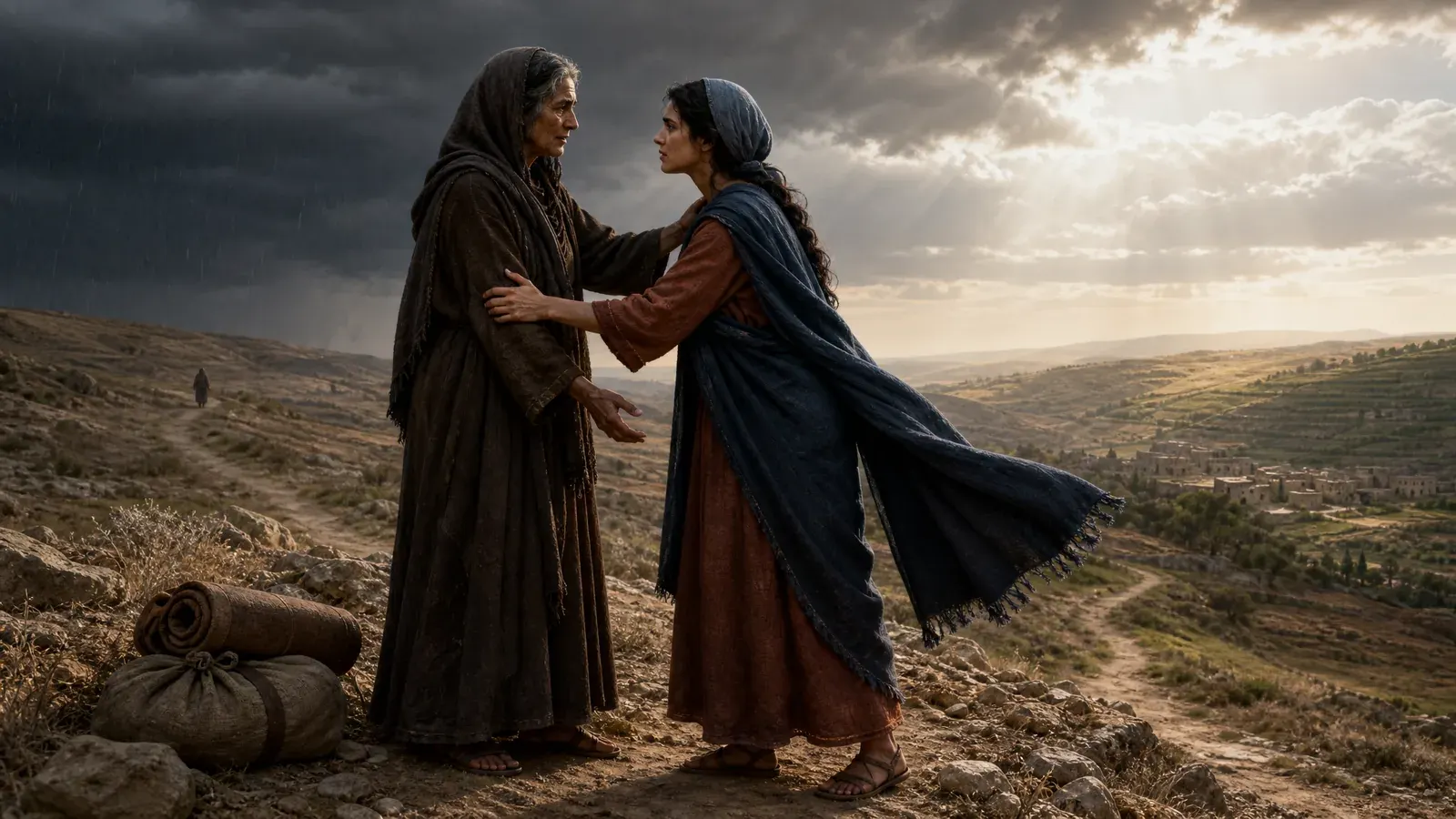
The Book of Ruth opens with a household steadily emptied by famine, migration, and death. Bethlehem has no bread, so Elimelech’s family goes to Moab, where Naomi eventually loses her husband and both sons. When she hears that the LORD has given bread again in Judah, she begins the return and urges Ruth and Orpah to seek new futures rather than bind themselves to her losses. Orpah leaves after Naomi’s repeated request, while Ruth chooses a loyalty that reaches beyond companionship to people, God, death, and burial. Bethlehem receives the two women at barley harvest, but Naomi can still describe herself as empty while Ruth stands beside her. The chapter closes without correcting Naomi’s grief. Instead, the Book of Ruth quietly places grief, loyal presence, returning bread, and the beginning of harvest in the same frame.
One complete chapter pageOpen chapter →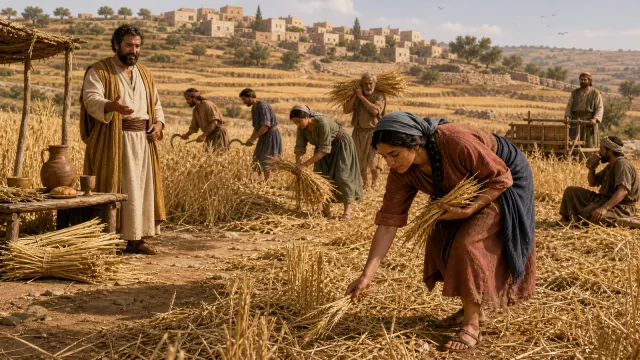
Gleaning Becomes a Place of Protection and Provision
The Book of Ruth moves from famine and bereavement into the working life of a harvest field. Ruth goes to glean, a provision already built into Israel’s law for vulnerable people, and her “hap” brings her to land belonging to Boaz, a relative of Elimelech. Boaz’s response turns generosity into a set of concrete protections: Ruth may remain with his women workers, drink freely, eat at his table, gather without rebuke, and work under an explicit order that the young men not touch her. He also has extra grain dropped deliberately for her. Ruth returns to Naomi with abundance and with food saved from the meal. When she names Boaz, Naomi sees more than a successful day. She recognizes covenant kindness and identifies him as one of their redeemers. Hope is returning, but the chapter lets it ripen through both barley and wheat harvests rather than forcing a quick resolution.
One complete chapter pageOpen chapter →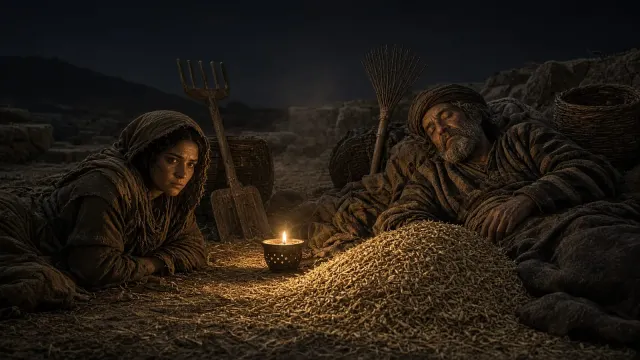
Ruth Asks Boaz to Act as Redeemer
The Book of Ruth brings the question of redemption into a tense nighttime encounter without allowing the chapter to end there. Naomi seeks “rest” for Ruth, meaning a secure household and future, and sends her to the threshing floor with a plan that carries genuine social risk. Ruth follows the instructions, but at midnight she also speaks with remarkable directness. She asks Boaz to spread his covering over her because he is a near kinsman, echoing his earlier blessing about refuge under the LORD’s wings. Boaz praises her character and agrees to act, yet he will not erase the nearer redeemer’s right. The private request therefore points toward public legal resolution. Before dawn Boaz sends Ruth back with grain and a promise in motion. Naomi then tells her to wait, not because Ruth has done nothing, but because she has acted, spoken, and asked plainly. The next responsibility belongs to Boaz.
One complete chapter pageOpen chapter →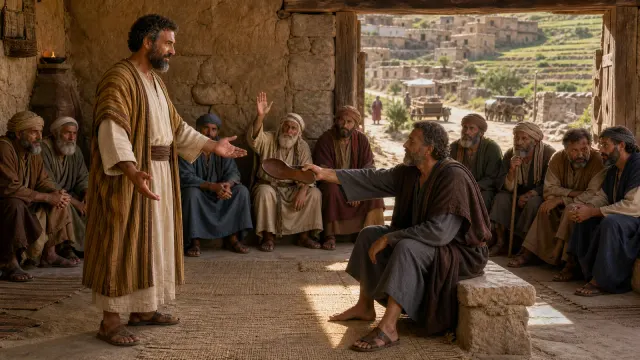
Public Redemption Opens Into a Royal Genealogy
The Book of Ruth finishes the redemption question in daylight, before witnesses, and then lets the result expand far beyond the city gate. Boaz gathers the nearer kinsman and ten elders, presents Naomi’s land interest, and makes clear that redemption also involves Ruth and the preservation of the dead man’s name and inheritance. The nearer man declines when the full obligation becomes clear, and the sandal exchange publicly confirms that Boaz may proceed. The witnesses bless Ruth and place her within the family memory of Israel. Boaz marries Ruth, the LORD gives conception, and Obed is born. The women who once heard Naomi call herself empty now speak of restored life and future care, and they praise Ruth as better to Naomi than seven sons. Then the Book of Ruth changes scale. A genealogy runs from Pharez to David, showing that ordinary loyalty, lawful redemption, harvest provision, and the inclusion of a Moabite woman have become part of Israel’s royal record.
One complete chapter pageOpen chapter →Source: eBible.org · eng-kjv2006