The big picture
Pleasure, construction, wealth, servants, entertainment, wisdom, inheritance, and work all enter the same examination. Ecclesiastes does not claim that nothing feels good. The Preacher says his heart rejoiced in his labor, and wisdom is still better than folly. The problem appears when temporary enjoyment is asked to become permanent profit. Death levels the wise and the fool, memory fades, and a carefully built estate passes to an heir whose character the builder cannot control. Anxiety can continue after the hands stop working. The chapter then makes its crucial turn: eating, drinking, and satisfaction in labor can still be good, not as conquests that defeat mortality, but as gifts from God within a limited life. Enjoyment survives the test only after it stops pretending to be ownership of tomorrow.
Central truth
The Preacher's pleasure, possessions, and skilled labour yield real enjoyment but cannot prevent death or control who inherits their results, so enjoyment must be received from God.

The study notes have a page of their own
The movement by movement analysis, the words to trace, the verse by verse notes and where readers differ are written for someone studying alone. They are on the Deep Personal Reflections page for this chapter. This page is the lesson.
A chapter-specific teaching brief
These anchors come from this chapter itself. They help a teacher use the Level 1 overview, the Level 2 study, and the Scripture text as one lesson.
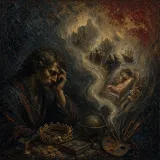
Open with the chapter’s first image
Ecclesiastes 2:1: “I said in mine heart, Go to now, I will prove thee with mirth, therefore enjoy pleasure: and, behold, this also is vanity.”
Slow down at the turning point
Ecclesiastes 2:13: “Then I saw that wisdom excelleth folly, as far as light excelleth darkness.”
Keep this word trail visible
heart, labour, vanity, wisdom, wise, fool
What to explain, in order
Teach the passage in this order. Each step names the verses it rests on, so every point can be shown in the text before it is applied.
Ecclesiastes 2:1-3
A deliberate experiment
Start by showing that this is a test, not a binge. "I will prove thee with mirth" means I will put you to the test with pleasure. The Preacher gives himself to wine "yet acquainting mine heart with wisdom", so he stays in control and observes himself as he goes. His aim is stated: to see what is good "for the sons of men, which they should do under the heaven all the days of their life". Teach this first because without it the class hears the next verses as indulgence. He is a researcher using his own life as the laboratory, and 2:2 already hints at the result.
Ecclesiastes 2:4-9
The great inventory
Read the list as one long breath and let it be heard. Point out the grammar: "I made me", "I builded me", "I planted me", "I got me", "I gathered me". Every line puts the self at the centre. Explain that the pools of 2:6 are irrigation works, so this is not idle luxury but serious building. Note the servants and maidens without passing over them; people are counted among his possessions, which the class may rightly find troubling. Finish on 2:9, "So I was great", and "also my wisdom remained with me". He kept his head throughout, which makes the verdict that follows his considered judgment.
Ecclesiastes 2:10-11
Joy as portion, not profit
This is the hinge, and it is where most learners go wrong. Read 2:10 first and stress that the heart rejoiced. Explain portion as an allotted share, like a plate served at a table: what you are given to enjoy now. Then read 2:11, where he looks back over all of it and finds "no profit under the sun". Profit is the word from 1:3, surplus that remains. Teach the two words side by side, portion and profit. The chapter says there is a portion and denies a profit, and the rest of the book depends on keeping them distinct.
Ecclesiastes 2:12-16
Light that still goes out
Now he turns from pleasure to wisdom. Show that he affirms wisdom strongly, as light against darkness, and that the wise person sees where he is going. Then read "one event happeneth to them all". Explain event as the thing that happens to someone, here death. Verse 16 adds forgetfulness: the wise are no better remembered than fools. Teach this step to keep both truths standing. Wisdom is worth having in life; it does not purchase an exemption from death. Learners who can hold that tension are ready for the hardest part of the chapter.
Ecclesiastes 2:17-23
Hatred, despair and the sleepless night
Read 2:17 plainly: "Therefore I hated life". Do not soften it, and do not linger on it either. Explain that the hatred is aimed at work that will be handed on and at life judged by what it can keep. Then trace the reasons: an unknown heir who may be a fool, work done in equity handed to someone who did not labour, and nights without rest. Verse 20 says he went about to make his heart despair. Teach this with care. Name it as the honest bottom of the argument, and tell the class that the Book of Ecclesiastes does not leave him there.
Ecclesiastes 2:24-26
From the hand of God
End with the turn. After the despair comes "There is nothing better", and the good named is ordinary: eating, drinking, enjoying good in one's labour. The new element is its source, "from the hand of God". Verse 25 asks who can eat or enjoy apart from him. Verse 26 says God gives wisdom, knowledge and joy to the one good in his sight, while the sinner gathers and heaps up for another. Explain that this is not a prosperity promise; even this "also is vanity", brief and beyond control. Teach it last because it is the first appearance of a pattern the book repeats.
Where learners get stuck
The misreadings this passage tends to produce, and how to answer each from the text.
"The lesson of chapter 2 is that wealth, pleasure and building projects are sinful."
The Preacher's heart "rejoiced in all my labour" (2:10), and in 2:24 eating, drinking and enjoying good in labour are called "from the hand of God". What fails is not the gardens or the music but the attempt to make them yield a lasting profit (2:11). Teach the distinction between enjoying gifts and demanding that they save us. Gardens, music, meals and work are good; they simply cannot carry the weight of eternity.
"If wise and foolish both die, there is no point being wise."
Ecclesiastes 2:13 says wisdom excels folly "as far as light excelleth darkness", and 2:14 says the wise man's eyes are in his head. The shared death of 2:16 is a limit on wisdom's reach, not a cancellation of its worth. Walking in daylight is better than walking in the dark, even when both roads end in the same place. Learners should leave able to value wisdom without expecting it to defeat death.
"Verse 26 means God makes good people rich and takes money from sinners."
Ecclesiastes 2:26 says God gives the good "wisdom, and knowledge, and joy", not money, and the sentence ends "This also is vanity and vexation of spirit". The same book observes in 9:11 that riches do not always go to the wise and in 8:14 that the righteous sometimes receive what the wicked deserve. The verse contrasts receiving joy from God with a restless heaping up that ends in another's hands. Keep it from becoming a guarantee.
"Verse 17 shows that hating life is a normal spiritual stage, so it is fine to stay there."
The Book of Ecclesiastes reports the Preacher's despair honestly in 2:17-20, but it does not commend staying there; within four verses it turns to receiving good "from the hand of God" (2:24). The despair belongs to an argument about trying to secure life by work. If someone in the room is carrying that feeling now, do not treat it as a lesson topic. Speak with them afterwards and make sure they have proper care.
Learning objectives
- List the different pleasures tested in verses 1–10.
- Distinguish enjoyment during labour from lasting profit afterwards.
- Explain why wisdom remains better than folly.
- Identify death as the event shared by wise and foolish.
- Trace the anxiety about an unknown successor.
- Explain the change to receiving in verses 24–26.
Teacher preparation
- Read 1:12–18 and all of chapter 2; mark each change from experiment to evaluation.
- Prepare a four-column inventory: pleasures, projects, possessions, and people; do not treat the servants as decorative property.
- Retain the KJV's 'musical instruments' in 2:8 rather than silently substituting another translation's disputed reading.
- Plan a sober reading of 2:17–23; never ask learners to supply personal accounts of despair.
- Place 'my portion' in 2:10 beside 'the hand of God' in 2:24 to expose the chapter's important turn.
Evidence and interpretation checks
Explicit
Show both results in Ecclesiastes 2:10–11: the heart rejoiced in labour, yet the final survey found no enduring profit under the sun.
Scripture-supported
Read Ecclesiastes 2:13–16 with 9:11: wisdom has value without guaranteeing victory over death or circumstances.
Strong inference
Infer from Ecclesiastes 2:18–21 that loss of control over succession intensifies the despair; the inheritance problem concerns an unknown future recipient.
Possible or traditional reading
Discuss the traditional association of Ecclesiastes 2:4–9 with Solomon's royal life; do not identify the unnamed heir in 2:19 as a textual certainty.
Limit
State that Ecclesiastes 2:24–26 neither promises universal wealth to righteous people nor declares food, music, gardens, and work inherently sinful.
Discussion with answer guidance
1. Why list houses, gardens, pools, singers, and silver instead of saying 'luxury'?
What a good answer contains
Because the length of the list is the argument. Houses, vineyards, gardens and orchards, pools "to water therewith the wood that bringeth forth trees" (2:6), servants, herds, silver and gold, singers and "musical instruments, and that of all sorts" (2:8). Nothing is left untried, so the verdict of 2:11 cannot be waved away as the complaint of someone who never had enough. A good answer sees thoroughness. A weak answer reads the list as a boast or as a sermon against wealth, which the passage does not yet make it.
Show teacher guidance
Notice the experiment's range in 2:4–10; this is no conclusion reached after one disappointing afternoon.
2. Did the Preacher enjoy his labour, or did nothing please him?
What a good answer contains
He did enjoy it, and the text says so plainly: "I withheld not my heart from any joy; for my heart rejoiced in all my labour: and this was my portion of all my labour" (2:10). Only after that does 2:11 report that "there was no profit under the sun". The joy was real and it was his portion, his share; what it could not be was a lasting surplus. A strong answer keeps both verses. A weak answer says nothing pleased him and so misses the distinction the chapter turns on.
Show teacher guidance
Require 2:10 before 2:11; acknowledge real enjoyment and distinguish it from the lasting gain sought.
3. How can wisdom excel folly if both people die?
What a good answer contains
Because wisdom's advantage is real for as long as life lasts, and death is shared at the end of it. "Then I saw that wisdom excelleth folly, as far as light excelleth darkness" (2:13); "The wise man's eyes are in his head; but the fool walketh in darkness" (2:14). Then "one event happeneth to them all" and "how dieth the wise man? as the fool" (2:16). A good answer holds both claims at once, light now and the same grave later. A weak answer drops one: either wisdom is pointless, or the wise escape death.
Show teacher guidance
Use light and darkness in 2:13–14, then the shared death in 2:16; preserve both claims.
4. What about the successor makes the completed work distressing?
What a good answer contains
That he cannot know or control who will receive it. "And who knoweth whether he shall be a wise man or a fool? yet shall he have rule over all my labour" (2:19). Verse 21 sharpens it: work done "in wisdom, and in knowledge, and in equity" passes "to a man that hath not laboured therein". A good answer names loss of control as the wound, and notices that the heir is unnamed. A weak answer imports a family quarrel or a particular son the text does not supply.
Show teacher guidance
Identify the unanswered wise-or-foolish question in 2:19; do not substitute a named son or invented family quarrel.
5. What makes the night in verse 23 part of the argument?
What a good answer contains
It shows that all the effort has not bought rest. "For all his days are sorrows, and his travail grief; yea, his heart taketh not rest in the night" (2:23). The worker who built so much lies awake over it. After the inventory of 2:4-9, the reader might expect a man at peace; instead the chapter ends its complaint in a sleepless bed. A good answer links the night to 2:22's question about what a man has of all his labour. A weak answer treats it as a detail about insomnia.
Show teacher guidance
Connect sleepless thought to the labourer's sorrow; ownership has not purchased rest, despite the impressive inventory.
6. What changes when enjoyment is described as coming from God's hand?
What a good answer contains
Enjoyment stops being a prize won and becomes a gift received. "There is nothing better for a man, than that he should eat and drink, and that he should make his soul enjoy good in his labour. This also I saw, that it was from the hand of God" (2:24). Compare the repeated "I made me" and "I got me" of 2:4-8 with God who "giveth" in 2:26. A good answer notices the shift from acquiring to receiving. A weak answer turns 2:26 into a promise that good people will always end up rich.
Show teacher guidance
Contrast receiving in 2:24–26 with the repeated acquiring in 2:4–10; reject the idea that gifts become guarantees of control.
Responsible application
Heart and habits
Ask learners to revise a fictional executive's claim that one more project will finally eliminate uncertainty.
Relationships and community
Have a group propose a fair handover of completed work without demanding that successors reproduce every preference of its founder.
Enjoyment without ownership of tomorrow
Invite a sample description of a shared meal or finished task that expresses gratitude rather than permanent achievement.
Session plans
Two timings of the same lesson. The shorter keeps the reading, the central discussion and one response; the longer gives the confusions and the application their own time.
45 minutes
The experiment
Read 2:1-3. Ask what he is testing and why he keeps his wisdom while he does it.
The inventory
Read 2:4-9 in one breath. Take question one and circle every "I made me" on the board.
Portion and profit
Read 2:10-11. Take question two and write portion and profit side by side. Answer confusion one.
Light and death
Read 2:12-16. Take question three and confusion two.
The heir and the night
Read 2:17-23 soberly. Take questions four and five. Keep to the text and ask for no personal accounts.
From the hand of God
Read 2:24-26. Take question six and confusion three, then give out the handout and read 2:24 together.
90 minutes
A wish list
Ask the group to write privately one thing they once believed would make them content. Nothing is shared aloud.
The experiment set up
Read 2:1-3 and explain prove and acquainting mine heart with wisdom. Read 1:16-18 beside it.
The inventory
Read 2:4-9. Take question one, chart the four kinds of possession, and note the servants honestly.
Portion and profit
Read 2:10-11. Take question two and confusion one. Ask what portion might mean in a working week.
Light and death
Read 2:12-16. Take question three and confusion two, and read 9:11 as a later echo.
The heir, the despair and the night
Read 2:17-23 slowly. Take questions four and five and confusion four, with care for anyone in the room.
From the hand of God
Read 2:24-26 and question six. Take confusion three, then read Luke 12:16-21 as a wider connection.
Application
In pairs, work the third application: describe a shared meal as a gift received rather than an achievement.
Handout and prayer
Read 2:24 together and give thanks for one ordinary gift by name.
Adapting the lesson
Children
Lay out picture cards of a garden, a pool, a big house, musicians and a pile of gold. Ask which would make someone happy for ever, then explain that the king had all of them and still found they could not last. Read 2:24 and talk about a good meal as a gift from God. Leave out 2:17 and the talk of hating life, and do not compare what families have.
Youth
Use a fictional influencer who has everything in 2:4-9 and still lies awake in 2:23. Ask what is missing. Spend time on the difference between portion and profit, since young people are often told that the next achievement will finally settle them. Treat 2:17-20 gently; if anyone seems to share that despair, follow up privately and involve a parent or appropriate help rather than discussing it in the group.
Adults
Adults will hear the inheritance problem of 2:18-21 sharply, especially those who have built a business, a ministry or a home and wonder who will receive it. Give time to that, and to the difference between acquiring and receiving in 2:4-8 and 2:24-26. Name honestly that servants appear among possessions in 2:7. Keep 2:26 from becoming a prosperity promise by reading 8:14 beside it.
One to one
Read 2:1-11 and ask what the person has worked hardest for in recent years. Listen. Then read 2:22-24 and ask what ordinary gift they enjoyed this week. If they are struggling with despair like 2:17-20, do not argue them out of it; stay with them, pray, and if you are concerned for their safety, help them get proper care.
Song and video learning lab
A song or video may interpret, compress, or dramatize the text. Its value becomes clearer when its choices are compared with Scripture.
- Before the media: the exact passage and its central movement.
- During the media: the words, people, events, and emotions the artist emphasizes.
- After the media: what it clarifies, what it leaves out, and what belongs back in the biblical text.
Handout
One page for learners to take home. The print button prints this section alone.
Ecclesiastes 2
The passage in brief
In Ecclesiastes 2 the Preacher tests pleasure. He builds houses and gardens, gathers servants, gold and music, and lets himself enjoy all of it. He really does enjoy it, but when he looks back he finds no lasting profit. Wisdom is better than folly, like light is better than darkness, but the wise and the foolish both die and are forgotten. He hates the thought of leaving his work to someone who may be a fool. Then he sees that eating, drinking and enjoying work are good gifts from the hand of God.
A verse to keep
There is nothing better for a man, than that he should eat and drink, and that he should make his soul enjoy good in his labour. This also I saw, that it was from the hand of God.
Ecclesiastes 2:24 · King James Version
Questions to take home
What is the difference between the "portion" of 2:10 and the "profit" of 2:11?
Why is wisdom still better than folly in 2:13-14, even though both die?
What ordinary good thing did you receive this week that you could thank God for, as 2:24 does?
This week
At one meal this week, stop before eating and thank God that the food and the enjoyment both come from his hand.
Music and video connected to the passage
Related media appears when its Scripture reference overlaps this study. Music and video can illuminate a theme while the biblical text remains the foundation.