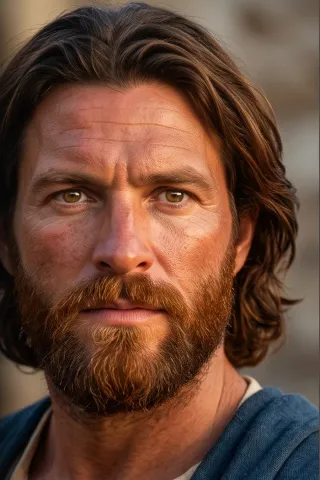
New · FreePlay The Witnesses The in-depth puzzle battle quest through Bible history

People of the Bible

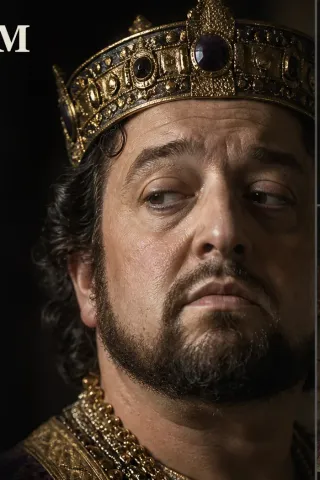
Solomon

Asked for a listening heart instead of long life or riches, got all three, and lost the plot at the end.

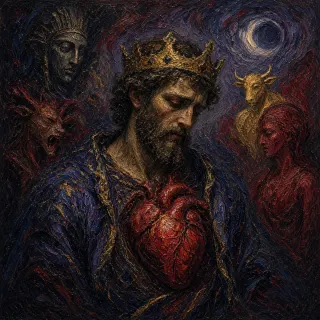
Solomon comes to the throne through a palace manoeuvre and secures it with a series of executions his father recommended. Then at Gibeon he is offered anything and asks for an understanding heart to judge a people too numerous to count, and the request itself is what pleases God. What follows is forty years of almost unbroken success: the temple built and filled with glory, a navy, a reputation that brings rulers across deserts to hear him, three thousand proverbs and a thousand and five songs. And then seven hundred wives, and high places for their gods on the hill facing Jerusalem.

Where he appears1 Kings 1 to 11 · 2 Chronicles 1 to 9

Scroll down to the account
Solomon

The movements, in the order the text gives them.

The Account of Solomon

  1. 01

    1 Kings 3:5-15

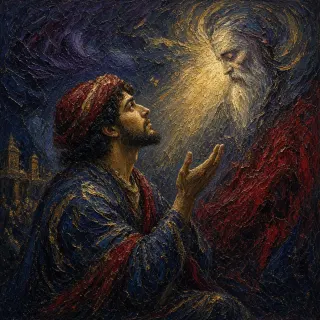
    Ask what I shall give you

    He says he is a little child who does not know how to go out or come in. He asks for a hearing heart to discern between good and evil, and is given wisdom, riches and honour on top of it.

    Solomon asks for the ability to hear before he asks for anything to display. An understanding heart sounds like a request for intelligence, but the work he names is judging: distinguishing good from bad among people who belong to God. That possessive matters. He keeps calling himself a servant and Israel thy people. The crown has not made its wearer the owner of the people. Even his reference to David puts the throne on the receiving end of mercy, not on a pedestal of family entitlement.

    The answer is generous, but it is not a blank cheque. Wisdom, riches and honour are granted; length of days comes with an if. The distinction prevents the scene from becoming a promise that every good beginning guarantees a good ending. Nor does the dream evaporate when Solomon wakes. He goes to the ark, offers sacrifices, and feeds his servants. The passage begins with the king describing himself as a servant and ends with actual servants at his feast. For this moment, the language and the conduct belong together.

    Verse by verse

    1. 3:7

      Little child expresses Solomon's admitted inexperience here; the passage does not give his exact age. Going out and coming in concerns carrying out his office, not learning to walk.

    2. 3:14

      Long life is conditional, unlike the immediately granted wisdom, riches and honour in verses 12-13.

    3. 3:15

      Second Chronicles 1:3-5 distinguishes the tabernacle and bronze altar at Gibeon from the ark at Jerusalem. The two locations should not be collapsed into one sanctuary.

    1 Kings 3:5-15

    King James Version · 11 verses

    3:5In Gibeon the LORD appeared to Solomon in a dream by night: and God said, Ask what I shall give thee.

    3:6And Solomon said, Thou hast shewed unto thy servant David my father great mercy, according as he walked before thee in truth, and in righteousness, and in uprightness of heart with thee; and thou hast kept for him this great kindness, that thou hast given him a son to sit on his throne, as it is this day.

    3:7And now, O LORD my God, thou hast made thy servant king instead of David my father: and I am but a little child: I know not how to go out or come in.

    3:8And thy servant is in the midst of thy people which thou hast chosen, a great people, that cannot be numbered nor counted for multitude.

    3:9Give therefore thy servant an understanding heart to judge thy people, that I may discern between good and bad: for who is able to judge this thy so great a people?

    3:10And the speech pleased the Lord, that Solomon had asked this thing.

    3:11And God said unto him, Because thou hast asked this thing, and hast not asked for thyself long life; neither hast asked riches for thyself, nor hast asked the life of thine enemies; but hast asked for thyself understanding to discern judgment;

    3:12Behold, I have done according to thy words: lo, I have given thee a wise and an understanding heart; so that there was none like thee before thee, neither after thee shall any arise like unto thee.

    3:13And I have also given thee that which thou hast not asked, both riches, and honour: so that there shall not be any among the kings like unto thee all thy days.

    3:14And if thou wilt walk in my ways, to keep my statutes and my commandments, as thy father David did walk, then I will lengthen thy days.

    3:15And Solomon awoke; and, behold, it was a dream. And he came to Jerusalem, and stood before the ark of the covenant of the LORD, and offered up burnt offerings, and offered peace offerings, and made a feast to all his servants.

  2. 02

    1 Kings 3:16-28

    Divide the living child

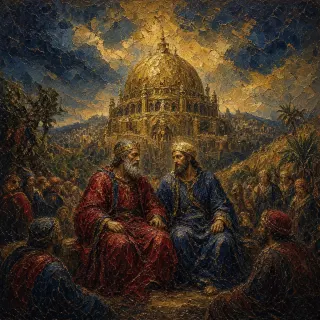
    Two women, one living baby and no witnesses. He calls for a sword, and the verdict is decided by which of them flinches. All Israel hears of it and is afraid of him.

    The difficulty is not that Solomon has too little testimony. He has two accounts that cancel each other out, and the first woman explicitly rules out another witness in the house. Repeating the statements more loudly will produce no new evidence. The sword changes what is being tested. Both women claim possession; the threatened death reveals which one places the child's life above her claim. Half a living child is not a compromise. It is the destruction of the very thing in dispute.

    The Book of First Kings identifies the real mother before Solomon announces his judgment: her bowels yearned upon her son. That compassion is stated in the text, not supplied by an imaginative retelling. Her willingness to surrender the child becomes the decisive evidence for returning him to her. The women are introduced as harlots, yet their case reaches the king and becomes the public demonstration of God's wisdom in him. No ambassador, no grand ceremony. Two unnamed women and a child who must remain alive.

    Verse by verse

    1. 3:18

      The absence of a third person is part of the first woman's testimony. It explains why an ordinary eyewitness cannot settle the competing claims.

    2. 3:19-21

      The death and substitution are initially presented as testimony, not as a separate account of events shown before the hearing.

    3. 3:26

      The text explicitly identifies the woman's compassion and motherhood. It does not supply a name for either woman or a punishment for the false claimant.

    4. 3:28

      The concluding phrase to do judgment connects this decision directly with Solomon's request in 3:9.

    1 Kings 3:16-28

    King James Version · 13 verses

    3:16Then came there two women, that were harlots, unto the king, and stood before him.

    3:17And the one woman said, O my lord, I and this woman dwell in one house; and I was delivered of a child with her in the house.

    3:18And it came to pass the third day after that I was delivered, that this woman was delivered also: and we were together; there was no stranger with us in the house, save we two in the house.

    3:19And this woman’s child died in the night; because she overlaid it.

    3:20And she arose at midnight, and took my son from beside me, while thine handmaid slept, and laid it in her bosom, and laid her dead child in my bosom.

    3:21And when I rose in the morning to give my child suck, behold, it was dead: but when I had considered it in the morning, behold, it was not my son, which I did bear.

    3:22And the other woman said, Nay; but the living is my son, and the dead is thy son. And this said, No; but the dead is thy son, and the living is my son. Thus they spake before the king.

    3:23Then said the king, The one saith, This is my son that liveth, and thy son is the dead: and the other saith, Nay; but thy son is the dead, and my son is the living.

    3:24And the king said, Bring me a sword. And they brought a sword before the king.

    3:25And the king said, Divide the living child in two, and give half to the one, and half to the other.

    3:26Then spake the woman whose the living child was unto the king, for her bowels yearned upon her son, and she said, O my lord, give her the living child, and in no wise slay it. But the other said, Let it be neither mine nor thine, but divide it.

    3:27Then the king answered and said, Give her the living child, and in no wise slay it: she is the mother thereof.

    3:28And all Israel heard of the judgment which the king had judged; and they feared the king: for they saw that the wisdom of God was in him, to do judgment.

  3. 03

    1 Kings 6:1-38

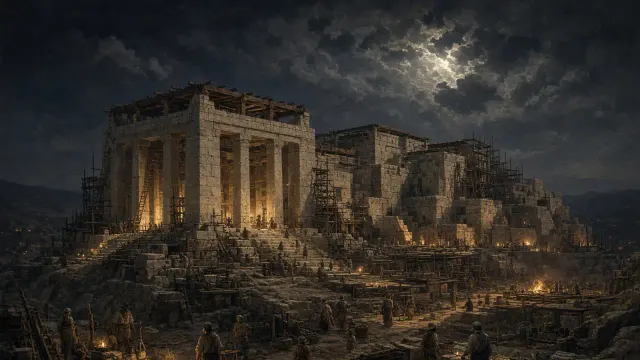
    Seven years to build it

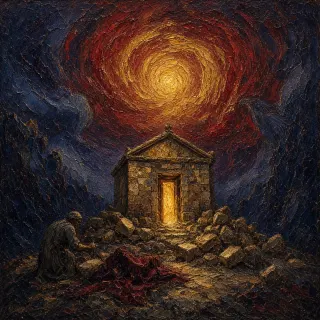
    Stone finished at the quarry so that no hammer or axe is heard in the house while it is going up. Cedar, gold, cherubim, and a date given to the year and the month.

    A construction account pauses to mention a noise that is missing. No hammer, axe or iron tool is heard in the house because the stone arrives already prepared. The work has not vanished: the previous chapter has counted labourers and described the cutting. What changes is where that work takes place. The finished surfaces can dazzle, but the Book of First Kings remembers how the stones got there.

    Then, among the dimensions and cedar beams, the word of the LORD interrupts the specifications. It says nothing about adding another layer of gold. It speaks of statutes, judgments and commandments, and promises God's dwelling among the children of Israel. The building matters profoundly, but it cannot make obedience unnecessary. Even the interior directs attention beyond its materials: cherubim spread their wings across the inner room, while palms and open flowers cover walls and doors. This is not merely an expensive royal hall. Its centre is the place prepared for the covenant ark, and the promise concerns a people, not just a property.

    Verse by verse

    1. 6:1

      The KJV dates construction from the Exodus as well as from Solomon's reign. The national point of reference is deliverance from Egypt, not simply a royal accession.

    2. 6:7

      The silence concerns iron tools at the house during construction. It does not mean stone was never cut or tools were never used elsewhere; 5:17-18 describes preparation.

    3. 6:19

      Oracle here names the inner sanctuary, also called the most holy place in verse 16. It is a room, not a prediction being spoken.

    4. 6:38

      The next verse, 7:1, records thirteen years for Solomon's own house. The figures are explicit; an explanation of his private motives is not.

    1 Kings 6:1-38: Seven years to build it

    1 Kings 6:1-38

    King James Version · 38 verses

    6:1And it came to pass in the four hundred and eightieth year after the children of Israel were come out of the land of Egypt, in the fourth year of Solomon’s reign over Israel, in the month Zif, which is the second month, that he began to build the house of the LORD.

    6:2And the house which king Solomon built for the LORD, the length thereof was threescore cubits, and the breadth thereof twenty cubits, and the height thereof thirty cubits.

    6:3And the porch before the temple of the house, twenty cubits was the length thereof, according to the breadth of the house; and ten cubits was the breadth thereof before the house.

    6:4And for the house he made windows of narrow lights.

    6:5And against the wall of the house he built chambers round about, against the walls of the house round about, both of the temple and of the oracle: and he made chambers round about:

    6:6The nethermost chamber was five cubits broad, and the middle was six cubits broad, and the third was seven cubits broad: for without in the wall of the house he made narrowed rests round about, that the beams should not be fastened in the walls of the house.

    6:7And the house, when it was in building, was built of stone made ready before it was brought thither: so that there was neither hammer nor axe nor any tool of iron heard in the house, while it was in building.

    6:8The door for the middle chamber was in the right side of the house: and they went up with winding stairs into the middle chamber, and out of the middle into the third.

    6:9So he built the house, and finished it; and covered the house with beams and boards of cedar.

    6:10And then he built chambers against all the house, five cubits high: and they rested on the house with timber of cedar.

    6:11And the word of the LORD came to Solomon, saying,

    6:12Concerning this house which thou art in building, if thou wilt walk in my statutes, and execute my judgments, and keep all my commandments to walk in them; then will I perform my word with thee, which I spake unto David thy father:

    6:13And I will dwell among the children of Israel, and will not forsake my people Israel.

    6:14So Solomon built the house, and finished it.

    6:15And he built the walls of the house within with boards of cedar, both the floor of the house, and the walls of the cieling: and he covered them on the inside with wood, and covered the floor of the house with planks of fir.

    6:16And he built twenty cubits on the sides of the house, both the floor and the walls with boards of cedar: he even built them for it within, even for the oracle, even for the most holy place.

    6:17And the house, that is, the temple before it, was forty cubits long.

    6:18And the cedar of the house within was carved with knops and open flowers: all was cedar; there was no stone seen.

    6:19And the oracle he prepared in the house within, to set there the ark of the covenant of the LORD.

    6:20And the oracle in the forepart was twenty cubits in length, and twenty cubits in breadth, and twenty cubits in the height thereof: and he overlaid it with pure gold; and so covered the altar which was of cedar.

    6:21So Solomon overlaid the house within with pure gold: and he made a partition by the chains of gold before the oracle; and he overlaid it with gold.

    6:22And the whole house he overlaid with gold, until he had finished all the house: also the whole altar that was by the oracle he overlaid with gold.

    6:23And within the oracle he made two cherubims of olive tree, each ten cubits high.

    6:24And five cubits was the one wing of the cherub, and five cubits the other wing of the cherub: from the uttermost part of the one wing unto the uttermost part of the other were ten cubits.

    6:25And the other cherub was ten cubits: both the cherubims were of one measure and one size.

    6:26The height of the one cherub was ten cubits, and so was it of the other cherub.

    6:27And he set the cherubims within the inner house: and they stretched forth the wings of the cherubims, so that the wing of the one touched the one wall, and the wing of the other cherub touched the other wall; and their wings touched one another in the midst of the house.

    6:28And he overlaid the cherubims with gold.

    6:29And he carved all the walls of the house round about with carved figures of cherubims and palm trees and open flowers, within and without.

    6:30And the floor of the house he overlaid with gold, within and without.

    6:31And for the entering of the oracle he made doors of olive tree: the lintel and side posts were a fifth part of the wall.

    6:32The two doors also were of olive tree; and he carved upon them carvings of cherubims and palm trees and open flowers, and overlaid them with gold, and spread gold upon the cherubims, and upon the palm trees.

    6:33So also made he for the door of the temple posts of olive tree, a fourth part of the wall.

    6:34And the two doors were of fir tree: the two leaves of the one door were folding, and the two leaves of the other door were folding.

    6:35And he carved thereon cherubims and palm trees and open flowers: and covered them with gold fitted upon the carved work.

    6:36And he built the inner court with three rows of hewed stone, and a row of cedar beams.

    6:37In the fourth year was the foundation of the house of the LORD laid, in the month Zif:

    6:38And in the eleventh year, in the month Bul, which is the eighth month, was the house finished throughout all the parts thereof, and according to all the fashion of it. So was he seven years in building it.

  4. 04

    1 Kings 8:22-53

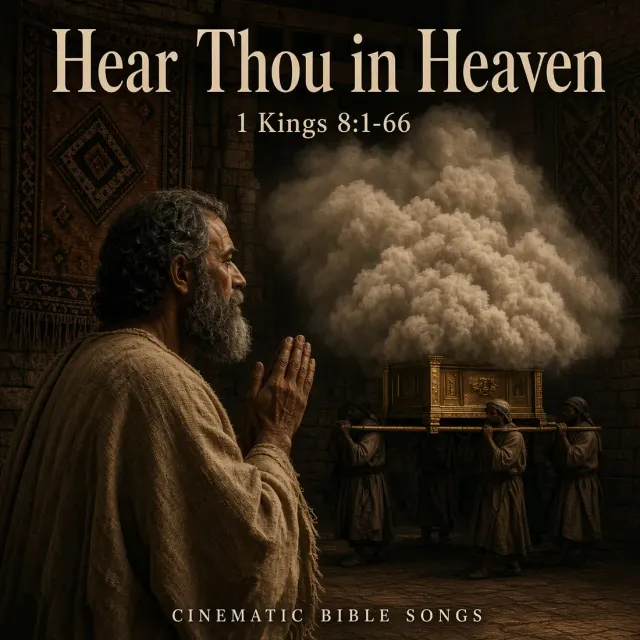
    Will God indeed dwell on the earth

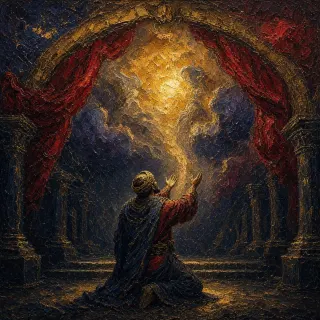
    He kneels with his hands spread to heaven and says heaven itself cannot contain God, let alone this house. Then he asks that the foreigner who comes and prays towards it be heard.

    The man dedicating the temple is the first to say that it cannot contain God. That is not an embarrassed correction to the building project. It is the foundation of the prayer. Solomon asks that God's name rest here and that prayers be heard in heaven. The temple gives the people a place to turn; it does not give the king possession of the One to whom they turn.

    What follows is remarkably unsentimental for an opening ceremony. There are lawsuits, military defeats, drought, crop failure, disease and exile. The shining new house is dedicated with provision for the day its worshippers are carried into an enemy's country. Their return begins with remembering, confessing and turning with the whole heart, not with getting a hand back on the building. Forgiveness is not an afterthought added to the celebration. It keeps appearing as the prayer's necessary answer.

    Then a stranger enters the petition. This person is not of Israel, yet Solomon asks that the prayer be answered so all peoples may know God's name. Israel's election and the outsider's welcome stand in the same prayer. The house has a particular address. The knowledge of God is not to stop at the border.

    Verse by verse

    1. 8:30

      The people pray toward this place, while God hears in heaven. The repeated distinction is built into the wording of the prayer.

    2. 8:38-39

      The plague of his own heart moves from public calamity to individual recognition of wrongdoing; verse 39 reserves complete knowledge of human hearts to God.

    3. 8:41-43

      The stranger is explicitly not of Israel. The stated purpose is that all peoples may know and fear God's name.

    4. 8:46-50

      Captivity is anticipated within the dedication prayer itself. Repentance in the enemy's land is followed by petitions for forgiveness and compassion from the captors.

    1 Kings 8:22-53: Will God indeed dwell on the earth

    1 Kings 8:22-53

    King James Version · 32 verses

    8:22And Solomon stood before the altar of the LORD in the presence of all the congregation of Israel, and spread forth his hands toward heaven:

    8:23And he said, LORD God of Israel, there is no God like thee, in heaven above, or on earth beneath, who keepest covenant and mercy with thy servants that walk before thee with all their heart:

    8:24Who hast kept with thy servant David my father that thou promisedst him: thou spakest also with thy mouth, and hast fulfilled it with thine hand, as it is this day.

    8:25Therefore now, LORD God of Israel, keep with thy servant David my father that thou promisedst him, saying, There shall not fail thee a man in my sight to sit on the throne of Israel; so that thy children take heed to their way, that they walk before me as thou hast walked before me.

    8:26And now, O God of Israel, let thy word, I pray thee, be verified, which thou spakest unto thy servant David my father.

    8:27But will God indeed dwell on the earth? behold, the heaven and heaven of heavens cannot contain thee; how much less this house that I have builded?

    8:28Yet have thou respect unto the prayer of thy servant, and to his supplication, O LORD my God, to hearken unto the cry and to the prayer, which thy servant prayeth before thee to day:

    8:29That thine eyes may be open toward this house night and day, even toward the place of which thou hast said, My name shall be there: that thou mayest hearken unto the prayer which thy servant shall make toward this place.

    8:30And hearken thou to the supplication of thy servant, and of thy people Israel, when they shall pray toward this place: and hear thou in heaven thy dwelling place: and when thou hearest, forgive.

    8:31If any man trespass against his neighbour, and an oath be laid upon him to cause him to swear, and the oath come before thine altar in this house:

    8:32Then hear thou in heaven, and do, and judge thy servants, condemning the wicked, to bring his way upon his head; and justifying the righteous, to give him according to his righteousness.

    8:33When thy people Israel be smitten down before the enemy, because they have sinned against thee, and shall turn again to thee, and confess thy name, and pray, and make supplication unto thee in this house:

    8:34Then hear thou in heaven, and forgive the sin of thy people Israel, and bring them again unto the land which thou gavest unto their fathers.

    8:35When heaven is shut up, and there is no rain, because they have sinned against thee; if they pray toward this place, and confess thy name, and turn from their sin, when thou afflictest them:

    8:36Then hear thou in heaven, and forgive the sin of thy servants, and of thy people Israel, that thou teach them the good way wherein they should walk, and give rain upon thy land, which thou hast given to thy people for an inheritance.

    8:37If there be in the land famine, if there be pestilence, blasting, mildew, locust, or if there be caterpiller; if their enemy besiege them in the land of their cities; whatsoever plague, whatsoever sickness there be;

    8:38What prayer and supplication soever be made by any man, or by all thy people Israel, which shall know every man the plague of his own heart, and spread forth his hands toward this house:

    8:39Then hear thou in heaven thy dwelling place, and forgive, and do, and give to every man according to his ways, whose heart thou knowest; (for thou, even thou only, knowest the hearts of all the children of men;)

    8:40That they may fear thee all the days that they live in the land which thou gavest unto our fathers.

    8:41Moreover concerning a stranger, that is not of thy people Israel, but cometh out of a far country for thy name’s sake;

    8:42(For they shall hear of thy great name, and of thy strong hand, and of thy stretched out arm;) when he shall come and pray toward this house;

    8:43Hear thou in heaven thy dwelling place, and do according to all that the stranger calleth to thee for: that all people of the earth may know thy name, to fear thee, as do thy people Israel; and that they may know that this house, which I have builded, is called by thy name.

    8:44If thy people go out to battle against their enemy, whithersoever thou shalt send them, and shall pray unto the LORD toward the city which thou hast chosen, and toward the house that I have built for thy name:

    8:45Then hear thou in heaven their prayer and their supplication, and maintain their cause.

    8:46If they sin against thee, (for there is no man that sinneth not,) and thou be angry with them, and deliver them to the enemy, so that they carry them away captives unto the land of the enemy, far or near;

    8:47Yet if they shall bethink themselves in the land whither they were carried captives, and repent, and make supplication unto thee in the land of them that carried them captives, saying, We have sinned, and have done perversely, we have committed wickedness;

    8:48And so return unto thee with all their heart, and with all their soul, in the land of their enemies, which led them away captive, and pray unto thee toward their land, which thou gavest unto their fathers, the city which thou hast chosen, and the house which I have built for thy name:

    8:49Then hear thou their prayer and their supplication in heaven thy dwelling place, and maintain their cause,

    8:50And forgive thy people that have sinned against thee, and all their transgressions wherein they have transgressed against thee, and give them compassion before them who carried them captive, that they may have compassion on them:

    8:51For they be thy people, and thine inheritance, which thou broughtest forth out of Egypt, from the midst of the furnace of iron:

    8:52That thine eyes may be open unto the supplication of thy servant, and unto the supplication of thy people Israel, to hearken unto them in all that they call for unto thee.

    8:53For thou didst separate them from among all the people of the earth, to be thine inheritance, as thou spakest by the hand of Moses thy servant, when thou broughtest our fathers out of Egypt, O Lord GOD.

  5. 05

    1 Kings 10:1-13

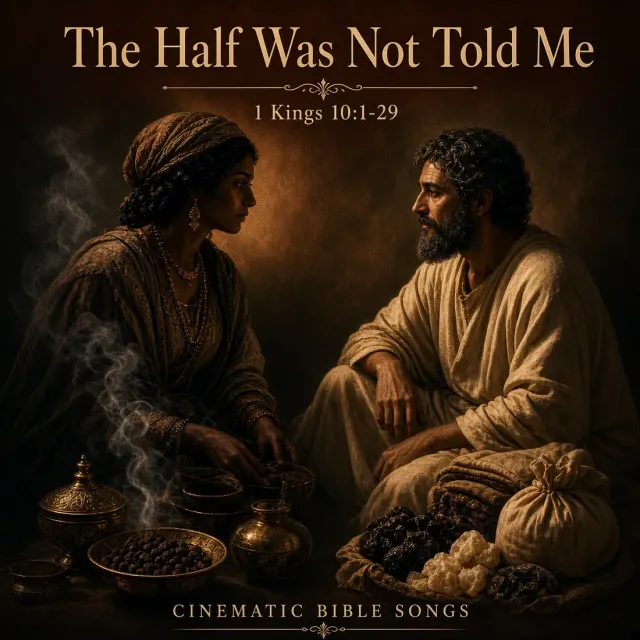
    The half was not told me

    The queen of Sheba arrives with hard questions and there is nothing he cannot answer. She says the report she heard was true and not even half of it.

    The queen's most important observation is not about the gold. After the questions, the meals, the officials and the ascent to the temple, she explains why a king has been put on the throne: to do judgment and justice. Her praise reaches past Solomon to Israel. God made him king, she says, because God loved the people. The splendour is visible; its proper purpose has to be spoken.

    That makes the visit more than an inventory of an impressive court. She arrived to test a report and admits that she had not believed it. The chapter allows an outsider to investigate, revise her conclusion and name what the royal office is for. Solomon's answers are not recorded, and neither are the questions. What survives is her considered response. In Matthew 12:42, Jesus remembers precisely her journey to hear wisdom, then speaks of a greater than Solomon. The gold fills several lines in the royal account. The journey to listen carries into the Gospel.

    Verse by verse

    1. 10:1

      Hard questions translates the Hebrew chidoth, riddles or probing questions. The passage does not preserve their wording.

    2. 10:5

      Meat means food here, not necessarily animal flesh. The queen notices the organisation of the household as well as its costly materials.

    3. 10:9

      The queen explicitly connects Solomon's appointment with God's love for Israel and with the work of justice.

    4. 10:13

      The exchange concludes with her departure. A marriage, a child or a private romantic episode is not recorded in this passage.

    1 Kings 10:1-13: The half was not told me

    1 Kings 10:1-13

    King James Version · 13 verses

    10:1And when the queen of Sheba heard of the fame of Solomon concerning the name of the LORD, she came to prove him with hard questions.

    10:2And she came to Jerusalem with a very great train, with camels that bare spices, and very much gold, and precious stones: and when she was come to Solomon, she communed with him of all that was in her heart.

    10:3And Solomon told her all her questions: there was not any thing hid from the king, which he told her not.

    10:4And when the queen of Sheba had seen all Solomon’s wisdom, and the house that he had built,

    10:5And the meat of his table, and the sitting of his servants, and the attendance of his ministers, and their apparel, and his cupbearers, and his ascent by which he went up unto the house of the LORD; there was no more spirit in her.

    10:6And she said to the king, It was a true report that I heard in mine own land of thy acts and of thy wisdom.

    10:7Howbeit I believed not the words, until I came, and mine eyes had seen it: and, behold, the half was not told me: thy wisdom and prosperity exceedeth the fame which I heard.

    10:8Happy are thy men, happy are these thy servants, which stand continually before thee, and that hear thy wisdom.

    10:9Blessed be the LORD thy God, which delighted in thee, to set thee on the throne of Israel: because the LORD loved Israel for ever, therefore made he thee king, to do judgment and justice.

    10:10And she gave the king an hundred and twenty talents of gold, and of spices very great store, and precious stones: there came no more such abundance of spices as these which the queen of Sheba gave to king Solomon.

    10:11And the navy also of Hiram, that brought gold from Ophir, brought in from Ophir great plenty of almug trees, and precious stones.

    10:12And the king made of the almug trees pillars for the house of the LORD, and for the king’s house, harps also and psalteries for singers: there came no such almug trees, nor were seen unto this day.

    10:13And king Solomon gave unto the queen of Sheba all her desire, whatsoever she asked, beside that which Solomon gave her of his royal bounty. So she turned and went to her own country, she and her servants.

  6. 06

    1 Kings 11:1-13

    When Solomon was old

    Seven hundred wives and three hundred concubines, and high places built on the mountain east of Jerusalem. The kingdom is not taken from him but from his son, for David’s sake.

    The repeated word is heart. The heart for which Solomon asked understanding is now turned away, and the Book of First Kings does not hide the reversal behind the size of his achievements. In 3:3 he loved the LORD; here he loves many foreign women and clings to them despite the stated warning. The issue is not that the text suddenly dislikes foreigners: the preceding chapter let a foreign queen bless Israel's God. The issue named here is the worship of other gods.

    Nor is Solomon portrayed as a bystander while his household does something regrettable. He goes after the gods. He builds the high places. The king who built the temple also supplies places for the worship it excludes. David's heart is the comparison, not because David never sinned, but because this passage is measuring undivided allegiance to the LORD. The judgment tears at the kingdom, yet preserves a portion for David's sake and Jerusalem's sake. Even the restraint in the sentence points outside Solomon's present conduct. His wisdom is not denied. It does not excuse him.

    Verse by verse

    1. 11:1-2

      Strange means foreign here. The passage's explicit concern is the turning of the heart toward other gods, not an unexplained objection to foreign ancestry.

    2. 11:4

      Perfect concerns wholehearted allegiance in this comparison. The Book of First Kings itself names David's offence concerning Uriah in 15:5.

    3. 11:9

      The two appearances are recorded in 3:5 and 9:2. Solomon's conduct is judged in light of a command he had already received.

    4. 11:11-13

      The division is announced for his son's reign, with a portion retained for David and Jerusalem. The passage does not record Solomon's repentance; Nehemiah 13:26 later recalls his sin explicitly.

    1 Kings 11:1-13

    King James Version · 13 verses

    11:1But king Solomon loved many strange women, together with the daughter of Pharaoh, women of the Moabites, Ammonites, Edomites, Zidonians, and Hittites;

    11:2Of the nations concerning which the LORD said unto the children of Israel, Ye shall not go in to them, neither shall they come in unto you: for surely they will turn away your heart after their gods: Solomon clave unto these in love.

    11:3And he had seven hundred wives, princesses, and three hundred concubines: and his wives turned away his heart.

    11:4For it came to pass, when Solomon was old, that his wives turned away his heart after other gods: and his heart was not perfect with the LORD his God, as was the heart of David his father.

    11:5For Solomon went after Ashtoreth the goddess of the Zidonians, and after Milcom the abomination of the Ammonites.

    11:6And Solomon did evil in the sight of the LORD, and went not fully after the LORD, as did David his father.

    11:7Then did Solomon build an high place for Chemosh, the abomination of Moab, in the hill that is before Jerusalem, and for Molech, the abomination of the children of Ammon.

    11:8And likewise did he for all his strange wives, which burnt incense and sacrificed unto their gods.

    11:9And the LORD was angry with Solomon, because his heart was turned from the LORD God of Israel, which had appeared unto him twice,

    11:10And had commanded him concerning this thing, that he should not go after other gods: but he kept not that which the LORD commanded.

    11:11Wherefore the LORD said unto Solomon, Forasmuch as this is done of thee, and thou hast not kept my covenant and my statutes, which I have commanded thee, I will surely rend the kingdom from thee, and will give it to thy servant.

    11:12Notwithstanding in thy days I will not do it for David thy father’s sake: but I will rend it out of the hand of thy son.

    11:13Howbeit I will not rend away all the kingdom; but will give one tribe to thy son for David my servant’s sake, and for Jerusalem’s sake which I have chosen.

Why it matters

Solomon is the peak of the monarchy and the explanation of its collapse in one life. The temple is his, the wisdom literature is largely his, and the prayer at the dedication is the widest thing anyone in the Old Testament says about foreigners praying towards that house. The account then states the cause of the split plainly: his heart was turned away, and the kingdom is torn in two in the reign of his son. His father sinned worse and repented; he drifted, and did not.

16 songs

The music

Every song in the catalogue whose passage falls inside these chapters.

  1. 1 Kings 1:1-2:46

    Solomon Sat upon the Throne

  2. 1 Kings 3

    A Wise and Understanding Heart

  3. 1 Kings 3:1-28

    An Understanding Heart

  4. 1 Kings 4:1-34

    Judah and Israel Dwelt Safely

  5. 1 Kings 5:1-7:51

    A House for the Name

  6. 1 Kings 5-8

    The House of the Name

  7. 1 Kings 8:1-66

    Hear Thou in Heaven

  8. 1 Kings 9:1-28

    Walk Before Him in Integrity

  9. 1 Kings 10:1-29

    The Half Was Not Told Me

  10. 1 Kings 11:1-43

    His Heart Was Turned Away

  11. 1 Kings 11

    The Kingdom Torn

  12. 2 Chronicles 1:1-2:18

    Wisdom for the Great Work

  13. 2 Chronicles 3:1-4:22

    Upon Mount Moriah

  14. 2 Chronicles 5:1-7:22

    The Glory Filled the House

  15. 2 Chronicles 5:1-7:22

    When the Glory Filled the House

  16. 2 Chronicles 8:1-9:31

    All the Kings Sought His Wisdom

Nearby

All the people

Report an error on this page