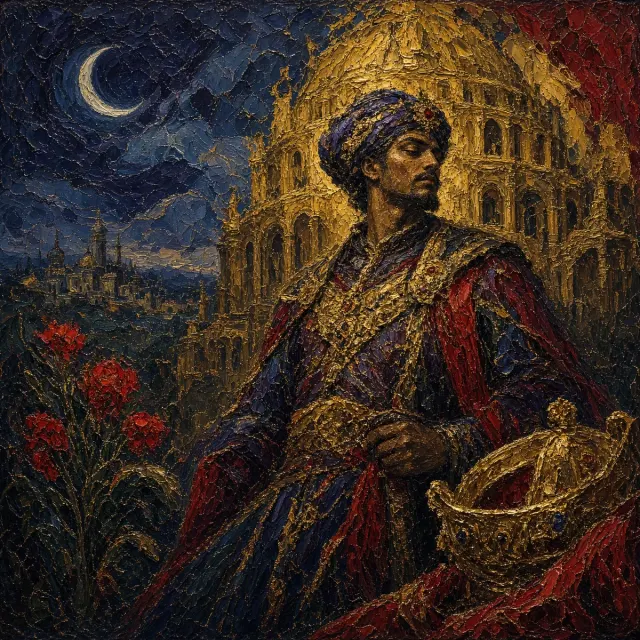

New · FreePlay The Witnesses The in-depth puzzle battle quest through Bible history

People of the Bible

The queen of Sheba

Travelled about fifteen hundred miles to test a reputation, and went home saying the report had understated it.

She hears of Solomon’s fame concerning the name of the LORD and comes to prove him with hard questions. She arrives with a very great train, camels carrying spices, gold and precious stones, and she communes with him about all that was in her heart. Nothing is hidden from her. When she has seen the wisdom, the house, the food on the table, the seating of the servants, the clothing, the cupbearers and the ascent by which he went up, there is no more spirit in her. She gives him a hundred and twenty talents of gold and says the half was not told me.

Where she appears1 Kings 10 · 2 Chronicles 9

Scroll down to the account

The movements, in the order the text gives them.

The Account of The queen of Sheba

  1. 01

    1 Kings 10:1-3

    Hard questions

    She comes because of his fame concerning the name of the LORD, not simply his wealth. She tells him everything in her heart, and there is nothing hidden from the king that he does not answer.

    The queen brings gold, but she also brings an examination. To prove him means to test him, and the considerable caravan does not turn the visit into a ceremony of automatic agreement. Solomon has a reputation; she has questions. The Book of First Kings gives her the initiative in almost every movement: she hears, comes, speaks, and sets the matters before him. She is not scenery arranged around a famous man.

    The questions themselves are not preserved. That restraint matters. Later imagination can supply riddles by the dozen, but this passage gives the scope of the conversation rather than a transcript. All that was in her heart describes what she laid before Solomon, not a romance concealed between the lines. His achievement is equally specific: nothing she raises remains beyond his explanation. The gold can be weighed. The test is whether the reputation can bear an actual conversation.

    Verse by verse

    1. 10:1

      Prove means test or examine. The verse connects Solomon's reputation with the name of the LORD, not with wealth alone.

    2. 10:2

      Train means an accompanying company or retinue. The camels carry the valuable goods described immediately afterward.

    3. 10:3

      The passage reports that Solomon answered everything but does not quote a single question or answer.
    1 Kings 10:1-3

    King James Version · 3 verses

    10:1And when the queen of Sheba heard of the fame of Solomon concerning the name of the LORD, she came to prove him with hard questions.

    10:2And she came to Jerusalem with a very great train, with camels that bare spices, and very much gold, and precious stones: and when she was come to Solomon, she communed with him of all that was in her heart.

    10:3And Solomon told her all her questions: there was not any thing hid from the king, which he told her not.

    1 Kings 10:1-3: Hard questions
  2. 02

    1 Kings 10:4-5

    There was no more spirit in her

    The list is deliberately domestic: the table, the sitting of the servants, the attendance of the ministers, their clothing, the cupbearers, and the stairway he went up by.

    She has heard the wisdom; now she can see it. The list moves from the house to the table, from the seating of servants to the service of ministers, and finally to the king's ascent to the house of the LORD. It is an unusually practical inspection of a famous mind. Dinner arrangements make the list. Wisdom here has a visible household, a working order, and people who know where to stand.

    The effect comes through accumulation rather than an account of a single spectacular performance. Clothing, food, attendance, cupbearers: the ordinary machinery of the court carries the impression. There was no more spirit in her is the passage's compressed description of astonishment. It does not say that she died, fainted, or underwent a conversion on the stairs. Two verses are enough to convey that the answers had impressed her, and the life surrounding those answers exceeded even that impression.

    Verse by verse

    1. 10:4

      The queen sees wisdom, not merely the building. The following list shows the visible arrangements through which that wisdom impresses her.

    2. 10:5

      Meat in this English means food generally, not exclusively animal flesh.

    3. 10:5

      The KJV reads ascent here and in 2 Chronicles 9:4. Neither passage gives enough detail to reconstruct the route architecturally.

    1 Kings 10:4-5

    King James Version · 2 verses

    10:4And when the queen of Sheba had seen all Solomon’s wisdom, and the house that he had built,

    10:5And the meat of his table, and the sitting of his servants, and the attendance of his ministers, and their apparel, and his cupbearers, and his ascent by which he went up unto the house of the LORD; there was no more spirit in her.

    1 Kings 10:4-5: There was no more spirit in her
  3. 03

    1 Kings 10:6-9

    Blessed be the LORD your God

    She says the report was true and the half was not told. Then she moves past the man entirely and blesses the God who set him there to do judgment and justice.

    The remarkable admission is not that the report was true, but that she had not believed it. The queen states the earlier doubt without apology and replaces it with what her own eyes have established. Solomon's reputation has committed the unusual offence of understatement. Yet her praise soon moves beyond the man who receives it. Happy are his servants because they hear this wisdom continually. What required her journey belongs to their working day.

    Then comes the sentence that gives the throne its purpose. God made Solomon king because he loved Israel, to do judgment and justice. The order is worth keeping intact: love for a people, appointment of a king, the work of justice. Royal magnificence has filled her view, but magnificence is not her final explanation of kingship. A foreign queen supplies a remarkably clear account of what Israel's throne is for.

    Verse by verse

    1. 10:7

      Her stated change of judgment follows personal observation. The passage records earlier disbelief, not hostility toward Solomon.

    2. 10:8

      The repeated happy applies to those who hear wisdom continually, not merely to those who possess courtly wealth.

    3. 10:9

      Second Chronicles 9:8 calls the seat God's throne; this verse calls it the throne of Israel. Both connect kingship with judgment and justice.

    1 Kings 10:6-9

    King James Version · 4 verses

    10:6And she said to the king, It was a true report that I heard in mine own land of thy acts and of thy wisdom.

    10:7Howbeit I believed not the words, until I came, and mine eyes had seen it: and, behold, the half was not told me: thy wisdom and prosperity exceedeth the fame which I heard.

    10:8Happy are thy men, happy are these thy servants, which stand continually before thee, and that hear thy wisdom.

    10:9Blessed be the LORD thy God, which delighted in thee, to set thee on the throne of Israel: because the LORD loved Israel for ever, therefore made he thee king, to do judgment and justice.

    1 Kings 10:6-9: Blessed be the LORD your God
  4. 04

    1 Kings 10:10-13

    She went to her own country

    A hundred and twenty talents of gold and more spices than ever came again. He gives her whatever she asks besides what he gave of royal bounty, and she goes home.

    The visit ends with gifts in both directions, not with the queen disappearing into Solomon's household. She turns and goes to her own country, with her servants. That final possessive quietly preserves her place in the account. She came as a ruler with a company, and she leaves with a company for the land that remains hers. Nothing here supplies a wedding, a child, or a new name.

    Between her gift and her departure, the chapter makes room for Hiram's ships and the almug wood. The interruption belongs to the same world of remarkable goods reaching Solomon, but the cargo is not assigned to the queen. Its uses are wonderfully concrete: supports for royal and sacred buildings, then harps and psalteries for singers. The account does more than admire expensive material in a pile. Some of that wealth becomes something that can be played. The queen's own return gifts are less precisely described; generosity is recorded without an inventory.

    Verse by verse

    1. 10:10

      The talent is a unit of weight here, not the name of a coin. The verse emphasizes the exceptional quantity of the spices as well as the gold.

    2. 10:11

      This cargo comes with Hiram's navy from Ophir. The interruption should not turn the queen into its named supplier.

    3. 10:13

      The specific things she requested are not listed. Her return to her own country is explicit; marriage and a child are not.

    1 Kings 10:10-13

    King James Version · 4 verses

    10:10And she gave the king an hundred and twenty talents of gold, and of spices very great store, and precious stones: there came no more such abundance of spices as these which the queen of Sheba gave to king Solomon.

    10:11And the navy also of Hiram, that brought gold from Ophir, brought in from Ophir great plenty of almug trees, and precious stones.

    10:12And the king made of the almug trees pillars for the house of the LORD, and for the king’s house, harps also and psalteries for singers: there came no such almug trees, nor were seen unto this day.

    10:13And king Solomon gave unto the queen of Sheba all her desire, whatsoever she asked, beside that which Solomon gave her of his royal bounty. So she turned and went to her own country, she and her servants.

Why it matters

She is the outsider brought in to confirm the verdict from a distance, and she says the thing the account most wants said: blessed be the LORD your God who delighted in you, because the LORD loved Israel forever, therefore he made you king to do judgment and justice. Jesus points at her a thousand years later, calling her the queen of the south who came from the ends of the earth to hear Solomon, and saying a greater than Solomon is here.

2 songs

The music

Every song in the catalogue whose passage falls inside these chapters.

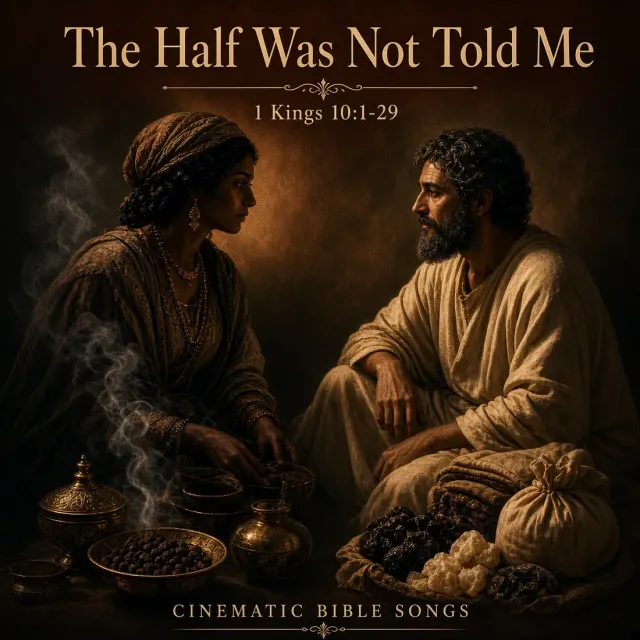
  1. 1 Kings 10:1-29

    The Half Was Not Told Me

  2. 2 Chronicles 8:1-9:31

    All the Kings Sought His Wisdom

Nearby

All the people

Report an error on this page