New · FreePlay The Witnesses The in-depth puzzle battle quest through Bible history

People of the Bible

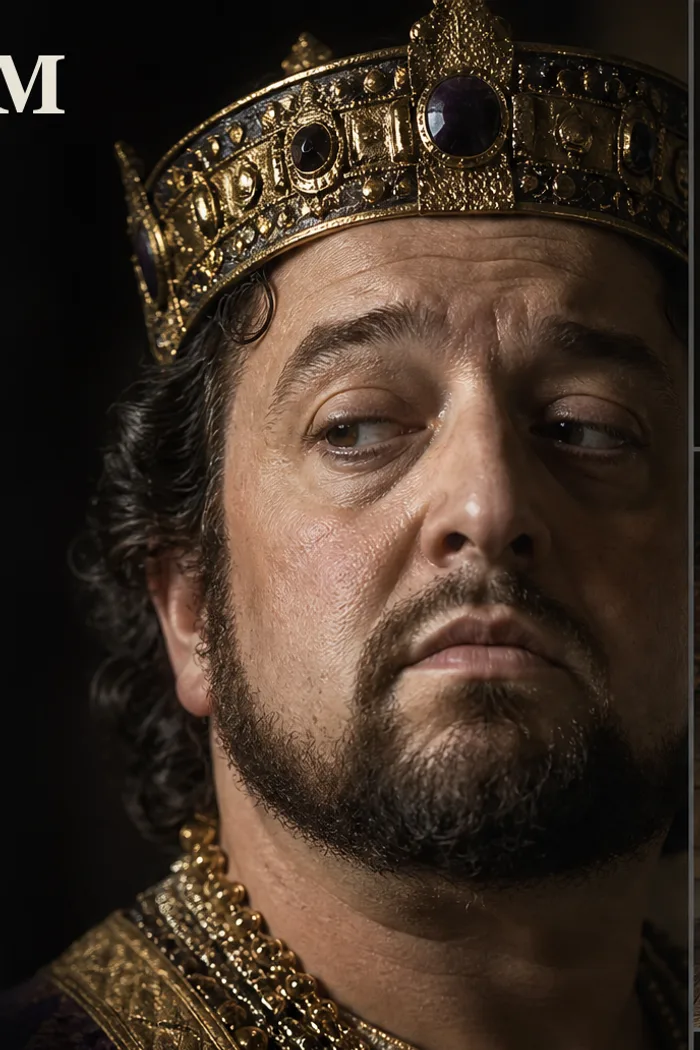
Rehoboam

Was asked to lighten the load, took three days to think about it, and gave the worst answer in the Old Testament.

Rehoboam goes to Shechem to be made king and the assembly of Israel arrives with a single request: your father made our yoke heavy, lighten it and we will serve you. He asks for three days. The old men who stood before Solomon tell him to speak good words to them and they will be his servants forever. The young men he grew up with tell him to say that his little finger is thicker than his father’s waist. He takes the second answer, and ten tribes walk out, and the kingdom of David lasts exactly three reigns.

Where he appears1 Kings 12 · 1 Kings 14 · 2 Chronicles 10 to 12

Scroll down to the account
Rehoboam

The movements, in the order the text gives them.

The Account of Rehoboam

  1. 01

    1 Kings 12:1-5

    Make the yoke lighter

    All Israel comes to Shechem, which means the coronation is not automatic. They send for Jeroboam out of Egypt, and the request they make is modest and specific.

    The people do not begin by asking for a different king. They offer service to this one, on a stated condition: lighten the burden. That is a narrower demand than the collapse of the kingdom that follows, and the distinction keeps the opening scene honest. Rehoboam is not yet facing a declaration of independence. He is receiving terms from people who have come to make him king.

    Their description of Solomon's reign also changes the viewing angle. The palaces, imported timber, and magnificence admired elsewhere have another vocabulary here: grievous service, heavy yoke. The Book of First Kings allows the people who carried the burden to describe it. Jeroboam, previously placed over the labor of the house of Joseph in 11:28, stands with the petitioners. The three-day delay is not condemned in itself; the text makes room for consultation. What needs answering is plain enough. The people are asking what Solomon's magnificence will cost under Solomon's son.

    Verse by verse

    1. 12:1

      The people assemble to make Rehoboam king at Shechem. The verse does not portray the meeting as a rebellion from its outset.

    2. 12:4

      The yoke is an image of imposed service. First Kings 5:13-14 supplies a concrete example of Solomon's labor levy and its rotating terms.

    3. 12:5

      Three days are expressly allowed for the response. The subsequent passage criticizes the counsel Rehoboam adopts, not the mere act of taking time.

    1 Kings 12:1-5

    King James Version · 5 verses

    12:1And Rehoboam went to Shechem: for all Israel were come to Shechem to make him king.

    12:2And it came to pass, when Jeroboam the son of Nebat, who was yet in Egypt, heard of it, (for he was fled from the presence of king Solomon, and Jeroboam dwelt in Egypt;)

    12:3That they sent and called him. And Jeroboam and all the congregation of Israel came, and spake unto Rehoboam, saying,

    12:4Thy father made our yoke grievous: now therefore make thou the grievous service of thy father, and his heavy yoke which he put upon us, lighter, and we will serve thee.

    12:5And he said unto them, Depart yet for three days, then come again to me. And the people departed.

    1 Kings 12:1-5: Make the yoke lighter
  2. 02

    1 Kings 12:6-11

    Two councils in three days

    The elders give him a sentence that would have held the kingdom together. The men he grew up with give him a boast about his little finger, and he prefers it.

    The elders put the word servant on the king before putting it on the people. Their sentence turns on that reversal: service offered by the ruler this day, service returned by the people for ever. They do not ask Rehoboam to surrender the throne. They describe a way of securing the relationship for which the throne exists. The repeated word is doing more work than any royal title.

    The second council changes the subject. The petition concerns a burden; the proposed answer concerns the thickness of a little finger. Then the burden returns, only heavier, and the whips acquire scorpions. The Book of First Kings also distinguishes the two groups by where they stood: the elders had stood before Solomon; the companions stand before Rehoboam. The king does obtain a second opinion. It contains no concession to the actual request. The promise of continued service has been answered with a promise of increased punishment.

    Verse by verse

    1. 12:7

      This day and for ever form a deliberate contrast inside the elders' proposal. They connect a present response with continuing allegiance.

    2. 12:8

      First Kings 14:21 gives Rehoboam's accession age as forty-one. Young men here should not turn the king and his companions into a group of teenagers.

    3. 12:11

      Scorpions intensify the threat beyond whips. The passage records the proposed threat, not an actual administration of this punishment.

    1 Kings 12:6-11

    King James Version · 6 verses

    12:6And king Rehoboam consulted with the old men, that stood before Solomon his father while he yet lived, and said, How do ye advise that I may answer this people?

    12:7And they spake unto him, saying, If thou wilt be a servant unto this people this day, and wilt serve them, and answer them, and speak good words to them, then they will be thy servants for ever.

    12:8But he forsook the counsel of the old men, which they had given him, and consulted with the young men that were grown up with him, and which stood before him:

    12:9And he said unto them, What counsel give ye that we may answer this people, who have spoken to me, saying, Make the yoke which thy father did put upon us lighter?

    12:10And the young men that were grown up with him spake unto him, saying, Thus shalt thou speak unto this people that spake unto thee, saying, Thy father made our yoke heavy, but make thou it lighter unto us; thus shalt thou say unto them, My little finger shall be thicker than my father’s loins.

    12:11And now whereas my father did lade you with a heavy yoke, I will add to your yoke: my father hath chastised you with whips, but I will chastise you with scorpions.

  3. 03

    1 Kings 12:12-19

    To your tents, O Israel

    He answers roughly, and Israel answers with a line from an old rebellion. He sends the officer over the forced labour to settle it, and they stone him, and the king leaves in a chariot at speed.

    The king will not hear the people, and the Book of First Kings says so twice. Between the two statements it places another explanation: the turn of events fulfills the word spoken through Ahijah. The passage keeps both levels visible. Rehoboam chooses the harsh reply; the division also carries out an earlier divine announcement. The prophecy does not make the rough words disappear from his mouth.

    Then speech becomes separation. The answer about David's house is followed by people leaving, a royal officer being stoned, and the king escaping by chariot. Adoram is identified by the very office bound up with the dispute, supervision of the tribute or labor levy. The text does not give the message he was sent to deliver, and his death should not be turned into a comic detail. It marks the point at which the dispute is no longer only verbal. Rehoboam had promised more service. He leaves with less kingdom.

    Verse by verse

    1. 12:13

      Answered roughly provides a sharp contrast with the good words proposed in 12:7 and with the soft answer of Proverbs 15:1.

    2. 12:15

      Ahijah's earlier announcement appears in 1 Kings 11:29-39. The book explicitly connects the division with that announcement.

    3. 12:18

      The Hebrew mas concerns the levy, including compulsory labor. The verse names Adoram's office but does not preserve his instructions or speech.

    1 Kings 12:12-19

    King James Version · 8 verses

    12:12So Jeroboam and all the people came to Rehoboam the third day, as the king had appointed, saying, Come to me again the third day.

    12:13And the king answered the people roughly, and forsook the old men’s counsel that they gave him;

    12:14And spake to them after the counsel of the young men, saying, My father made your yoke heavy, and I will add to your yoke: my father also chastised you with whips, but I will chastise you with scorpions.

    12:15Wherefore the king hearkened not unto the people; for the cause was from the LORD, that he might perform his saying, which the LORD spake by Ahijah the Shilonite unto Jeroboam the son of Nebat.

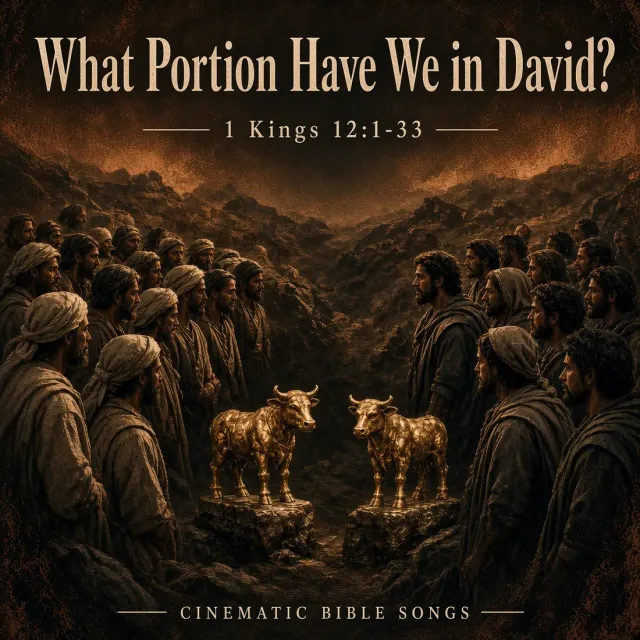
    12:16So when all Israel saw that the king hearkened not unto them, the people answered the king, saying, What portion have we in David? neither have we inheritance in the son of Jesse: to your tents, O Israel: now see to thine own house, David. So Israel departed unto their tents.

    12:17But as for the children of Israel which dwelt in the cities of Judah, Rehoboam reigned over them.

    12:18Then king Rehoboam sent Adoram, who was over the tribute; and all Israel stoned him with stones, that he died. Therefore king Rehoboam made speed to get him up to his chariot, to flee to Jerusalem.

    12:19So Israel rebelled against the house of David unto this day.

  4. 04

    2 Chronicles 12:1-12

    The LORD is righteous

    Shishak of Egypt takes the fortified cities and the treasures of the house, including the gold shields. Rehoboam humbles himself, and what is left is bronze shields carried by the guard.

    The shields still come out when the king enters the temple. They are no longer gold. The Book of Second Chronicles places that material change after a confession, a reprieve, and the removal of the treasures, so the surviving ceremony cannot be mistaken for an untouched kingdom. The procession continues. The metal has changed.

    The confession itself is exceptionally short: The LORD is righteous. Neither the king nor the princes offers a defence against Shemaiah's charge. Their humiliation receives a real response, but some deliverance is not the same as exemption from loss. Jerusalem is spared destruction while Judah remains subject to Shishak. The explanation returns to service: they will learn the difference between God's service and the service of foreign kingdoms. The man whose earlier crisis revolved around the people's service is now a servant himself. The passage grants the reprieve without returning the gold, and the following verses do not turn this moment of humility into an unqualified account of lifelong faithfulness.

    Verse by verse

    1. 12:1

      The abandonment of the law follows the establishment and strengthening of the kingdom. The sequence is explicitly stated.

    2. 12:7

      Some deliverance is limited by the following verse: survival does not remove foreign servitude.

    3. 12:12

      The following judgment in 12:14 remains adverse because Rehoboam did not prepare his heart to seek the LORD. This reprieve is not a blanket reversal of that assessment.

    4. 12:12

      Matthew 1:7 includes Rehoboam, spelled Roboam in the KJV, in the genealogy leading to Jesus. The preserved Davidic line includes this troubled reign.

    2 Chronicles 12:1-12

    King James Version · 12 verses

    12:1And it came to pass, when Rehoboam had established the kingdom, and had strengthened himself, he forsook the law of the LORD, and all Israel with him.

    12:2And it came to pass, that in the fifth year of king Rehoboam Shishak king of Egypt came up against Jerusalem, because they had transgressed against the LORD,

    12:3With twelve hundred chariots, and threescore thousand horsemen: and the people were without number that came with him out of Egypt; the Lubims, the Sukkiims, and the Ethiopians.

    12:4And he took the fenced cities which pertained to Judah, and came to Jerusalem.

    12:5Then came Shemaiah the prophet to Rehoboam, and to the princes of Judah, that were gathered together to Jerusalem because of Shishak, and said unto them, Thus saith the LORD, Ye have forsaken me, and therefore have I also left you in the hand of Shishak.

    12:6Whereupon the princes of Israel and the king humbled themselves; and they said, The LORD is righteous.

    12:7And when the LORD saw that they humbled themselves, the word of the LORD came to Shemaiah, saying, They have humbled themselves; therefore I will not destroy them, but I will grant them some deliverance; and my wrath shall not be poured out upon Jerusalem by the hand of Shishak.

    12:8Nevertheless they shall be his servants; that they may know my service, and the service of the kingdoms of the countries.

    12:9So Shishak king of Egypt came up against Jerusalem, and took away the treasures of the house of the LORD, and the treasures of the king’s house; he took all: he carried away also the shields of gold which Solomon had made.

    12:10Instead of which king Rehoboam made shields of brass, and committed them to the hands of the chief of the guard, that kept the entrance of the king’s house.

    12:11And when the king entered into the house of the LORD, the guard came and fetched them, and brought them again into the guard chamber.

    12:12And when he humbled himself, the wrath of the LORD turned from him, that he would not destroy him altogether: and also in Judah things went well.

Why it matters

The split of the kingdom is the largest single event between Solomon and the exile, and it turns on one speech by one man who had a genuinely easy way out and did not take it. The account gives the cause twice over: the young men’s advice, and a note that the turn of events was from the LORD, so that the word by Ahijah would stand. Both are left in. Chronicles adds the one good thing about him, that when Shishak came he and the princes humbled themselves and said the LORD is righteous.

6 songs

The music

Every song in the catalogue whose passage falls inside these chapters.

  1. 1 Kings 12-14

    Two Calves of Gold

  2. 1 Kings 12:1-33

    What Portion Have We in David?

  3. 1 Kings 13:1-14:20

    The Altar Was Rent

  4. 1 Kings 14:21-16:28

    Blood upon Every Throne

  5. 2 Chronicles 10:1-11:23

    The Kingdom Was Divided

  6. 2 Chronicles 12:1-16

    When He Humbled Himself

Nearby

All the people

Report an error on this page