New · FreePlay The Witnesses The in-depth puzzle battle quest through Bible history

People of the Bible

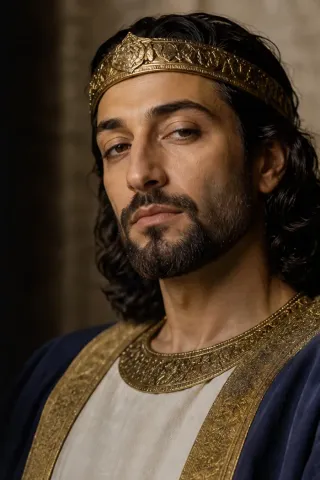
Jeroboam

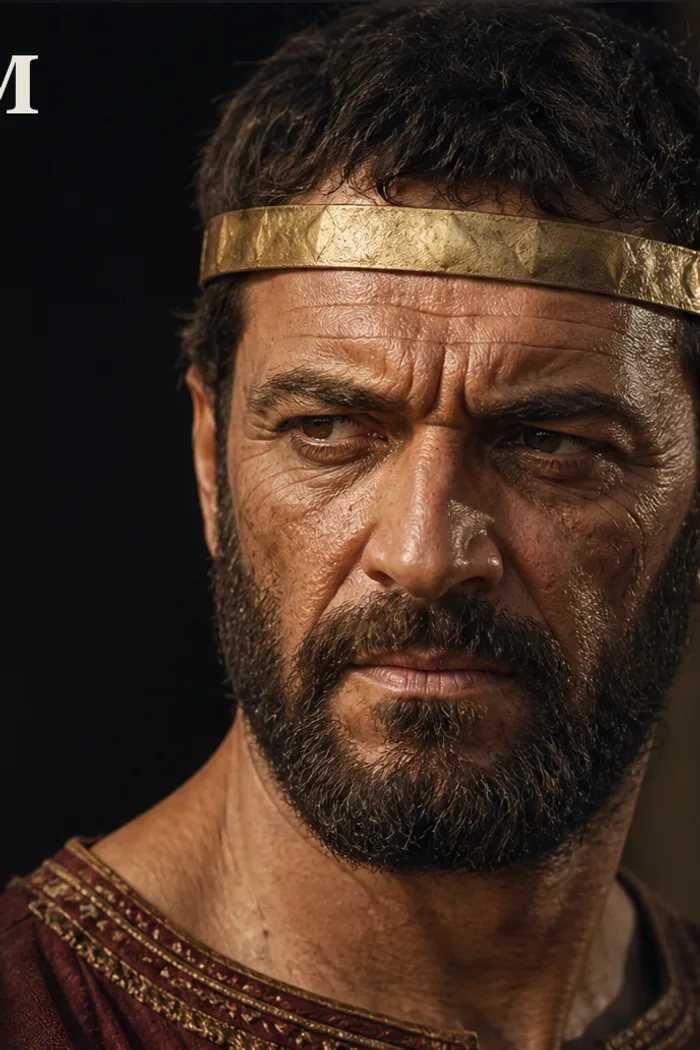
Was promised ten tribes and a sure house if he would listen, and built two golden calves in the first year.

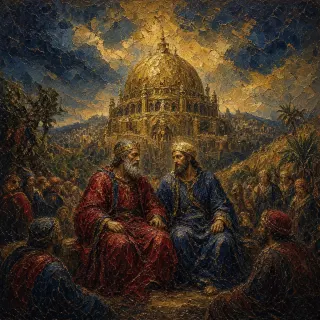
Jeroboam is a capable young officer Solomon puts in charge of the labour of the house of Joseph. A prophet meets him on the road, tears a new cloak into twelve pieces and tells him to take ten, with a promise attached: if you listen and walk in my ways, I will build you a sure house as I built for David. Solomon tries to kill him and he goes to Egypt. He comes back for the assembly at Shechem, is made king of the ten tribes, and then does arithmetic. If the people go up to Jerusalem to sacrifice, their hearts will turn back. So he makes two calves.

Where he appears1 Kings 11 to 14

Scroll down to the account
Jeroboam

The movements, in the order the text gives them.

The Account of Jeroboam

  1. 01

    1 Kings 11:26-40

    The cloak torn in twelve

    Ahijah takes hold of the new garment Jeroboam is wearing and tears it in the road. Ten pieces, and a conditional promise of a house as sure as David’s.

    The garment is new. Ahijah tears it anyway. Twelve pieces make the judgment visible, and ten are put before a man whose existing authority comes from supervising Solomon's labor. The movement from royal servant to prospective king is enormous, but the pieces do not authorize an unlimited claim. David's house retains a place, Jerusalem retains its named significance, and the transfer is delayed until Solomon's son.

    The promise to Jeroboam is larger than a temporary appointment. A sure house is offered, with David himself as the comparison, on the condition that Jeroboam listen and obey. That condition belongs beside the torn cloth, not in small print beneath it. The same speech explains Solomon's loss by his failure to keep the commands and offers Jeroboam continuity through keeping them. The division is not presented as permission for a rival set of gods. At the end, the promised king has to flee to Egypt. A promise of a throne and immediate possession of one are not the same event.

    Verse by verse

    1. 11:28

      The house of Joseph refers to the Joseph tribes, Ephraim and Manasseh. Jeroboam's first described responsibility is supervision, not kingship.

    2. 11:32

      The one-tribe wording should be retained as written. First Kings 12:21 explicitly names Benjamin alongside Judah in Rehoboam's force.

    3. 11:38

      The enduring house is conditional on listening and obedience. The verse does not make its continuation unconditional.

    4. 11:39

      Not for ever limits the announced affliction of David's descendants. Jeroboam's grant does not erase every promise attached to David's house.

    1 Kings 11:26-40: The cloak torn in twelve

    1 Kings 11:26-40

    King James Version · 15 verses

    11:26And Jeroboam the son of Nebat, an Ephrathite of Zereda, Solomon’s servant, whose mother’s name was Zeruah, a widow woman, even he lifted up his hand against the king.

    11:27And this was the cause that he lifted up his hand against the king: Solomon built Millo, and repaired the breaches of the city of David his father.

    11:28And the man Jeroboam was a mighty man of valour: and Solomon seeing the young man that he was industrious, he made him ruler over all the charge of the house of Joseph.

    11:29And it came to pass at that time when Jeroboam went out of Jerusalem, that the prophet Ahijah the Shilonite found him in the way; and he had clad himself with a new garment; and they two were alone in the field:

    11:30And Ahijah caught the new garment that was on him, and rent it in twelve pieces:

    11:31And he said to Jeroboam, Take thee ten pieces: for thus saith the LORD, the God of Israel, Behold, I will rend the kingdom out of the hand of Solomon, and will give ten tribes to thee:

    11:32(But he shall have one tribe for my servant David’s sake, and for Jerusalem’s sake, the city which I have chosen out of all the tribes of Israel:)

    11:33Because that they have forsaken me, and have worshipped Ashtoreth the goddess of the Zidonians, Chemosh the god of the Moabites, and Milcom the god of the children of Ammon, and have not walked in my ways, to do that which is right in mine eyes, and to keep my statutes and my judgments, as did David his father.

    11:34Howbeit I will not take the whole kingdom out of his hand: but I will make him prince all the days of his life for David my servant’s sake, whom I chose, because he kept my commandments and my statutes:

    11:35But I will take the kingdom out of his son’s hand, and will give it unto thee, even ten tribes.

    11:36And unto his son will I give one tribe, that David my servant may have a light alway before me in Jerusalem, the city which I have chosen me to put my name there.

    11:37And I will take thee, and thou shalt reign according to all that thy soul desireth, and shalt be king over Israel.

    11:38And it shall be, if thou wilt hearken unto all that I command thee, and wilt walk in my ways, and do that is right in my sight, to keep my statutes and my commandments, as David my servant did; that I will be with thee, and build thee a sure house, as I built for David, and will give Israel unto thee.

    11:39And I will for this afflict the seed of David, but not for ever.

    11:40Solomon sought therefore to kill Jeroboam. And Jeroboam arose, and fled into Egypt, unto Shishak king of Egypt, and was in Egypt until the death of Solomon.

  2. 02

    1 Kings 12:20-24

    Made king over Israel

    Rehoboam masses a hundred and eighty thousand men to take the tribes back. A prophet stops the war with one sentence: this thing is from me. They go home.

    Jeroboam receives the crown, but the decisive speech in these verses is delivered to the other side. Rehoboam's army has been counted, its purpose stated, and its warriors assembled. Shemaiah then names the intended enemy as brethren. The divided kingdom has not ceased to be a related people. That word stands directly in the path of the announced campaign.

    The protection of Jeroboam's new position does not come here from a victory won by his troops. It comes from a command that the opposing army actually obeys. The repetition is striking: they hearkened to the word of the LORD, returned, and departed according to that word. The previous scene had twice said that the king would not hear the people. This scene records hearing that changes an army's direction. It does not promise that the two reigns will never have hostilities; it identifies this expedition as one that was stopped.

    Verse by verse

    1. 12:20

      Judah only describes the Davidic side here, while the next verse explicitly includes Benjamin. The adjacent wording should not be silently reduced to a different tribal list.

    2. 12:24

      Brethren is the reason the proposed opponents cannot be treated simply as outsiders. The prohibition concerns fighting these fellow Israelites.

    3. 12:24

      First Kings 14:30 later records continuing war between the two kings. The abandoned campaign here is not a claim that all later conflict disappeared.

    1 Kings 12:20-24

    King James Version · 5 verses

    12:20And it came to pass, when all Israel heard that Jeroboam was come again, that they sent and called him unto the congregation, and made him king over all Israel: there was none that followed the house of David, but the tribe of Judah only.

    12:21And when Rehoboam was come to Jerusalem, he assembled all the house of Judah, with the tribe of Benjamin, an hundred and fourscore thousand chosen men, which were warriors, to fight against the house of Israel, to bring the kingdom again to Rehoboam the son of Solomon.

    12:22But the word of God came unto Shemaiah the man of God, saying,

    12:23Speak unto Rehoboam, the son of Solomon, king of Judah, and unto all the house of Judah and Benjamin, and to the remnant of the people, saying,

    12:24Thus saith the LORD, Ye shall not go up, nor fight against your brethren the children of Israel: return every man to his house; for this thing is from me. They hearkened therefore to the word of the LORD, and returned to depart, according to the word of the LORD.

    1 Kings 12:20-24: Made king over Israel
  3. 03

    1 Kings 12:25-33

    Two calves, and a feast he invented

    Behold your gods, O Israel. One at Bethel, one at Dan, priests from anyone who wanted the job, and a festival in the eighth month, in the month he devised of his own heart.

    The calves begin in a sentence Jeroboam speaks in his heart. Here the Book of First Kings actually supplies the inward reasoning that commentary so often has to leave alone: worship at Jerusalem may return the people's allegiance to Rehoboam and cost Jeroboam his life. The public explanation is easier travel. The private calculation is the survival of his rule. The passage sets the two beside each other without confusing them.

    The changes then spread beyond the objects of gold. Sites, priests, sacrifices, and the calendar all receive royal adjustment. Made and ordained keep recurring until the final description locates the invented month in his own heart. That is a pointed contrast with the earlier offer of a secure house through listening to God's commands. Jeroboam has not merely moved a service to a more convenient venue. The king who received a kingdom by a prophetic word is now furnishing its worship from his own decisions.

    Verse by verse

    1. 12:26

      The king's inward reasoning is explicitly reported. This passage permits a statement of motive because it supplies that motive itself.

    2. 12:28

      The claim about gods bringing Israel from Egypt closely repeats the declaration over Aaron's calf in Exodus 32:4.

    3. 12:31

      The explicitly stated priestly disqualification is that the appointees were not sons of Levi. The criticism is not simply an assessment of their wealth.

    4. 12:33

      Second Chronicles 11:13-16 adds that displaced Levites and other worshipers went to Jerusalem. Kings emphasizes the king's arrangements; Chronicles also describes the resulting movement of people.

    1 Kings 12:25-33

    King James Version · 9 verses

    12:25Then Jeroboam built Shechem in mount Ephraim, and dwelt therein; and went out from thence, and built Penuel.

    12:26And Jeroboam said in his heart, Now shall the kingdom return to the house of David:

    12:27If this people go up to do sacrifice in the house of the LORD at Jerusalem, then shall the heart of this people turn again unto their lord, even unto Rehoboam king of Judah, and they shall kill me, and go again to Rehoboam king of Judah.

    12:28Whereupon the king took counsel, and made two calves of gold, and said unto them, It is too much for you to go up to Jerusalem: behold thy gods, O Israel, which brought thee up out of the land of Egypt.

    12:29And he set the one in Beth-el, and the other put he in Dan.

    12:30And this thing became a sin: for the people went to worship before the one, even unto Dan.

    12:31And he made an house of high places, and made priests of the lowest of the people, which were not of the sons of Levi.

    12:32And Jeroboam ordained a feast in the eighth month, on the fifteenth day of the month, like unto the feast that is in Judah, and he offered upon the altar. So did he in Beth-el, sacrificing unto the calves that he had made: and he placed in Beth-el the priests of the high places which he had made.

    12:33So he offered upon the altar which he had made in Beth-el the fifteenth day of the eighth month, even in the month which he had devised of his own heart; and ordained a feast unto the children of Israel: and he offered upon the altar, and burnt incense.

  4. 04

    1 Kings 13:1-6

    The altar torn and the hand dried up

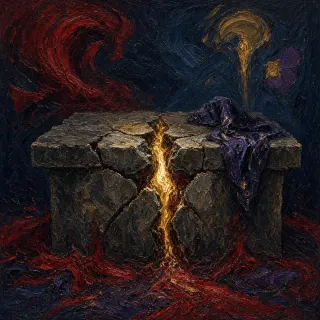
    A man out of Judah cries against the altar while Jeroboam stands on it. The king points and orders him seized, and his arm stiffens where it is, and he has to ask for prayer to get it back.

    The prophet addresses the altar, and the king takes the offence personally. That difference is almost the whole encounter. The announced judgment concerns the worship Jeroboam has established; Jeroboam's immediate answer is an order to seize the speaker. His outstretched hand then becomes the part of the scene he cannot control. The command goes out. The arm will not come back.

    Two signs should remain distinct. The altar splits and spills its ashes, confirming the word spoken against it. The king's hand withers and is restored when the same man he threatened prays for him. Restoration is real, but the altar has not thereby received approval. Nor does the request for healing amount to an explicit renunciation of the new worship. The chapter eventually states in 13:33 that Jeroboam did not return from his evil way. His hand is restored in these verses. The Book of First Kings does not claim the same restoration for his allegiance.

    Verse by verse

    1. 13:1

      The man of God comes from Judah to Bethel. No personal name is supplied for him here.

    2. 13:2

      Josiah is named as a future member of David's house. The altar's immediate splitting and the later action by Josiah are different parts of the announcement.

    3. 13:5

      The ashes falling out are part of the specified sign, not a separate accidental detail.

    4. 13:6

      The request is for the restoration of the hand. The verse records answered intercession, not an explicit abandonment of Jeroboam's religious arrangements.

    1 Kings 13:1-6

    King James Version · 6 verses

    13:1And, behold, there came a man of God out of Judah by the word of the LORD unto Beth-el: and Jeroboam stood by the altar to burn incense.

    13:2And he cried against the altar in the word of the LORD, and said, O altar, altar, thus saith the LORD; Behold, a child shall be born unto the house of David, Josiah by name; and upon thee shall he offer the priests of the high places that burn incense upon thee, and men’s bones shall be burnt upon thee.

    13:3And he gave a sign the same day, saying, This is the sign which the LORD hath spoken; Behold, the altar shall be rent, and the ashes that are upon it shall be poured out.

    13:4And it came to pass, when king Jeroboam heard the saying of the man of God, which had cried against the altar in Beth-el, that he put forth his hand from the altar, saying, Lay hold on him. And his hand, which he put forth against him, dried up, so that he could not pull it in again to him.

    13:5The altar also was rent, and the ashes poured out from the altar, according to the sign which the man of God had given by the word of the LORD.

    13:6And the king answered and said unto the man of God, Intreat now the face of the LORD thy God, and pray for me, that my hand may be restored me again. And the man of God besought the LORD, and the king’s hand was restored him again, and became as it was before.

Why it matters

Jeroboam is the man who got the promise and did not believe it. The phrase that follows him through both books of Kings, the sin of Jeroboam who made Israel to sin, becomes the standard measure of every northern king for two hundred years, and not one of them turns from it. The account is precise about the reasoning: he says it in his own heart, and every decision after it is a calculation about keeping what he was already given.

6 songs

The music

Every song in the catalogue whose passage falls inside these chapters.

  1. 1 Kings 11:1-43

    His Heart Was Turned Away

  2. 1 Kings 11

    The Kingdom Torn

  3. 1 Kings 12-14

    Two Calves of Gold

  4. 1 Kings 12:1-33

    What Portion Have We in David?

  5. 1 Kings 13:1-14:20

    The Altar Was Rent

  6. 1 Kings 14:21-16:28

    Blood upon Every Throne

Nearby

All the people

Report an error on this page