New · FreePlay The Witnesses The in-depth puzzle battle quest through Bible history

People of the Bible

Nathan

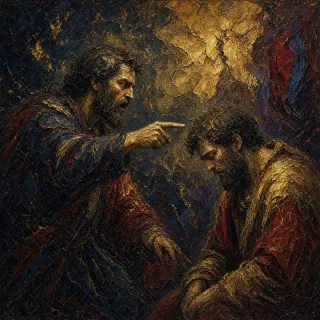
Told a king an account about a poor man’s lamb, waited for the verdict, and then said you are the man.

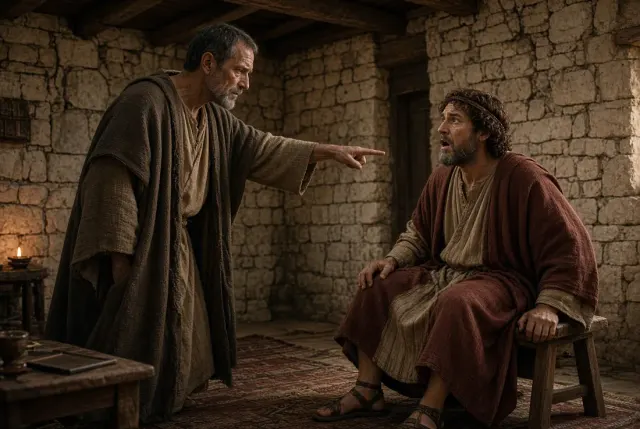
Nathan appears three times and each one turns the history. First David tells him he wants to build a house for God, and Nathan says do it, and is corrected in the night and has to go back and say the opposite, which is the most honest thing a prophet does in the book. The message he brings instead is the covenant that David’s house and throne will be established forever. Second, after Uriah, he walks in and tells an account about two men and a lamb until David is angry enough to pass sentence. Third, he is old, and he and Bathsheba move in a single morning to put Solomon on the throne.

Where he appears2 Samuel 7 · 2 Samuel 12 · 1 Kings 1

Scroll down to the account
Nathan

The movements, in the order the text gives them.

The Account of Nathan

  1. 01

    2 Samuel 7:1-17

    Go, do all that is in your heart

    He approves the temple on his own judgment and is told that night to say something else. What he brings back is bigger than what he took away: not a house for God, but a house for David.

    Nathan's first answer has to be corrected before morning. David's proposal sounds fitting: the king has cedar walls, while the ark remains behind curtains. Nathan approves it because the LORD is with David. That is not yet the same thing as the LORD having commissioned this particular building. The word that comes that night makes the distinction impossible to miss.

    The reply also changes the direction of the gift. David proposes to provide God with a house; God announces that he will provide David with one. Between those two meanings stands the reminder of who took the shepherd from the sheepcote, went with him, and gave him his position. The king's proposed generosity rests on gifts already received. God is not a neglected tenant waiting for David to notice the accommodation.

    The promise extends beyond David's death to his offspring, the building of the temple, and the enduring throne. Discipline is included, not concealed; mercy will not depart as it did from Saul. Nathan has more to bring back than a refusal of a construction project. He delivers a promise large enough to change the meaning of David's house. His task is to speak all these words, including the ones that overturn his own first advice.

    Verse by verse

    1. 7:3-4

      Nathan's initial approval precedes the explicit arrival of the word of the LORD. The account distinguishes his first counsel from the revelation he must subsequently deliver.

    2. 7:13

      First Kings 8:17-20 identifies Solomon's temple building as the fulfillment of the promise concerning David's son. David's intention and the identity of the builder remain distinct.

    3. 7:14

      Hebrews 1:5 quotes the father-and-son promise in reference to Christ. That later use should be recognized alongside the immediate setting of David's royal offspring.

    4. 7:15-16

      The promise includes chastening while distinguishing David's house from Saul's rejection. Luke 1:32-33 connects David's throne and an unending kingdom with Jesus.

    5. 7:17

      Second Chronicles 29:25 also names Nathan in the prophetic authorization of temple music. His recorded work extends beyond the confrontations for which he is best known.

    2 Samuel 7:1-17

    King James Version · 17 verses

    7:1And it came to pass, when the king sat in his house, and the LORD had given him rest round about from all his enemies;

    7:2That the king said unto Nathan the prophet, See now, I dwell in an house of cedar, but the ark of God dwelleth within curtains.

    7:3And Nathan said to the king, Go, do all that is in thine heart; for the LORD is with thee.

    7:4And it came to pass that night, that the word of the LORD came unto Nathan, saying,

    7:5Go and tell my servant David, Thus saith the LORD, Shalt thou build me an house for me to dwell in?

    7:6Whereas I have not dwelt in any house since the time that I brought up the children of Israel out of Egypt, even to this day, but have walked in a tent and in a tabernacle.

    7:7In all the places wherein I have walked with all the children of Israel spake I a word with any of the tribes of Israel, whom I commanded to feed my people Israel, saying, Why build ye not me an house of cedar?

    7:8Now therefore so shalt thou say unto my servant David, Thus saith the LORD of hosts, I took thee from the sheepcote, from following the sheep, to be ruler over my people, over Israel:

    7:9And I was with thee whithersoever thou wentest, and have cut off all thine enemies out of thy sight, and have made thee a great name, like unto the name of the great men that are in the earth.

    7:10Moreover I will appoint a place for my people Israel, and will plant them, that they may dwell in a place of their own, and move no more; neither shall the children of wickedness afflict them any more, as beforetime,

    7:11And as since the time that I commanded judges to be over my people Israel, and have caused thee to rest from all thine enemies. Also the LORD telleth thee that he will make thee an house.

    7:12And when thy days be fulfilled, and thou shalt sleep with thy fathers, I will set up thy seed after thee, which shall proceed out of thy bowels, and I will establish his kingdom.

    7:13He shall build an house for my name, and I will stablish the throne of his kingdom for ever.

    7:14I will be his father, and he shall be my son. If he commit iniquity, I will chasten him with the rod of men, and with the stripes of the children of men:

    7:15But my mercy shall not depart away from him, as I took it from Saul, whom I put away before thee.

    7:16And thine house and thy kingdom shall be established for ever before thee: thy throne shall be established for ever.

    7:17According to all these words, and according to all this vision, so did Nathan speak unto David.

  2. 02

    2 Samuel 12:1-7

    There were two men in one city

    A rich man with flocks, a poor man with one ewe lamb he raised with his children. David’s anger is greatly kindled and he condemns the man to fourfold restitution and death.

    Nathan gets a verdict before he names the defendant. The rich man's offence is presented in a scale David can judge without first defending himself: abundant flocks on one side, one little ewe lamb on the other. But the lamb is not merely entered in an inventory. It eats from the poor man's food, drinks from his cup, and lies in his bosom. A household has made room for it as for a daughter.

    The visitor does not create a shortage. The rich man has plenty; what he spares is his own property, and what he takes belongs to someone who has almost nothing. That choice is the point on which David's anger fastens. He names the absence of pity and demands repayment, then reaches beyond repayment to the man's unworthiness to live. The king can still recognize predatory taking when another man's name seems to stand over it.

    Thou art the man does not introduce a new standard. It places David inside the standard he has just announced. The accusation then begins with what God gave him, not with what David lacked. The parable has left very little room for an argument from necessity. The rich man had enough.

    Verse by verse

    1. 12:1

      The LORD sends Nathan. His approach is presented as a commissioned confrontation, not simply unsolicited palace advice.

    2. 12:3

      The lamb is like a daughter to the poor man. The comparison explains its place in the household; it does not require every detail of the parable to have a separate historical equivalent.

    3. 12:5-6

      David combines the declaration that the man deserves death with fourfold restitution. Exodus 22:1 specifies restitution for this theft, not execution.

    4. 12:7

      The identification directs David's own judgment back at him. Nathan then names the LORD as the source of the kingship and deliverance David has received.

    2 Samuel 12:1-7

    King James Version · 7 verses

    12:1And the LORD sent Nathan unto David. And he came unto him, and said unto him, There were two men in one city; the one rich, and the other poor.

    12:2The rich man had exceeding many flocks and herds:

    12:3But the poor man had nothing, save one little ewe lamb, which he had bought and nourished up: and it grew up together with him, and with his children; it did eat of his own meat, and drank of his own cup, and lay in his bosom, and was unto him as a daughter.

    12:4And there came a traveller unto the rich man, and he spared to take of his own flock and of his own herd, to dress for the wayfaring man that was come unto him; but took the poor man’s lamb, and dressed it for the man that was come to him.

    12:5And David’s anger was greatly kindled against the man; and he said to Nathan, As the LORD liveth, the man that hath done this thing shall surely die:

    12:6And he shall restore the lamb fourfold, because he did this thing, and because he had no pity.

    12:7And Nathan said to David, Thou art the man. Thus saith the LORD God of Israel, I anointed thee king over Israel, and I delivered thee out of the hand of Saul;

    2 Samuel 12:1-7: There were two men in one city
  3. 03

    2 Samuel 12:7-14

    You are the man

    Four words in Hebrew. What follows is the whole account read back, what was given and what would have been added, and a sentence that the sword will not depart from his house.

    Nathan's accusation refuses to let a foreign sword become an alibi. David did not strike Uriah at the wall, but he arranged the conditions of his death. The prophet names both truths together: David killed him, and the weapon was the sword of the children of Ammon. The distance between an order and its execution does not break the line of responsibility.

    The repeated language of giving and taking makes the offence sharper. God had given kingship and deliverance; David took Uriah's wife. The judgment then places the same house that received the promise of chapter 7 under the threat of a continuing sword. Nothing in Nathan's earlier message had promised that the dynasty would be beyond correction. Nor does this message disguise the suffering that correction will involve. What was done secretly is answered with a threatened public exposure.

    David's confession is brief, and Nathan's answer is immediate: the LORD has put away his sin, and David will not die. That announcement stands beside, not instead of, the child's announced death. The text does not offer a simple equation that makes the two interchangeable. Nathan speaks pardon without retracting judgment. The king's admission ends the evasion. It does not end the consequences.

    Verse by verse

    1. 12:8

      The list of gifts establishes David's abundance and obligation. It does not describe Uriah's wife as another gift God had authorized him to take.

    2. 12:9

      The accusation names the killing and the taking of Uriah's wife separately. The involvement of Ammonite soldiers does not absolve the king who arranged it.

    3. 12:10-12

      The sword within David's house and the public taking of his wives are announced as judgments. The passage is describing the sentence, not instructing readers to imitate those acts.

    4. 12:13

      David is explicitly spared the death just threatened by his own verdict in verse 5. Forgiveness is stated, but the following verse prevents equating it with the removal of every consequence.

    5. 12:14

      The child's death is announced without an accusation that the child committed David's offence. The severity should not be softened by supplying such an accusation.

    2 Samuel 12:7-14

    King James Version · 8 verses

    12:7And Nathan said to David, Thou art the man. Thus saith the LORD God of Israel, I anointed thee king over Israel, and I delivered thee out of the hand of Saul;

    12:8And I gave thee thy master’s house, and thy master’s wives into thy bosom, and gave thee the house of Israel and of Judah; and if that had been too little, I would moreover have given unto thee such and such things.

    12:9Wherefore hast thou despised the commandment of the LORD, to do evil in his sight? thou hast killed Uriah the Hittite with the sword, and hast taken his wife to be thy wife, and hast slain him with the sword of the children of Ammon.

    12:10Now therefore the sword shall never depart from thine house; because thou hast despised me, and hast taken the wife of Uriah the Hittite to be thy wife.

    12:11Thus saith the LORD, Behold, I will raise up evil against thee out of thine own house, and I will take thy wives before thine eyes, and give them unto thy neighbour, and he shall lie with thy wives in the sight of this sun.

    12:12For thou didst it secretly: but I will do this thing before all Israel, and before the sun.

    12:13And David said unto Nathan, I have sinned against the LORD. And Nathan said unto David, The LORD also hath put away thy sin; thou shalt not die.

    12:14Howbeit, because by this deed thou hast given great occasion to the enemies of the LORD to blaspheme, the child also that is born unto thee shall surely die.

    2 Samuel 12:7-14: You are the man
  4. 04

    1 Kings 1:11-27

    Have you not heard

    Adonijah has already declared himself. Nathan choreographs it: Bathsheba goes in first, he follows while she is still speaking, and the two testimonies together get the oath out of David that morning.

    The guest list tells Nathan that Adonijah's feast is not an ordinary family meal. Solomon is absent, and so are Nathan, Zadok, Benaiah, and the mighty men named earlier. Adonijah has assembled support without summoning the people whose presence would make the gathering something else. Nathan reads those omissions as a danger to Bathsheba and her son and says so before arranging an audience with David.

    The intervention is coordinated in plain sight of the text. Bathsheba will remind David of his oath; Nathan will enter while she is still speaking and confirm her words. The plan is not hidden information that must be invented to make the scene work. But coordination does not by itself prove fabrication. David's own acknowledgment of the oath in verse 30 supplies the answer to that suspicion.

    Nathan's manner before the king is formal, even deferential. His questions are not. He asks whether David authorized Adonijah's rule, then lists the feast, the guests, and the acclamation already being spoken over the rival. The pressure is exact: either the king ordered this succession and excluded his own servants from knowing it, or events have outrun his instruction. Nathan does not bring a sword into the chamber. He brings the discrepancy that requires David to act.

    Verse by verse

    1. 1:12

      Nathan expressly frames his counsel as a means of preserving Bathsheba and Solomon's lives. That stated concern should not be replaced with an invented private motive.

    2. 1:14

      The timing of the two appearances is planned and openly disclosed. The text does not present their agreement as an accidental coincidence.

    3. 1:24

      Nathan asks whether the king has authorized Adonijah to reign. This is a question put to David, not an assertion that David has already done so.

    4. 1:26-27

      Nathan names his own exclusion and that of other royal servants. The omissions support his demand for an explicit account of the king's intention.

    1 Kings 1:11-27: Have you not heard

    1 Kings 1:11-27

    King James Version · 17 verses

    1:11Wherefore Nathan spake unto Bath-sheba the mother of Solomon, saying, Hast thou not heard that Adonijah the son of Haggith doth reign, and David our lord knoweth it not?

    1:12Now therefore come, let me, I pray thee, give thee counsel, that thou mayest save thine own life, and the life of thy son Solomon.

    1:13Go and get thee in unto king David, and say unto him, Didst not thou, my lord, O king, swear unto thine handmaid, saying, Assuredly Solomon thy son shall reign after me, and he shall sit upon my throne? why then doth Adonijah reign?

    1:14Behold, while thou yet talkest there with the king, I also will come in after thee, and confirm thy words.

    1:15And Bath-sheba went in unto the king into the chamber: and the king was very old; and Abishag the Shunammite ministered unto the king.

    1:16And Bath-sheba bowed, and did obeisance unto the king. And the king said, What wouldest thou?

    1:17And she said unto him, My lord, thou swarest by the LORD thy God unto thine handmaid, saying, Assuredly Solomon thy son shall reign after me, and he shall sit upon my throne.

    1:18And now, behold, Adonijah reigneth; and now, my lord the king, thou knowest it not:

    1:19And he hath slain oxen and fat cattle and sheep in abundance, and hath called all the sons of the king, and Abiathar the priest, and Joab the captain of the host: but Solomon thy servant hath he not called.

    1:20And thou, my lord, O king, the eyes of all Israel are upon thee, that thou shouldest tell them who shall sit on the throne of my lord the king after him.

    1:21Otherwise it shall come to pass, when my lord the king shall sleep with his fathers, that I and my son Solomon shall be counted offenders.

    1:22And, lo, while she yet talked with the king, Nathan the prophet also came in.

    1:23And they told the king, saying, Behold Nathan the prophet. And when he was come in before the king, he bowed himself before the king with his face to the ground.

    1:24And Nathan said, My lord, O king, hast thou said, Adonijah shall reign after me, and he shall sit upon my throne?

    1:25For he is gone down this day, and hath slain oxen and fat cattle and sheep in abundance, and hath called all the king’s sons, and the captains of the host, and Abiathar the priest; and, behold, they eat and drink before him, and say, God save king Adonijah.

    1:26But me, even me thy servant, and Zadok the priest, and Benaiah the son of Jehoiada, and thy servant Solomon, hath he not called.

    1:27Is this thing done by my lord the king, and thou hast not shewed it unto thy servant, who should sit on the throne of my lord the king after him?


Why it matters

Nathan is the shape of the prophetic office before there are prophetic books: a man with access to the king who uses it to say the thing nobody else will. The parable is the technique, and it works because David is a good judge of everyone except himself. He is also the one who is willing to be publicly wrong. He told the king to go ahead and then came back and unsaid it, and Scripture keeps both halves.

4 songs

The music

Every song in the catalogue whose passage falls inside these chapters.

  1. 2 Samuel 7

    A House and a Throne

  2. 2 Samuel 7:1-29

    A House Established unto David

  3. 2 Samuel 11-12

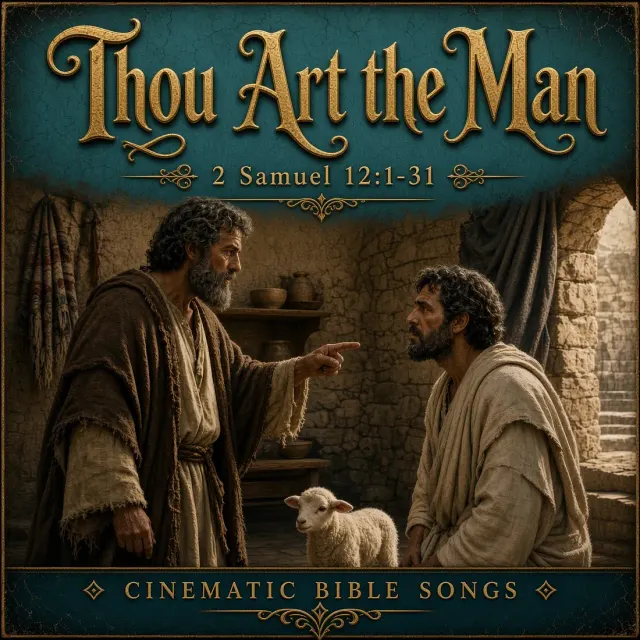
    Thou Art the Man

  4. 1 Kings 1:1-2:46

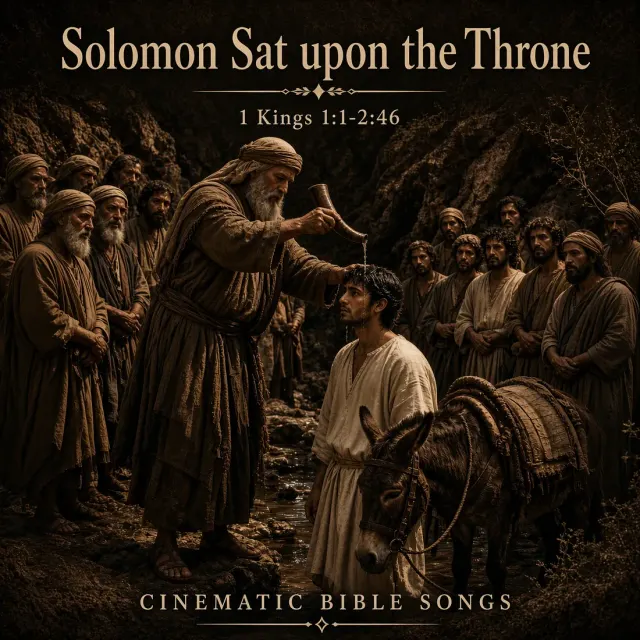
    Solomon Sat upon the Throne

Nearby

All the people

Report an error on this page