[Verse 1]
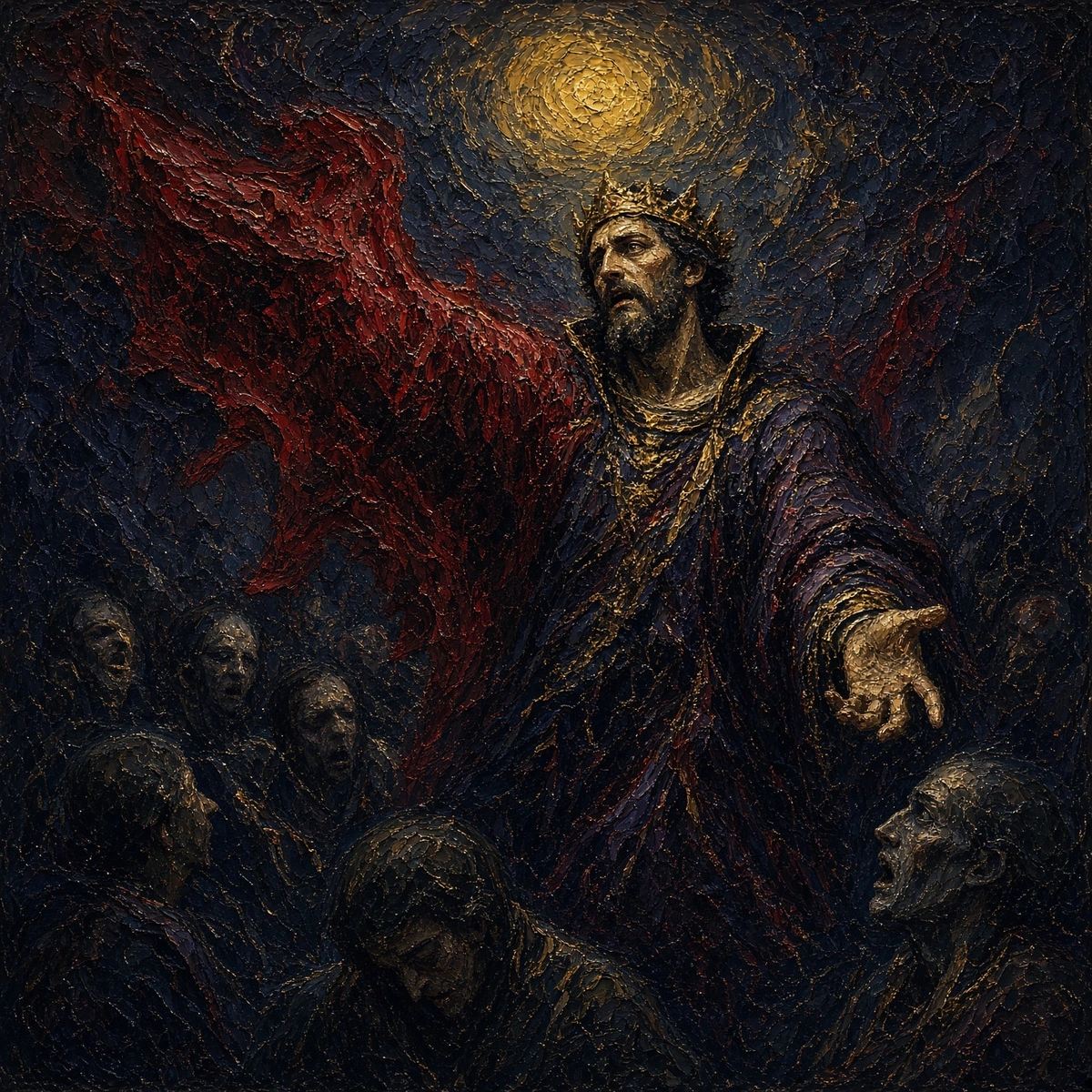
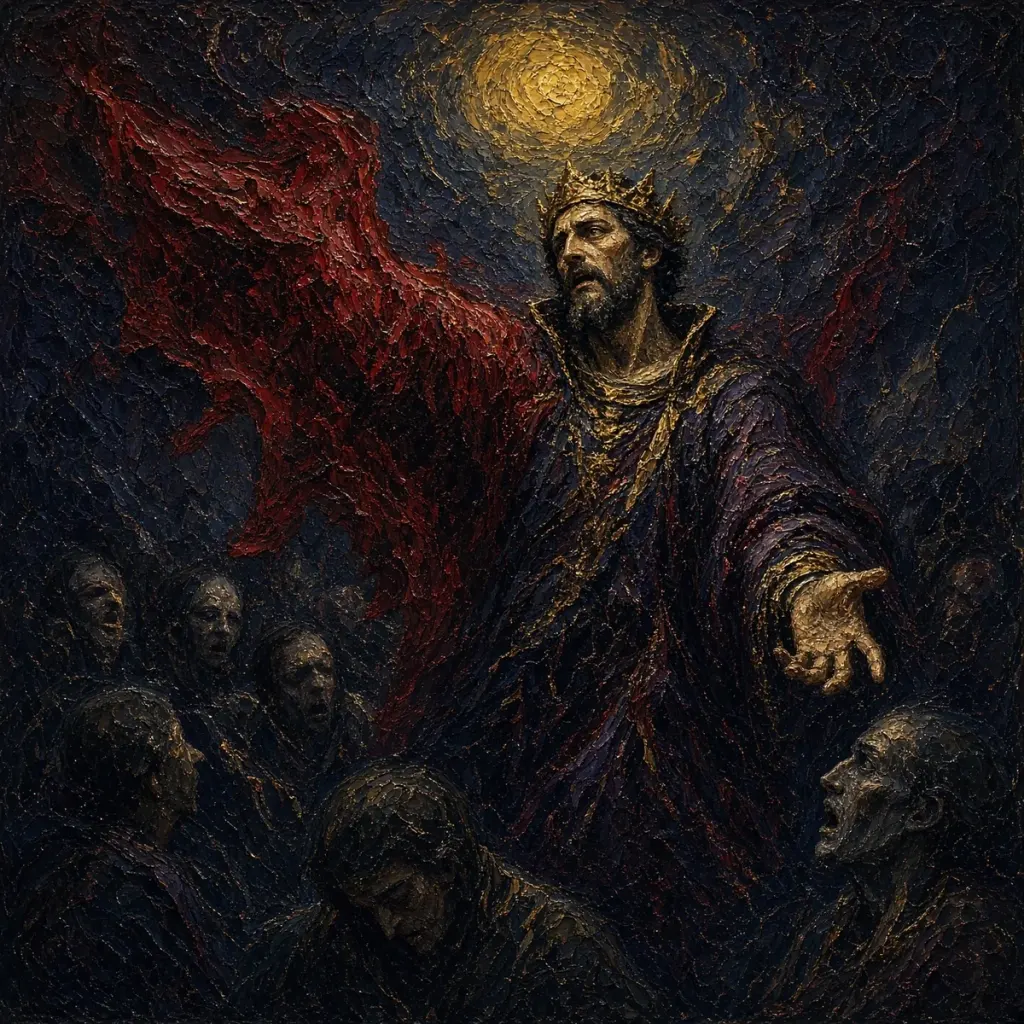
The king and Haman arrive at Esther's second banquet.
Esther asks that her own life be given to her.
The queen reveals that she and her people have been sold for destruction.
Ahasuerus demands the identity and location of the man behind the scheme.
[Pre-Chorus]
The warning stood where no one wished to see,
And every hidden root became a tree.
[Chorus]
The Adversary and Enemy Is This Wicked Haman, let the warning remain,
Hidden sin still flowers into pain.
The word of the LORD exposed what men concealed,
And judgment stood where every heart was revealed.
[Verse 2]
The king rises from the banquet in wrath and enters the palace garden.
Haman remains to beg Esther for his life.
He understands that the king has determined evil against him.
The king interprets the desperate posture as a further assault upon the queen.
[Bridge]
Harbonah reports the fifty-cubit gallows standing at Haman's house.
He reminds the king that Mordecai had spoken good for the throne.
Ahasuerus commands that Haman be hanged upon his own gallows.
Haman dies on the structure prepared for Mordecai.
[Final Chorus]
The Adversary and Enemy Is This Wicked Haman, let the warning remain,
Hidden sin still flowers into pain.
The word of the LORD exposed what men concealed,
And judgment stood where every heart stood revealed.
[Outro]
The warning did not vanish with the dust.
The final line remembered judgment, fear, and trust.
Esther 7: The queen names her people and their enemy
At the second banquet, Esther finally states the petition that has been waiting behind two invitations. Against Ahasuerus’s offer of up to half the kingdom, she asks for her own life and the lives of her people. She repeats the destruction decree’s language and brings the anonymous target of Haman’s policy into the king’s immediate household. When Ahasuerus asks who has done this, Esther names Haman as the enemy. The king leaves in anger, while Haman pleads with Esther for his life. When the king returns, he interprets Haman’s position near Esther as an assault on the queen, although the Book of Esther has described Haman’s action as a plea. Harbonah then points out the enormous execution structure Haman built for Mordecai, the man who saved the king. Haman is put on his own prepared wood, but the royal decree against the Jews remains unresolved.