

Lyrics · Esther
For Such a Time as This
Esther 3-8
Lyrics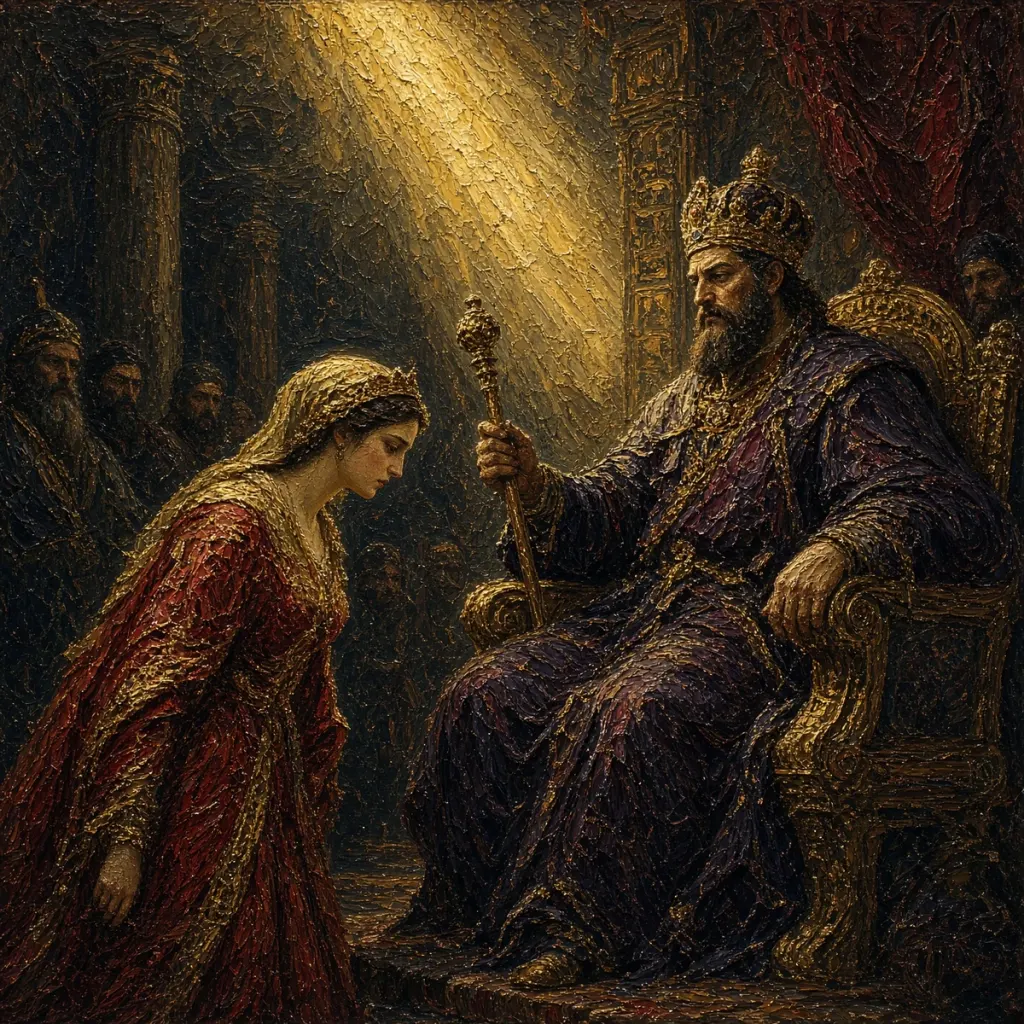
About this song
About this song
This song belongs to the Esther collection. 8 recordings are available to play here, with the complete lyrics below.
- Bible book
- Esther
- Collection
- Esther
- Musical styles
- Acoustic, Pop, World Music, Cinematic Soundtrack, Rock, Country & Americana, Worship & Gospel
Named in this songHamanMordecaiEsther
About the passage
Esther 3: One man’s anger acquires the king’s seal
Haman’s promotion creates a new crisis at the gate. Mordecai refuses the commanded reverence, and Haman chooses to treat that refusal not as one man’s offense but as grounds for destroying an entire people. Pur is cast to determine the day before Haman presents his accusation, so the desired outcome precedes the case he makes to Ahasuerus. He describes a dispersed people with different laws, alleges disloyalty, and joins the accusation to a large financial offer without naming the personal grievance underneath it. Ahasuerus transfers his signet and authorizes Haman to act. The resulting decree uses the empire’s multilingual administrative network to command the destruction and plunder of Jews on one appointed day. The chapter closes with one of Esther’s hardest contrasts: the king and Haman drink while the city of Shushan is perplexed.
Study Esther 3 in depthEsther 4: The queen learns what the crown cannot protect
The destruction decree becomes visible first through mourning. Mordecai tears his clothes, wears sackcloth and ashes, and cries openly, while similar grief spreads wherever the royal order arrives. The palace boundary is sharp enough that sackcloth cannot enter, and Esther initially knows only that Mordecai is distressed. Hatach becomes the messenger who carries explanation and then a copy of the decree between them. Esther learns that intervention requires an unsummoned approach to Ahasuerus, an act governed by a law of death unless the king extends the golden sceptre. Mordecai answers that the palace does not make her exempt from the danger facing her people and raises the possibility that her position may matter precisely now. Esther then takes command of the preparation, orders a shared fast, and resolves to enter the king’s presence without claiming certainty that she will survive.
Study Esther 4 in depthEsther 5: An invitation that Haman misunderstands
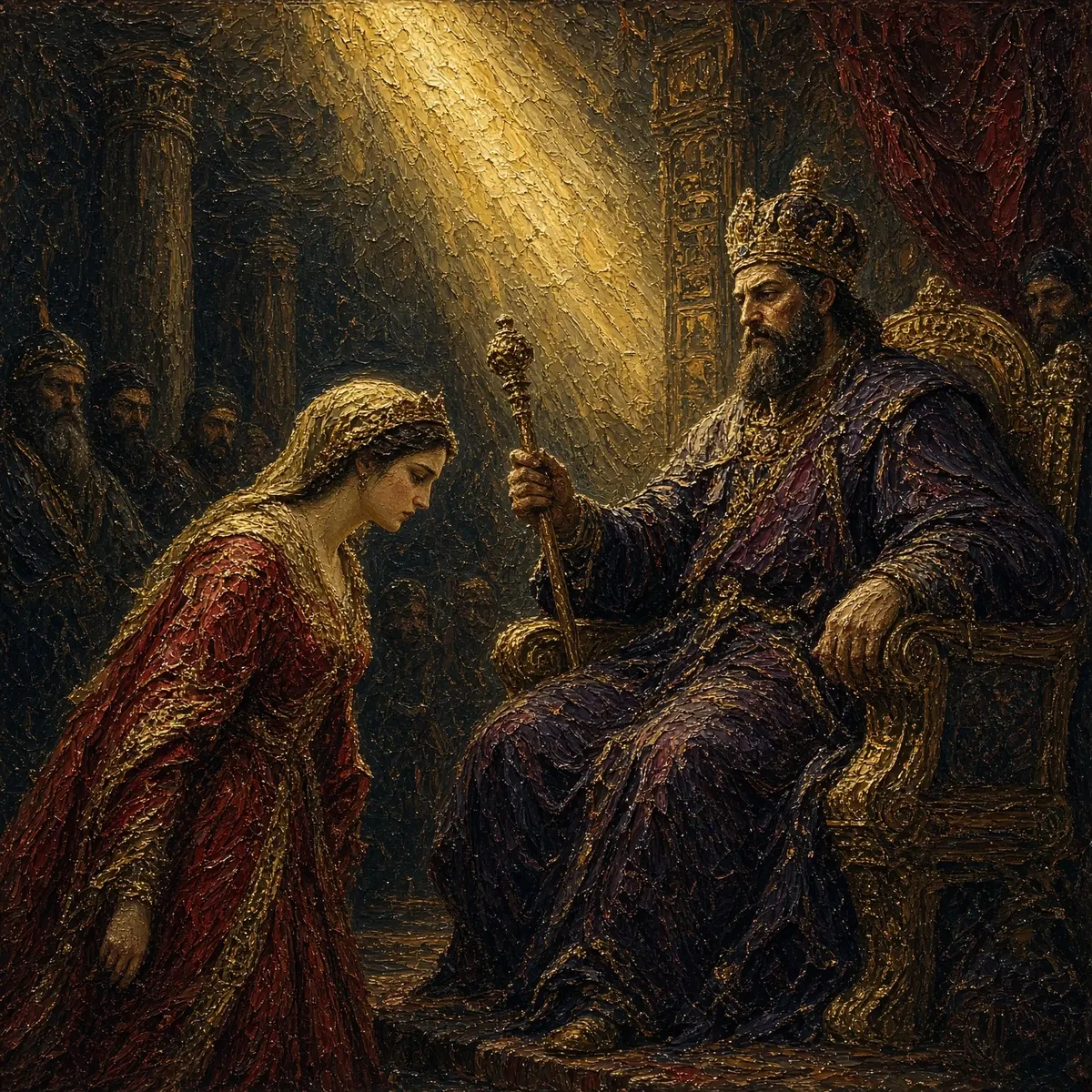
Esther acts on the decision made in the previous chapter. Dressed in royal apparel, she enters the inner court, is seen by Ahasuerus, and receives the extended sceptre that allows her to approach. The king offers extravagant generosity, but Esther’s immediate request is simply that he and Haman attend a banquet she has already prepared. At the meal, Ahasuerus asks again for her petition, and she answers with another invitation, promising to speak the next day. The Book of Esther does not explain her private reason for delaying, but the interval creates the night on which the central reversal will begin. Haman meanwhile leaves delighted, then sees Mordecai still refusing him honour. At home he lists his wealth, children, promotion, and exclusive invitations, only to declare that all of it means nothing while Mordecai remains. His household answers with a towering execution structure, and Haman approves.
Study Esther 5 in depth