

Lyrics · Exodus
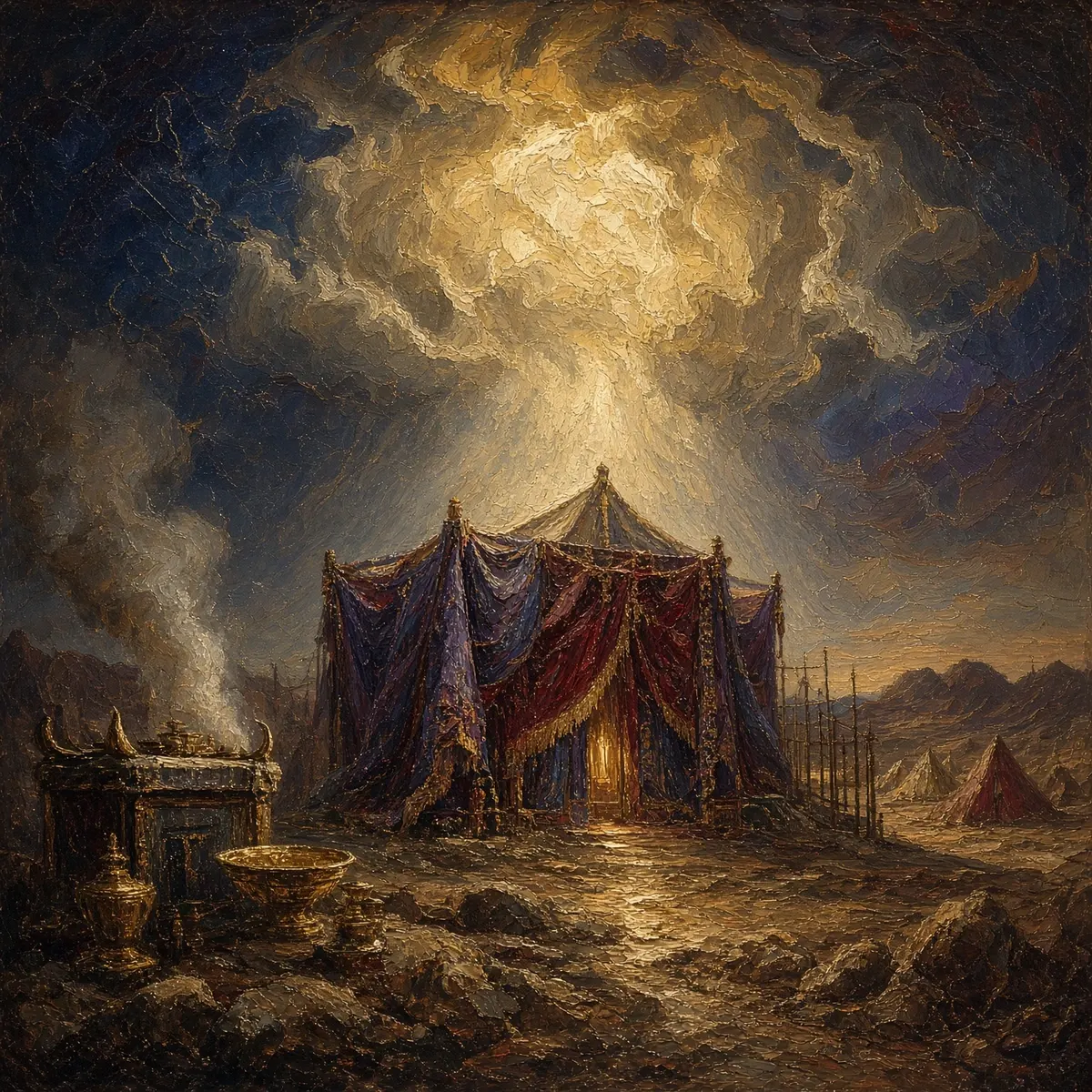
Glory Filled the Tabernacle
Exodus 35-40
Lyrics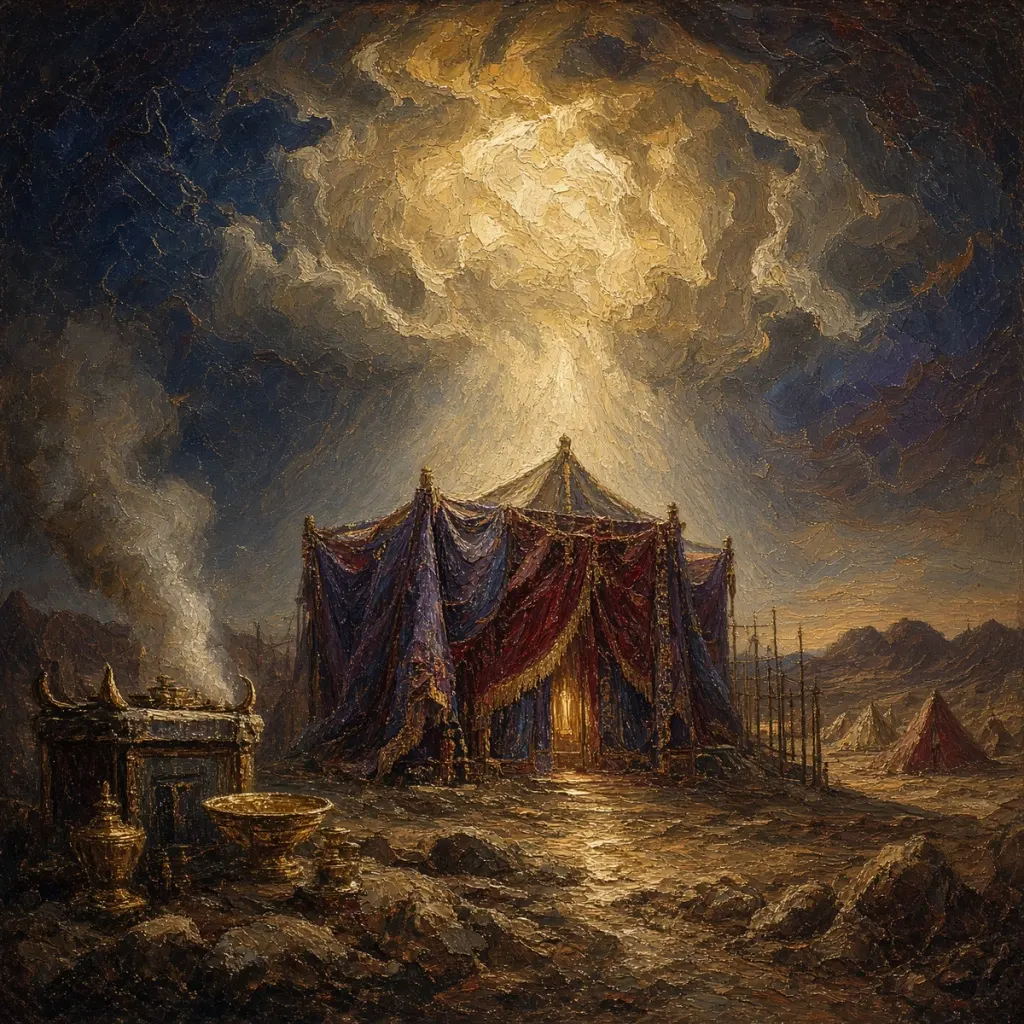
About this song
About this song
This song belongs to the Exodus collection. 8 recordings are available to play here, with the complete lyrics below.
- Bible book
- Exodus
- Collection
- Exodus
- Musical styles
- Pop, World Music, Alternative Pop, Worship & Gospel, Classical, Soul, Blues & Jazz
Named in this songTabernacleMoses
About the passage
Exodus 35: The congregation gathers to build, not to replace
The Book of Exodus begins the building campaign with a command not to work. Sabbath comes before collection, design, or craftsmanship, placing a firm limit around even this sacred project. Moses then invites willing gifts for a design that has already been given. Participation is voluntary, but the sanctuary itself is not a community improvisation. Men and women return with jewelry, fabric, skins, metals, wood, oil, and stones. Skilled women are specifically remembered for what they spin with their own hands, while rulers bring materials required for priestly garments and sanctuary service. The same kinds of gold that could feed an unauthorized image can now serve commanded work, so material alone never explains the difference. The chapter closes by naming Bezaleel and Aholiab publicly and adding a crucial gift to their craftsmanship: they can teach. The work is designed to spread through capable hands rather than remain trapped in two experts.
Study Exodus 35 in depthExodus 36: The giving stops, and the making continues
The Book of Exodus turns generosity into a problem Moses must stop. The craftsmen report that Israel has brought more than the assigned work requires, and the collection ends because the project has a defined size. No one uses surplus enthusiasm as permission to enlarge the design. From there, the chapter records familiar specifications as finished workmanship: curtains joined by loops and clasps, outer coverings, boards seated in silver sockets, bars binding the frame, and distinct hangings marking entrance and inner boundary. The repetition is purposeful because the grammar has changed from "make" to "made." After the calf, the distance between what God commanded and what human hands actually produced matters. Precious gold stands on practical joinery, and beautiful fabric depends on seams, fastenings, and structural fit. The result is not just ornament but a dwelling whose separate parts are made to become one without losing their distinct functions.
Study Exodus 36 in depthExodus 37: The furnishings are made to the pattern
The Book of Exodus follows the craftsmen into the sanctuary's inner furnishings. Bezaleel makes the ark and mercy seat, but the finest goldwork still contains no portrait of God. The cherubim face the mercy seat, and the place of divine speech remains associated with testimony rather than a manufactured divine image. The table is made not only to look complete but to travel and to support an actual service, with poles and vessels included. The lampstand becomes one integrated beaten work of pure gold, intricate in form yet accompanied by the plain tools needed to maintain it. The incense altar shares gold and wood with other furnishings without becoming interchangeable with them. Finally, the chapter moves from carpentry and metalwork to the apothecary's craft in making oil and incense. The inventory of obedience includes what can be carried, what can be lit, and what can only be smelled.
Study Exodus 37 in depth