New · FreePlay The Witnesses The in-depth puzzle battle quest through Bible history

Objects of the Bible

The tabernacle

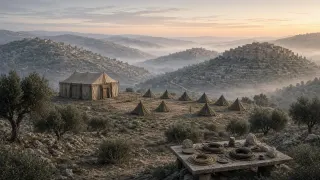
A building designed to be taken apart, because the people it belonged to were not staying anywhere.

Fifty chapters of the Pentateuch are given to it, which is more than creation, the flood and the patriarchs combined. Everything about it is portable: boards that lift out of silver sockets, a covering of skins, rings and staves on every item heavy enough to need carrying, and a rule that the staves stay in the rings. It is a temple built by people who knew they would be moving in the morning.

Where it appearsExodus 40 · Leviticus 9 · Numbers 9

Scroll down to the account
The tabernacle

The movements, in the order the text gives them.

The Account of The tabernacle

  1. 01

    Exodus 25:8-9

    That I may dwell among them

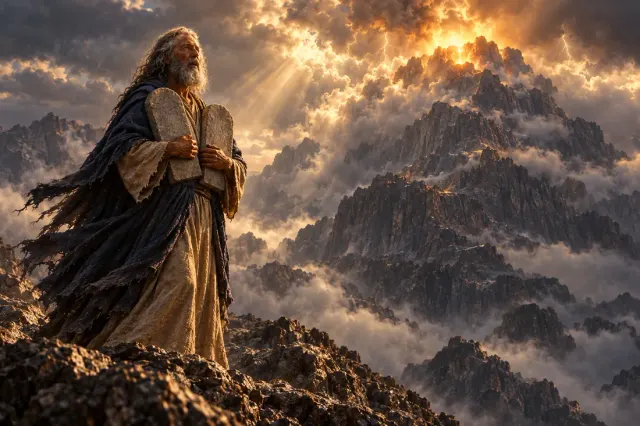
    The reason is given before the first measurement. The pattern is shown rather than described, and the instruction is to make it after it.

    The decisive word is them, not it. God asks for a sanctuary so that he may dwell among the people. The building serves that relationship; it is not a box large enough to contain its owner. Even Solomon, with a far grander building, will admit that heaven itself cannot contain God (1 Kings 8:27). The wilderness tent makes no competing claim.

    The setting gives the command its edge. These people have already built for Pharaoh, under taskmasters. Here the materials come from willing hearts, as verse 2 specifies. The Book of Exodus has moved from coerced construction to an offered dwelling. But willingness does not mean that the builders invent the terms of access. Pattern appears twice in verse 9, embracing both the structure and its furnishings. The invitation is generous; the specifications are not optional.

    Hebrews 8:5 later takes that pattern seriously, calling the earthly service an example and shadow of heavenly things. That is a later scriptural interpretation, not permission to assign a secret meaning to every peg. The first purpose is already immense: a holy God will live in the midst of an unsettled people.

    Verse by verse

    1. 25:8

      Sanctuary translates miqdash, a holy place; tabernacle in verse 9 translates mishkan, a dwelling. The two names emphasize holiness and habitation.

    2. 25:9

      Instruments means the sanctuary furnishings and utensils, not musical instruments.

    3. 25:9

      Hebrews 8:5 explicitly connects the command about the pattern with the earthly sanctuary as a shadow of heavenly things.

    Exodus 25:8-9

    King James Version · 2 verses

    25:8And let them make me a sanctuary; that I may dwell among them.

    25:9According to all that I shew thee, after the pattern of the tabernacle, and the pattern of all the instruments thereof, even so shall ye make it.

    Exodus 25:8-9: That I may dwell among them
  2. 02

    Exodus 31:1-5

    Filled with the spirit of God in wisdom

    The first man in Scripture said to be filled with the spirit is a craftsman, named, with his assistant named too.

    Being filled with the spirit of God leads, in this passage, to a workbench. The results are not left floating in religious vocabulary: designs, metalwork, stone settings, carved timber. Wisdom has measurements. Gold does not become a lampstand merely because everybody means well.

    Bezaleel is called by name, with his family and tribe attached. He belongs to Judah, not the priestly family of Aaron. The sanctuary therefore depends on a distinction that the passage does not apologize for: the person appointed to make its furnishings is not the person appointed to perform its priestly service. Neither task makes the other unnecessary. The repeated workmanship at the beginning and end of the description holds thought and execution together. He must conceive the work and know what his hands are doing.

    Verse 6 immediately widens the circle to Aholiab and other skilled workers. Exodus 35:34 adds the ability to teach. This is not a solitary genius receiving heavenly permission to ignore everyone else. The gift produces a working community, with knowledge that can be passed on. The finished sanctuary will contain extraordinary craftsmanship, but its construction begins with people being equipped to do actual work.

    Verse by verse

    1. 31:2

      Judah identifies Bezaleel with a different tribe from Aaron, who belongs to Levi. The passage appoints a craftsman, not an additional priest.

    2. 31:3

      Wisdom, understanding, and knowledge describe practical capacity here, as the following list of crafts makes explicit.

    3. 31:4

      Cunning in the KJV means skillful or ingenious here, not deceitful. Exodus 35:34 also attributes the ability to teach to the appointed craftsmen.

    Exodus 31:1-5

    King James Version · 5 verses

    31:1And the LORD spake unto Moses, saying,

    31:2See, I have called by name Bezaleel the son of Uri, the son of Hur, of the tribe of Judah:

    31:3And I have filled him with the spirit of God, in wisdom, and in understanding, and in knowledge, and in all manner of workmanship,

    31:4To devise cunning works, to work in gold, and in silver, and in brass,

    31:5And in cutting of stones, to set them, and in carving of timber, to work in all manner of workmanship.

    Exodus 31:1-5: Filled with the spirit of God in wisdom
  3. 03

    Exodus 40:17-33

    So Moses finished the work

    The assembly is described piece by piece in order, and each step ends with the same phrase: as the LORD commanded Moses.

    Seven times the account returns to the same verdict: as the LORD commanded Moses. The repetition is the point. After the golden calf, Israel's ability to make an impressive religious object was never in doubt. The issue was whether the work would answer to God's command rather than substitute for it. This time the refrain keeps answering yes.

    The assembly moves from the innermost furnishings toward the court, while the objects begin to function as they are placed: bread is arranged, lamps are lit, incense is burned, water is used. This is not a display awaiting visitors. It is a sanctuary entering service. The sockets, boards, bars, and coverings also keep the construction plainly portable. Nothing in the magnificence requires the people to stop being travelers.

    So Moses finished the work recalls the completed work of Genesis 2:1-3. Exodus 39:43 has already joined inspection and blessing: Moses looks at the work and blesses the workers. The echo is substantial without making Moses another creator. A place of ordered life has been prepared according to divine speech. The last thing Moses puts up is the court's entrance. The structure is finished; filling it is not his work.

    Verse by verse

    1. 40:19

      The command-and-compliance refrain appears at 40:19, 21, 23, 25, 27, 29, and 32, seven occurrences within this passage.

    2. 40:22

      Without the vail means outside the inner veil, not outside the tent. The table is in the outer chamber, on the north side.

    3. 40:29

      Meat offering in the KJV means a grain or food offering here, not an additional animal sacrifice.

    4. 40:33

      Genesis 2:2 and Exodus 40:33 both connect completion with work; Exodus 39:43 adds the corresponding act of blessing.

    Exodus 40:17-33

    King James Version · 17 verses

    40:17And it came to pass in the first month in the second year, on the first day of the month, that the tabernacle was reared up.

    40:18And Moses reared up the tabernacle, and fastened his sockets, and set up the boards thereof, and put in the bars thereof, and reared up his pillars.

    40:19And he spread abroad the tent over the tabernacle, and put the covering of the tent above upon it; as the LORD commanded Moses.

    40:20And he took and put the testimony into the ark, and set the staves on the ark, and put the mercy seat above upon the ark:

    40:21And he brought the ark into the tabernacle, and set up the vail of the covering, and covered the ark of the testimony; as the LORD commanded Moses.

    40:22And he put the table in the tent of the congregation, upon the side of the tabernacle northward, without the vail.

    40:23And he set the bread in order upon it before the LORD; as the LORD had commanded Moses.

    40:24And he put the candlestick in the tent of the congregation, over against the table, on the side of the tabernacle southward.

    40:25And he lighted the lamps before the LORD; as the LORD commanded Moses.

    40:26And he put the golden altar in the tent of the congregation before the vail:

    40:27And he burnt sweet incense thereon; as the LORD commanded Moses.

    40:28And he set up the hanging at the door of the tabernacle.

    40:29And he put the altar of burnt offering by the door of the tabernacle of the tent of the congregation, and offered upon it the burnt offering and the meat offering; as the LORD commanded Moses.

    40:30And he set the laver between the tent of the congregation and the altar, and put water there, to wash withal.

    40:31And Moses and Aaron and his sons washed their hands and their feet thereat:

    40:32When they went into the tent of the congregation, and when they came near unto the altar, they washed; as the LORD commanded Moses.

    40:33And he reared up the court round about the tabernacle and the altar, and set up the hanging of the court gate. So Moses finished the work.

  4. 04

    Exodus 40:34-35

    Moses was not able to enter

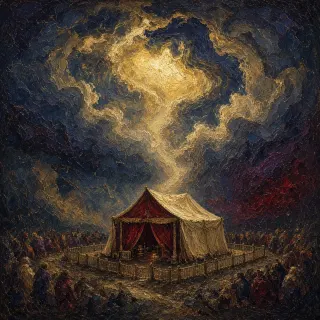
    The moment it is finished it becomes unusable by the man who built it, because the glory fills it.

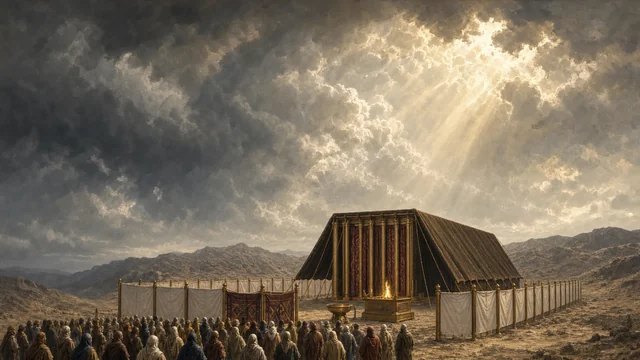
    The man who has just finished the sanctuary cannot walk into it. That is not the collapse of the project. It is its astonishing completion. Moses has arranged the objects and performed the prescribed work; now something happens that no craftsman, however gifted, could manufacture. The glory fills the dwelling, and the builder remains outside.

    The contrast matters after Exodus 33. There God had threatened not to go in the people's midst, and Moses had pleaded for his presence. The cloud here answers that crisis. God has not abandoned the people after the calf, but neither has forgiveness reduced him to a manageable presence. Nearness and unrestricted access are not the same thing.

    The wording will return at Solomon's dedication: the priests cannot stand to minister because the glory fills the house (1 Kings 8:10-11). Neither tent nor temple puts its ministers in control. Leviticus begins with God calling to Moses from this very tent, making the next communication an act of divine initiative rather than human entry. The sanctuary is occupied, not possessed. The glory that vindicates the construction also establishes its limit.

    Verse by verse

    1. 40:34

      The cloud and glory are described together but are not simply equated. The cloud covers the tent; the glory fills the tabernacle.

    2. 40:35

      This verse explains Moses' inability to enter by the divine presence, not by a stated personal offense.

    3. 40:35

      John 1:14 joins dwelling and glory again; its Greek verb for dwelt, eskenosen, carries the sense of pitching a tent or dwelling in one.

    Exodus 40:34-35

    King James Version · 2 verses

    40:34Then a cloud covered the tent of the congregation, and the glory of the LORD filled the tabernacle.

    40:35And Moses was not able to enter into the tent of the congregation, because the cloud abode thereon, and the glory of the LORD filled the tabernacle.

    Exodus 40:34-35: Moses was not able to enter
  5. 05

    Numbers 9:15-23

    At the commandment of the LORD they rested

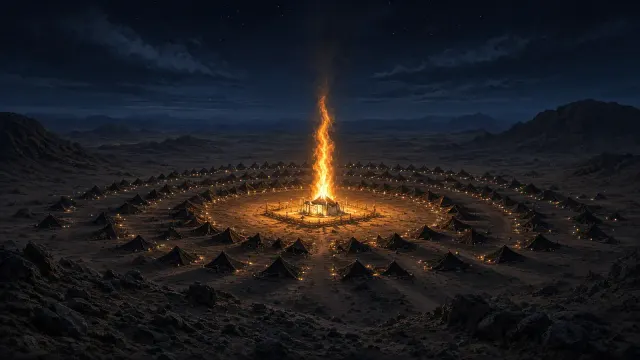
    The tent sets the calendar. Two days or a month or a year, the camp stayed as long as the cloud stayed.

    A year and a single night receive the same instruction. The length of the stop changes; the reason for stopping does not. The Book of Numbers keeps stretching and shrinking the interval until no convenient timetable survives. Two days, a month, a year. Even a night departure is possible. The camp's schedule belongs to the cloud.

    The repetition does more than describe travel arrangements. Keeping the charge of the LORD includes not traveling. Movement is not automatically obedience, and remaining in place is not automatically failure. Those conclusions belong to this particular camp and its stated command, not to an invented lesson about every human delay. Here the governing signal is public and attached to the sanctuary.

    That arrangement explains the tabernacle's strange architectural dignity: a dwelling of divine glory designed to come apart. Portability is not a concession to inferior worship; it is how the sanctuary accompanies this people's appointed life. The passage also retains Moses at its close. Visible guidance does not erase the command given through him. Cloud, instruction, and ordered camp belong together. Israel carries the tent, but Israel does not set the departure time.

    Verse by verse

    1. 9:15

      The tent of the testimony is named for the covenant testimony associated with the sanctuary and its ark.

    2. 9:19

      Kept the charge describes fulfilling an assigned obligation. In this verse that obligation is specifically to remain camped.

    3. 9:22

      The list gives possible lengths of encampment; it does not supply a dated itinerary identifying every stop.

    4. 9:23

      Numbers 10:11 dates the departure from Sinai to the twentieth day of the second month in the second year.

    Numbers 9:15-23

    King James Version · 9 verses

    9:15And on the day that the tabernacle was reared up the cloud covered the tabernacle, namely, the tent of the testimony: and at even there was upon the tabernacle as it were the appearance of fire, until the morning.

    9:16So it was alway: the cloud covered it by day, and the appearance of fire by night.

    9:17And when the cloud was taken up from the tabernacle, then after that the children of Israel journeyed: and in the place where the cloud abode, there the children of Israel pitched their tents.

    9:18At the commandment of the LORD the children of Israel journeyed, and at the commandment of the LORD they pitched: as long as the cloud abode upon the tabernacle they rested in their tents.

    9:19And when the cloud tarried long upon the tabernacle many days, then the children of Israel kept the charge of the LORD, and journeyed not.

    9:20And so it was, when the cloud was a few days upon the tabernacle; according to the commandment of the LORD they abode in their tents, and according to the commandment of the LORD they journeyed.

    9:21And so it was, when the cloud abode from even unto the morning, and that the cloud was taken up in the morning, then they journeyed: whether it was by day or by night that the cloud was taken up, they journeyed.

    9:22Or whether it were two days, or a month, or a year, that the cloud tarried upon the tabernacle, remaining thereon, the children of Israel abode in their tents, and journeyed not: but when it was taken up, they journeyed.

    9:23At the commandment of the LORD they rested in the tents, and at the commandment of the LORD they journeyed: they kept the charge of the LORD, at the commandment of the LORD by the hand of Moses.

Why it matters

The purpose is stated once, early and plainly: let them make me a sanctuary, that I may dwell among them. Not that they may visit, that he may dwell. The pattern is shown on the mountain and the workmen are named and said to be filled with the spirit of God in wisdom and in understanding, which is the first time in Scripture that phrase is used of anybody, and it is used of craftsmen. When it is finished the cloud covers it and the glory fills it, and Moses cannot go in.

3 songs

The music

Every song in the catalogue whose passage falls inside these chapters.

  1. Leviticus 9:22-24

    Fire Fell on Carmel

    Play here
    Open song pageRead lyrics
  2. Leviticus 9:1-10:20

    Strange Fire

  3. Numbers 9:1-10:36

    When the Cloud Lifted

Nearby

All the objects

Report an error on this page