4:3And when the people were come into the camp, the elders of Israel said, Wherefore hath the LORD smitten us to day before the Philistines? Let us fetch the ark of the covenant of the LORD out of Shiloh unto us, that, when it cometh among us, it may save us out of the hand of our enemies.
4:4So the people sent to Shiloh, that they might bring from thence the ark of the covenant of the LORD of hosts, which dwelleth between the cherubims: and the two sons of Eli, Hophni and Phinehas, were there with the ark of the covenant of God.
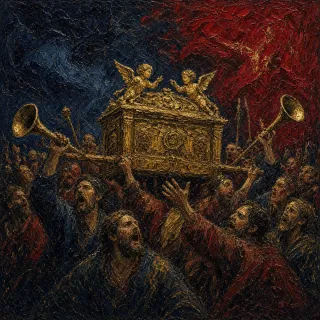
4:5And when the ark of the covenant of the LORD came into the camp, all Israel shouted with a great shout, so that the earth rang again.
4:6And when the Philistines heard the noise of the shout, they said, What meaneth the noise of this great shout in the camp of the Hebrews? And they understood that the ark of the LORD was come into the camp.
4:7And the Philistines were afraid, for they said, God is come into the camp. And they said, Woe unto us! for there hath not been such a thing heretofore.
4:8Woe unto us! who shall deliver us out of the hand of these mighty Gods? these are the Gods that smote the Egyptians with all the plagues in the wilderness.
4:9Be strong, and quit yourselves like men, O ye Philistines, that ye be not servants unto the Hebrews, as they have been to you: quit yourselves like men, and fight.
4:10And the Philistines fought, and Israel was smitten, and they fled every man into his tent: and there was a very great slaughter; for there fell of Israel thirty thousand footmen.
4:11And the ark of God was taken; and the two sons of Eli, Hophni and Phinehas, were slain.



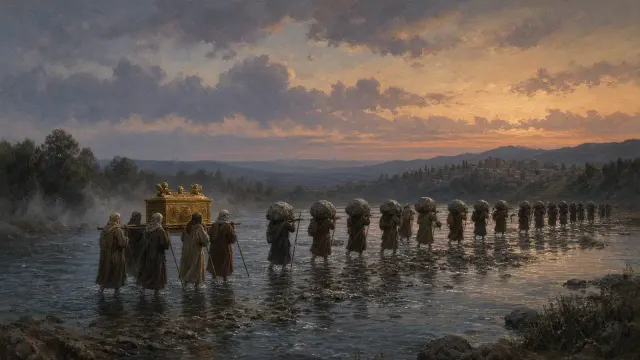
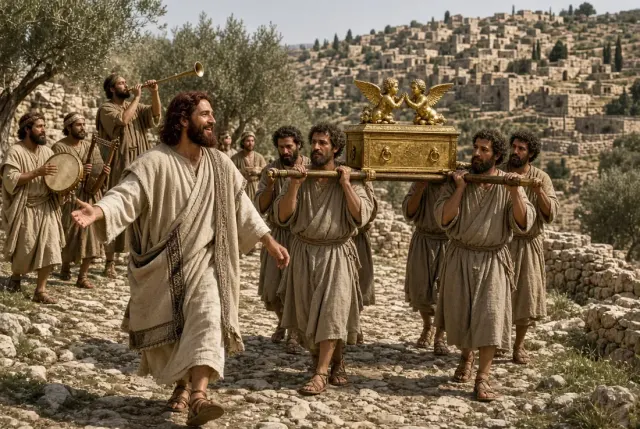



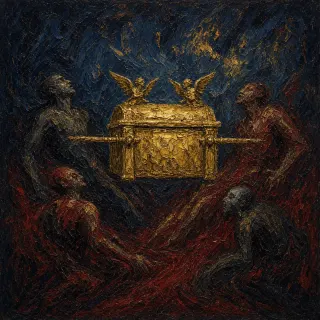





The carrying poles are not packing equipment to be put away after delivery. They belong to the ark permanently. A chest covered with gold might invite attention to its craftsmanship, but these two verses insist on how it is to be moved. Its holiness includes the journey, not merely its position behind the veil.
The preceding instructions have specified wood, gold, rings, and poles; the following verse identifies the testimony placed inside. Thus the means of carrying the ark stand directly beside the covenant document it carries. Handling and meaning are not separate departments. Numbers 4:15 later prohibits the bearers from touching the holy things, and Numbers 7:9 assigns the Kohathites shoulder-borne service rather than wagons. The poles make that distinction physically possible.
The command also keeps the central object of Israel's sanctuary ready for an unsettled life. A throne-associated chest travels with a people still living in tents. The majesty is real, and so are the shoulders beneath it. First Chronicles 15:15 will describe the corrected transport in precisely those terms: shoulders and staves, according to Moses' command. The detail that looks like an assembly instruction turns out to govern an entire procession.