New · FreePlay The Witnesses The in-depth puzzle battle quest through Bible history

Objects of the Bible

The mercy seat

A lid, with the law underneath it and blood on top of it once a year.

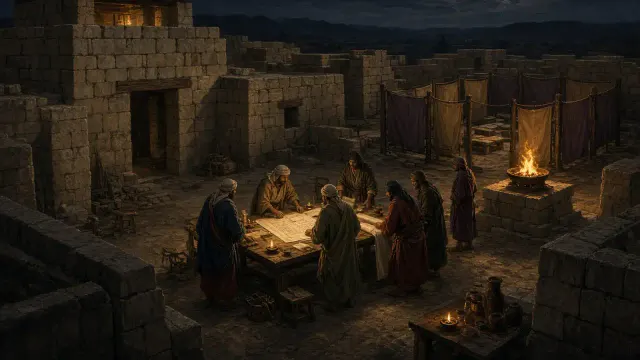
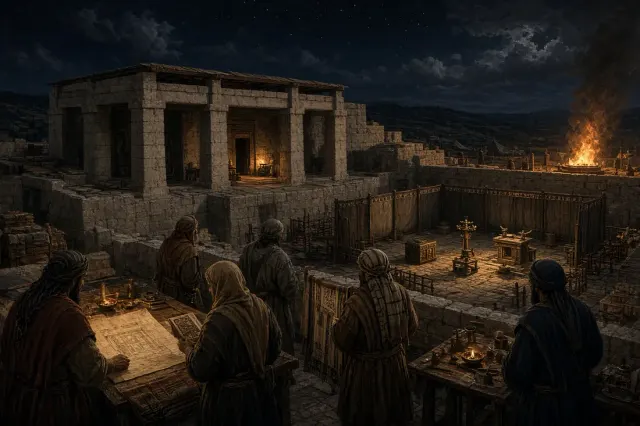
It is made of pure gold, not overlaid, and its dimensions match the top of the ark exactly, because it is the ark’s lid. Two cherubim of beaten work stand at the two ends, of the mercy seat shall ye make the cherubim, so the whole thing is one piece. Their faces look toward each other and downward, toward the lid, and their wings stretch over it. What they are looking at is the covering over the testimony.

Where it appearsExodus 25 · Leviticus 16

Scroll down to the account
The mercy seat

The movements, in the order the text gives them.

The Account of The mercy seat

  1. 01

    Exodus 25:17-20

    Of the mercy seat shall ye make the cherubim

    The figures are not attached, they are part of the lid. Their faces are toward each other and toward the covering.

    The mercy seat is not a chair. Its length and breadth match the ark beneath it exactly, because this is the ark's golden cover. The English name can send the imagination looking for a throne with legs; the measurements bring it back to the chest. Unlike the ark, which is wood overlaid with gold, this piece is specified as pure gold. The distinction belongs to the instructions, not merely to an illustrator's choice of colors.

    The cherubim face one another, but their attention is directed toward the cover between them. Wings spread overhead; faces turn inward. The arrangement makes a center without supplying a statue of God to fill it. Verse 22 will identify that space by the voice heard there, not by an image placed there. Even the most elaborate craftsmanship stops short of depicting the speaker.

    Exodus 37:7-8 describes the cherubim as beaten from the same work as the cover. They are not decorative figures set beside an otherwise ordinary lid. Cover, guardians, and place of meeting belong to one design. The object is small enough to sit upon a chest and weighty enough to order the entire sanctuary around it.

    Verse by verse

    1. 25:17

      The Hebrew kapporet names the ark-cover associated with atonement. It is not the ordinary word for a chair.

    2. 25:19

      Exodus 37:7-8 describes the cherubim and cover as one beaten work.

    3. 25:20

      The passage specifies wings and faces but does not provide a complete description of the cherubim.
    Exodus 25:17-20

    King James Version · 4 verses

    25:17And thou shalt make a mercy seat of pure gold: two cubits and a half shall be the length thereof, and a cubit and a half the breadth thereof.

    25:18And thou shalt make two cherubims of gold, of beaten work shalt thou make them, in the two ends of the mercy seat.

    25:19And make one cherub on the one end, and the other cherub on the other end: even of the mercy seat shall ye make the cherubims on the two ends thereof.

    25:20And the cherubims shall stretch forth their wings on high, covering the mercy seat with their wings, and their faces shall look one to another; toward the mercy seat shall the faces of the cherubims be.

    Exodus 25:17-20: Of the mercy seat shall ye make the cherubim
  2. 02

    Exodus 25:22

    There I will meet with thee

    The stated location of the meeting is above a lid and between two gold figures, over a box containing a law that has already been broken once.

    The most important feature of this golden object is something the gold cannot do: speak. There I will meet with thee, and I will commune with thee. The cover is not an oracle with a voice of its own. God appoints a place from which he will address Moses, and the workmanship serves that meeting. The sanctuary's center is not a beautiful silence.

    The testimony lies inside the ark, while commands for Israel are spoken from above it. Written instruction and living address belong together. The arrangement does not put mercy on one side and divine command on the other, as though the two were rivals. The very place later marked with atoning blood is also a place from which God gives commandments. Mercy has not misplaced the covenant.

    Numbers 7:89 records the promise becoming an actual encounter: Moses enters, hears the voice from above the cover, and speaks with God. That verse matters because Exodus has not merely described a symbolic possibility. The meeting has a location and a participant. The gold remains gold. The decisive thing is that God speaks there.

    Verse by verse

    1. 25:22

      The Hebrew verb translated commune is the ordinary verb for speaking, dabar; the setting does not turn the word into a description of wordless meditation.

    2. 25:22

      Numbers 7:89 repeats both the location above the cover and the position between the cherubim.

    3. 25:22

      This promise addresses Moses. The separate regulations for Aaron in Leviticus 16 should not be silently substituted for it.

    Exodus 25:22

    King James Version · 1 verse

    25:22And there I will meet with thee, and I will commune with thee from above the mercy seat, from between the two cherubims which are upon the ark of the testimony, of all things which I will give thee in commandment unto the children of Israel.

    Exodus 25:22: There I will meet with thee
  3. 03

    Leviticus 16:2

    That he come not at all times

    Aaron is told plainly that the reason for the restriction is that he will die, and that a cloud will appear upon the mercy seat.

    The instructions begin with two deaths already in view. Verse 1 places this command after the deaths of Aaron's sons, so that he die not is not ceremonial exaggeration. Aaron is the high priest, but his office does not make every approach safe. The title authorizes a ministry; it does not give him possession of the room.

    There is a crucial difference between not at all times and never. The next verse begins the prescribed approach, and the chapter eventually fixes its annual observance on the tenth day of the seventh month. Restriction and provision arrive together. God does not abandon the sanctuary to keep Aaron alive; he tells Aaron how to enter the place where his presence is manifested.

    Even the clothing changes. Verse 4 specifies holy linen garments rather than a display of the jeweled breastpiece and its twelve stones. The rite is not an occasion for the high priest to make the strongest visual impression. He must first bring an offering for himself and his household. The man who represents Israel cannot walk past the need for atonement simply because representing Israel is his job.

    Verse by verse

    1. 16:2

      Aaron thy brother keeps the instruction personally addressed through Moses; verse 1 explicitly supplies the setting after the deaths of Aaron's sons.

    2. 16:2

      The cloud in this verse is associated with divine appearance. Verse 13 expressly identifies the cloud produced by incense; the precise relationship between the two descriptions is debated.

    3. 16:2

      The annual date appears in Leviticus 16:29, and the repeated annual obligation in 16:34.

    Leviticus 16:2

    King James Version · 1 verse

    16:2And the LORD said unto Moses, Speak unto Aaron thy brother, that he come not at all times into the holy place within the vail before the mercy seat, which is upon the ark; that he die not: for I will appear in the cloud upon the mercy seat.

    Leviticus 16:2: That he come not at all times
  4. 04

    Leviticus 16:12-14

    The cloud of the incense may cover the mercy seat

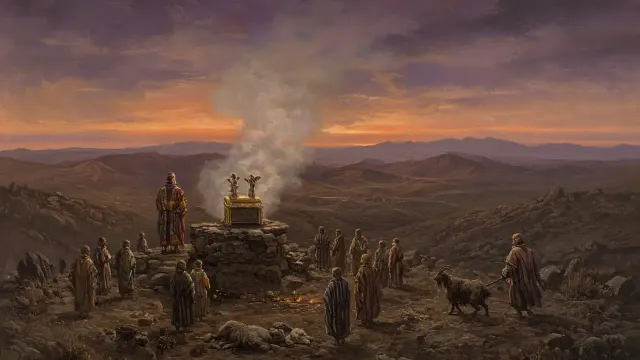
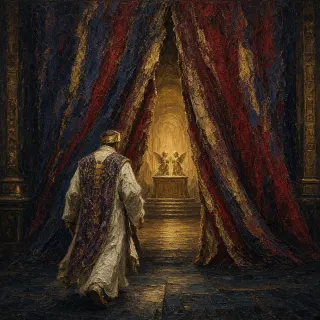
    He goes in with coals and incense first, so that the smoke arrives before he does, and then sprinkles the blood seven times.

    The smoke comes before the blood. Aaron carries burning coals and finely beaten incense behind the veil, and the stated purpose of the cloud is that he die not. The incense is not supplied to improve the atmosphere. It belongs to the conditions under which a living priest may approach the divine presence.

    Then the blood comes from the bull offered for Aaron and his household in verse 11. Before he performs the corresponding action with the people's goat, the priest's own need has been acknowledged. Office has brought him nearer, not made him innocent. The finger applying blood belongs to someone who also requires atonement.

    The directions distinguish the cover itself from the space before it. Blood is applied eastward upon the mercy seat, then seven times before it. Those are not interchangeable locations, and the chapter does not say that the law tablets become invisible to God beneath a coating of blood. Its own explanation in verse 16 is that the holy place requires atonement because of Israel's uncleanness and transgressions. The sanctuary stands among an unclean people. The rite deals with that proximity rather than pretending the impurity never arrived.

    Verse by verse

    1. 16:12

      The incense is finely beaten and carried with coals from the altar before the LORD. The priest does not create an alternative incense rite of his own.

    2. 16:13

      That he die not gives the cloud an explicit protective role within the prescribed approach.

    3. 16:14

      The bull is for Aaron and his house in verse 11; the corresponding offering for the people is the goat in verse 15.

    Leviticus 16:12-14

    King James Version · 3 verses

    16:12And he shall take a censer full of burning coals of fire from off the altar before the LORD, and his hands full of sweet incense beaten small, and bring it within the vail:

    16:13And he shall put the incense upon the fire before the LORD, that the cloud of the incense may cover the mercy seat that is upon the testimony, that he die not:

    16:14And he shall take of the blood of the bullock, and sprinkle it with his finger upon the mercy seat eastward; and before the mercy seat shall he sprinkle of the blood with his finger seven times.

    Leviticus 16:12-14: The cloud of the incense may cover the mercy seat
  5. 05

    Hebrews 9:5

    The cherubims of glory shadowing the mercy seat

    The letter lists the furniture and then declines to go into detail, of which we cannot now speak particularly, and turns to what it was for.

    Even Hebrews declines to explain every furnishing. After naming the ark, its contents, and the overshadowing cherubim, the sentence stops the tour: of which we cannot now speak particularly. That is a decision about the argument, not a confession that the objects are unimportant. The chapter has a destination, and another extended description of the gold will not take it there.

    The next verses turn from what stood in the sanctuary to who entered it. Ordinary priestly service belongs to the first chamber; the high priest enters the second in the annual rite, not without blood. The arrangement makes access the question. Beautiful objects cannot, by themselves, perfect the worshipper's conscience, as verse 9 states with remarkable directness.

    When Christ enters the argument in verses 11-12, the contrast is not between an unattractive old room and an attractive new one. It concerns a greater sanctuary, his own blood rather than animal blood, and redemption that does not need another annual installment. Hebrews remembers the mercy seat accurately, then refuses to stop at its craftsmanship. The place where blood was brought becomes part of an argument about the finality of the blood Christ brings.

    Verse by verse

    1. 9:5

      Shadowing describes the cherubim's position over the cover, corresponding to their spread wings in Exodus 25:20.

    2. 9:5

      Cannot now speak particularly means the detailed discussion is being set aside at this point. The text does not say that the details cannot be known.

    3. 9:5

      The same Greek noun appears in Romans 3:25; its interpretation there should not be treated as settled simply by importing the furniture from Hebrews.

    Hebrews 9:5

    King James Version · 1 verse

    9:5And over it the cherubims of glory shadowing the mercyseat; of which we can not now speak particularly.

    Hebrews 9:5: The cherubims of glory shadowing the mercy seat

Why it matters

The promise made about it is the point of the whole tent: there I will meet with thee, and I will commune with thee from above the mercy seat, from between the two cherubim. And once a year, on the tenth day of the seventh month, the high priest goes in with a censer of coals and two handfuls of incense so that the cloud may cover the mercy seat that he die not, and sprinkles blood upon it and before it seven times. The law is inside the box and the blood is on the lid, and the meeting happens above both.

1 song

The music

Every song in the catalogue whose passage falls inside these chapters.

  1. Leviticus 16:1-34

    Beyond the Veil

Nearby

All the objects

Report an error on this page