New · FreePlay The Witnesses The in-depth puzzle battle quest through Bible history

People of the Bible

Moses

Drawn out of the Nile, sent back from a burning bush, and given a law on a mountain. The man God knew face to face, who never crossed the river.

Also called The servant of the LORD; the lawgiver; Moshe

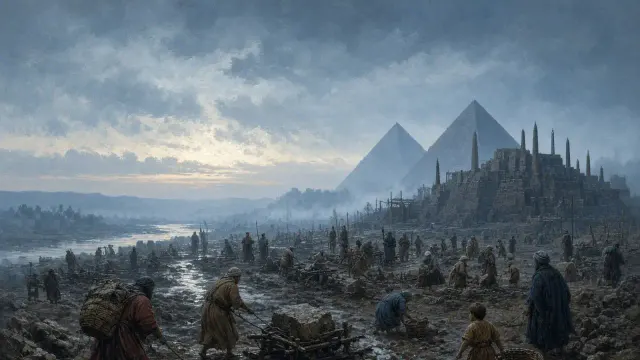
Moses is born to Amram and Jochebed of the tribe of Levi under a Pharaoh who has ordered every Hebrew boy thrown into the Nile. His mother hides him three months, then sets him afloat in a pitched basket among the reeds, where Pharaoh's daughter finds him, names him for being drawn out of the water, and raises him as her own with his own mother as nurse. At forty he kills an Egyptian who is beating a Hebrew, is found out, and flees to Midian, where he marries Zipporah and keeps her father's sheep for forty years. At eighty a bush burns on Horeb and is not consumed, and God tells him his name, I AM THAT I AM, and sends him back to bring Israel out. He argues five times that he is the wrong man.

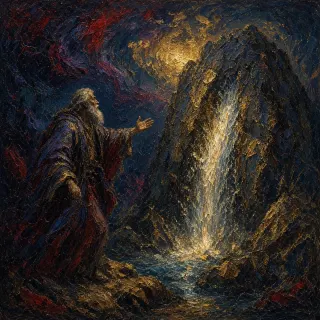
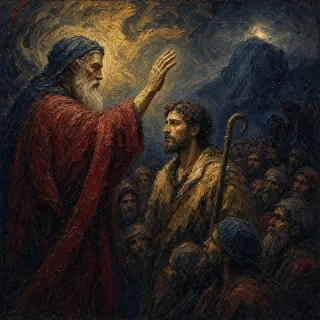
With his brother Aaron as his mouth he confronts Pharaoh through ten plagues, institutes the Passover, and leads the people through the sea on dry ground. He brings them to Sinai, goes up into the cloud for forty days, and comes down with two tables of stone to find a golden calf; he breaks the tables, grinds the calf, and goes back up to plead that God either forgive the people or blot Moses out of his book. God shows him his glory from the cleft of a rock, and his face shines. He builds the tabernacle, judges the people, and endures forty years of their complaining, and at Meribah he strikes the rock he was told to speak to, and for that is barred from the land. He commissions Joshua, preaches Deuteronomy on the plains of Moab, climbs Nebo, sees the whole land from Dan to the Negev, and dies there at a hundred and twenty with his eye undimmed. God buries him, and no one knows where.

Where he appearsExodus 1 to 40 · Numbers 1 to 36 · Deuteronomy 1 to 34

Scroll down to the account
Moses

The movements, in the order the text gives them.

The Account of Moses

  1. 01

    Exodus 2:1-10

    The ark of bulrushes

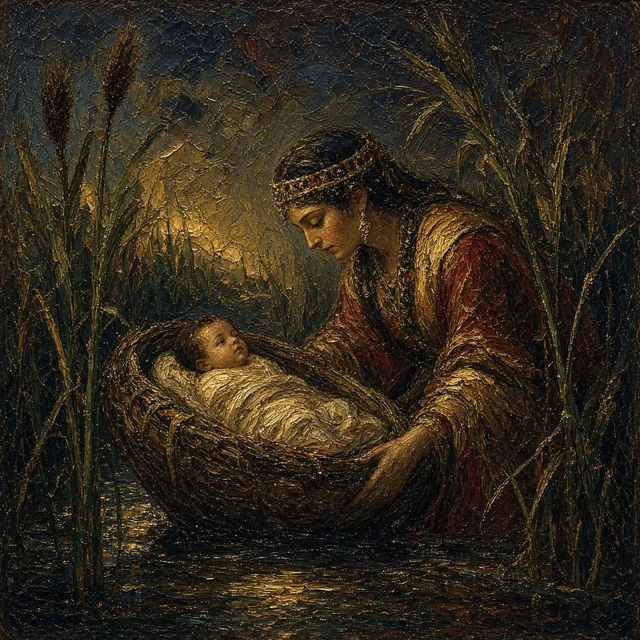
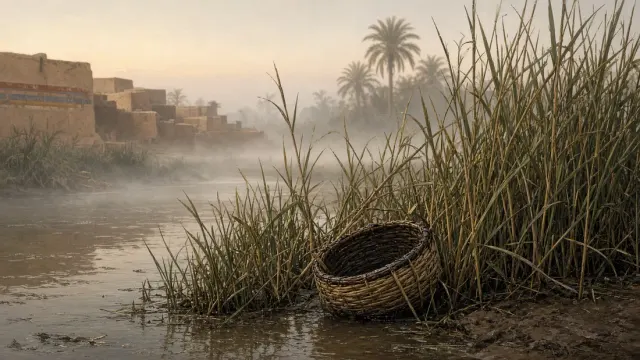
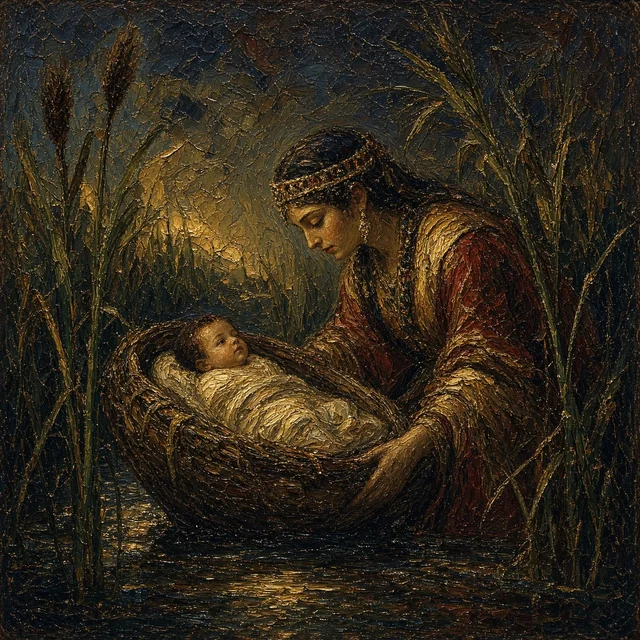
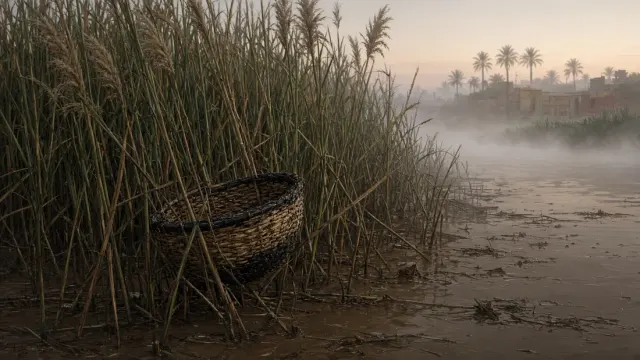
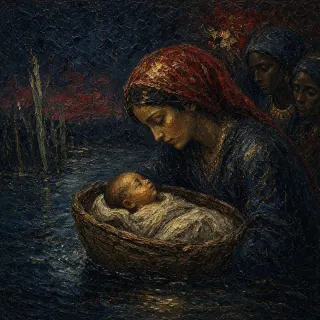
    A Levite woman bears a goodly child and hides him three months. When she can hide him no longer she makes an ark of bulrushes, daubs it with slime and pitch, and lays it in the flags by the river's brink. Pharaoh's daughter finds him, his sister fetches his mother to nurse him, and the princess names him Moses, because I drew him out of the water.

    Pharaoh's daughter knows perfectly well whose baby this is. Her words, one of the Hebrews' children, remove the possibility of an innocent mistake. The decree in Exodus 1:22 has made Hebrew boys targets, yet the king's own daughter looks into the basket and has compassion. The child's mother has prepared the little vessel, his sister has stayed within watching distance, and a maid brings it out of the reeds. Before Moses can do anything at all, women on both sides of the Egyptian-Hebrew divide are doing the work that keeps him alive. The future deliverer enters the account as someone who must be delivered.

    The sister's intervention is beautifully economical. She does not explain the family connection or deliver a speech against Pharaoh. She offers a nurse. The arrangement returns the child to his own mother, now with wages authorized by the household that should have been his greatest danger. Pharaoh's policy has acquired an unexpected expense. The humor belongs to that reversal, not to the terror behind it: his mother could hide him no longer. Nor does the text send the basket on a picturesque voyage down the Nile. She places it among the reeds at the bank, with his sister nearby. This is desperate, deliberate care, described through pitch, papyrus, a watching child, and a crying baby. The great public history begins with small hands doing necessary things.

    Verse by verse

    1. 2:1

      His parents are unnamed here but identified as Amram and Jochebed in Exodus 6:20. The opening emphasizes their Levitical family before giving personal names.

    2. 2:2

      Goodly means beautiful or fine-looking, not morally accomplished. Hebrews 11:23 explicitly interprets the parents' three months of concealment as an act of faith.

    3. 2:4

      The sister is not named in this passage. Numbers 26:59 identifies Miriam as the sister of Moses and Aaron.

    4. 2:10

      The naming explanation connects Moses with the Hebrew verb mashah, to draw out. The verse gives the princess's explanation, not a complete account of the name's linguistic history.

    Exodus 2:1-10

    King James Version · 10 verses

    2:1And there went a man of the house of Levi, and took to wife a daughter of Levi.

    2:2And the woman conceived, and bare a son: and when she saw him that he was a goodly child, she hid him three months.

    2:3And when she could not longer hide him, she took for him an ark of bulrushes, and daubed it with slime and with pitch, and put the child therein; and she laid it in the flags by the river’s brink.

    2:4And his sister stood afar off, to wit what would be done to him.

    2:5And the daughter of Pharaoh came down to wash herself at the river; and her maidens walked along by the river’s side; and when she saw the ark among the flags, she sent her maid to fetch it.

    2:6And when she had opened it, she saw the child: and, behold, the babe wept. And she had compassion on him, and said, This is one of the Hebrews’ children.

    2:7Then said his sister to Pharaoh’s daughter, Shall I go and call to thee a nurse of the Hebrew women, that she may nurse the child for thee?

    2:8And Pharaoh’s daughter said to her, Go. And the maid went and called the child’s mother.

    2:9And Pharaoh’s daughter said unto her, Take this child away, and nurse it for me, and I will give thee thy wages. And the woman took the child, and nursed it.

    2:10And the child grew, and she brought him unto Pharaoh’s daughter, and he became her son. And she called his name Moses: and she said, Because I drew him out of the water.

    Exodus 2:1-10: The ark of bulrushes
  2. 02

    Exodus 2:11-22

    The Egyptian in the sand, and the well in Midian

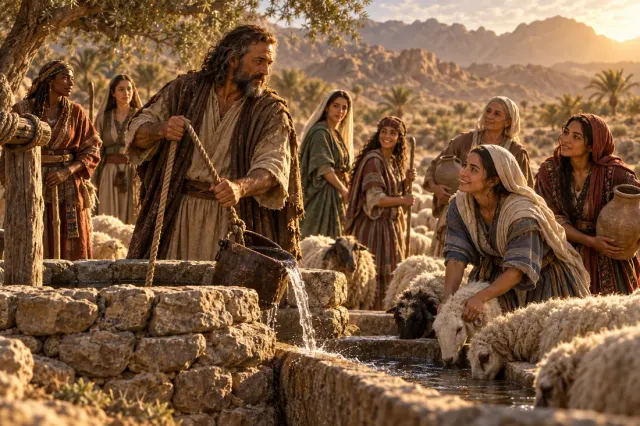
    Grown, he goes out to his brethren and sees an Egyptian smiting a Hebrew. He slays him and hides him in the sand. The next day a Hebrew asks, who made thee a prince and a judge over us? Pharaoh seeks to slay him, and he flees to Midian, waters the seven daughters of the priest at a well, marries Zipporah, and names his son Gershom: a stranger in a strange land.

    The words his brethren settle Moses' identification before anyone in the passage accepts his authority. He goes out to the Hebrews as his own people, not as a visitor inspecting someone else's labor. Yet recognition does not travel both ways. The man he rebukes answers by throwing the killing of the Egyptian back at him. Moses has looked this way and that before striking; the next day's exchange establishes that looking is not the same as remaining unseen. The sand has concealed a body, not the deed. The Book of Exodus neither supplies a divine command for the killing nor disguises it as an official act of deliverance.

    At the well, a different intervention ends without a corpse. Moses stands against shepherds who drive women away, then waters the flock himself. Removing the threat is not the end of the task; the animals still need water. The women call their rescuer an Egyptian, while Moses has just called the Hebrews his brothers. His public appearance and his own allegiance do not fit neatly together. Even the home he finds in Midian leaves that tension intact: Gershom's name preserves his description of himself as a stranger. Reuel's reaction adds a wonderfully ordinary note. Seven daughters have come home early after receiving unusual help, and they have somehow left the helpful man sitting at the well. An invitation to eat corrects the omission. Hospitality gives the fugitive a household, but the name of his son keeps the distance from home audible.

    Verse by verse

    1. 2:11

      Acts 7:23 gives Moses' age here as forty. Acts 7:25 also supplies Stephen's explanation that Moses expected his brothers to recognize deliverance through his hand; Exodus does not state that expectation here.

    2. 2:14

      Moses' fear is expressly reported after the accusation. The text does not identify the accuser beyond his being the Hebrew whom Moses rebukes.

    3. 2:16-21

      The well, an act involving water, an invitation into a household, and a marriage recall Genesis 24 and 29. The correspondences are structural; the encounters are not identical.

    4. 2:22

      Gershom is explained through Moses' condition as a stranger in a foreign land. The name records displacement even after marriage and the birth of a son.

    Exodus 2:11-22

    King James Version · 12 verses

    2:11And it came to pass in those days, when Moses was grown, that he went out unto his brethren, and looked on their burdens: and he spied an Egyptian smiting an Hebrew, one of his brethren.

    2:12And he looked this way and that way, and when he saw that there was no man, he slew the Egyptian, and hid him in the sand.

    2:13And when he went out the second day, behold, two men of the Hebrews strove together: and he said to him that did the wrong, Wherefore smitest thou thy fellow?

    2:14And he said, Who made thee a prince and a judge over us? intendest thou to kill me, as thou killedst the Egyptian? And Moses feared, and said, Surely this thing is known.

    2:15Now when Pharaoh heard this thing, he sought to slay Moses. But Moses fled from the face of Pharaoh, and dwelt in the land of Midian: and he sat down by a well.

    2:16Now the priest of Midian had seven daughters: and they came and drew water, and filled the troughs to water their father’s flock.

    2:17And the shepherds came and drove them away: but Moses stood up and helped them, and watered their flock.

    2:18And when they came to Reuel their father, he said, How is it that ye are come so soon to day?

    2:19And they said, An Egyptian delivered us out of the hand of the shepherds, and also drew water enough for us, and watered the flock.

    2:20And he said unto his daughters, And where is he? why is it that ye have left the man? call him, that he may eat bread.

    2:21And Moses was content to dwell with the man: and he gave Moses Zipporah his daughter.

    2:22And she bare him a son, and he called his name Gershom: for he said, I have been a stranger in a strange land.

    Exodus 2:11-22: The Egyptian in the sand, and the well in Midian
  3. 03

    Exodus 3:1-4:17

    The bush that burned

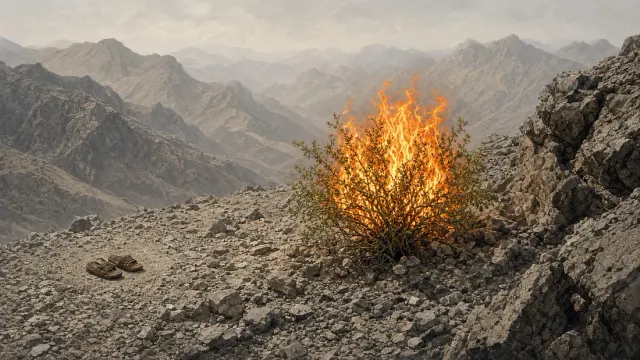
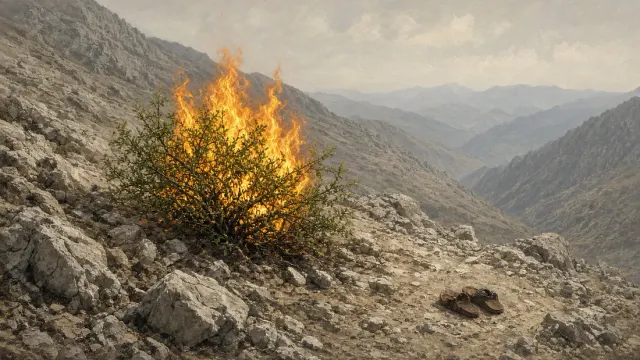
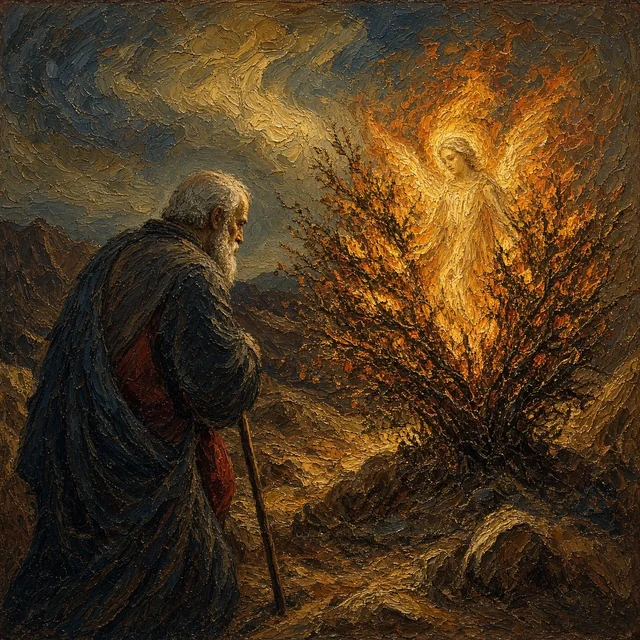
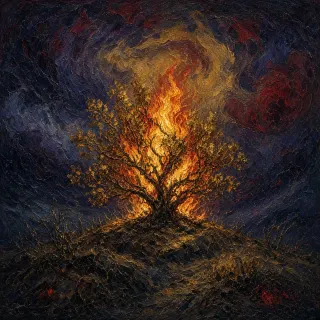
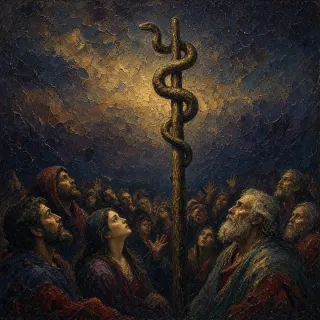
    Keeping Jethro's flock at Horeb, he sees a bush burning and not consumed. God calls him by name, tells him to take off his shoes, names himself the God of Abraham, Isaac and Jacob and then I AM THAT I AM, and sends him to Pharaoh. Moses objects five times: who am I, what is thy name, they will not believe me, I am slow of speech, send someone else. God gives him signs, a rod, and Aaron.

    The first promise to Moses is not that he possesses the right qualifications. It is that God will be with him. Moses asks about his own adequacy in 3:11; the answer changes the subject from the messenger's stature to the sender's presence. Even the sign has an unusual timetable. Israel will serve God on this mountain after the deliverance, not before Moses has to leave Midian. The commission does not arrive with a completed demonstration of everything it requires. It arrives with a promise and a destination.

    The movement from 3:7 to 3:10 is worth hearing slowly. God has seen, heard, and known Israel's suffering, and declares that he has come down to deliver. Then Moses is told to go to Pharaoh. Divine attention does not leave the human messenger unnecessary; it gives his errand its reason. Nor has Moses stumbled onto a naturally sacred shrub. The ordinary act of tending someone else's flock brings him to ground made holy by God's presence. He turns aside to look, is called by name, and removes his shoes. The approach is intimate and bounded at once.

    His objections become steadily less indirect. There is the question of identity, then the name, then Israel's possible disbelief, then his own speech. Finally, in 4:13, the polished reasons give way to a request that someone else be sent. The text records God's anger; it does not turn the entire exchange into a charming misunderstanding. Yet help still takes concrete form: Aaron will speak, Moses will instruct him, and the rod already in Moses' hand will accompany them. The bush has not produced a suddenly eloquent hero. It has produced a commission that Moses cannot explain away.

    Verse by verse

    1. 3:2-4

      The angel of the LORD appears in the flame, while the passage subsequently identifies the speaker as the LORD and God. The account presents divine speech without explaining the mechanics of that manifestation.

    2. 3:14

      The name is connected with the Hebrew verb meaning to be. I AM and I will be represent a real interpretive discussion, not a choice between a meaningful name and a meaningless one.

    3. 3:19

      The predicted Egyptian resistance belongs to the commission from the beginning. A refusal by Pharaoh will not by itself demonstrate that Moses has misheard the assignment.

    4. 4:10

      Slow of speech and of a slow tongue do not establish a particular medical diagnosis. Acts 7:22 describes Moses as mighty in words and deeds, without explaining the relationship between that description and this objection.

    5. 3:6

      Mark 12:26-27 returns to the bush and God's identification with Abraham, Isaac, and Jacob in Jesus' argument about resurrection. The encounter becomes testimony about the living God as well as a commission to Moses.

    Exodus 3:1-4:17: The bush that burned

    Exodus 3:1-4:17

    King James Version · 39 verses

    3:1Now Moses kept the flock of Jethro his father in law, the priest of Midian: and he led the flock to the backside of the desert, and came to the mountain of God, even to Horeb.

    3:2And the angel of the LORD appeared unto him in a flame of fire out of the midst of a bush: and he looked, and, behold, the bush burned with fire, and the bush was not consumed.

    3:3And Moses said, I will now turn aside, and see this great sight, why the bush is not burnt.

    3:4And when the LORD saw that he turned aside to see, God called unto him out of the midst of the bush, and said, Moses, Moses. And he said, Here am I.

    3:5And he said, Draw not nigh hither: put off thy shoes from off thy feet, for the place whereon thou standest is holy ground.

    3:6Moreover he said, I am the God of thy father, the God of Abraham, the God of Isaac, and the God of Jacob. And Moses hid his face; for he was afraid to look upon God.

    3:7And the LORD said, I have surely seen the affliction of my people which are in Egypt, and have heard their cry by reason of their taskmasters; for I know their sorrows;

    3:8And I am come down to deliver them out of the hand of the Egyptians, and to bring them up out of that land unto a good land and a large, unto a land flowing with milk and honey; unto the place of the Canaanites, and the Hittites, and the Amorites, and the Perizzites, and the Hivites, and the Jebusites.

    3:9Now therefore, behold, the cry of the children of Israel is come unto me: and I have also seen the oppression wherewith the Egyptians oppress them.

    3:10Come now therefore, and I will send thee unto Pharaoh, that thou mayest bring forth my people the children of Israel out of Egypt.

    3:11And Moses said unto God, Who am I, that I should go unto Pharaoh, and that I should bring forth the children of Israel out of Egypt?

    3:12And he said, Certainly I will be with thee; and this shall be a token unto thee, that I have sent thee: When thou hast brought forth the people out of Egypt, ye shall serve God upon this mountain.

    3:13And Moses said unto God, Behold, when I come unto the children of Israel, and shall say unto them, The God of your fathers hath sent me unto you; and they shall say to me, What is his name? what shall I say unto them?

    3:14And God said unto Moses, I AM THAT I AM: and he said, Thus shalt thou say unto the children of Israel, I AM hath sent me unto you.

    3:15And God said moreover unto Moses, Thus shalt thou say unto the children of Israel, The LORD God of your fathers, the God of Abraham, the God of Isaac, and the God of Jacob, hath sent me unto you: this is my name for ever, and this is my memorial unto all generations.

    3:16Go, and gather the elders of Israel together, and say unto them, The LORD God of your fathers, the God of Abraham, of Isaac, and of Jacob, appeared unto me, saying, I have surely visited you, and seen that which is done to you in Egypt:

    3:17And I have said, I will bring you up out of the affliction of Egypt unto the land of the Canaanites, and the Hittites, and the Amorites, and the Perizzites, and the Hivites, and the Jebusites, unto a land flowing with milk and honey.

    3:18And they shall hearken to thy voice: and thou shalt come, thou and the elders of Israel, unto the king of Egypt, and ye shall say unto him, The LORD God of the Hebrews hath met with us: and now let us go, we beseech thee, three days’ journey into the wilderness, that we may sacrifice to the LORD our God.

    3:19And I am sure that the king of Egypt will not let you go, no, not by a mighty hand.

    3:20And I will stretch out my hand, and smite Egypt with all my wonders which I will do in the midst thereof: and after that he will let you go.

    3:21And I will give this people favour in the sight of the Egyptians: and it shall come to pass, that, when ye go, ye shall not go empty:

    3:22But every woman shall borrow of her neighbour, and of her that sojourneth in her house, jewels of silver, and jewels of gold, and raiment: and ye shall put them upon your sons, and upon your daughters; and ye shall spoil the Egyptians.

    4:1And Moses answered and said, But, behold, they will not believe me, nor hearken unto my voice: for they will say, The LORD hath not appeared unto thee.

    4:2And the LORD said unto him, What is that in thine hand? And he said, A rod.

    4:3And he said, Cast it on the ground. And he cast it on the ground, and it became a serpent; and Moses fled from before it.

    4:4And the LORD said unto Moses, Put forth thine hand, and take it by the tail. And he put forth his hand, and caught it, and it became a rod in his hand:

    4:5That they may believe that the LORD God of their fathers, the God of Abraham, the God of Isaac, and the God of Jacob, hath appeared unto thee.

    4:6And the LORD said furthermore unto him, Put now thine hand into thy bosom. And he put his hand into his bosom: and when he took it out, behold, his hand was leprous as snow.

    4:7And he said, Put thine hand into thy bosom again. And he put his hand into his bosom again; and plucked it out of his bosom, and, behold, it was turned again as his other flesh.

    4:8And it shall come to pass, if they will not believe thee, neither hearken to the voice of the first sign, that they will believe the voice of the latter sign.

    4:9And it shall come to pass, if they will not believe also these two signs, neither hearken unto thy voice, that thou shalt take of the water of the river, and pour it upon the dry land: and the water which thou takest out of the river shall become blood upon the dry land.

    4:10And Moses said unto the LORD, O my Lord, I am not eloquent, neither heretofore, nor since thou hast spoken unto thy servant: but I am slow of speech, and of a slow tongue.

    4:11And the LORD said unto him, Who hath made man’s mouth? or who maketh the dumb, or deaf, or the seeing, or the blind? have not I the LORD?

    4:12Now therefore go, and I will be with thy mouth, and teach thee what thou shalt say.

    4:13And he said, O my Lord, send, I pray thee, by the hand of him whom thou wilt send.

    4:14And the anger of the LORD was kindled against Moses, and he said, Is not Aaron the Levite thy brother? I know that he can speak well. And also, behold, he cometh forth to meet thee: and when he seeth thee, he will be glad in his heart.

    4:15And thou shalt speak unto him, and put words in his mouth: and I will be with thy mouth, and with his mouth, and will teach you what ye shall do.

    4:16And he shall be thy spokesman unto the people: and he shall be, even he shall be to thee instead of a mouth, and thou shalt be to him instead of God.

    4:17And thou shalt take this rod in thine hand, wherewith thou shalt do signs.

  4. 04

    Exodus 4:18-31

    The road back

    He takes his wife and sons and the rod of God and sets out. At a lodging place the LORD meets him and seeks to kill him, and Zipporah circumcises their son with a sharp stone. Aaron meets him at the mount of God, and together they gather the elders of Israel, who believe and bow their heads.

    The rod has changed ownership without changing hands. In 4:2 it was simply the object Moses carried; in 4:20 it is the rod of God. That small alteration captures the journey. Moses is still a husband traveling with his family and still a shepherd carrying a staff, but the errand now belongs to someone else. The message about Israel as God's firstborn gives the confrontation with Pharaoh a family vocabulary before it becomes a contest of signs. Release is not presented merely as a request for better working conditions. Pharaoh is claiming service from a son whom God claims as his own.

    Then the road interrupts every easy assumption about the commissioned man's security. The LORD meets him and seeks to kill him; Zipporah acts, and the danger passes. The pronouns are frustratingly spare. Moses is commonly understood as the endangered person, but the son has also been proposed, and whose feet are touched is disputed. The text gives firmer ground for the action than for a complete reconstruction: a son is circumcised, Zipporah touches with the foreskin, and the lethal encounter ends. Circumcision recalls the covenant obligation of Genesis 17. The man sent to speak for that covenant does not travel beyond its claims. Zipporah, not Moses, performs the decisive action here. The chapter then closes not with a display of his prestige but with the elders' worship: they have heard that God has visited Israel and seen its affliction. The suffering noticed at the bush is the news that moves them.

    Verse by verse

    1. 4:18

      Moses asks Jethro's permission to return, but the verse does not say that he gives Jethro a full account of the burning bush. Silence about that conversation is not evidence that it never occurred.

    2. 4:22-23

      Israel is called God's firstborn as a people. The following threat against Pharaoh's firstborn deliberately keeps the same family term in view.

    3. 4:24

      The passage leaves the endangered person's identity implicit. Interpretations that specify every movement or explain Zipporah's complete reasoning exceed what the wording establishes.

    4. 4:25-26

      Bridegroom of blood is Zipporah's phrase, repeated with an explicit reference to circumcision in verse 26. Its precise ritual background remains disputed.

    5. 4:31

      Visited here means that God has attended to Israel in action, not that he has only arrived for an inspection. The stated reason for worship is his recognition of their affliction.

    Exodus 4:18-31

    King James Version · 14 verses

    4:18And Moses went and returned to Jethro his father in law, and said unto him, Let me go, I pray thee, and return unto my brethren which are in Egypt, and see whether they be yet alive. And Jethro said to Moses, Go in peace.

    4:19And the LORD said unto Moses in Midian, Go, return into Egypt: for all the men are dead which sought thy life.

    4:20And Moses took his wife and his sons, and set them upon an ass, and he returned to the land of Egypt: and Moses took the rod of God in his hand.

    4:21And the LORD said unto Moses, When thou goest to return into Egypt, see that thou do all those wonders before Pharaoh, which I have put in thine hand: but I will harden his heart, that he shall not let the people go.

    4:22And thou shalt say unto Pharaoh, Thus saith the LORD, Israel is my son, even my firstborn:

    4:23And I say unto thee, Let my son go, that he may serve me: and if thou refuse to let him go, behold, I will slay thy son, even thy firstborn.

    4:24And it came to pass by the way in the inn, that the LORD met him, and sought to kill him.

    4:25Then Zipporah took a sharp stone, and cut off the foreskin of her son, and cast it at his feet, and said, Surely a bloody husband art thou to me.

    4:26So he let him go: then she said, A bloody husband thou art, because of the circumcision.

    4:27And the LORD said to Aaron, Go into the wilderness to meet Moses. And he went, and met him in the mount of God, and kissed him.

    4:28And Moses told Aaron all the words of the LORD who had sent him, and all the signs which he had commanded him.

    4:29And Moses and Aaron went and gathered together all the elders of the children of Israel:

    4:30And Aaron spake all the words which the LORD had spoken unto Moses, and did the signs in the sight of the people.

    4:31And the people believed: and when they heard that the LORD had visited the children of Israel, and that he had looked upon their affliction, then they bowed their heads and worshipped.

  5. 05

    Exodus 5-6

    Who is the LORD?

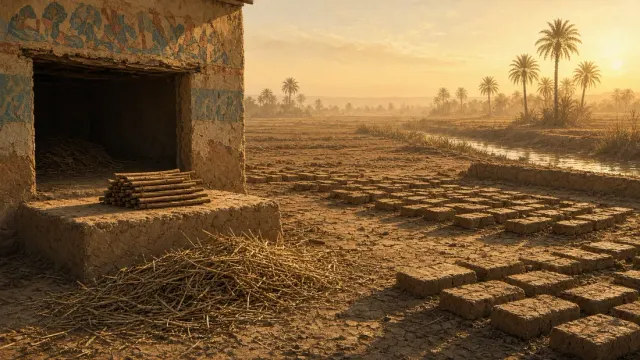
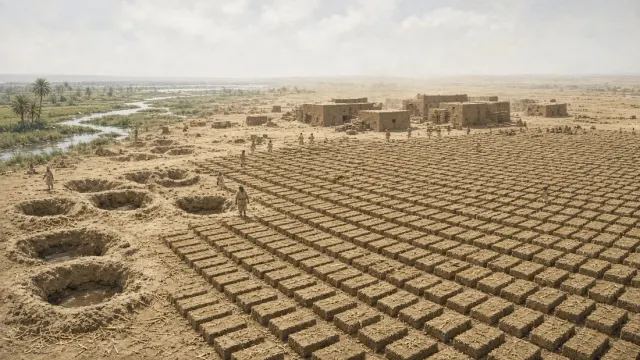
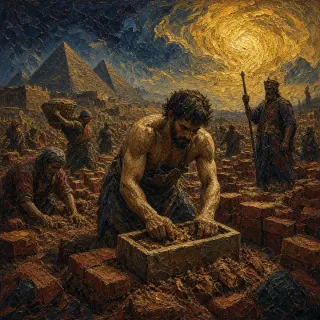
    Moses and Aaron tell Pharaoh, let my people go. Pharaoh answers, who is the LORD, that I should obey his voice? He withholds straw and demands the same tale of bricks. The people blame Moses, Moses complains to God, and God answers with his name and seven promises: I will bring you out, I will rid you, I will redeem you, I will take you to me for a people.

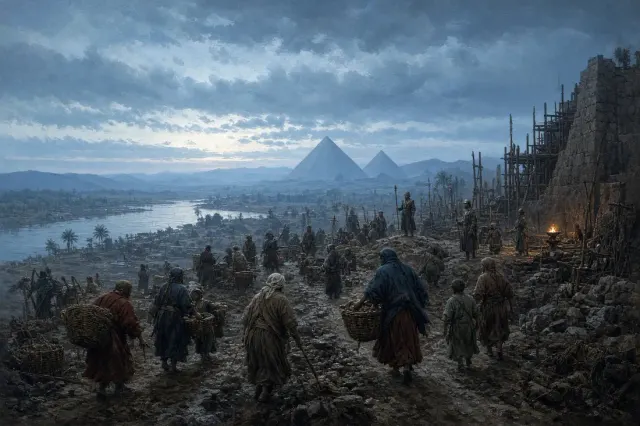
    The first measurable result of Moses' mission is a worse working day. The brick quota remains, the straw supply disappears, and the Hebrew officers receive the beatings when the numbers fail. That arrangement matters. Pharaoh makes the oppressed people police an impossible demand, then calls their request for worship idleness. The confrontation over God's authority reaches bodies and building materials before it reaches a spectacular sign. The officers' appeal to Pharaoh fails; their anger turns toward Moses and Aaron. Deliverance has been announced, but the people standing under the blows cannot yet see it.

    Moses does not tidy that failure before bringing it to God. His complaint at the end of chapter 5 states the apparent contradiction directly: the errand has brought evil upon the people, and deliverance has not happened. The response in chapter 6 is remarkable for how little it depends on a newly improved Moses. God recalls the covenant and unfolds the work in repeated promises: bringing out, freeing, redeeming, taking a people, being their God, bringing them in, giving the land. The goal is larger than the cancellation of a labor obligation. A people will belong to God and receive the inheritance promised to their fathers.

    Then a family list stops the momentum. Reuben, Simeon, Levi: the genealogy reaches the third son and follows the line down to Aaron and Moses. This is not a random interruption or a complete register of Israel. It identifies the actual household from which the two commissioned men come, including relationships that matter elsewhere in the wilderness account. The repeated identification in 6:26-27 fastens those ordinary family names to the extraordinary assignment. Meanwhile, Moses' objection about his lips returns. God's declaration has grown larger; Moses has not become a different species.

    Verse by verse

    1. 5:14

      The taskmasters and the Israelite officers occupy different positions. Verse 14 specifically identifies the beaten officers as men of the children of Israel.

    2. 5:11-13

      Stubble replaces the straw formerly supplied, but the brick requirement is unchanged. The impossible combination, not merely a shortage of materials, drives the crisis.

    3. 6:3

      The divine name already appears in Genesis, including Genesis 4:26. Readers therefore debate whether 6:3 concerns a newly disclosed name or a new experience of what that name signifies in covenant fulfillment.

    4. 6:6-8

      The promises move from release to relationship and inheritance. Freedom from Egypt is the beginning of the announced work, not its entire content.

    5. 6:20-23

      The genealogy identifies Amram and Jochebed as the parents of Aaron and Moses and identifies Aaron's marriage and sons. Its focus narrows to the commissioned family rather than covering every tribe.

    6. 6:30

      Uncircumcised lips is a figurative description of speech judged unfit for the task. It renews the objection rather than introducing a literal condition of the mouth.

    Exodus 5-6: Who is the LORD?

    Exodus 5-6

    King James Version · 53 verses

    5:1And afterward Moses and Aaron went in, and told Pharaoh, Thus saith the LORD God of Israel, Let my people go, that they may hold a feast unto me in the wilderness.

    5:2And Pharaoh said, Who is the LORD, that I should obey his voice to let Israel go? I know not the LORD, neither will I let Israel go.

    5:3And they said, The God of the Hebrews hath met with us: let us go, we pray thee, three days’ journey into the desert, and sacrifice unto the LORD our God; lest he fall upon us with pestilence, or with the sword.

    5:4And the king of Egypt said unto them, Wherefore do ye, Moses and Aaron, let the people from their works? get you unto your burdens.

    5:5And Pharaoh said, Behold, the people of the land now are many, and ye make them rest from their burdens.

    5:6And Pharaoh commanded the same day the taskmasters of the people, and their officers, saying,

    5:7Ye shall no more give the people straw to make brick, as heretofore: let them go and gather straw for themselves.

    5:8And the tale of the bricks, which they did make heretofore, ye shall lay upon them; ye shall not diminish ought thereof: for they be idle; therefore they cry, saying, Let us go and sacrifice to our God.

    5:9Let there more work be laid upon the men, that they may labour therein; and let them not regard vain words.

    5:10And the taskmasters of the people went out, and their officers, and they spake to the people, saying, Thus saith Pharaoh, I will not give you straw.

    5:11Go ye, get you straw where ye can find it: yet not ought of your work shall be diminished.

    5:12So the people were scattered abroad throughout all the land of Egypt to gather stubble instead of straw.

    5:13And the taskmasters hasted them, saying, Fulfil your works, your daily tasks, as when there was straw.

    5:14And the officers of the children of Israel, which Pharaoh’s taskmasters had set over them, were beaten, and demanded, Wherefore have ye not fulfilled your task in making brick both yesterday and to day, as heretofore?

    5:15Then the officers of the children of Israel came and cried unto Pharaoh, saying, Wherefore dealest thou thus with thy servants?

    5:16There is no straw given unto thy servants, and they say to us, Make brick: and, behold, thy servants are beaten; but the fault is in thine own people.

    5:17But he said, Ye are idle, ye are idle: therefore ye say, Let us go and do sacrifice to the LORD.

    5:18Go therefore now, and work; for there shall no straw be given you, yet shall ye deliver the tale of bricks.

    5:19And the officers of the children of Israel did see that they were in evil case, after it was said, Ye shall not minish ought from your bricks of your daily task.

    5:20And they met Moses and Aaron, who stood in the way, as they came forth from Pharaoh:

    5:21And they said unto them, The LORD look upon you, and judge; because ye have made our savour to be abhorred in the eyes of Pharaoh, and in the eyes of his servants, to put a sword in their hand to slay us.

    5:22And Moses returned unto the LORD, and said, Lord, wherefore hast thou so evil entreated this people? why is it that thou hast sent me?

    5:23For since I came to Pharaoh to speak in thy name, he hath done evil to this people; neither hast thou delivered thy people at all.

    6:1Then the LORD said unto Moses, Now shalt thou see what I will do to Pharaoh: for with a strong hand shall he let them go, and with a strong hand shall he drive them out of his land.

    6:2And God spake unto Moses, and said unto him, I am the LORD:

    6:3And I appeared unto Abraham, unto Isaac, and unto Jacob, by the name of God Almighty, but by my name JEHOVAH was I not known to them.

    6:4And I have also established my covenant with them, to give them the land of Canaan, the land of their pilgrimage, wherein they were strangers.

    6:5And I have also heard the groaning of the children of Israel, whom the Egyptians keep in bondage; and I have remembered my covenant.

    6:6Wherefore say unto the children of Israel, I am the LORD, and I will bring you out from under the burdens of the Egyptians, and I will rid you out of their bondage, and I will redeem you with a stretched out arm, and with great judgments:

    6:7And I will take you to me for a people, and I will be to you a God: and ye shall know that I am the LORD your God, which bringeth you out from under the burdens of the Egyptians.

    6:8And I will bring you in unto the land, concerning the which I did swear to give it to Abraham, to Isaac, and to Jacob; and I will give it you for an heritage: I am the LORD.

    6:9And Moses spake so unto the children of Israel: but they hearkened not unto Moses for anguish of spirit, and for cruel bondage.

    6:10And the LORD spake unto Moses, saying,

    6:11Go in, speak unto Pharaoh king of Egypt, that he let the children of Israel go out of his land.

    6:12And Moses spake before the LORD, saying, Behold, the children of Israel have not hearkened unto me; how then shall Pharaoh hear me, who am of uncircumcised lips?

    6:13And the LORD spake unto Moses and unto Aaron, and gave them a charge unto the children of Israel, and unto Pharaoh king of Egypt, to bring the children of Israel out of the land of Egypt.

    6:14These be the heads of their fathers’ houses: The sons of Reuben the firstborn of Israel; Hanoch, and Pallu, Hezron, and Carmi: these be the families of Reuben.

    6:15And the sons of Simeon; Jemuel, and Jamin, and Ohad, and Jachin, and Zohar, and Shaul the son of a Canaanitish woman: these are the families of Simeon.

    6:16And these are the names of the sons of Levi according to their generations; Gershon, and Kohath, and Merari: and the years of the life of Levi were an hundred thirty and seven years.

    6:17The sons of Gershon; Libni, and Shimi, according to their families.

    6:18And the sons of Kohath; Amram, and Izhar, and Hebron, and Uzziel: and the years of the life of Kohath were an hundred thirty and three years.

    6:19And the sons of Merari; Mahali and Mushi: these are the families of Levi according to their generations.

    6:20And Amram took him Jochebed his father’s sister to wife; and she bare him Aaron and Moses: and the years of the life of Amram were an hundred and thirty and seven years.

    6:21And the sons of Izhar; Korah, and Nepheg, and Zichri.

    6:22And the sons of Uzziel; Mishael, and Elzaphan, and Zithri.

    6:23And Aaron took him Elisheba, daughter of Amminadab, sister of Naashon, to wife; and she bare him Nadab, and Abihu, Eleazar, and Ithamar.

    6:24And the sons of Korah; Assir, and Elkanah, and Abiasaph: these are the families of the Korhites.

    6:25And Eleazar Aaron’s son took him one of the daughters of Putiel to wife; and she bare him Phinehas: these are the heads of the fathers of the Levites according to their families.

    6:26These are that Aaron and Moses, to whom the LORD said, Bring out the children of Israel from the land of Egypt according to their armies.

    6:27These are they which spake to Pharaoh king of Egypt, to bring out the children of Israel from Egypt: these are that Moses and Aaron.

    6:28And it came to pass on the day when the LORD spake unto Moses in the land of Egypt,

    6:29That the LORD spake unto Moses, saying, I am the LORD: speak thou unto Pharaoh king of Egypt all that I say unto thee.

    6:30And Moses said before the LORD, Behold, I am of uncircumcised lips, and how shall Pharaoh hearken unto me?

  6. 06

    Exodus 7-10

    Nine plagues

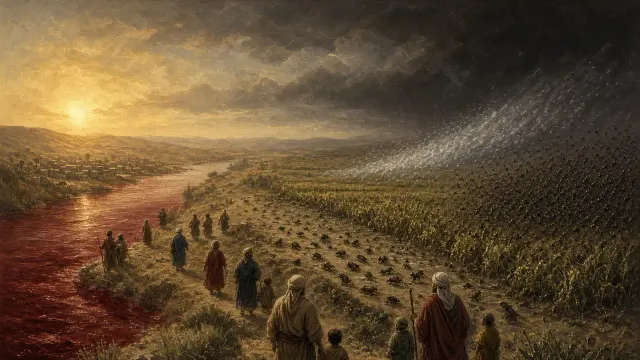
    Aaron's rod becomes a serpent and swallows the magicians'. Then the river turns to blood, frogs, lice, flies, murrain on the cattle, boils, hail, locusts and three days of darkness. Pharaoh hardens his heart, or the LORD hardens it, after each. Moses stretches out his hand for the hail, the locusts and the darkness, and Pharaoh at last tells him: see my face no more.

    The magicians' first successes are a peculiar service to Egypt: they can add to its troubles. Producing more blood or more frogs does not remove the blood or frogs already making the country miserable. Pharaoh must ask Moses to plead for relief. By the boils, the magicians cannot even stand before him. The sequence is not merely a competition over who can perform an impressive act. It exposes the difference between imitation, command, and the power to end a judgment. Even Pharaoh's concessions keep trying to preserve ownership: worship here, go only a little way, take the men but not the children, leave the livestock. The insistence that not a hoof remain answers a series of attempted reservations, not a dispute about one stubborn animal.

    The hardening language is deliberately uncomfortable. Pharaoh hardens his heart, his heart is described as hardened, and the LORD hardens it. The commission has already foretold divine hardening, so it is misleading to announce that God only enters the matter after an entirely independent first phase. It is equally misleading to erase Pharaoh's own refusals, reversals, and admission of sin. The Book of Exodus sets divine purpose and the ruler's accountable decisions together. It does not supply a neat formula for making either disappear.

    There are distinctions within Egypt as well as between Egypt and Israel. Before the hail, some of Pharaoh's servants fear the LORD's word and shelter their servants and cattle; others leave them outside. The warning makes response possible and the text records different responses. Afterward, the damaged crops are named with almost agricultural patience: flax and barley were struck, while wheat and rie had not yet grown up. Judgment here is not a blur of interchangeable disasters. It has timing, limits, witnesses, and survivors. The stated purpose keeps returning to knowledge: Pharaoh, Egypt, and Israel's children are to know whose word has proved effective.

    Verse by verse

    1. 7:7

      Moses is eighty and Aaron eighty-three when they speak to Pharaoh. The confrontation belongs to their old age, not their early adulthood.

    2. 8:19

      The magicians' phrase finger of God acknowledges a power beyond their own. Luke 11:20 uses the same phrase when Jesus speaks of casting out devils.

    3. 9:3

      The livestock plague is announced against animals in the field. The later hail warning again distinguishes animals left outside from those brought under shelter.

    4. 9:12

      This is the first report within the plague sequence that explicitly makes the LORD the subject of hardening Pharaoh's heart. Divine hardening was already announced in Exodus 4:21 and 7:3.

    5. 9:20-21

      Some Egyptian officials act on the warning and some do not. The distinction is stated within Pharaoh's own servants, not only between two national populations.

    6. 10:26

      Moses explains the demand for the livestock by the requirements of worship, whose full sacrificial needs have not yet been disclosed. Pharaoh's permission with conditions is not the release demanded.

    Exodus 7-10: Nine plagues

    Exodus 7-10

    King James Version · 121 verses

    7:1And the LORD said unto Moses, See, I have made thee a god to Pharaoh: and Aaron thy brother shall be thy prophet.

    7:2Thou shalt speak all that I command thee: and Aaron thy brother shall speak unto Pharaoh, that he send the children of Israel out of his land.

    7:3And I will harden Pharaoh’s heart, and multiply my signs and my wonders in the land of Egypt.

    7:4But Pharaoh shall not hearken unto you, that I may lay my hand upon Egypt, and bring forth mine armies, and my people the children of Israel, out of the land of Egypt by great judgments.

    7:5And the Egyptians shall know that I am the LORD, when I stretch forth mine hand upon Egypt, and bring out the children of Israel from among them.

    7:6And Moses and Aaron did as the LORD commanded them, so did they.

    7:7And Moses was fourscore years old, and Aaron fourscore and three years old, when they spake unto Pharaoh.

    7:8And the LORD spake unto Moses and unto Aaron, saying,

    7:9When Pharaoh shall speak unto you, saying, Shew a miracle for you: then thou shalt say unto Aaron, Take thy rod, and cast it before Pharaoh, and it shall become a serpent.

    7:10And Moses and Aaron went in unto Pharaoh, and they did so as the LORD had commanded: and Aaron cast down his rod before Pharaoh, and before his servants, and it became a serpent.

    7:11Then Pharaoh also called the wise men and the sorcerers: now the magicians of Egypt, they also did in like manner with their enchantments.

    7:12For they cast down every man his rod, and they became serpents: but Aaron’s rod swallowed up their rods.

    7:13And he hardened Pharaoh’s heart, that he hearkened not unto them; as the LORD had said.

    7:14And the LORD said unto Moses, Pharaoh’s heart is hardened, he refuseth to let the people go.

    7:15Get thee unto Pharaoh in the morning; lo, he goeth out unto the water; and thou shalt stand by the river’s brink against he come; and the rod which was turned to a serpent shalt thou take in thine hand.

    7:16And thou shalt say unto him, The LORD God of the Hebrews hath sent me unto thee, saying, Let my people go, that they may serve me in the wilderness: and, behold, hitherto thou wouldest not hear.

    7:17Thus saith the LORD, In this thou shalt know that I am the LORD: behold, I will smite with the rod that is in mine hand upon the waters which are in the river, and they shall be turned to blood.

    7:18And the fish that is in the river shall die, and the river shall stink; and the Egyptians shall lothe to drink of the water of the river.

    7:19And the LORD spake unto Moses, Say unto Aaron, Take thy rod, and stretch out thine hand upon the waters of Egypt, upon their streams, upon their rivers, and upon their ponds, and upon all their pools of water, that they may become blood; and that there may be blood throughout all the land of Egypt, both in vessels of wood, and in vessels of stone.

    7:20And Moses and Aaron did so, as the LORD commanded; and he lifted up the rod, and smote the waters that were in the river, in the sight of Pharaoh, and in the sight of his servants; and all the waters that were in the river were turned to blood.

    7:21And the fish that was in the river died; and the river stank, and the Egyptians could not drink of the water of the river; and there was blood throughout all the land of Egypt.

    7:22And the magicians of Egypt did so with their enchantments: and Pharaoh’s heart was hardened, neither did he hearken unto them; as the LORD had said.

    7:23And Pharaoh turned and went into his house, neither did he set his heart to this also.

    7:24And all the Egyptians digged round about the river for water to drink; for they could not drink of the water of the river.

    7:25And seven days were fulfilled, after that the LORD had smitten the river.

    8:1And the LORD spake unto Moses, Go unto Pharaoh, and say unto him, Thus saith the LORD, Let my people go, that they may serve me.

    8:2And if thou refuse to let them go, behold, I will smite all thy borders with frogs:

    8:3And the river shall bring forth frogs abundantly, which shall go up and come into thine house, and into thy bedchamber, and upon thy bed, and into the house of thy servants, and upon thy people, and into thine ovens, and into thy kneadingtroughs:

    8:4And the frogs shall come up both on thee, and upon thy people, and upon all thy servants.

    8:5And the LORD spake unto Moses, Say unto Aaron, Stretch forth thine hand with thy rod over the streams, over the rivers, and over the ponds, and cause frogs to come up upon the land of Egypt.

    8:6And Aaron stretched out his hand over the waters of Egypt; and the frogs came up, and covered the land of Egypt.

    8:7And the magicians did so with their enchantments, and brought up frogs upon the land of Egypt.

    8:8Then Pharaoh called for Moses and Aaron, and said, Intreat the LORD, that he may take away the frogs from me, and from my people; and I will let the people go, that they may do sacrifice unto the LORD.

    8:9And Moses said unto Pharaoh, Glory over me: when shall I intreat for thee, and for thy servants, and for thy people, to destroy the frogs from thee and thy houses, that they may remain in the river only?

    8:10And he said, To morrow. And he said, Be it according to thy word: that thou mayest know that there is none like unto the LORD our God.

    8:11And the frogs shall depart from thee, and from thy houses, and from thy servants, and from thy people; they shall remain in the river only.

    8:12And Moses and Aaron went out from Pharaoh: and Moses cried unto the LORD because of the frogs which he had brought against Pharaoh.

    8:13And the LORD did according to the word of Moses; and the frogs died out of the houses, out of the villages, and out of the fields.

    8:14And they gathered them together upon heaps: and the land stank.

    8:15But when Pharaoh saw that there was respite, he hardened his heart, and hearkened not unto them; as the LORD had said.

    8:16And the LORD said unto Moses, Say unto Aaron, Stretch out thy rod, and smite the dust of the land, that it may become lice throughout all the land of Egypt.

    8:17And they did so; for Aaron stretched out his hand with his rod, and smote the dust of the earth, and it became lice in man, and in beast; all the dust of the land became lice throughout all the land of Egypt.

    8:18And the magicians did so with their enchantments to bring forth lice, but they could not: so there were lice upon man, and upon beast.

    8:19Then the magicians said unto Pharaoh, This is the finger of God: and Pharaoh’s heart was hardened, and he hearkened not unto them; as the LORD had said.

    8:20And the LORD said unto Moses, Rise up early in the morning, and stand before Pharaoh; lo, he cometh forth to the water; and say unto him, Thus saith the LORD, Let my people go, that they may serve me.

    8:21Else, if thou wilt not let my people go, behold, I will send swarms of flies upon thee, and upon thy servants, and upon thy people, and into thy houses: and the houses of the Egyptians shall be full of swarms of flies, and also the ground whereon they are.

    8:22And I will sever in that day the land of Goshen, in which my people dwell, that no swarms of flies shall be there; to the end thou mayest know that I am the LORD in the midst of the earth.

    8:23And I will put a division between my people and thy people: to morrow shall this sign be.

    8:24And the LORD did so; and there came a grievous swarm of flies into the house of Pharaoh, and into his servants’ houses, and into all the land of Egypt: the land was corrupted by reason of the swarm of flies.

    8:25And Pharaoh called for Moses and for Aaron, and said, Go ye, sacrifice to your God in the land.

    8:26And Moses said, It is not meet so to do; for we shall sacrifice the abomination of the Egyptians to the LORD our God: lo, shall we sacrifice the abomination of the Egyptians before their eyes, and will they not stone us?

    8:27We will go three days’ journey into the wilderness, and sacrifice to the LORD our God, as he shall command us.

    8:28And Pharaoh said, I will let you go, that ye may sacrifice to the LORD your God in the wilderness; only ye shall not go very far away: intreat for me.

    8:29And Moses said, Behold, I go out from thee, and I will intreat the LORD that the swarms of flies may depart from Pharaoh, from his servants, and from his people, to morrow: but let not Pharaoh deal deceitfully any more in not letting the people go to sacrifice to the LORD.

    8:30And Moses went out from Pharaoh, and intreated the LORD.

    8:31And the LORD did according to the word of Moses; and he removed the swarms of flies from Pharaoh, from his servants, and from his people; there remained not one.

    8:32And Pharaoh hardened his heart at this time also, neither would he let the people go.

    9:1Then the LORD said unto Moses, Go in unto Pharaoh, and tell him, Thus saith the LORD God of the Hebrews, Let my people go, that they may serve me.

    9:2For if thou refuse to let them go, and wilt hold them still,

    9:3Behold, the hand of the LORD is upon thy cattle which is in the field, upon the horses, upon the asses, upon the camels, upon the oxen, and upon the sheep: there shall be a very grievous murrain.

    9:4And the LORD shall sever between the cattle of Israel and the cattle of Egypt: and there shall nothing die of all that is the children’s of Israel.

    9:5And the LORD appointed a set time, saying, To morrow the LORD shall do this thing in the land.

    9:6And the LORD did that thing on the morrow, and all the cattle of Egypt died: but of the cattle of the children of Israel died not one.

    9:7And Pharaoh sent, and, behold, there was not one of the cattle of the Israelites dead. And the heart of Pharaoh was hardened, and he did not let the people go.

    9:8And the LORD said unto Moses and unto Aaron, Take to you handfuls of ashes of the furnace, and let Moses sprinkle it toward the heaven in the sight of Pharaoh.

    9:9And it shall become small dust in all the land of Egypt, and shall be a boil breaking forth with blains upon man, and upon beast, throughout all the land of Egypt.

    9:10And they took ashes of the furnace, and stood before Pharaoh; and Moses sprinkled it up toward heaven; and it became a boil breaking forth with blains upon man, and upon beast.

    9:11And the magicians could not stand before Moses because of the boils; for the boil was upon the magicians, and upon all the Egyptians.

    9:12And the LORD hardened the heart of Pharaoh, and he hearkened not unto them; as the LORD had spoken unto Moses.

    9:13And the LORD said unto Moses, Rise up early in the morning, and stand before Pharaoh, and say unto him, Thus saith the LORD God of the Hebrews, Let my people go, that they may serve me.

    9:14For I will at this time send all my plagues upon thine heart, and upon thy servants, and upon thy people; that thou mayest know that there is none like me in all the earth.

    9:15For now I will stretch out my hand, that I may smite thee and thy people with pestilence; and thou shalt be cut off from the earth.

    9:16And in very deed for this cause have I raised thee up, for to shew in thee my power; and that my name may be declared throughout all the earth.

    9:17As yet exaltest thou thyself against my people, that thou wilt not let them go?

    9:18Behold, to morrow about this time I will cause it to rain a very grievous hail, such as hath not been in Egypt since the foundation thereof even until now.

    9:19Send therefore now, and gather thy cattle, and all that thou hast in the field; for upon every man and beast which shall be found in the field, and shall not be brought home, the hail shall come down upon them, and they shall die.

    9:20He that feared the word of the LORD among the servants of Pharaoh made his servants and his cattle flee into the houses:

    9:21And he that regarded not the word of the LORD left his servants and his cattle in the field.

    9:22And the LORD said unto Moses, Stretch forth thine hand toward heaven, that there may be hail in all the land of Egypt, upon man, and upon beast, and upon every herb of the field, throughout the land of Egypt.

    9:23And Moses stretched forth his rod toward heaven: and the LORD sent thunder and hail, and the fire ran along upon the ground; and the LORD rained hail upon the land of Egypt.

    9:24So there was hail, and fire mingled with the hail, very grievous, such as there was none like it in all the land of Egypt since it became a nation.

    9:25And the hail smote throughout all the land of Egypt all that was in the field, both man and beast; and the hail smote every herb of the field, and brake every tree of the field.

    9:26Only in the land of Goshen, where the children of Israel were, was there no hail.

    9:27And Pharaoh sent, and called for Moses and Aaron, and said unto them, I have sinned this time: the LORD is righteous, and I and my people are wicked.

    9:28Intreat the LORD (for it is enough) that there be no more mighty thunderings and hail; and I will let you go, and ye shall stay no longer.

    9:29And Moses said unto him, As soon as I am gone out of the city, I will spread abroad my hands unto the LORD; and the thunder shall cease, neither shall there be any more hail; that thou mayest know how that the earth is the LORD’s.

    9:30But as for thee and thy servants, I know that ye will not yet fear the LORD God.

    9:31And the flax and the barley was smitten: for the barley was in the ear, and the flax was bolled.

    9:32But the wheat and the rie were not smitten: for they were not grown up.

    9:33And Moses went out of the city from Pharaoh, and spread abroad his hands unto the LORD: and the thunders and hail ceased, and the rain was not poured upon the earth.

    9:34And when Pharaoh saw that the rain and the hail and the thunders were ceased, he sinned yet more, and hardened his heart, he and his servants.

    9:35And the heart of Pharaoh was hardened, neither would he let the children of Israel go; as the LORD had spoken by Moses.

    10:1And the LORD said unto Moses, Go in unto Pharaoh: for I have hardened his heart, and the heart of his servants, that I might shew these my signs before him:

    10:2And that thou mayest tell in the ears of thy son, and of thy son’s son, what things I have wrought in Egypt, and my signs which I have done among them; that ye may know how that I am the LORD.

    10:3And Moses and Aaron came in unto Pharaoh, and said unto him, Thus saith the LORD God of the Hebrews, How long wilt thou refuse to humble thyself before me? let my people go, that they may serve me.

    10:4Else, if thou refuse to let my people go, behold, to morrow will I bring the locusts into thy coast:

    10:5And they shall cover the face of the earth, that one cannot be able to see the earth: and they shall eat the residue of that which is escaped, which remaineth unto you from the hail, and shall eat every tree which groweth for you out of the field:

    10:6And they shall fill thy houses, and the houses of all thy servants, and the houses of all the Egyptians; which neither thy fathers, nor thy fathers’ fathers have seen, since the day that they were upon the earth unto this day. And he turned himself, and went out from Pharaoh.

    10:7And Pharaoh’s servants said unto him, How long shall this man be a snare unto us? let the men go, that they may serve the LORD their God: knowest thou not yet that Egypt is destroyed?

    10:8And Moses and Aaron were brought again unto Pharaoh: and he said unto them, Go, serve the LORD your God: but who are they that shall go?

    10:9And Moses said, We will go with our young and with our old, with our sons and with our daughters, with our flocks and with our herds will we go; for we must hold a feast unto the LORD.

    10:10And he said unto them, Let the LORD be so with you, as I will let you go, and your little ones: look to it; for evil is before you.

    10:11Not so: go now ye that are men, and serve the LORD; for that ye did desire. And they were driven out from Pharaoh’s presence.

    10:12And the LORD said unto Moses, Stretch out thine hand over the land of Egypt for the locusts, that they may come up upon the land of Egypt, and eat every herb of the land, even all that the hail hath left.

    10:13And Moses stretched forth his rod over the land of Egypt, and the LORD brought an east wind upon the land all that day, and all that night; and when it was morning, the east wind brought the locusts.

    10:14And the locusts went up over all the land of Egypt, and rested in all the coasts of Egypt: very grievous were they; before them there were no such locusts as they, neither after them shall be such.

    10:15For they covered the face of the whole earth, so that the land was darkened; and they did eat every herb of the land, and all the fruit of the trees which the hail had left: and there remained not any green thing in the trees, or in the herbs of the field, through all the land of Egypt.

    10:16Then Pharaoh called for Moses and Aaron in haste; and he said, I have sinned against the LORD your God, and against you.

    10:17Now therefore forgive, I pray thee, my sin only this once, and intreat the LORD your God, that he may take away from me this death only.

    10:18And he went out from Pharaoh, and intreated the LORD.

    10:19And the LORD turned a mighty strong west wind, which took away the locusts, and cast them into the Red sea; there remained not one locust in all the coasts of Egypt.

    10:20But the LORD hardened Pharaoh’s heart, so that he would not let the children of Israel go.

    10:21And the LORD said unto Moses, Stretch out thine hand toward heaven, that there may be darkness over the land of Egypt, even darkness which may be felt.

    10:22And Moses stretched forth his hand toward heaven; and there was a thick darkness in all the land of Egypt three days:

    10:23They saw not one another, neither rose any from his place for three days: but all the children of Israel had light in their dwellings.

    10:24And Pharaoh called unto Moses, and said, Go ye, serve the LORD; only let your flocks and your herds be stayed: let your little ones also go with you.

    10:25And Moses said, Thou must give us also sacrifices and burnt offerings, that we may sacrifice unto the LORD our God.

    10:26Our cattle also shall go with us; there shall not an hoof be left behind; for thereof must we take to serve the LORD our God; and we know not with what we must serve the LORD, until we come thither.

    10:27But the LORD hardened Pharaoh’s heart, and he would not let them go.

    10:28And Pharaoh said unto him, Get thee from me, take heed to thyself, see my face no more; for in that day thou seest my face thou shalt die.

    10:29And Moses said, Thou hast spoken well, I will see thy face again no more.

  7. 07

    Exodus 11-12

    The Passover

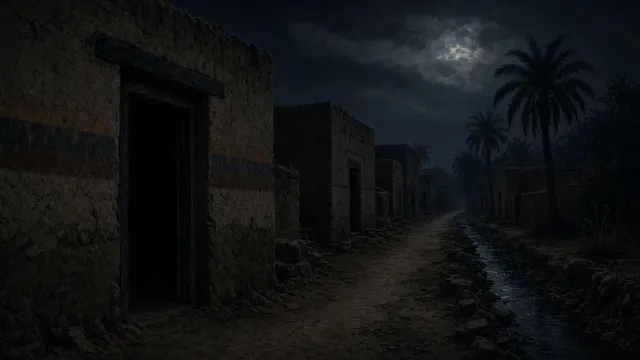
    One plague more. Every household takes a lamb, kills it at evening on the fourteenth day, and strikes its blood on the two side posts and the lintel. At midnight the LORD smites all the firstborn of Egypt, from Pharaoh's to the captive's in the dungeon, and passes over the houses with blood on the door. Pharaoh rises in the night and sends them away, and six hundred thousand men on foot go out.

    The departure begins by changing the calendar. This month will be the beginning of months, because Israel's public time is to be reckoned around deliverance. Then the instructions become intensely domestic: the size of a household, the appetite of its members, a neighbor sharing an animal, blood on a doorframe. An event confronting the throne of Egypt is prepared at the level of supper. The small household is not required to waste an animal to prove its seriousness. It joins another household according to what the people can eat. The precision keeps actual bodies and actual food in view.

    The meal holds haste and remembrance together. Shoes, staff, and girded loins prepare a people to leave; the annual observance prepares generations who were never in Egypt to remember. The explanation to children is built into the instructions before those later children ask. Memory is not entrusted to a vague family impression. It receives a date, actions, food, and words. The blood marks the houses where the command has been observed, and the later regulations admit a circumcised stranger to the feast under the same law. The passage does not portray deliverance as a protection supplied merely by an ethnic label, detached from the appointed sign.

    None of that domestic detail makes the midnight judgment gentle. The firstborn die from the royal house to the captive in the dungeon. The Book of Exodus reports a great cry, not a harmless embarrassment for Pharaoh. That severity must remain beside the meal's meaning. Nor does the rush to leave erase the long span behind it: the account measures the sojourn, names the mixed multitude, and records the dough carried before it could rise. This is a people going out with households and provisions, not an abstract idea of freedom walking through an open door.

    Verse by verse

    1. 12:2

      The month of departure becomes the first month for Israel's calendar. The verse establishes its place in reckoning time without supplying a modern calendar date.

    2. 12:7

      The blood is placed on the two side posts and the upper doorpost. The instruction does not place it on the threshold.

    3. 12:26-27

      The children's question belongs to the prescribed future observance. The rite includes a verbal account of deliverance, not only the repetition of a meal.

    4. 12:29

      The firstborn judgment reaches both the throne and the dungeon. The wording refuses to restrict its cost to Pharaoh personally.

    5. 12:40

      The KJV states a sojourn of 430 years in Egypt; the Samaritan Pentateuch and Greek tradition include Canaan in their wording. The chronological interpretation is therefore a genuine textual discussion, not a detail to settle by an unsupported date.

    6. 12:46

      The prohibition on breaking the animal's bones is recalled in John 19:36 concerning Jesus. Paul explicitly calls Christ the passover in 1 Corinthians 5:7.

    Exodus 11-12: The Passover

    Exodus 11-12

    King James Version · 61 verses

    11:1And the LORD said unto Moses, Yet will I bring one plague more upon Pharaoh, and upon Egypt; afterwards he will let you go hence: when he shall let you go, he shall surely thrust you out hence altogether.

    11:2Speak now in the ears of the people, and let every man borrow of his neighbour, and every woman of her neighbour, jewels of silver, and jewels of gold.

    11:3And the LORD gave the people favour in the sight of the Egyptians. Moreover the man Moses was very great in the land of Egypt, in the sight of Pharaoh’s servants, and in the sight of the people.

    11:4And Moses said, Thus saith the LORD, About midnight will I go out into the midst of Egypt:

    11:5And all the firstborn in the land of Egypt shall die, from the firstborn of Pharaoh that sitteth upon his throne, even unto the firstborn of the maidservant that is behind the mill; and all the firstborn of beasts.

    11:6And there shall be a great cry throughout all the land of Egypt, such as there was none like it, nor shall be like it any more.

    11:7But against any of the children of Israel shall not a dog move his tongue, against man or beast: that ye may know how that the LORD doth put a difference between the Egyptians and Israel.

    11:8And all these thy servants shall come down unto me, and bow down themselves unto me, saying, Get thee out, and all the people that follow thee: and after that I will go out. And he went out from Pharaoh in a great anger.

    11:9And the LORD said unto Moses, Pharaoh shall not hearken unto you; that my wonders may be multiplied in the land of Egypt.

    11:10And Moses and Aaron did all these wonders before Pharaoh: and the LORD hardened Pharaoh’s heart, so that he would not let the children of Israel go out of his land.

    12:1And the LORD spake unto Moses and Aaron in the land of Egypt, saying,

    12:2This month shall be unto you the beginning of months: it shall be the first month of the year to you.

    12:3Speak ye unto all the congregation of Israel, saying, In the tenth day of this month they shall take to them every man a lamb, according to the house of their fathers, a lamb for an house:

    12:4And if the household be too little for the lamb, let him and his neighbour next unto his house take it according to the number of the souls; every man according to his eating shall make your count for the lamb.

    12:5Your lamb shall be without blemish, a male of the first year: ye shall take it out from the sheep, or from the goats:

    12:6And ye shall keep it up until the fourteenth day of the same month: and the whole assembly of the congregation of Israel shall kill it in the evening.

    12:7And they shall take of the blood, and strike it on the two side posts and on the upper door post of the houses, wherein they shall eat it.

    12:8And they shall eat the flesh in that night, roast with fire, and unleavened bread; and with bitter herbs they shall eat it.

    12:9Eat not of it raw, nor sodden at all with water, but roast with fire; his head with his legs, and with the purtenance thereof.

    12:10And ye shall let nothing of it remain until the morning; and that which remaineth of it until the morning ye shall burn with fire.

    12:11And thus shall ye eat it; with your loins girded, your shoes on your feet, and your staff in your hand; and ye shall eat it in haste: it is the LORD’s passover.

    12:12For I will pass through the land of Egypt this night, and will smite all the firstborn in the land of Egypt, both man and beast; and against all the gods of Egypt I will execute judgment: I am the LORD.

    12:13And the blood shall be to you for a token upon the houses where ye are: and when I see the blood, I will pass over you, and the plague shall not be upon you to destroy you, when I smite the land of Egypt.

    12:14And this day shall be unto you for a memorial; and ye shall keep it a feast to the LORD throughout your generations; ye shall keep it a feast by an ordinance for ever.

    12:15Seven days shall ye eat unleavened bread; even the first day ye shall put away leaven out of your houses: for whosoever eateth leavened bread from the first day until the seventh day, that soul shall be cut off from Israel.

    12:16And in the first day there shall be an holy convocation, and in the seventh day there shall be an holy convocation to you; no manner of work shall be done in them, save that which every man must eat, that only may be done of you.

    12:17And ye shall observe the feast of unleavened bread; for in this selfsame day have I brought your armies out of the land of Egypt: therefore shall ye observe this day in your generations by an ordinance for ever.

    12:18In the first month, on the fourteenth day of the month at even, ye shall eat unleavened bread, until the one and twentieth day of the month at even.

    12:19Seven days shall there be no leaven found in your houses: for whosoever eateth that which is leavened, even that soul shall be cut off from the congregation of Israel, whether he be a stranger, or born in the land.

    12:20Ye shall eat nothing leavened; in all your habitations shall ye eat unleavened bread.

    12:21Then Moses called for all the elders of Israel, and said unto them, Draw out and take you a lamb according to your families, and kill the passover.

    12:22And ye shall take a bunch of hyssop, and dip it in the blood that is in the bason, and strike the lintel and the two side posts with the blood that is in the bason; and none of you shall go out at the door of his house until the morning.

    12:23For the LORD will pass through to smite the Egyptians; and when he seeth the blood upon the lintel, and on the two side posts, the LORD will pass over the door, and will not suffer the destroyer to come in unto your houses to smite you.

    12:24And ye shall observe this thing for an ordinance to thee and to thy sons for ever.

    12:25And it shall come to pass, when ye be come to the land which the LORD will give you, according as he hath promised, that ye shall keep this service.

    12:26And it shall come to pass, when your children shall say unto you, What mean ye by this service?

    12:27That ye shall say, It is the sacrifice of the LORD’s passover, who passed over the houses of the children of Israel in Egypt, when he smote the Egyptians, and delivered our houses. And the people bowed the head and worshipped.

    12:28And the children of Israel went away, and did as the LORD had commanded Moses and Aaron, so did they.

    12:29And it came to pass, that at midnight the LORD smote all the firstborn in the land of Egypt, from the firstborn of Pharaoh that sat on his throne unto the firstborn of the captive that was in the dungeon; and all the firstborn of cattle.

    12:30And Pharaoh rose up in the night, he, and all his servants, and all the Egyptians; and there was a great cry in Egypt; for there was not a house where there was not one dead.

    12:31And he called for Moses and Aaron by night, and said, Rise up, and get you forth from among my people, both ye and the children of Israel; and go, serve the LORD, as ye have said.

    12:32Also take your flocks and your herds, as ye have said, and be gone; and bless me also.

    12:33And the Egyptians were urgent upon the people, that they might send them out of the land in haste; for they said, We be all dead men.

    12:34And the people took their dough before it was leavened, their kneadingtroughs being bound up in their clothes upon their shoulders.

    12:35And the children of Israel did according to the word of Moses; and they borrowed of the Egyptians jewels of silver, and jewels of gold, and raiment:

    12:36And the LORD gave the people favour in the sight of the Egyptians, so that they lent unto them such things as they required. And they spoiled the Egyptians.

    12:37And the children of Israel journeyed from Rameses to Succoth, about six hundred thousand on foot that were men, beside children.

    12:38And a mixed multitude went up also with them; and flocks, and herds, even very much cattle.

    12:39And they baked unleavened cakes of the dough which they brought forth out of Egypt, for it was not leavened; because they were thrust out of Egypt, and could not tarry, neither had they prepared for themselves any victual.

    12:40Now the sojourning of the children of Israel, who dwelt in Egypt, was four hundred and thirty years.

    12:41And it came to pass at the end of the four hundred and thirty years, even the selfsame day it came to pass, that all the hosts of the LORD went out from the land of Egypt.

    12:42It is a night to be much observed unto the LORD for bringing them out from the land of Egypt: this is that night of the LORD to be observed of all the children of Israel in their generations.

    12:43And the LORD said unto Moses and Aaron, This is the ordinance of the passover: There shall no stranger eat thereof:

    12:44But every man’s servant that is bought for money, when thou hast circumcised him, then shall he eat thereof.

    12:45A foreigner and an hired servant shall not eat thereof.

    12:46In one house shall it be eaten; thou shalt not carry forth ought of the flesh abroad out of the house; neither shall ye break a bone thereof.

    12:47All the congregation of Israel shall keep it.

    12:48And when a stranger shall sojourn with thee, and will keep the passover to the LORD, let all his males be circumcised, and then let him come near and keep it; and he shall be as one that is born in the land: for no uncircumcised person shall eat thereof.

    12:49One law shall be to him that is homeborn, and unto the stranger that sojourneth among you.

    12:50Thus did all the children of Israel; as the LORD commanded Moses and Aaron, so did they.

    12:51And it came to pass the selfsame day, that the LORD did bring the children of Israel out of the land of Egypt by their armies.

  8. 08

    Exodus 13:17-14:31

    Through the sea

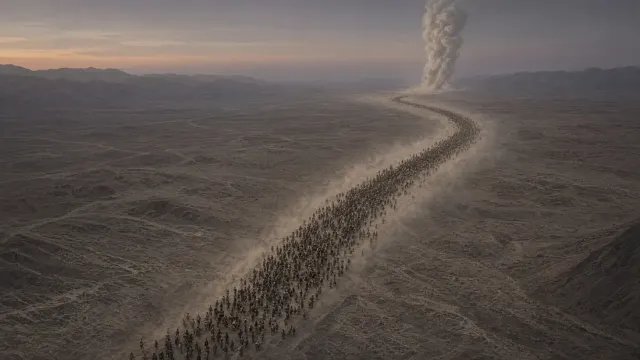
    Led by a pillar of cloud by day and fire by night, they camp by the sea, and Pharaoh's chariots close in. Fear ye not, Moses says, stand still and see the salvation of the LORD. He stretches out his hand, an east wind divides the sea, Israel walks through on dry ground with the waters a wall on either side, and the sea returns on the Egyptians. Not one of them remains.

    The shortest road is rejected before the sea becomes an obstacle. Exodus 13:17 explains the decision in terms of a people who might turn back at the sight of war. Their route is not a geographical mistake that God has to repair. Among their belongings travel Joseph's bones, carried because of an oath made in Genesis 50:25. A dead man's request has survived the generations of slavery. The journey therefore carries an old promise in a very physical form: a people leaving Egypt are also keeping faith with a burial still unfinished.

    At the water, Moses' command to stand still and the divine command to go forward do not describe competing strategies. Israel cannot defeat the pursuing army; it must receive deliverance rather than win it by force. Yet receiving that deliverance includes walking where the opened water makes a path. The pillar's move from the front to the rear is equally concrete. The presence that has guided now stands between the pursued and the pursuers. Direction and protection come from the same place.

    The east wind blows all that night. That phrase gives the crossing a duration often lost in a single painted instant: darkness, a sustained wind, exposed ground, and people moving between waters. The army's collapse is described through chariots, wheels, confusion, and the Egyptians' recognition that the LORD fights for Israel. The closing response is fear of the LORD and belief in him and his servant Moses. Moses has not become a second source of power. His authority has been established as the authority of a servant. The water that Israel could not cross unaided becomes the place where that distinction is made visible.

    Verse by verse

    1. 13:18

      Harnessed describes an ordered or equipped departure, not proof that Israel already possessed the military confidence needed for war. The preceding verse explicitly mentions the danger of retreat.

    2. 13:19

      The oath about Joseph's bones comes from Genesis 50:25 and is recalled in Hebrews 11:22. Carrying them fulfills a prior obligation during the emergency of departure.

    3. 14:19-20

      The cloud moves behind Israel before the sea is divided. Protection from the approaching Egyptians precedes the opened route through the water.

    4. 14:21

      The verse names a strong east wind operating through the night. It does not identify a modern crossing site or reduce the event to an ordinary low tide.

    5. 14:31

      First Corinthians 10:1-2 interprets the cloud and sea in relation to Israel's identification with Moses. The Book of Exodus itself closes by naming him God's servant.

    Exodus 13:17-14:31: Through the sea

    Exodus 13:17-14:31

    King James Version · 37 verses

    13:17And it came to pass, when Pharaoh had let the people go, that God led them not through the way of the land of the Philistines, although that was near; for God said, Lest peradventure the people repent when they see war, and they return to Egypt:

    13:18But God led the people about, through the way of the wilderness of the Red sea: and the children of Israel went up harnessed out of the land of Egypt.

    13:19And Moses took the bones of Joseph with him: for he had straitly sworn the children of Israel, saying, God will surely visit you; and ye shall carry up my bones away hence with you.

    13:20And they took their journey from Succoth, and encamped in Etham, in the edge of the wilderness.

    13:21And the LORD went before them by day in a pillar of a cloud, to lead them the way; and by night in a pillar of fire, to give them light; to go by day and night:

    13:22He took not away the pillar of the cloud by day, nor the pillar of fire by night, from before the people.

    14:1And the LORD spake unto Moses, saying,

    14:2Speak unto the children of Israel, that they turn and encamp before Pi-hahiroth, between Migdol and the sea, over against Baal-zephon: before it shall ye encamp by the sea.

    14:3For Pharaoh will say of the children of Israel, They are entangled in the land, the wilderness hath shut them in.

    14:4And I will harden Pharaoh’s heart, that he shall follow after them; and I will be honoured upon Pharaoh, and upon all his host; that the Egyptians may know that I am the LORD. And they did so.

    14:5And it was told the king of Egypt that the people fled: and the heart of Pharaoh and of his servants was turned against the people, and they said, Why have we done this, that we have let Israel go from serving us?

    14:6And he made ready his chariot, and took his people with him:

    14:7And he took six hundred chosen chariots, and all the chariots of Egypt, and captains over every one of them.

    14:8And the LORD hardened the heart of Pharaoh king of Egypt, and he pursued after the children of Israel: and the children of Israel went out with an high hand.

    14:9But the Egyptians pursued after them, all the horses and chariots of Pharaoh, and his horsemen, and his army, and overtook them encamping by the sea, beside Pi-hahiroth, before Baal-zephon.

    14:10And when Pharaoh drew nigh, the children of Israel lifted up their eyes, and, behold, the Egyptians marched after them; and they were sore afraid: and the children of Israel cried out unto the LORD.

    14:11And they said unto Moses, Because there were no graves in Egypt, hast thou taken us away to die in the wilderness? wherefore hast thou dealt thus with us, to carry us forth out of Egypt?

    14:12Is not this the word that we did tell thee in Egypt, saying, Let us alone, that we may serve the Egyptians? For it had been better for us to serve the Egyptians, than that we should die in the wilderness.

    14:13And Moses said unto the people, Fear ye not, stand still, and see the salvation of the LORD, which he will shew to you to day: for the Egyptians whom ye have seen to day, ye shall see them again no more for ever.

    14:14The LORD shall fight for you, and ye shall hold your peace.

    14:15And the LORD said unto Moses, Wherefore criest thou unto me? speak unto the children of Israel, that they go forward:

    14:16But lift thou up thy rod, and stretch out thine hand over the sea, and divide it: and the children of Israel shall go on dry ground through the midst of the sea.

    14:17And I, behold, I will harden the hearts of the Egyptians, and they shall follow them: and I will get me honour upon Pharaoh, and upon all his host, upon his chariots, and upon his horsemen.

    14:18And the Egyptians shall know that I am the LORD, when I have gotten me honour upon Pharaoh, upon his chariots, and upon his horsemen.

    14:19And the angel of God, which went before the camp of Israel, removed and went behind them; and the pillar of the cloud went from before their face, and stood behind them:

    14:20And it came between the camp of the Egyptians and the camp of Israel; and it was a cloud and darkness to them, but it gave light by night to these: so that the one came not near the other all the night.

    14:21And Moses stretched out his hand over the sea; and the LORD caused the sea to go back by a strong east wind all that night, and made the sea dry land, and the waters were divided.

    14:22And the children of Israel went into the midst of the sea upon the dry ground: and the waters were a wall unto them on their right hand, and on their left.

    14:23And the Egyptians pursued, and went in after them to the midst of the sea, even all Pharaoh’s horses, his chariots, and his horsemen.

    14:24And it came to pass, that in the morning watch the LORD looked unto the host of the Egyptians through the pillar of fire and of the cloud, and troubled the host of the Egyptians,

    14:25And took off their chariot wheels, that they drave them heavily: so that the Egyptians said, Let us flee from the face of Israel; for the LORD fighteth for them against the Egyptians.

    14:26And the LORD said unto Moses, Stretch out thine hand over the sea, that the waters may come again upon the Egyptians, upon their chariots, and upon their horsemen.

    14:27And Moses stretched forth his hand over the sea, and the sea returned to his strength when the morning appeared; and the Egyptians fled against it; and the LORD overthrew the Egyptians in the midst of the sea.

    14:28And the waters returned, and covered the chariots, and the horsemen, and all the host of Pharaoh that came into the sea after them; there remained not so much as one of them.

    14:29But the children of Israel walked upon dry land in the midst of the sea; and the waters were a wall unto them on their right hand, and on their left.

    14:30Thus the LORD saved Israel that day out of the hand of the Egyptians; and Israel saw the Egyptians dead upon the sea shore.

    14:31And Israel saw that great work which the LORD did upon the Egyptians: and the people feared the LORD, and believed the LORD, and his servant Moses.

  9. 09

    Exodus 15-17

    Song, manna, water, Amalek

    Moses and the people sing: the LORD is my strength and song. Then Marah's bitter water is sweetened by a tree, manna and quails come in the wilderness of Sin, water comes from the rock at Horeb when Moses strikes it, and Amalek is beaten at Rephidim while Aaron and Hur hold up his hands.

    The enemy gets a voice in the song, and it is almost entirely occupied with itself. Exodus 15:9 piles up pursuit, overtaking, plunder, appetite, sword, and destruction. Verse 10 answers that crowded boast with God's wind. The long intention and the short undoing are part of the poetry's force. Moses and the children of Israel sing; Miriam is named a prophetess and leads the women with timbrels and dances. The account gives both the event and its public musical memory. It does not leave the women silently admiring the men's performance.

    Three days later, the problem is water. The change from song to thirst need not be explained by pretending that thirst is imaginary. What the chapters expose is the way present need reshapes the memory of Egypt: the pots of meat remain vivid, while the bondage recedes. Manna answers hunger with a peculiar rhythm. Gathering more than needed does not create security, and keeping an ordinary day's remainder produces worms; the portion kept for the Sabbath does not spoil. The same action, storage, has a different meaning under a different instruction. The point is not that preparation is inherently faithless. The food itself teaches a schedule of provision, work, and rest.

    At Amalek, the raised hand does not cancel the fighting below, and Joshua's fighting does not make the raised hand incidental. Both are recorded. Then Moses' arms become heavy. The man associated with the rod that struck Egypt needs a stone to sit on and two people to hold him steady. Aaron and Hur are not merely spectators in the presence of a great leader; their hands are part of how he continues. The battle's written memorial is specifically to be rehearsed in Joshua's ears. The chapter preserves divine victory, human fatigue, practical assistance, and the training of a successor without forcing them into rival explanations.

    Verse by verse

    1. 15:20

      Miriam is expressly called a prophetess, not merely a musician. Micah 6:4 names her alongside Moses and Aaron among those sent before Israel.

    2. 16:23-24

      The reserved Sabbath portion does not breed worms, unlike the unauthorized overnight storage in 16:20. The contrast is built around the stated instruction for each day.

    3. 16:36

      An omer is one tenth of an ephah according to 16:36. The chapter supplies its own measurement gloss rather than leaving the unit unexplained.

    4. 17:6

      Here Moses is commanded to strike the rock. Numbers 20:8 commands speech to the rock, so the later episode must not be judged as though the instructions were identical.

    5. 17:6

      First Corinthians 10:4 identifies the spiritual Rock with Christ. That is Paul's explicit reading of the wilderness provision, not a statement that the stone's physical composition was divine.

    6. 15:1

      Revelation 15:3 joins the song of Moses with the song of the Lamb. The later scene deliberately brings sea, deliverance, worship, and Moses' name together.

    Exodus 15-17: Song, manna, water, Amalek

    Exodus 15-17

    King James Version · 79 verses

    15:1Then sang Moses and the children of Israel this song unto the LORD, and spake, saying, I will sing unto the LORD, for he hath triumphed gloriously: the horse and his rider hath he thrown into the sea.

    15:2The LORD is my strength and song, and he is become my salvation: he is my God, and I will prepare him an habitation; my father’s God, and I will exalt him.

    15:3The LORD is a man of war: the LORD is his name.

    15:4Pharaoh’s chariots and his host hath he cast into the sea: his chosen captains also are drowned in the Red sea.

    15:5The depths have covered them: they sank into the bottom as a stone.

    15:6Thy right hand, O LORD, is become glorious in power: thy right hand, O LORD, hath dashed in pieces the enemy.

    15:7And in the greatness of thine excellency thou hast overthrown them that rose up against thee: thou sentest forth thy wrath, which consumed them as stubble.

    15:8And with the blast of thy nostrils the waters were gathered together, the floods stood upright as an heap, and the depths were congealed in the heart of the sea.

    15:9The enemy said, I will pursue, I will overtake, I will divide the spoil; my lust shall be satisfied upon them; I will draw my sword, my hand shall destroy them.

    15:10Thou didst blow with thy wind, the sea covered them: they sank as lead in the mighty waters.

    15:11Who is like unto thee, O LORD, among the gods? who is like thee, glorious in holiness, fearful in praises, doing wonders?

    15:12Thou stretchedst out thy right hand, the earth swallowed them.

    15:13Thou in thy mercy hast led forth the people which thou hast redeemed: thou hast guided them in thy strength unto thy holy habitation.

    15:14The people shall hear, and be afraid: sorrow shall take hold on the inhabitants of Palestina.

    15:15Then the dukes of Edom shall be amazed; the mighty men of Moab, trembling shall take hold upon them; all the inhabitants of Canaan shall melt away.

    15:16Fear and dread shall fall upon them; by the greatness of thine arm they shall be as still as a stone; till thy people pass over, O LORD, till the people pass over, which thou hast purchased.

    15:17Thou shalt bring them in, and plant them in the mountain of thine inheritance, in the place, O LORD, which thou hast made for thee to dwell in, in the Sanctuary, O Lord, which thy hands have established.

    15:18The LORD shall reign for ever and ever.

    15:19For the horse of Pharaoh went in with his chariots and with his horsemen into the sea, and the LORD brought again the waters of the sea upon them; but the children of Israel went on dry land in the midst of the sea.

    15:20And Miriam the prophetess, the sister of Aaron, took a timbrel in her hand; and all the women went out after her with timbrels and with dances.

    15:21And Miriam answered them, Sing ye to the LORD, for he hath triumphed gloriously; the horse and his rider hath he thrown into the sea.

    15:22So Moses brought Israel from the Red sea, and they went out into the wilderness of Shur; and they went three days in the wilderness, and found no water.

    15:23And when they came to Marah, they could not drink of the waters of Marah, for they were bitter: therefore the name of it was called Marah.

    15:24And the people murmured against Moses, saying, What shall we drink?

    15:25And he cried unto the LORD; and the LORD shewed him a tree, which when he had cast into the waters, the waters were made sweet: there he made for them a statute and an ordinance, and there he proved them,

    15:26And said, If thou wilt diligently hearken to the voice of the LORD thy God, and wilt do that which is right in his sight, and wilt give ear to his commandments, and keep all his statutes, I will put none of these diseases upon thee, which I have brought upon the Egyptians: for I am the LORD that healeth thee.

    15:27And they came to Elim, where were twelve wells of water, and threescore and ten palm trees: and they encamped there by the waters.

    16:1And they took their journey from Elim, and all the congregation of the children of Israel came unto the wilderness of Sin, which is between Elim and Sinai, on the fifteenth day of the second month after their departing out of the land of Egypt.

    16:2And the whole congregation of the children of Israel murmured against Moses and Aaron in the wilderness:

    16:3And the children of Israel said unto them, Would to God we had died by the hand of the LORD in the land of Egypt, when we sat by the flesh pots, and when we did eat bread to the full; for ye have brought us forth into this wilderness, to kill this whole assembly with hunger.

    16:4Then said the LORD unto Moses, Behold, I will rain bread from heaven for you; and the people shall go out and gather a certain rate every day, that I may prove them, whether they will walk in my law, or no.

    16:5And it shall come to pass, that on the sixth day they shall prepare that which they bring in; and it shall be twice as much as they gather daily.

    16:6And Moses and Aaron said unto all the children of Israel, At even, then ye shall know that the LORD hath brought you out from the land of Egypt:

    16:7And in the morning, then ye shall see the glory of the LORD; for that he heareth your murmurings against the LORD: and what are we, that ye murmur against us?

    16:8And Moses said, This shall be, when the LORD shall give you in the evening flesh to eat, and in the morning bread to the full; for that the LORD heareth your murmurings which ye murmur against him: and what are we? your murmurings are not against us, but against the LORD.

    16:9And Moses spake unto Aaron, Say unto all the congregation of the children of Israel, Come near before the LORD: for he hath heard your murmurings.

    16:10And it came to pass, as Aaron spake unto the whole congregation of the children of Israel, that they looked toward the wilderness, and, behold, the glory of the LORD appeared in the cloud.

    16:11And the LORD spake unto Moses, saying,

    16:12I have heard the murmurings of the children of Israel: speak unto them, saying, At even ye shall eat flesh, and in the morning ye shall be filled with bread; and ye shall know that I am the LORD your God.

    16:13And it came to pass, that at even the quails came up, and covered the camp: and in the morning the dew lay round about the host.

    16:14And when the dew that lay was gone up, behold, upon the face of the wilderness there lay a small round thing, as small as the hoar frost on the ground.

    16:15And when the children of Israel saw it, they said one to another, It is manna: for they wist not what it was. And Moses said unto them, This is the bread which the LORD hath given you to eat.

    16:16This is the thing which the LORD hath commanded, Gather of it every man according to his eating, an omer for every man, according to the number of your persons; take ye every man for them which are in his tents.

    16:17And the children of Israel did so, and gathered, some more, some less.

    16:18And when they did mete it with an omer, he that gathered much had nothing over, and he that gathered little had no lack; they gathered every man according to his eating.

    16:19And Moses said, Let no man leave of it till the morning.

    16:20Notwithstanding they hearkened not unto Moses; but some of them left of it until the morning, and it bred worms, and stank: and Moses was wroth with them.

    16:21And they gathered it every morning, every man according to his eating: and when the sun waxed hot, it melted.

    16:22And it came to pass, that on the sixth day they gathered twice as much bread, two omers for one man: and all the rulers of the congregation came and told Moses.

    16:23And he said unto them, This is that which the LORD hath said, To morrow is the rest of the holy sabbath unto the LORD: bake that which ye will bake to day, and seethe that ye will seethe; and that which remaineth over lay up for you to be kept until the morning.

    16:24And they laid it up till the morning, as Moses bade: and it did not stink, neither was there any worm therein.

    16:25And Moses said, Eat that to day; for to day is a sabbath unto the LORD: to day ye shall not find it in the field.

    16:26Six days ye shall gather it; but on the seventh day, which is the sabbath, in it there shall be none.

    16:27And it came to pass, that there went out some of the people on the seventh day for to gather, and they found none.

    16:28And the LORD said unto Moses, How long refuse ye to keep my commandments and my laws?

    16:29See, for that the LORD hath given you the sabbath, therefore he giveth you on the sixth day the bread of two days; abide ye every man in his place, let no man go out of his place on the seventh day.

    16:30So the people rested on the seventh day.

    16:31And the house of Israel called the name thereof Manna: and it was like coriander seed, white; and the taste of it was like wafers made with honey.

    16:32And Moses said, This is the thing which the LORD commandeth, Fill an omer of it to be kept for your generations; that they may see the bread wherewith I have fed you in the wilderness, when I brought you forth from the land of Egypt.

    16:33And Moses said unto Aaron, Take a pot, and put an omer full of manna therein, and lay it up before the LORD, to be kept for your generations.

    16:34As the LORD commanded Moses, so Aaron laid it up before the Testimony, to be kept.

    16:35And the children of Israel did eat manna forty years, until they came to a land inhabited; they did eat manna, until they came unto the borders of the land of Canaan.

    16:36Now an omer is the tenth part of an ephah.

    17:1And all the congregation of the children of Israel journeyed from the wilderness of Sin, after their journeys, according to the commandment of the LORD, and pitched in Rephidim: and there was no water for the people to drink.

    17:2Wherefore the people did chide with Moses, and said, Give us water that we may drink. And Moses said unto them, Why chide ye with me? wherefore do ye tempt the LORD?

    17:3And the people thirsted there for water; and the people murmured against Moses, and said, Wherefore is this that thou hast brought us up out of Egypt, to kill us and our children and our cattle with thirst?

    17:4And Moses cried unto the LORD, saying, What shall I do unto this people? they be almost ready to stone me.

    17:5And the LORD said unto Moses, Go on before the people, and take with thee of the elders of Israel; and thy rod, wherewith thou smotest the river, take in thine hand, and go.

    17:6Behold, I will stand before thee there upon the rock in Horeb; and thou shalt smite the rock, and there shall come water out of it, that the people may drink. And Moses did so in the sight of the elders of Israel.

    17:7And he called the name of the place Massah, and Meribah, because of the chiding of the children of Israel, and because they tempted the LORD, saying, Is the LORD among us, or not?

    17:8Then came Amalek, and fought with Israel in Rephidim.

    17:9And Moses said unto Joshua, Choose us out men, and go out, fight with Amalek: to morrow I will stand on the top of the hill with the rod of God in mine hand.

    17:10So Joshua did as Moses had said to him, and fought with Amalek: and Moses, Aaron, and Hur went up to the top of the hill.

    17:11And it came to pass, when Moses held up his hand, that Israel prevailed: and when he let down his hand, Amalek prevailed.

    17:12But Moses’ hands were heavy; and they took a stone, and put it under him, and he sat thereon; and Aaron and Hur stayed up his hands, the one on the one side, and the other on the other side; and his hands were steady until the going down of the sun.

    17:13And Joshua discomfited Amalek and his people with the edge of the sword.

    17:14And the LORD said unto Moses, Write this for a memorial in a book, and rehearse it in the ears of Joshua: for I will utterly put out the remembrance of Amalek from under heaven.

    17:15And Moses built an altar, and called the name of it Jehovah-nissi:

    17:16For he said, Because the LORD hath sworn that the LORD will have war with Amalek from generation to generation.

  10. 10

    Exodus 18

    Jethro's advice

    His father-in-law brings Zipporah and the boys to the mount of God, rejoices at all the LORD has done, and offers sacrifice. Watching Moses judge the people from morning to evening, he tells him he will wear away, and to set rulers of thousands, hundreds, fifties and tens. Moses does.

    Jethro can rejoice at the deliverance and still say that Moses' arrangement is not good. Those responses belong together. His criticism does not undo his confession about the LORD in 18:11; his gratitude does not require him to admire a queue that lasts from morning to evening. Moses sits, the people stand, and one man's availability governs everyone's access to judgment. Jethro names the danger to both sides. Moses will wear away, and so will the people. The celebrated deliverer has become a bottleneck.

    The advice is more careful than a slogan about delegation. Moses must still represent the people before God, teach the statutes, and make the required way of life clear. Other judges will handle ordinary disputes, while difficult cases return to him. The standards for those judges concern character as well as ability: fear of God, truth, and hatred of covetousness. A shorter line would be no improvement if it ended at a dishonest court. Jethro also places the plan under the condition that God command it. He offers practical judgment without claiming to replace the divine commission.

    Moses listens. The Book of Exodus does not add a speech defending his old system, an injured reaction to advice from a foreign priest, or a struggle to surrender prestige. It records implementation. Earlier, Israel needed the man who could stand before Pharaoh; here, it needs him to stop being the only person before whom every dispute must stand. The office is not diminished by becoming sustainable. The people can go to their place in peace.

    Verse by verse

    1. 18:2

      Zipporah returns with the two sons after Moses had sent her back. The chapter does not state when that separation occurred or supply the conversation behind it.

    2. 18:3-4

      Gershom records being a stranger; Eliezer records God's help and escape from Pharaoh's sword. The paired explanations preserve two sides of Moses' experience abroad.

    3. 18:19-20

      Jethro's advice assumes that Moses will continue teaching God's ordinances. Delegating decisions does not mean abandoning the source and explanation of the law.

    4. 18:21

      Hating covetousness rules out judges eager for dishonest gain. Competence alone is not the qualification given.

    5. 18:23

      The condition and God command thee so prevents the advice from being presented as authority above God's command. The plan is proposed within, not outside, Moses' responsibility to God.

    Exodus 18: Jethro's advice

    Exodus 18

    King James Version · 27 verses

    18:1When Jethro, the priest of Midian, Moses’ father in law, heard of all that God had done for Moses, and for Israel his people, and that the LORD had brought Israel out of Egypt;

    18:2Then Jethro, Moses’ father in law, took Zipporah, Moses’ wife, after he had sent her back,

    18:3And her two sons; of which the name of the one was Gershom; for he said, I have been an alien in a strange land:

    18:4And the name of the other was Eliezer; for the God of my father, said he, was mine help, and delivered me from the sword of Pharaoh:

    18:5And Jethro, Moses’ father in law, came with his sons and his wife unto Moses into the wilderness, where he encamped at the mount of God:

    18:6And he said unto Moses, I thy father in law Jethro am come unto thee, and thy wife, and her two sons with her.

    18:7And Moses went out to meet his father in law, and did obeisance, and kissed him; and they asked each other of their welfare; and they came into the tent.

    18:8And Moses told his father in law all that the LORD had done unto Pharaoh and to the Egyptians for Israel’s sake, and all the travail that had come upon them by the way, and how the LORD delivered them.

    18:9And Jethro rejoiced for all the goodness which the LORD had done to Israel, whom he had delivered out of the hand of the Egyptians.

    18:10And Jethro said, Blessed be the LORD, who hath delivered you out of the hand of the Egyptians, and out of the hand of Pharaoh, who hath delivered the people from under the hand of the Egyptians.

    18:11Now I know that the LORD is greater than all gods: for in the thing wherein they dealt proudly he was above them.

    18:12And Jethro, Moses’ father in law, took a burnt offering and sacrifices for God: and Aaron came, and all the elders of Israel, to eat bread with Moses’ father in law before God.

    18:13And it came to pass on the morrow, that Moses sat to judge the people: and the people stood by Moses from the morning unto the evening.

    18:14And when Moses’ father in law saw all that he did to the people, he said, What is this thing that thou doest to the people? why sittest thou thyself alone, and all the people stand by thee from morning unto even?

    18:15And Moses said unto his father in law, Because the people come unto me to enquire of God:

    18:16When they have a matter, they come unto me; and I judge between one and another, and I do make them know the statutes of God, and his laws.

    18:17And Moses’ father in law said unto him, The thing that thou doest is not good.

    18:18Thou wilt surely wear away, both thou, and this people that is with thee: for this thing is too heavy for thee; thou art not able to perform it thyself alone.

    18:19Hearken now unto my voice, I will give thee counsel, and God shall be with thee: Be thou for the people to God-ward, that thou mayest bring the causes unto God:

    18:20And thou shalt teach them ordinances and laws, and shalt shew them the way wherein they must walk, and the work that they must do.

    18:21Moreover thou shalt provide out of all the people able men, such as fear God, men of truth, hating covetousness; and place such over them, to be rulers of thousands, and rulers of hundreds, rulers of fifties, and rulers of tens:

    18:22And let them judge the people at all seasons: and it shall be, that every great matter they shall bring unto thee, but every small matter they shall judge: so shall it be easier for thyself, and they shall bear the burden with thee.

    18:23If thou shalt do this thing, and God command thee so, then thou shalt be able to endure, and all this people shall also go to their place in peace.

    18:24So Moses hearkened to the voice of his father in law, and did all that he had said.

    18:25And Moses chose able men out of all Israel, and made them heads over the people, rulers of thousands, rulers of hundreds, rulers of fifties, and rulers of tens.

    18:26And they judged the people at all seasons: the hard causes they brought unto Moses, but every small matter they judged themselves.

    18:27And Moses let his father in law depart; and he went his way into his own land.

  11. 11

    Exodus 19-20

    Sinai

    In the third month they camp before the mountain. Moses goes up and down between God and the people, the mount smokes and quakes, the trumpet sounds long and loud, and God speaks the ten words: I am the LORD thy God which have brought thee out of the land of Egypt. The people beg that Moses speak with them, and not God, lest they die.

    Before the commands, there is a completed rescue. The opening declaration in Exodus 20 identifies the speaker as the God who brought Israel out of the house of bondage. The sequence matters: the law is addressed to a delivered people, not offered as the price by which slaves might persuade God to free them. Chapter 19 gives the same movement in a different image. Israel has been carried on eagles' wings and brought to God himself. The destination is described first as a relationship, not a tract of land.

    The mountain is both an invitation and a boundary. The people are summoned into covenant, yet they may not turn that summons into unrestricted access. Moses repeatedly moves between mountain and camp, carrying words in both directions and enforcing limits that remain in place even during revelation. The thunder, smoke, trumpet, and trembling are not decorative effects around a private insight. The people hear; the stated purpose includes establishing confidence that God speaks with Moses. His mediation has public witnesses. When he approaches the thick darkness while the people stand far off, the distance shows the work his office performs.

    The commands enter ordinary life with striking reach. The Sabbath interrupts the power of a household to keep extracting labor: sons, daughters, servants, cattle, and the stranger within its gates all appear in the same prohibition. Honoring parents, refusing theft and false witness, and the command concerning the neighbor's wife and possessions place covenant obligations among familiar relationships. Coveting brings even an unperformed grasping after another person's household into view. The final altar instructions then refuse grandeur on human terms: no fashioned silver or gold gods, no tool raised over the altar's stones, no exposed nakedness on steps. The God whose presence shakes a mountain has not asked Israel to improve him with metalwork.

    Verse by verse

    1. 19:5

      Peculiar treasure means a specially valued possession, not a strange or eccentric people. The same Hebrew noun, segullah, describes David's personal treasure in 1 Chronicles 29:3.

    2. 19:6

      The title kingdom of priests describes Israel's calling among the nations. It does not by itself erase the priestly distinctions that the law subsequently establishes.

    3. 20:2

      The command is introduced by the rescue already accomplished. The identity and action of the speaker precede the obligations he gives.

    4. 20:3-17

      Different Jewish and Christian traditions divide and number the commandments differently. The passage gives the commands without modern numerical labels attached to each one.

    5. 20:20

      Fear not and the purpose that his fear may be before their faces occur in the same verse. The immediate contrast is between terror that holds the people back and reverence that restrains sin.

    6. 20:24-26

      The restrictions concern the altar's construction and approach. They do not prohibit all craftsmanship, since detailed artistic work is commanded for the tabernacle.

    Exodus 19-20: Sinai

    Exodus 19-20

    King James Version · 51 verses

    19:1In the third month, when the children of Israel were gone forth out of the land of Egypt, the same day came they into the wilderness of Sinai.

    19:2For they were departed from Rephidim, and were come to the desert of Sinai, and had pitched in the wilderness; and there Israel camped before the mount.

    19:3And Moses went up unto God, and the LORD called unto him out of the mountain, saying, Thus shalt thou say to the house of Jacob, and tell the children of Israel;

    19:4Ye have seen what I did unto the Egyptians, and how I bare you on eagles’ wings, and brought you unto myself.

    19:5Now therefore, if ye will obey my voice indeed, and keep my covenant, then ye shall be a peculiar treasure unto me above all people: for all the earth is mine:

    19:6And ye shall be unto me a kingdom of priests, and an holy nation. These are the words which thou shalt speak unto the children of Israel.

    19:7And Moses came and called for the elders of the people, and laid before their faces all these words which the LORD commanded him.

    19:8And all the people answered together, and said, All that the LORD hath spoken we will do. And Moses returned the words of the people unto the LORD.

    19:9And the LORD said unto Moses, Lo, I come unto thee in a thick cloud, that the people may hear when I speak with thee, and believe thee for ever. And Moses told the words of the people unto the LORD.

    19:10And the LORD said unto Moses, Go unto the people, and sanctify them to day and to morrow, and let them wash their clothes,

    19:11And be ready against the third day: for the third day the LORD will come down in the sight of all the people upon mount Sinai.

    19:12And thou shalt set bounds unto the people round about, saying, Take heed to yourselves, that ye go not up into the mount, or touch the border of it: whosoever toucheth the mount shall be surely put to death:

    19:13There shall not an hand touch it, but he shall surely be stoned, or shot through; whether it be beast or man, it shall not live: when the trumpet soundeth long, they shall come up to the mount.

    19:14And Moses went down from the mount unto the people, and sanctified the people; and they washed their clothes.

    19:15And he said unto the people, Be ready against the third day: come not at your wives.

    19:16And it came to pass on the third day in the morning, that there were thunders and lightnings, and a thick cloud upon the mount, and the voice of the trumpet exceeding loud; so that all the people that was in the camp trembled.

    19:17And Moses brought forth the people out of the camp to meet with God; and they stood at the nether part of the mount.

    19:18And mount Sinai was altogether on a smoke, because the LORD descended upon it in fire: and the smoke thereof ascended as the smoke of a furnace, and the whole mount quaked greatly.

    19:19And when the voice of the trumpet sounded long, and waxed louder and louder, Moses spake, and God answered him by a voice.

    19:20And the LORD came down upon mount Sinai, on the top of the mount: and the LORD called Moses up to the top of the mount; and Moses went up.

    19:21And the LORD said unto Moses, Go down, charge the people, lest they break through unto the LORD to gaze, and many of them perish.

    19:22And let the priests also, which come near to the LORD, sanctify themselves, lest the LORD break forth upon them.

    19:23And Moses said unto the LORD, The people cannot come up to mount Sinai: for thou chargedst us, saying, Set bounds about the mount, and sanctify it.

    19:24And the LORD said unto him, Away, get thee down, and thou shalt come up, thou, and Aaron with thee: but let not the priests and the people break through to come up unto the LORD, lest he break forth upon them.

    19:25So Moses went down unto the people, and spake unto them.

    20:1And God spake all these words, saying,

    20:2I am the LORD thy God, which have brought thee out of the land of Egypt, out of the house of bondage.

    20:3Thou shalt have no other gods before me.

    20:4Thou shalt not make unto thee any graven image, or any likeness of any thing that is in heaven above, or that is in the earth beneath, or that is in the water under the earth:

    20:5Thou shalt not bow down thyself to them, nor serve them: for I the LORD thy God am a jealous God, visiting the iniquity of the fathers upon the children unto the third and fourth generation of them that hate me;

    20:6And shewing mercy unto thousands of them that love me, and keep my commandments.

    20:7Thou shalt not take the name of the LORD thy God in vain; for the LORD will not hold him guiltless that taketh his name in vain.

    20:8Remember the sabbath day, to keep it holy.

    20:9Six days shalt thou labour, and do all thy work:

    20:10But the seventh day is the sabbath of the LORD thy God: in it thou shalt not do any work, thou, nor thy son, nor thy daughter, thy manservant, nor thy maidservant, nor thy cattle, nor thy stranger that is within thy gates:

    20:11For in six days the LORD made heaven and earth, the sea, and all that in them is, and rested the seventh day: wherefore the LORD blessed the sabbath day, and hallowed it.

    20:12Honour thy father and thy mother: that thy days may be long upon the land which the LORD thy God giveth thee.

    20:13Thou shalt not kill.

    20:14Thou shalt not commit adultery.

    20:15Thou shalt not steal.

    20:16Thou shalt not bear false witness against thy neighbour.

    20:17Thou shalt not covet thy neighbour’s house, thou shalt not covet thy neighbour’s wife, nor his manservant, nor his maidservant, nor his ox, nor his ass, nor any thing that is thy neighbour’s.

    20:18And all the people saw the thunderings, and the lightnings, and the noise of the trumpet, and the mountain smoking: and when the people saw it, they removed, and stood afar off.

    20:19And they said unto Moses, Speak thou with us, and we will hear: but let not God speak with us, lest we die.

    20:20And Moses said unto the people, Fear not: for God is come to prove you, and that his fear may be before your faces, that ye sin not.

    20:21And the people stood afar off, and Moses drew near unto the thick darkness where God was.

    20:22And the LORD said unto Moses, Thus thou shalt say unto the children of Israel, Ye have seen that I have talked with you from heaven.

    20:23Ye shall not make with me gods of silver, neither shall ye make unto you gods of gold.

    20:24An altar of earth thou shalt make unto me, and shalt sacrifice thereon thy burnt offerings, and thy peace offerings, thy sheep, and thine oxen: in all places where I record my name I will come unto thee, and I will bless thee.

    20:25And if thou wilt make me an altar of stone, thou shalt not build it of hewn stone: for if thou lift up thy tool upon it, thou hast polluted it.

    20:26Neither shalt thou go up by steps unto mine altar, that thy nakedness be not discovered thereon.

  12. 12

    Exodus 24

    Blood of the covenant

    Moses reads the book of the covenant and the people answer, all that the LORD hath said will we do. He sprinkles them with blood, and goes up with Aaron, Nadab, Abihu and seventy elders, who see the God of Israel with a paved work of sapphire under his feet. Then Moses goes into the cloud on the mount for forty days and forty nights.

    Half the blood goes on the altar, and half is held for the people. Between those actions, Moses reads. That placement keeps the ceremony from becoming an impressive act whose meaning only the officiant knows. The words of the covenant are spoken, written, read aloud, and accepted before the blood is applied to the people. Twelve pillars stand for twelve tribes; the altar and the people are brought into one binding covenant. The blood does not replace the words. It seals the relationship those words define.

    The meal on the mountain is equally remarkable for what is described and what is not. Moses, Aaron, Nadab, Abihu, and seventy elders see the God of Israel, yet the most sustained visual detail concerns what is under his feet: sapphire-like pavement, clear as heaven. The account does not give a portrait of God's face. It stresses instead that he does not lay his hand against the leaders; they see and eat and drink. Survival and fellowship belong inside the description of this permitted encounter. That is why the statement must be held beside Exodus 33:20 rather than used to erase it. The passages distinguish access and disclosure, but they do not provide a complete diagram of how every divine manifestation works.

    Moses' further ascent adds waiting to revelation. The cloud covers the mountain for six days before the call on the seventh. Joshua accompanies him upward, while Aaron and Hur remain available for matters in the camp. Even here, with the covenant ratified and glory visible, different people receive different responsibilities and limits of approach. Nearness is granted; it is not seized.

    Verse by verse

    1. 24:5

      The young men offer sacrifices before the later consecration of Aaron and his sons. The verse does not identify these young men as already-ordained Aaronic priests.

    2. 24:4

      The twelve pillars represent the twelve tribes. The chapter explains the number, so no separate symbolic calculation is necessary.

    3. 24:7

      The public reading precedes the people's renewed assent. The covenant is not ratified through an unexplained gesture alone.

    4. 24:10-11

      The account describes the pavement beneath God's feet and explicitly notes the leaders' survival. It does not describe his facial features or claim unrestricted sight of his being.

    5. 24:16-18

      Moses remains six days under the cloud before the seventh-day call. The forty days and nights belong to the subsequent statement in verse 18, not to a casually interchangeable period.

    Exodus 24

    King James Version · 18 verses

    24:1And he said unto Moses, Come up unto the LORD, thou, and Aaron, Nadab, and Abihu, and seventy of the elders of Israel; and worship ye afar off.

    24:2And Moses alone shall come near the LORD: but they shall not come nigh; neither shall the people go up with him.

    24:3And Moses came and told the people all the words of the LORD, and all the judgments: and all the people answered with one voice, and said, All the words which the LORD hath said will we do.

    24:4And Moses wrote all the words of the LORD, and rose up early in the morning, and builded an altar under the hill, and twelve pillars, according to the twelve tribes of Israel.

    24:5And he sent young men of the children of Israel, which offered burnt offerings, and sacrificed peace offerings of oxen unto the LORD.

    24:6And Moses took half of the blood, and put it in basons; and half of the blood he sprinkled on the altar.

    24:7And he took the book of the covenant, and read in the audience of the people: and they said, All that the LORD hath said will we do, and be obedient.

    24:8And Moses took the blood, and sprinkled it on the people, and said, Behold the blood of the covenant, which the LORD hath made with you concerning all these words.

    24:9Then went up Moses, and Aaron, Nadab, and Abihu, and seventy of the elders of Israel:

    24:10And they saw the God of Israel: and there was under his feet as it were a paved work of a sapphire stone, and as it were the body of heaven in his clearness.

    24:11And upon the nobles of the children of Israel he laid not his hand: also they saw God, and did eat and drink.

    24:12And the LORD said unto Moses, Come up to me into the mount, and be there: and I will give thee tables of stone, and a law, and commandments which I have written; that thou mayest teach them.

    24:13And Moses rose up, and his minister Joshua: and Moses went up into the mount of God.

    24:14And he said unto the elders, Tarry ye here for us, until we come again unto you: and, behold, Aaron and Hur are with you: if any man have any matters to do, let him come unto them.

    24:15And Moses went up into the mount, and a cloud covered the mount.

    24:16And the glory of the LORD abode upon mount Sinai, and the cloud covered it six days: and the seventh day he called unto Moses out of the midst of the cloud.

    24:17And the sight of the glory of the LORD was like devouring fire on the top of the mount in the eyes of the children of Israel.

    24:18And Moses went into the midst of the cloud, and gat him up into the mount: and Moses was in the mount forty days and forty nights.

  13. 13

    Exodus 32-34

    The calf, the cleft of the rock, the shining face

    He comes down with the two tables to find the people dancing round a golden calf. He breaks the tables, burns the calf, grinds it to powder and makes them drink it, and the Levites kill three thousand. Then he goes back up: yet now, if thou wilt forgive their sin; and if not, blot me out of thy book. God passes by him in the cleft of the rock proclaiming his name, merciful and gracious, and gives new tables, and Moses' face shines so that he veils it.

    Aaron's explanation loses a great deal of credibility because the chapter has already described his graving tool. Gold did not simply enter the fire and accidentally emerge as a calf. Verse 4 records his workmanship; verse 24 records his excuse. The distance between them is the passage's own dry judgment. Nor is attaching the LORD's name to the feast enough to make this authorized worship. The people have demanded something to go before them because they no longer know what has become of Moses. A commissioned mediator has disappeared from view, and a manufactured object is being made to fill the gap.

    The argument over the people begins even before Moses descends. God calls them Moses' people in 32:7; Moses answers by calling them God's people in 32:11. His appeal rests on God's deliverance, God's reputation before Egypt, and God's oath to the fathers. He does not accept the destruction of the nation in exchange for a new beginning through himself. But intercession does not make what follows painless. The tablets are broken, the calf is ground down, about three thousand men fall, and a plague is reported. Moses' offer to be blotted from God's book does not authorize him to dictate whose sin will be charged to whom. The reply preserves God's judgment even in the presence of his servant's extraordinary plea.

    Chapter 33 then exposes the deepest issue: a promised land without God's accompanying presence is not an acceptable substitute for the covenant. The tent outside the camp makes both continuing access and damaged fellowship visible. Moses seeks God's glory, but receives a protected, limited disclosure and a proclamation of God's name and character. Mercy, patience, forgiveness, and the refusal to clear guilt are spoken together. The replacement tablets do not mean that nothing happened. They mean that the covenant has been renewed after something terrible happened. Finally, Moses' face shines, and he does not know it. The radiance is an effect of speaking with God, not an expression he has practiced before returning to camp.

    Verse by verse

    1. 32:4

      The graving tool in 32:4 must be kept beside Aaron's claim in 32:24. The chapter has already supplied evidence against the excuse that the calf simply emerged.

    2. 32:28

      The approximately three thousand deaths are explicitly reported. Calling the episode merely a lesson in failed leadership would conceal its human cost.

    3. 32:32-33

      The offer concerns being blotted from God's book. The text does not define the book through a complete later theological system or say that Moses' offer is accepted.

    4. 33:11

      Face to face in 33:11 describes the directness of communication, while 33:20 denies an unprotected sight of God's face. The chapter itself requires a distinction between those uses.

    5. 33:19

      Paul quotes the declaration about mercy in Romans 9:15. In Exodus, it is part of God's answer to Moses' request to see his glory.

    6. 34:33-35

      Moses removes the veil when entering to speak with the LORD and replaces it after addressing Israel. Second Corinthians 3:7-18 develops a further interpretation of that veil in relation to Christ.

    Exodus 32-34: The calf, the cleft of the rock, the shining face

    Exodus 32-34

    King James Version · 93 verses

    32:1And when the people saw that Moses delayed to come down out of the mount, the people gathered themselves together unto Aaron, and said unto him, Up, make us gods, which shall go before us; for as for this Moses, the man that brought us up out of the land of Egypt, we wot not what is become of him.

    32:2And Aaron said unto them, Break off the golden earrings, which are in the ears of your wives, of your sons, and of your daughters, and bring them unto me.

    32:3And all the people brake off the golden earrings which were in their ears, and brought them unto Aaron.

    32:4And he received them at their hand, and fashioned it with a graving tool, after he had made it a molten calf: and they said, These be thy gods, O Israel, which brought thee up out of the land of Egypt.

    32:5And when Aaron saw it, he built an altar before it; and Aaron made proclamation, and said, To morrow is a feast to the LORD.

    32:6And they rose up early on the morrow, and offered burnt offerings, and brought peace offerings; and the people sat down to eat and to drink, and rose up to play.

    32:7And the LORD said unto Moses, Go, get thee down; for thy people, which thou broughtest out of the land of Egypt, have corrupted themselves:

    32:8They have turned aside quickly out of the way which I commanded them: they have made them a molten calf, and have worshipped it, and have sacrificed thereunto, and said, These be thy gods, O Israel, which have brought thee up out of the land of Egypt.

    32:9And the LORD said unto Moses, I have seen this people, and, behold, it is a stiffnecked people:

    32:10Now therefore let me alone, that my wrath may wax hot against them, and that I may consume them: and I will make of thee a great nation.

    32:11And Moses besought the LORD his God, and said, LORD, why doth thy wrath wax hot against thy people, which thou hast brought forth out of the land of Egypt with great power, and with a mighty hand?

    32:12Wherefore should the Egyptians speak, and say, For mischief did he bring them out, to slay them in the mountains, and to consume them from the face of the earth? Turn from thy fierce wrath, and repent of this evil against thy people.

    32:13Remember Abraham, Isaac, and Israel, thy servants, to whom thou swarest by thine own self, and saidst unto them, I will multiply your seed as the stars of heaven, and all this land that I have spoken of will I give unto your seed, and they shall inherit it for ever.

    32:14And the LORD repented of the evil which he thought to do unto his people.

    32:15And Moses turned, and went down from the mount, and the two tables of the testimony were in his hand: the tables were written on both their sides; on the one side and on the other were they written.

    32:16And the tables were the work of God, and the writing was the writing of God, graven upon the tables.

    32:17And when Joshua heard the noise of the people as they shouted, he said unto Moses, There is a noise of war in the camp.

    32:18And he said, It is not the voice of them that shout for mastery, neither is it the voice of them that cry for being overcome: but the noise of them that sing do I hear.

    32:19And it came to pass, as soon as he came nigh unto the camp, that he saw the calf, and the dancing: and Moses’ anger waxed hot, and he cast the tables out of his hands, and brake them beneath the mount.

    32:20And he took the calf which they had made, and burnt it in the fire, and ground it to powder, and strawed it upon the water, and made the children of Israel drink of it.

    32:21And Moses said unto Aaron, What did this people unto thee, that thou hast brought so great a sin upon them?

    32:22And Aaron said, Let not the anger of my lord wax hot: thou knowest the people, that they are set on mischief.

    32:23For they said unto me, Make us gods, which shall go before us: for as for this Moses, the man that brought us up out of the land of Egypt, we wot not what is become of him.

    32:24And I said unto them, Whosoever hath any gold, let them break it off. So they gave it me: then I cast it into the fire, and there came out this calf.

    32:25And when Moses saw that the people were naked; (for Aaron had made them naked unto their shame among their enemies:)

    32:26Then Moses stood in the gate of the camp, and said, Who is on the LORD’s side? let him come unto me. And all the sons of Levi gathered themselves together unto him.

    32:27And he said unto them, Thus saith the LORD God of Israel, Put every man his sword by his side, and go in and out from gate to gate throughout the camp, and slay every man his brother, and every man his companion, and every man his neighbour.

    32:28And the children of Levi did according to the word of Moses: and there fell of the people that day about three thousand men.

    32:29For Moses had said, Consecrate yourselves to day to the LORD, even every man upon his son, and upon his brother; that he may bestow upon you a blessing this day.

    32:30And it came to pass on the morrow, that Moses said unto the people, Ye have sinned a great sin: and now I will go up unto the LORD; peradventure I shall make an atonement for your sin.

    32:31And Moses returned unto the LORD, and said, Oh, this people have sinned a great sin, and have made them gods of gold.

    32:32Yet now, if thou wilt forgive their sin; and if not, blot me, I pray thee, out of thy book which thou hast written.

    32:33And the LORD said unto Moses, Whosoever hath sinned against me, him will I blot out of my book.

    32:34Therefore now go, lead the people unto the place of which I have spoken unto thee: behold, mine Angel shall go before thee: nevertheless in the day when I visit I will visit their sin upon them.

    32:35And the LORD plagued the people, because they made the calf, which Aaron made.

    33:1And the LORD said unto Moses, Depart, and go up hence, thou and the people which thou hast brought up out of the land of Egypt, unto the land which I sware unto Abraham, to Isaac, and to Jacob, saying, Unto thy seed will I give it:

    33:2And I will send an angel before thee; and I will drive out the Canaanite, the Amorite, and the Hittite, and the Perizzite, the Hivite, and the Jebusite:

    33:3Unto a land flowing with milk and honey: for I will not go up in the midst of thee; for thou art a stiffnecked people: lest I consume thee in the way.

    33:4And when the people heard these evil tidings, they mourned: and no man did put on him his ornaments.

    33:5For the LORD had said unto Moses, Say unto the children of Israel, Ye are a stiffnecked people: I will come up into the midst of thee in a moment, and consume thee: therefore now put off thy ornaments from thee, that I may know what to do unto thee.

    33:6And the children of Israel stripped themselves of their ornaments by the mount Horeb.

    33:7And Moses took the tabernacle, and pitched it without the camp, afar off from the camp, and called it the Tabernacle of the congregation. And it came to pass, that every one which sought the LORD went out unto the tabernacle of the congregation, which was without the camp.

    33:8And it came to pass, when Moses went out unto the tabernacle, that all the people rose up, and stood every man at his tent door, and looked after Moses, until he was gone into the tabernacle.

    33:9And it came to pass, as Moses entered into the tabernacle, the cloudy pillar descended, and stood at the door of the tabernacle, and the LORD talked with Moses.

    33:10And all the people saw the cloudy pillar stand at the tabernacle door: and all the people rose up and worshipped, every man in his tent door.

    33:11And the LORD spake unto Moses face to face, as a man speaketh unto his friend. And he turned again into the camp: but his servant Joshua, the son of Nun, a young man, departed not out of the tabernacle.

    33:12And Moses said unto the LORD, See, thou sayest unto me, Bring up this people: and thou hast not let me know whom thou wilt send with me. Yet thou hast said, I know thee by name, and thou hast also found grace in my sight.

    33:13Now therefore, I pray thee, if I have found grace in thy sight, shew me now thy way, that I may know thee, that I may find grace in thy sight: and consider that this nation is thy people.

    33:14And he said, My presence shall go with thee, and I will give thee rest.

    33:15And he said unto him, If thy presence go not with me, carry us not up hence.

    33:16For wherein shall it be known here that I and thy people have found grace in thy sight? is it not in that thou goest with us? so shall we be separated, I and thy people, from all the people that are upon the face of the earth.

    33:17And the LORD said unto Moses, I will do this thing also that thou hast spoken: for thou hast found grace in my sight, and I know thee by name.

    33:18And he said, I beseech thee, shew me thy glory.

    33:19And he said, I will make all my goodness pass before thee, and I will proclaim the name of the LORD before thee; and will be gracious to whom I will be gracious, and will shew mercy on whom I will shew mercy.

    33:20And he said, Thou canst not see my face: for there shall no man see me, and live.

    33:21And the LORD said, Behold, there is a place by me, and thou shalt stand upon a rock:

    33:22And it shall come to pass, while my glory passeth by, that I will put thee in a clift of the rock, and will cover thee with my hand while I pass by:

    33:23And I will take away mine hand, and thou shalt see my back parts: but my face shall not be seen.

    34:1And the LORD said unto Moses, Hew thee two tables of stone like unto the first: and I will write upon these tables the words that were in the first tables, which thou brakest.

    34:2And be ready in the morning, and come up in the morning unto mount Sinai, and present thyself there to me in the top of the mount.

    34:3And no man shall come up with thee, neither let any man be seen throughout all the mount; neither let the flocks nor herds feed before that mount.

    34:4And he hewed two tables of stone like unto the first; and Moses rose up early in the morning, and went up unto mount Sinai, as the LORD had commanded him, and took in his hand the two tables of stone.

    34:5And the LORD descended in the cloud, and stood with him there, and proclaimed the name of the LORD.

    34:6And the LORD passed by before him, and proclaimed, The LORD, The LORD God, merciful and gracious, longsuffering, and abundant in goodness and truth,

    34:7Keeping mercy for thousands, forgiving iniquity and transgression and sin, and that will by no means clear the guilty; visiting the iniquity of the fathers upon the children, and upon the children’s children, unto the third and to the fourth generation.

    34:8And Moses made haste, and bowed his head toward the earth, and worshipped.

    34:9And he said, If now I have found grace in thy sight, O Lord, let my Lord, I pray thee, go among us; for it is a stiffnecked people; and pardon our iniquity and our sin, and take us for thine inheritance.

    34:10And he said, Behold, I make a covenant: before all thy people I will do marvels, such as have not been done in all the earth, nor in any nation: and all the people among which thou art shall see the work of the LORD: for it is a terrible thing that I will do with thee.

    34:11Observe thou that which I command thee this day: behold, I drive out before thee the Amorite, and the Canaanite, and the Hittite, and the Perizzite, and the Hivite, and the Jebusite.

    34:12Take heed to thyself, lest thou make a covenant with the inhabitants of the land whither thou goest, lest it be for a snare in the midst of thee:

    34:13But ye shall destroy their altars, break their images, and cut down their groves:

    34:14For thou shalt worship no other god: for the LORD, whose name is Jealous, is a jealous God:

    34:15Lest thou make a covenant with the inhabitants of the land, and they go a whoring after their gods, and do sacrifice unto their gods, and one call thee, and thou eat of his sacrifice;

    34:16And thou take of their daughters unto thy sons, and their daughters go a whoring after their gods, and make thy sons go a whoring after their gods.

    34:17Thou shalt make thee no molten gods.

    34:18The feast of unleavened bread shalt thou keep. Seven days thou shalt eat unleavened bread, as I commanded thee, in the time of the month Abib: for in the month Abib thou camest out from Egypt.

    34:19All that openeth the matrix is mine; and every firstling among thy cattle, whether ox or sheep, that is male.

    34:20But the firstling of an ass thou shalt redeem with a lamb: and if thou redeem him not, then shalt thou break his neck. All the firstborn of thy sons thou shalt redeem. And none shall appear before me empty.

    34:21Six days thou shalt work, but on the seventh day thou shalt rest: in earing time and in harvest thou shalt rest.

    34:22And thou shalt observe the feast of weeks, of the firstfruits of wheat harvest, and the feast of ingathering at the year’s end.

    34:23Thrice in the year shall all your men children appear before the Lord GOD, the God of Israel.

    34:24For I will cast out the nations before thee, and enlarge thy borders: neither shall any man desire thy land, when thou shalt go up to appear before the LORD thy God thrice in the year.

    34:25Thou shalt not offer the blood of my sacrifice with leaven; neither shall the sacrifice of the feast of the passover be left unto the morning.

    34:26The first of the firstfruits of thy land thou shalt bring unto the house of the LORD thy God. Thou shalt not seethe a kid in his mother’s milk.

    34:27And the LORD said unto Moses, Write thou these words: for after the tenor of these words I have made a covenant with thee and with Israel.

    34:28And he was there with the LORD forty days and forty nights; he did neither eat bread, nor drink water. And he wrote upon the tables the words of the covenant, the ten commandments.

    34:29And it came to pass, when Moses came down from mount Sinai with the two tables of testimony in Moses’ hand, when he came down from the mount, that Moses wist not that the skin of his face shone while he talked with him.

    34:30And when Aaron and all the children of Israel saw Moses, behold, the skin of his face shone; and they were afraid to come nigh him.

    34:31And Moses called unto them; and Aaron and all the rulers of the congregation returned unto him: and Moses talked with them.

    34:32And afterward all the children of Israel came nigh: and he gave them in commandment all that the LORD had spoken with him in mount Sinai.

    34:33And till Moses had done speaking with them, he put a vail on his face.

    34:34But when Moses went in before the LORD to speak with him, he took the vail off, until he came out. And he came out, and spake unto the children of Israel that which he was commanded.

    34:35And the children of Israel saw the face of Moses, that the skin of Moses’ face shone: and Moses put the vail upon his face again, until he went in to speak with him.

  14. 14

    Exodus 35-40

    The tabernacle raised

    The people bring more than enough, Bezaleel and Aholiab make everything as shown on the mount, and on the first day of the first month of the second year Moses rears up the tabernacle, sets the ark, table, lampstand and altars in place, and the glory of the LORD fills it so that he cannot enter.

    One of Moses' announcements during the building project is an order to stop giving. The craftsmen report that the people have brought more than enough, and the proclamation restrains further contributions. After the gold collected for the calf, that is a striking change in the use of willing hands and precious materials. The difference is not that beautiful work has suddenly become safe in itself. The work now follows the command and pattern entrusted to Moses. The repeated phrase as the LORD commanded is doing serious work: this sanctuary is not another object improvised to answer the people's impatience.

    These chapters have an enormous respect for skill. The Spirit equips Bezaleel for design, metal, stone, and wood; he and Aholiab also receive ability to teach. Women spin with wisdom, leaders bring stones and spices, and craftsmen turn offerings into objects that must actually be made. The gold threads in 39:3 are not a vague shimmer: gold is beaten into plates, cut into wires, and worked into the fabric. Mirrors become the material for the laver. The account names processes because the work matters. Yet the first instruction Moses gives this assembled community is about the Sabbath. Even building the sanctuary does not authorize an endless working week. The command governs the workers' time as well as the finished object.

    Completion brings inspection and blessing, not a celebration of Moses as the designer. He sees that the work has been done according to the command and blesses the people. When the tabernacle is erected, the cloud covers it and the glory fills it so fully that Moses cannot enter. That is not the project's failure. The point of the sanctuary has arrived, and even the man who supervised its making cannot treat God's presence as his possession. The final emphasis falls on the cloud and fire throughout Israel's journeys. The Book of Exodus began with a people forced to build for Pharaoh. It ends with a dwelling in their midst and a presence that determines when they move.

    Verse by verse

    1. 35:31

      The Spirit's equipment includes craftsmanship and the ability to teach in 35:34. The passage does not confine divine gifting to public speech or extraordinary signs.

    2. 36:6-7

      The order to stop contributions follows the craftsmen's report of abundance. The text describes sufficiency and restraint rather than treating unlimited collection as an end in itself.

    3. 38:8

      The laver and its base are made from the women's lookingglasses. The verse identifies the donated objects but does not attribute vanity, repentance, or any other unspoken motive to the donors.

    4. 39:3

      The gold is beaten into thin plates and cut into wires for the fabric. This is a specific manufacturing description, not merely a statement that the garment looked golden.

    5. 40:17

      The tabernacle is raised on the first day of the first month in the second year. The account supplies the date relative to the exodus rather than an independently established modern year.

    6. 40:35

      Moses' inability to enter is connected to the covering cloud and filling glory. Leviticus 1:1 then begins with the LORD calling to Moses from the tabernacle.

    Exodus 35-40: The tabernacle raised

    Exodus 35-40

    King James Version · 214 verses

    35:1And Moses gathered all the congregation of the children of Israel together, and said unto them, These are the words which the LORD hath commanded, that ye should do them.

    35:2Six days shall work be done, but on the seventh day there shall be to you an holy day, a sabbath of rest to the LORD: whosoever doeth work therein shall be put to death.

    35:3Ye shall kindle no fire throughout your habitations upon the sabbath day.

    35:4And Moses spake unto all the congregation of the children of Israel, saying, This is the thing which the LORD commanded, saying,

    35:5Take ye from among you an offering unto the LORD: whosoever is of a willing heart, let him bring it, an offering of the LORD; gold, and silver, and brass,

    35:6And blue, and purple, and scarlet, and fine linen, and goats’ hair,

    35:7And rams’ skins dyed red, and badgers’ skins, and shittim wood,

    35:8And oil for the light, and spices for anointing oil, and for the sweet incense,

    35:9And onyx stones, and stones to be set for the ephod, and for the breastplate.

    35:10And every wise hearted among you shall come, and make all that the LORD hath commanded;

    35:11The tabernacle, his tent, and his covering, his taches, and his boards, his bars, his pillars, and his sockets,

    35:12The ark, and the staves thereof, with the mercy seat, and the vail of the covering,

    35:13The table, and his staves, and all his vessels, and the shewbread,

    35:14The candlestick also for the light, and his furniture, and his lamps, with the oil for the light,

    35:15And the incense altar, and his staves, and the anointing oil, and the sweet incense, and the hanging for the door at the entering in of the tabernacle,

    35:16The altar of burnt offering, with his brasen grate, his staves, and all his vessels, the laver and his foot,

    35:17The hangings of the court, his pillars, and their sockets, and the hanging for the door of the court,

    35:18The pins of the tabernacle, and the pins of the court, and their cords,

    35:19The cloths of service, to do service in the holy place, the holy garments for Aaron the priest, and the garments of his sons, to minister in the priest’s office.

    35:20And all the congregation of the children of Israel departed from the presence of Moses.

    35:21And they came, every one whose heart stirred him up, and every one whom his spirit made willing, and they brought the LORD’s offering to the work of the tabernacle of the congregation, and for all his service, and for the holy garments.

    35:22And they came, both men and women, as many as were willing hearted, and brought bracelets, and earrings, and rings, and tablets, all jewels of gold: and every man that offered offered an offering of gold unto the LORD.

    35:23And every man, with whom was found blue, and purple, and scarlet, and fine linen, and goats’ hair, and red skins of rams, and badgers’ skins, brought them.

    35:24Every one that did offer an offering of silver and brass brought the LORD’s offering: and every man, with whom was found shittim wood for any work of the service, brought it.

    35:25And all the women that were wise hearted did spin with their hands, and brought that which they had spun, both of blue, and of purple, and of scarlet, and of fine linen.

    35:26And all the women whose heart stirred them up in wisdom spun goats’ hair.

    35:27And the rulers brought onyx stones, and stones to be set, for the ephod, and for the breastplate;

    35:28And spice, and oil for the light, and for the anointing oil, and for the sweet incense.

    35:29The children of Israel brought a willing offering unto the LORD, every man and woman, whose heart made them willing to bring for all manner of work, which the LORD had commanded to be made by the hand of Moses.

    35:30And Moses said unto the children of Israel, See, the LORD hath called by name Bezaleel the son of Uri, the son of Hur, of the tribe of Judah;

    35:31And he hath filled him with the spirit of God, in wisdom, in understanding, and in knowledge, and in all manner of workmanship;

    35:32And to devise curious works, to work in gold, and in silver, and in brass,

    35:33And in the cutting of stones, to set them, and in carving of wood, to make any manner of cunning work.

    35:34And he hath put in his heart that he may teach, both he, and Aholiab, the son of Ahisamach, of the tribe of Dan.

    35:35Them hath he filled with wisdom of heart, to work all manner of work, of the engraver, and of the cunning workman, and of the embroiderer, in blue, and in purple, in scarlet, and in fine linen, and of the weaver, even of them that do any work, and of those that devise cunning work.

    36:1Then wrought Bezaleel and Aholiab, and every wise hearted man, in whom the LORD put wisdom and understanding to know how to work all manner of work for the service of the sanctuary, according to all that the LORD had commanded.

    36:2And Moses called Bezaleel and Aholiab, and every wise hearted man, in whose heart the LORD had put wisdom, even every one whose heart stirred him up to come unto the work to do it:

    36:3And they received of Moses all the offering, which the children of Israel had brought for the work of the service of the sanctuary, to make it withal. And they brought yet unto him free offerings every morning.

    36:4And all the wise men, that wrought all the work of the sanctuary, came every man from his work which they made;

    36:5And they spake unto Moses, saying, The people bring much more than enough for the service of the work, which the LORD commanded to make.

    36:6And Moses gave commandment, and they caused it to be proclaimed throughout the camp, saying, Let neither man nor woman make any more work for the offering of the sanctuary. So the people were restrained from bringing.

    36:7For the stuff they had was sufficient for all the work to make it, and too much.

    36:8And every wise hearted man among them that wrought the work of the tabernacle made ten curtains of fine twined linen, and blue, and purple, and scarlet: with cherubims of cunning work made he them.

    36:9The length of one curtain was twenty and eight cubits, and the breadth of one curtain four cubits: the curtains were all of one size.

    36:10And he coupled the five curtains one unto another: and the other five curtains he coupled one unto another.

    36:11And he made loops of blue on the edge of one curtain from the selvedge in the coupling: likewise he made in the uttermost side of another curtain, in the coupling of the second.

    36:12Fifty loops made he in one curtain, and fifty loops made he in the edge of the curtain which was in the coupling of the second: the loops held one curtain to another.

    36:13And he made fifty taches of gold, and coupled the curtains one unto another with the taches: so it became one tabernacle.

    36:14And he made curtains of goats’ hair for the tent over the tabernacle: eleven curtains he made them.

    36:15The length of one curtain was thirty cubits, and four cubits was the breadth of one curtain: the eleven curtains were of one size.

    36:16And he coupled five curtains by themselves, and six curtains by themselves.

    36:17And he made fifty loops upon the uttermost edge of the curtain in the coupling, and fifty loops made he upon the edge of the curtain which coupleth the second.

    36:18And he made fifty taches of brass to couple the tent together, that it might be one.

    36:19And he made a covering for the tent of rams’ skins dyed red, and a covering of badgers’ skins above that.

    36:20And he made boards for the tabernacle of shittim wood, standing up.

    36:21The length of a board was ten cubits, and the breadth of a board one cubit and a half.

    36:22One board had two tenons, equally distant one from another: thus did he make for all the boards of the tabernacle.

    36:23And he made boards for the tabernacle; twenty boards for the south side southward:

    36:24And forty sockets of silver he made under the twenty boards; two sockets under one board for his two tenons, and two sockets under another board for his two tenons.

    36:25And for the other side of the tabernacle, which is toward the north corner, he made twenty boards,

    36:26And their forty sockets of silver; two sockets under one board, and two sockets under another board.

    36:27And for the sides of the tabernacle westward he made six boards.

    36:28And two boards made he for the corners of the tabernacle in the two sides.

    36:29And they were coupled beneath, and coupled together at the head thereof, to one ring: thus he did to both of them in both the corners.

    36:30And there were eight boards; and their sockets were sixteen sockets of silver, under every board two sockets.

    36:31And he made bars of shittim wood; five for the boards of the one side of the tabernacle,

    36:32And five bars for the boards of the other side of the tabernacle, and five bars for the boards of the tabernacle for the sides westward.

    36:33And he made the middle bar to shoot through the boards from the one end to the other.

    36:34And he overlaid the boards with gold, and made their rings of gold to be places for the bars, and overlaid the bars with gold.

    36:35And he made a vail of blue, and purple, and scarlet, and fine twined linen: with cherubims made he it of cunning work.

    36:36And he made thereunto four pillars of shittim wood, and overlaid them with gold: their hooks were of gold; and he cast for them four sockets of silver.

    36:37And he made an hanging for the tabernacle door of blue, and purple, and scarlet, and fine twined linen, of needlework;

    36:38And the five pillars of it with their hooks: and he overlaid their chapiters and their fillets with gold: but their five sockets were of brass.

    37:1And Bezaleel made the ark of shittim wood: two cubits and a half was the length of it, and a cubit and a half the breadth of it, and a cubit and a half the height of it:

    37:2And he overlaid it with pure gold within and without, and made a crown of gold to it round about.

    37:3And he cast for it four rings of gold, to be set by the four corners of it; even two rings upon the one side of it, and two rings upon the other side of it.

    37:4And he made staves of shittim wood, and overlaid them with gold.

    37:5And he put the staves into the rings by the sides of the ark, to bear the ark.

    37:6And he made the mercy seat of pure gold: two cubits and a half was the length thereof, and one cubit and a half the breadth thereof.

    37:7And he made two cherubims of gold, beaten out of one piece made he them, on the two ends of the mercy seat;

    37:8One cherub on the end on this side, and another cherub on the other end on that side: out of the mercy seat made he the cherubims on the two ends thereof.

    37:9And the cherubims spread out their wings on high, and covered with their wings over the mercy seat, with their faces one to another; even to the mercy seatward were the faces of the cherubims.

    37:10And he made the table of shittim wood: two cubits was the length thereof, and a cubit the breadth thereof, and a cubit and a half the height thereof:

    37:11And he overlaid it with pure gold, and made thereunto a crown of gold round about.

    37:12Also he made thereunto a border of an handbreadth round about; and made a crown of gold for the border thereof round about.

    37:13And he cast for it four rings of gold, and put the rings upon the four corners that were in the four feet thereof.

    37:14Over against the border were the rings, the places for the staves to bear the table.

    37:15And he made the staves of shittim wood, and overlaid them with gold, to bear the table.

    37:16And he made the vessels which were upon the table, his dishes, and his spoons, and his bowls, and his covers to cover withal, of pure gold.

    37:17And he made the candlestick of pure gold: of beaten work made he the candlestick; his shaft, and his branch, his bowls, his knops, and his flowers, were of the same:

    37:18And six branches going out of the sides thereof; three branches of the candlestick out of the one side thereof, and three branches of the candlestick out of the other side thereof:

    37:19Three bowls made after the fashion of almonds in one branch, a knop and a flower; and three bowls made like almonds in another branch, a knop and a flower: so throughout the six branches going out of the candlestick.

    37:20And in the candlestick were four bowls made like almonds, his knops, and his flowers:

    37:21And a knop under two branches of the same, and a knop under two branches of the same, and a knop under two branches of the same, according to the six branches going out of it.

    37:22Their knops and their branches were of the same: all of it was one beaten work of pure gold.

    37:23And he made his seven lamps, and his snuffers, and his snuffdishes, of pure gold.

    37:24Of a talent of pure gold made he it, and all the vessels thereof.

    37:25And he made the incense altar of shittim wood: the length of it was a cubit, and the breadth of it a cubit; it was foursquare; and two cubits was the height of it; the horns thereof were of the same.

    37:26And he overlaid it with pure gold, both the top of it, and the sides thereof round about, and the horns of it: also he made unto it a crown of gold round about.

    37:27And he made two rings of gold for it under the crown thereof, by the two corners of it, upon the two sides thereof, to be places for the staves to bear it withal.

    37:28And he made the staves of shittim wood, and overlaid them with gold.

    37:29And he made the holy anointing oil, and the pure incense of sweet spices, according to the work of the apothecary.

    38:1And he made the altar of burnt offering of shittim wood: five cubits was the length thereof, and five cubits the breadth thereof; it was foursquare; and three cubits the height thereof.

    38:2And he made the horns thereof on the four corners of it; the horns thereof were of the same: and he overlaid it with brass.

    38:3And he made all the vessels of the altar, the pots, and the shovels, and the basons, and the fleshhooks, and the firepans: all the vessels thereof made he of brass.

    38:4And he made for the altar a brasen grate of network under the compass thereof beneath unto the midst of it.

    38:5And he cast four rings for the four ends of the grate of brass, to be places for the staves.

    38:6And he made the staves of shittim wood, and overlaid them with brass.

    38:7And he put the staves into the rings on the sides of the altar, to bear it withal; he made the altar hollow with boards.

    38:8And he made the laver of brass, and the foot of it of brass, of the lookingglasses of the women assembling, which assembled at the door of the tabernacle of the congregation.

    38:9And he made the court: on the south side southward the hangings of the court were of fine twined linen, an hundred cubits:

    38:10Their pillars were twenty, and their brasen sockets twenty; the hooks of the pillars and their fillets were of silver.

    38:11And for the north side the hangings were an hundred cubits, their pillars were twenty, and their sockets of brass twenty; the hooks of the pillars and their fillets of silver.

    38:12And for the west side were hangings of fifty cubits, their pillars ten, and their sockets ten; the hooks of the pillars and their fillets of silver.

    38:13And for the east side eastward fifty cubits.

    38:14The hangings of the one side of the gate were fifteen cubits; their pillars three, and their sockets three.

    38:15And for the other side of the court gate, on this hand and that hand, were hangings of fifteen cubits; their pillars three, and their sockets three.

    38:16All the hangings of the court round about were of fine twined linen.

    38:17And the sockets for the pillars were of brass; the hooks of the pillars and their fillets of silver; and the overlaying of their chapiters of silver; and all the pillars of the court were filleted with silver.

    38:18And the hanging for the gate of the court was needlework, of blue, and purple, and scarlet, and fine twined linen: and twenty cubits was the length, and the height in the breadth was five cubits, answerable to the hangings of the court.

    38:19And their pillars were four, and their sockets of brass four; their hooks of silver, and the overlaying of their chapiters and their fillets of silver.

    38:20And all the pins of the tabernacle, and of the court round about, were of brass.

    38:21This is the sum of the tabernacle, even of the tabernacle of testimony, as it was counted, according to the commandment of Moses, for the service of the Levites, by the hand of Ithamar, son to Aaron the priest.

    38:22And Bezaleel the son of Uri, the son of Hur, of the tribe of Judah, made all that the LORD commanded Moses.

    38:23And with him was Aholiab, son of Ahisamach, of the tribe of Dan, an engraver, and a cunning workman, and an embroiderer in blue, and in purple, and in scarlet, and fine linen.

    38:24All the gold that was occupied for the work in all the work of the holy place, even the gold of the offering, was twenty and nine talents, and seven hundred and thirty shekels, after the shekel of the sanctuary.

    38:25And the silver of them that were numbered of the congregation was an hundred talents, and a thousand seven hundred and threescore and fifteen shekels, after the shekel of the sanctuary:

    38:26A bekah for every man, that is, half a shekel, after the shekel of the sanctuary, for every one that went to be numbered, from twenty years old and upward, for six hundred thousand and three thousand and five hundred and fifty men.

    38:27And of the hundred talents of silver were cast the sockets of the sanctuary, and the sockets of the vail; an hundred sockets of the hundred talents, a talent for a socket.

    38:28And of the thousand seven hundred seventy and five shekels he made hooks for the pillars, and overlaid their chapiters, and filleted them.

    38:29And the brass of the offering was seventy talents, and two thousand and four hundred shekels.

    38:30And therewith he made the sockets to the door of the tabernacle of the congregation, and the brasen altar, and the brasen grate for it, and all the vessels of the altar,

    38:31And the sockets of the court round about, and the sockets of the court gate, and all the pins of the tabernacle, and all the pins of the court round about.

    39:1And of the blue, and purple, and scarlet, they made cloths of service, to do service in the holy place, and made the holy garments for Aaron; as the LORD commanded Moses.

    39:2And he made the ephod of gold, blue, and purple, and scarlet, and fine twined linen.

    39:3And they did beat the gold into thin plates, and cut it into wires, to work it in the blue, and in the purple, and in the scarlet, and in the fine linen, with cunning work.

    39:4They made shoulderpieces for it, to couple it together: by the two edges was it coupled together.

    39:5And the curious girdle of his ephod, that was upon it, was of the same, according to the work thereof; of gold, blue, and purple, and scarlet, and fine twined linen; as the LORD commanded Moses.

    39:6And they wrought onyx stones inclosed in ouches of gold, graven, as signets are graven, with the names of the children of Israel.

    39:7And he put them on the shoulders of the ephod, that they should be stones for a memorial to the children of Israel; as the LORD commanded Moses.

    39:8And he made the breastplate of cunning work, like the work of the ephod; of gold, blue, and purple, and scarlet, and fine twined linen.

    39:9It was foursquare; they made the breastplate double: a span was the length thereof, and a span the breadth thereof, being doubled.

    39:10And they set in it four rows of stones: the first row was a sardius, a topaz, and a carbuncle: this was the first row.

    39:11And the second row, an emerald, a sapphire, and a diamond.

    39:12And the third row, a ligure, an agate, and an amethyst.

    39:13And the fourth row, a beryl, an onyx, and a jasper: they were inclosed in ouches of gold in their inclosings.

    39:14And the stones were according to the names of the children of Israel, twelve, according to their names, like the engravings of a signet, every one with his name, according to the twelve tribes.

    39:15And they made upon the breastplate chains at the ends, of wreathen work of pure gold.

    39:16And they made two ouches of gold, and two gold rings; and put the two rings in the two ends of the breastplate.

    39:17And they put the two wreathen chains of gold in the two rings on the ends of the breastplate.

    39:18And the two ends of the two wreathen chains they fastened in the two ouches, and put them on the shoulderpieces of the ephod, before it.

    39:19And they made two rings of gold, and put them on the two ends of the breastplate, upon the border of it, which was on the side of the ephod inward.

    39:20And they made two other golden rings, and put them on the two sides of the ephod underneath, toward the forepart of it, over against the other coupling thereof, above the curious girdle of the ephod.

    39:21And they did bind the breastplate by his rings unto the rings of the ephod with a lace of blue, that it might be above the curious girdle of the ephod, and that the breastplate might not be loosed from the ephod; as the LORD commanded Moses.

    39:22And he made the robe of the ephod of woven work, all of blue.

    39:23And there was an hole in the midst of the robe, as the hole of an habergeon, with a band round about the hole, that it should not rend.

    39:24And they made upon the hems of the robe pomegranates of blue, and purple, and scarlet, and twined linen.

    39:25And they made bells of pure gold, and put the bells between the pomegranates upon the hem of the robe, round about between the pomegranates;

    39:26A bell and a pomegranate, a bell and a pomegranate, round about the hem of the robe to minister in; as the LORD commanded Moses.

    39:27And they made coats of fine linen of woven work for Aaron, and for his sons,

    39:28And a mitre of fine linen, and goodly bonnets of fine linen, and linen breeches of fine twined linen,

    39:29And a girdle of fine twined linen, and blue, and purple, and scarlet, of needlework; as the LORD commanded Moses.

    39:30And they made the plate of the holy crown of pure gold, and wrote upon it a writing, like to the engravings of a signet, HOLINESS TO THE LORD.

    39:31And they tied unto it a lace of blue, to fasten it on high upon the mitre; as the LORD commanded Moses.

    39:32Thus was all the work of the tabernacle of the tent of the congregation finished: and the children of Israel did according to all that the LORD commanded Moses, so did they.

    39:33And they brought the tabernacle unto Moses, the tent, and all his furniture, his taches, his boards, his bars, and his pillars, and his sockets,

    39:34And the covering of rams’ skins dyed red, and the covering of badgers’ skins, and the vail of the covering,

    39:35The ark of the testimony, and the staves thereof, and the mercy seat,

    39:36The table, and all the vessels thereof, and the shewbread,

    39:37The pure candlestick, with the lamps thereof, even with the lamps to be set in order, and all the vessels thereof, and the oil for light,

    39:38And the golden altar, and the anointing oil, and the sweet incense, and the hanging for the tabernacle door,

    39:39The brasen altar, and his grate of brass, his staves, and all his vessels, the laver and his foot,

    39:40The hangings of the court, his pillars, and his sockets, and the hanging for the court gate, his cords, and his pins, and all the vessels of the service of the tabernacle, for the tent of the congregation,

    39:41The cloths of service to do service in the holy place, and the holy garments for Aaron the priest, and his sons’ garments, to minister in the priest’s office.

    39:42According to all that the LORD commanded Moses, so the children of Israel made all the work.

    39:43And Moses did look upon all the work, and, behold, they had done it as the LORD had commanded, even so had they done it: and Moses blessed them.

    40:1And the LORD spake unto Moses, saying,

    40:2On the first day of the first month shalt thou set up the tabernacle of the tent of the congregation.

    40:3And thou shalt put therein the ark of the testimony, and cover the ark with the vail.

    40:4And thou shalt bring in the table, and set in order the things that are to be set in order upon it; and thou shalt bring in the candlestick, and light the lamps thereof.

    40:5And thou shalt set the altar of gold for the incense before the ark of the testimony, and put the hanging of the door to the tabernacle.

    40:6And thou shalt set the altar of the burnt offering before the door of the tabernacle of the tent of the congregation.

    40:7And thou shalt set the laver between the tent of the congregation and the altar, and shalt put water therein.

    40:8And thou shalt set up the court round about, and hang up the hanging at the court gate.

    40:9And thou shalt take the anointing oil, and anoint the tabernacle, and all that is therein, and shalt hallow it, and all the vessels thereof: and it shall be holy.

    40:10And thou shalt anoint the altar of the burnt offering, and all his vessels, and sanctify the altar: and it shall be an altar most holy.

    40:11And thou shalt anoint the laver and his foot, and sanctify it.

    40:12And thou shalt bring Aaron and his sons unto the door of the tabernacle of the congregation, and wash them with water.

    40:13And thou shalt put upon Aaron the holy garments, and anoint him, and sanctify him; that he may minister unto me in the priest’s office.

    40:14And thou shalt bring his sons, and clothe them with coats:

    40:15And thou shalt anoint them, as thou didst anoint their father, that they may minister unto me in the priest’s office: for their anointing shall surely be an everlasting priesthood throughout their generations.

    40:16Thus did Moses: according to all that the LORD commanded him, so did he.

    40:17And it came to pass in the first month in the second year, on the first day of the month, that the tabernacle was reared up.

    40:18And Moses reared up the tabernacle, and fastened his sockets, and set up the boards thereof, and put in the bars thereof, and reared up his pillars.

    40:19And he spread abroad the tent over the tabernacle, and put the covering of the tent above upon it; as the LORD commanded Moses.

    40:20And he took and put the testimony into the ark, and set the staves on the ark, and put the mercy seat above upon the ark:

    40:21And he brought the ark into the tabernacle, and set up the vail of the covering, and covered the ark of the testimony; as the LORD commanded Moses.

    40:22And he put the table in the tent of the congregation, upon the side of the tabernacle northward, without the vail.

    40:23And he set the bread in order upon it before the LORD; as the LORD had commanded Moses.

    40:24And he put the candlestick in the tent of the congregation, over against the table, on the side of the tabernacle southward.

    40:25And he lighted the lamps before the LORD; as the LORD commanded Moses.

    40:26And he put the golden altar in the tent of the congregation before the vail:

    40:27And he burnt sweet incense thereon; as the LORD commanded Moses.

    40:28And he set up the hanging at the door of the tabernacle.

    40:29And he put the altar of burnt offering by the door of the tabernacle of the tent of the congregation, and offered upon it the burnt offering and the meat offering; as the LORD commanded Moses.

    40:30And he set the laver between the tent of the congregation and the altar, and put water there, to wash withal.

    40:31And Moses and Aaron and his sons washed their hands and their feet thereat:

    40:32When they went into the tent of the congregation, and when they came near unto the altar, they washed; as the LORD commanded Moses.

    40:33And he reared up the court round about the tabernacle and the altar, and set up the hanging of the court gate. So Moses finished the work.

    40:34Then a cloud covered the tent of the congregation, and the glory of the LORD filled the tabernacle.

    40:35And Moses was not able to enter into the tent of the congregation, because the cloud abode thereon, and the glory of the LORD filled the tabernacle.

    40:36And when the cloud was taken up from over the tabernacle, the children of Israel went onward in all their journeys:

    40:37But if the cloud were not taken up, then they journeyed not till the day that it was taken up.

    40:38For the cloud of the LORD was upon the tabernacle by day, and fire was on it by night, in the sight of all the house of Israel, throughout all their journeys.

  15. 15

    Numbers 11-12

    Complaints, and his own family

    The people lust for flesh and weep for Egypt, and Moses tells God he cannot bear all this people alone; God puts his spirit on seventy elders and sends quail. Then Miriam and Aaron speak against him because of his Ethiopian wife. The text says he was very meek, above all men. God calls him the one he speaks with mouth to mouth, and Moses prays for Miriam's healing.

    Moses' complaint takes the form of an impossible family assignment: he did not conceive this people, yet he is being asked to carry them as a nursing father carries a child. The image is startling because the exhaustion is not hidden behind official language. He says the burden is too heavy and asks to die rather than continue under it. The Book of Numbers records that plea without turning it into a polished statement of resilience. God's answer includes other shoulders. Seventy elders will share the burden, and the Spirit's activity makes their participation more than an administrative rearrangement.

    That shared gift soon produces a test of its own. Eldad and Medad prophesy in the camp rather than at the tent, and Joshua wants Moses to stop them. Moses refuses to make his position the boundary of God's generosity. His stated wish is that all the LORD's people were prophets. The point is especially sharp beside the next chapter, where his own brother and sister challenge the uniqueness of his office. Moses does not need to silence every other prophetic voice to remain the servant whose relationship with God is distinctive. God himself draws that distinction, naming the directness of his speech and Moses' faithfulness in the household.

    Miriam's exclusion gives that defense a painful bodily form. The text does not turn her into a disposable villain. Aaron pleads, Moses cries for her healing, and the whole camp waits until she is brought back. The challenged brother becomes her intercessor. Seven days outside the camp are still seven days outside it; mercy does not pretend the judgment never occurred. But the journey is not resumed by leaving her behind. The chapter ends with a restored place in a moving community.

    Verse by verse

    1. 11:12

      The comparisons to pregnancy and nursing are Moses' own language for an unbearable assignment. They should not be replaced with invented private thoughts when the passage already supplies his complaint.

    2. 11:17

      God promises that the elders will bear the burden with Moses. The distribution of the Spirit is linked expressly to shared responsibility.

    3. 11:28-29

      Joshua's concern meets Moses' wish for wider prophetic gifting. The text does not say that Eldad and Medad are false prophets or that their location invalidates the gift.

    4. 12:1

      The Cushite woman is not named. Whether this is Zipporah described in another way or a different wife is disputed; the chapter does not settle the identification.

    5. 12:3

      Meek describes Moses' humility, not an inability to lead or speak firmly. The claim stands inside a passage in which God defends him rather than Moses conducting his own defense.

    6. 12:7

      Hebrews 3:2-6 takes up Moses' faithfulness in God's house and distinguishes his service from Christ's place as Son. It honors Moses' faithfulness while making that distinction.

    Numbers 11-12: Complaints, and his own family

    Numbers 11-12

    King James Version · 51 verses

    11:1And when the people complained, it displeased the LORD: and the LORD heard it; and his anger was kindled; and the fire of the LORD burnt among them, and consumed them that were in the uttermost parts of the camp.

    11:2And the people cried unto Moses; and when Moses prayed unto the LORD, the fire was quenched.

    11:3And he called the name of the place Taberah: because the fire of the LORD burnt among them.

    11:4And the mixt multitude that was among them fell a lusting: and the children of Israel also wept again, and said, Who shall give us flesh to eat?

    11:5We remember the fish, which we did eat in Egypt freely; the cucumbers, and the melons, and the leeks, and the onions, and the garlick:

    11:6But now our soul is dried away: there is nothing at all, beside this manna, before our eyes.

    11:7And the manna was as coriander seed, and the colour thereof as the colour of bdellium.

    11:8And the people went about, and gathered it, and ground it in mills, or beat it in a mortar, and baked it in pans, and made cakes of it: and the taste of it was as the taste of fresh oil.

    11:9And when the dew fell upon the camp in the night, the manna fell upon it.

    11:10Then Moses heard the people weep throughout their families, every man in the door of his tent: and the anger of the LORD was kindled greatly; Moses also was displeased.

    11:11And Moses said unto the LORD, Wherefore hast thou afflicted thy servant? and wherefore have I not found favour in thy sight, that thou layest the burden of all this people upon me?

    11:12Have I conceived all this people? have I begotten them, that thou shouldest say unto me, Carry them in thy bosom, as a nursing father beareth the sucking child, unto the land which thou swarest unto their fathers?

    11:13Whence should I have flesh to give unto all this people? for they weep unto me, saying, Give us flesh, that we may eat.

    11:14I am not able to bear all this people alone, because it is too heavy for me.

    11:15And if thou deal thus with me, kill me, I pray thee, out of hand, if I have found favour in thy sight; and let me not see my wretchedness.

    11:16And the LORD said unto Moses, Gather unto me seventy men of the elders of Israel, whom thou knowest to be the elders of the people, and officers over them; and bring them unto the tabernacle of the congregation, that they may stand there with thee.

    11:17And I will come down and talk with thee there: and I will take of the spirit which is upon thee, and will put it upon them; and they shall bear the burden of the people with thee, that thou bear it not thyself alone.

    11:18And say thou unto the people, Sanctify yourselves against to morrow, and ye shall eat flesh: for ye have wept in the ears of the LORD, saying, Who shall give us flesh to eat? for it was well with us in Egypt: therefore the LORD will give you flesh, and ye shall eat.

    11:19Ye shall not eat one day, nor two days, nor five days, neither ten days, nor twenty days;

    11:20But even a whole month, until it come out at your nostrils, and it be loathsome unto you: because that ye have despised the LORD which is among you, and have wept before him, saying, Why came we forth out of Egypt?

    11:21And Moses said, The people, among whom I am, are six hundred thousand footmen; and thou hast said, I will give them flesh, that they may eat a whole month.

    11:22Shall the flocks and the herds be slain for them, to suffice them? or shall all the fish of the sea be gathered together for them, to suffice them?

    11:23And the LORD said unto Moses, Is the LORD’s hand waxed short? thou shalt see now whether my word shall come to pass unto thee or not.

    11:24And Moses went out, and told the people the words of the LORD, and gathered the seventy men of the elders of the people, and set them round about the tabernacle.

    11:25And the LORD came down in a cloud, and spake unto him, and took of the spirit that was upon him, and gave it unto the seventy elders: and it came to pass, that, when the spirit rested upon them, they prophesied, and did not cease.

    11:26But there remained two of the men in the camp, the name of the one was Eldad, and the name of the other Medad: and the spirit rested upon them; and they were of them that were written, but went not out unto the tabernacle: and they prophesied in the camp.

    11:27And there ran a young man, and told Moses, and said, Eldad and Medad do prophesy in the camp.

    11:28And Joshua the son of Nun, the servant of Moses, one of his young men, answered and said, My lord Moses, forbid them.

    11:29And Moses said unto him, Enviest thou for my sake? would God that all the LORD’s people were prophets, and that the LORD would put his spirit upon them!

    11:30And Moses gat him into the camp, he and the elders of Israel.

    11:31And there went forth a wind from the LORD, and brought quails from the sea, and let them fall by the camp, as it were a day’s journey on this side, and as it were a day’s journey on the other side, round about the camp, and as it were two cubits high upon the face of the earth.

    11:32And the people stood up all that day, and all that night, and all the next day, and they gathered the quails: he that gathered least gathered ten homers: and they spread them all abroad for themselves round about the camp.

    11:33And while the flesh was yet between their teeth, ere it was chewed, the wrath of the LORD was kindled against the people, and the LORD smote the people with a very great plague.

    11:34And he called the name of that place Kibroth-hattaavah: because there they buried the people that lusted.

    11:35And the people journeyed from Kibroth-hattaavah unto Hazeroth; and abode at Hazeroth.

    12:1And Miriam and Aaron spake against Moses because of the Ethiopian woman whom he had married: for he had married an Ethiopian woman.

    12:2And they said, Hath the LORD indeed spoken only by Moses? hath he not spoken also by us? And the LORD heard it.

    12:3(Now the man Moses was very meek, above all the men which were upon the face of the earth.)

    12:4And the LORD spake suddenly unto Moses, and unto Aaron, and unto Miriam, Come out ye three unto the tabernacle of the congregation. And they three came out.

    12:5And the LORD came down in the pillar of the cloud, and stood in the door of the tabernacle, and called Aaron and Miriam: and they both came forth.

    12:6And he said, Hear now my words: If there be a prophet among you, I the LORD will make myself known unto him in a vision, and will speak unto him in a dream.

    12:7My servant Moses is not so, who is faithful in all mine house.

    12:8With him will I speak mouth to mouth, even apparently, and not in dark speeches; and the similitude of the LORD shall he behold: wherefore then were ye not afraid to speak against my servant Moses?

    12:9And the anger of the LORD was kindled against them; and he departed.

    12:10And the cloud departed from off the tabernacle; and, behold, Miriam became leprous, white as snow: and Aaron looked upon Miriam, and, behold, she was leprous.

    12:11And Aaron said unto Moses, Alas, my lord, I beseech thee, lay not the sin upon us, wherein we have done foolishly, and wherein we have sinned.

    12:12Let her not be as one dead, of whom the flesh is half consumed when he cometh out of his mother’s womb.

    12:13And Moses cried unto the LORD, saying, Heal her now, O God, I beseech thee.

    12:14And the LORD said unto Moses, If her father had but spit in her face, should she not be ashamed seven days? let her be shut out from the camp seven days, and after that let her be received in again.

    12:15And Miriam was shut out from the camp seven days: and the people journeyed not till Miriam was brought in again.

    12:16And afterward the people removed from Hazeroth, and pitched in the wilderness of Paran.

  16. 16

    Numbers 13-14

    Kadesh-barnea

    Twelve spies go into the land; ten bring an evil report and the people weep all night and talk of returning to Egypt. God threatens to disinherit them and make of Moses a greater nation. Moses pleads the honour of God's name among the nations and his own words, the LORD is longsuffering, and God pardons, but that generation will die in the wilderness over forty years.

    The grapes are not in dispute. Both the fearful report and the faithful reply concern a genuinely fruitful land; the enormous cluster has been brought back as evidence. The disagreement concerns what that evidence means beside fortified cities and formidable inhabitants. One report imagines a land that eats its inhabitants; Joshua and Caleb call the inhabitants bread. The competing food images expose two incompatible readings of the same situation. Their confidence is tied to the LORD's presence, not to a claim that the walls are small or the opponents harmless.

    The people's proposed return to Egypt turns refusal into an alternative program: appoint another captain and go back. Moses' intercession does not argue that their reaction is understandable enough to excuse. He appeals to what Egypt and the surrounding peoples will conclude about God's power and then repeats God's own declaration of patience and mercy. The answer contains a distinction easy to lose: pardon is granted in 14:20, yet the generation's exclusion remains. Forgiveness is not the statement that the journey can now proceed as though the refusal never happened. The children their parents feared would become prey are specifically named as the people God will bring in. The very future used to justify retreat becomes the future their parents will not enter.

    The next morning's advance is not a belated correction. The word now given is not to go up, because the LORD will not be with them in that attempt. They proceed anyway. Fearful refusal and determined assault look like opposites, but both disregard the command currently before them. Moses and the ark remain in the camp. The account does not celebrate motion simply because it is bold. What matters is not whether Israel is moving, but whether the movement answers the word it has received.

    Verse by verse

    1. 13:25

      The forty-day reconnaissance supplies the numerical basis for the judgment in 14:34. The later forty years are linked explicitly to those days.
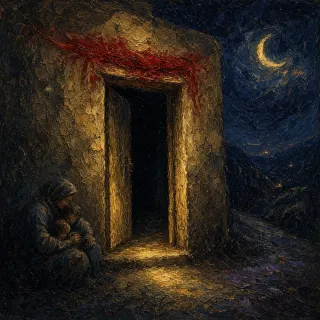
    2. 13:33

      The saying about grasshoppers includes the spies' own perception and their claim about how others saw them. The text does not independently report the inhabitants making that comparison.

    3. 14:9

      The bread image answers the earlier claim that the land devours its inhabitants. Joshua and Caleb reverse the image while grounding their appeal in God's presence.
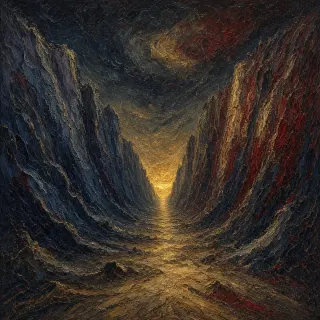
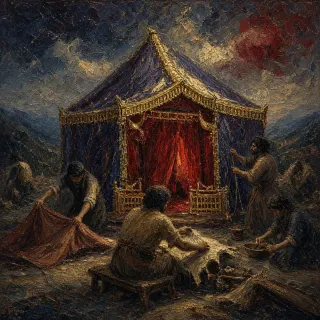
    4. 14:18

      Moses' appeal draws on the divine proclamation in Exodus 34:6-7. He asks on the basis of God's declared character, not the people's innocence.

    5. 14:20-23

      Pardon and exclusion appear together. The passage itself distinguishes forgiveness from removal of every consequence.

    6. 14:44

      The ark and Moses remain in the camp when the people advance. Their absence underscores the warning that this assault is not the commanded entry into the land.

    Numbers 13-14: Kadesh-barnea

    Numbers 13-14

    King James Version · 78 verses

    13:1And the LORD spake unto Moses, saying,

    13:2Send thou men, that they may search the land of Canaan, which I give unto the children of Israel: of every tribe of their fathers shall ye send a man, every one a ruler among them.

    13:3And Moses by the commandment of the LORD sent them from the wilderness of Paran: all those men were heads of the children of Israel.

    13:4And these were their names: of the tribe of Reuben, Shammua the son of Zaccur.

    13:5Of the tribe of Simeon, Shaphat the son of Hori.

    13:6Of the tribe of Judah, Caleb the son of Jephunneh.

    13:7Of the tribe of Issachar, Igal the son of Joseph.

    13:8Of the tribe of Ephraim, Oshea the son of Nun.

    13:9Of the tribe of Benjamin, Palti the son of Raphu.

    13:10Of the tribe of Zebulun, Gaddiel the son of Sodi.

    13:11Of the tribe of Joseph, namely, of the tribe of Manasseh, Gaddi the son of Susi.

    13:12Of the tribe of Dan, Ammiel the son of Gemalli.

    13:13Of the tribe of Asher, Sethur the son of Michael.

    13:14Of the tribe of Naphtali, Nahbi the son of Vophsi.

    13:15Of the tribe of Gad, Geuel the son of Machi.

    13:16These are the names of the men which Moses sent to spy out the land. And Moses called Oshea the son of Nun Jehoshua.

    13:17And Moses sent them to spy out the land of Canaan, and said unto them, Get you up this way southward, and go up into the mountain:

    13:18And see the land, what it is; and the people that dwelleth therein, whether they be strong or weak, few or many;

    13:19And what the land is that they dwell in, whether it be good or bad; and what cities they be that they dwell in, whether in tents, or in strong holds;

    13:20And what the land is, whether it be fat or lean, whether there be wood therein, or not. And be ye of good courage, and bring of the fruit of the land. Now the time was the time of the firstripe grapes.

    13:21So they went up, and searched the land from the wilderness of Zin unto Rehob, as men come to Hamath.

    13:22And they ascended by the south, and came unto Hebron; where Ahiman, Sheshai, and Talmai, the children of Anak, were. (Now Hebron was built seven years before Zoan in Egypt.)

    13:23And they came unto the brook of Eshcol, and cut down from thence a branch with one cluster of grapes, and they bare it between two upon a staff; and they brought of the pomegranates, and of the figs.

    13:24The place was called the brook Eshcol, because of the cluster of grapes which the children of Israel cut down from thence.

    13:25And they returned from searching of the land after forty days.

    13:26And they went and came to Moses, and to Aaron, and to all the congregation of the children of Israel, unto the wilderness of Paran, to Kadesh; and brought back word unto them, and unto all the congregation, and shewed them the fruit of the land.

    13:27And they told him, and said, We came unto the land whither thou sentest us, and surely it floweth with milk and honey; and this is the fruit of it.

    13:28Nevertheless the people be strong that dwell in the land, and the cities are walled, and very great: and moreover we saw the children of Anak there.

    13:29The Amalekites dwell in the land of the south: and the Hittites, and the Jebusites, and the Amorites, dwell in the mountains: and the Canaanites dwell by the sea, and by the coast of Jordan.

    13:30And Caleb stilled the people before Moses, and said, Let us go up at once, and possess it; for we are well able to overcome it.

    13:31But the men that went up with him said, We be not able to go up against the people; for they are stronger than we.

    13:32And they brought up an evil report of the land which they had searched unto the children of Israel, saying, The land, through which we have gone to search it, is a land that eateth up the inhabitants thereof; and all the people that we saw in it are men of a great stature.

    13:33And there we saw the giants, the sons of Anak, which come of the giants: and we were in our own sight as grasshoppers, and so we were in their sight.

    14:1And all the congregation lifted up their voice, and cried; and the people wept that night.

    14:2And all the children of Israel murmured against Moses and against Aaron: and the whole congregation said unto them, Would God that we had died in the land of Egypt! or would God we had died in this wilderness!

    14:3And wherefore hath the LORD brought us unto this land, to fall by the sword, that our wives and our children should be a prey? were it not better for us to return into Egypt?

    14:4And they said one to another, Let us make a captain, and let us return into Egypt.

    14:5Then Moses and Aaron fell on their faces before all the assembly of the congregation of the children of Israel.

    14:6And Joshua the son of Nun, and Caleb the son of Jephunneh, which were of them that searched the land, rent their clothes:

    14:7And they spake unto all the company of the children of Israel, saying, The land, which we passed through to search it, is an exceeding good land.

    14:8If the LORD delight in us, then he will bring us into this land, and give it us; a land which floweth with milk and honey.

    14:9Only rebel not ye against the LORD, neither fear ye the people of the land; for they are bread for us: their defence is departed from them, and the LORD is with us: fear them not.

    14:10But all the congregation bade stone them with stones. And the glory of the LORD appeared in the tabernacle of the congregation before all the children of Israel.

    14:11And the LORD said unto Moses, How long will this people provoke me? and how long will it be ere they believe me, for all the signs which I have shewed among them?

    14:12I will smite them with the pestilence, and disinherit them, and will make of thee a greater nation and mightier than they.

    14:13And Moses said unto the LORD, Then the Egyptians shall hear it, (for thou broughtest up this people in thy might from among them;)

    14:14And they will tell it to the inhabitants of this land: for they have heard that thou LORD art among this people, that thou LORD art seen face to face, and that thy cloud standeth over them, and that thou goest before them, by day time in a pillar of a cloud, and in a pillar of fire by night.

    14:15Now if thou shalt kill all this people as one man, then the nations which have heard the fame of thee will speak, saying,

    14:16Because the LORD was not able to bring this people into the land which he sware unto them, therefore he hath slain them in the wilderness.

    14:17And now, I beseech thee, let the power of my Lord be great, according as thou hast spoken, saying,

    14:18The LORD is longsuffering, and of great mercy, forgiving iniquity and transgression, and by no means clearing the guilty, visiting the iniquity of the fathers upon the children unto the third and fourth generation.

    14:19Pardon, I beseech thee, the iniquity of this people according unto the greatness of thy mercy, and as thou hast forgiven this people, from Egypt even until now.

    14:20And the LORD said, I have pardoned according to thy word:

    14:21But as truly as I live, all the earth shall be filled with the glory of the LORD.

    14:22Because all those men which have seen my glory, and my miracles, which I did in Egypt and in the wilderness, and have tempted me now these ten times, and have not hearkened to my voice;

    14:23Surely they shall not see the land which I sware unto their fathers, neither shall any of them that provoked me see it:

    14:24But my servant Caleb, because he had another spirit with him, and hath followed me fully, him will I bring into the land whereinto he went; and his seed shall possess it.

    14:25(Now the Amalekites and the Canaanites dwelt in the valley.) To morrow turn you, and get you into the wilderness by the way of the Red sea.

    14:26And the LORD spake unto Moses and unto Aaron, saying,

    14:27How long shall I bear with this evil congregation, which murmur against me? I have heard the murmurings of the children of Israel, which they murmur against me.

    14:28Say unto them, As truly as I live, saith the LORD, as ye have spoken in mine ears, so will I do to you:

    14:29Your carcases shall fall in this wilderness; and all that were numbered of you, according to your whole number, from twenty years old and upward, which have murmured against me,

    14:30Doubtless ye shall not come into the land, concerning which I sware to make you dwell therein, save Caleb the son of Jephunneh, and Joshua the son of Nun.

    14:31But your little ones, which ye said should be a prey, them will I bring in, and they shall know the land which ye have despised.

    14:32But as for you, your carcases, they shall fall in this wilderness.

    14:33And your children shall wander in the wilderness forty years, and bear your whoredoms, until your carcases be wasted in the wilderness.

    14:34After the number of the days in which ye searched the land, even forty days, each day for a year, shall ye bear your iniquities, even forty years, and ye shall know my breach of promise.

    14:35I the LORD have said, I will surely do it unto all this evil congregation, that are gathered together against me: in this wilderness they shall be consumed, and there they shall die.

    14:36And the men, which Moses sent to search the land, who returned, and made all the congregation to murmur against him, by bringing up a slander upon the land,

    14:37Even those men that did bring up the evil report upon the land, died by the plague before the LORD.

    14:38But Joshua the son of Nun, and Caleb the son of Jephunneh, which were of the men that went to search the land, lived still.

    14:39And Moses told these sayings unto all the children of Israel: and the people mourned greatly.

    14:40And they rose up early in the morning, and gat them up into the top of the mountain, saying, Lo, we be here, and will go up unto the place which the LORD hath promised: for we have sinned.

    14:41And Moses said, Wherefore now do ye transgress the commandment of the LORD? but it shall not prosper.

    14:42Go not up, for the LORD is not among you; that ye be not smitten before your enemies.

    14:43For the Amalekites and the Canaanites are there before you, and ye shall fall by the sword: because ye are turned away from the LORD, therefore the LORD will not be with you.

    14:44But they presumed to go up unto the hill top: nevertheless the ark of the covenant of the LORD, and Moses, departed not out of the camp.

    14:45Then the Amalekites came down, and the Canaanites which dwelt in that hill, and smote them, and discomfited them, even unto Hormah.

  17. 17

    Numbers 16-17

    Korah

    Korah, Dathan and Abiram and two hundred and fifty princes accuse Moses and Aaron of taking too much upon themselves. Moses falls on his face and sets a test of censers. The earth opens and swallows the households of Dathan and Abiram, fire consumes the two hundred and fifty, and a plague is stayed only when Aaron runs into the congregation with incense. Aaron's rod buds to settle it.

    Dathan and Abiram call Egypt a land flowing with milk and honey. The phrase promised for Israel's destination has been reassigned to the place of forced labor. Their accusation does more than complain about the wilderness; it rewrites the departure itself as a loss inflicted by Moses. Korah's claim works differently, beginning with the holiness of the whole congregation. That calling is real, but Moses answers that it does not authorize every office: the Levites already possess a distinct service, and the demand now reaches for the priesthood. Two hundred and fifty men of recognized standing join the challenge. Their reputation makes the confrontation weightier, not automatically justified.

    Moses does not merely insist that a title settle the matter. The test will disclose whom God chooses, and he declares that the works establishing his commission are not of his own mind. Yet the resulting judgment cannot be reduced to a tidy victory for the proper organization. Dathan and Abiram stand with wives, sons, and little children; the earth opens, and households disappear. Fire consumes the incense-offering company. The account places those people in view. A gloss that mentions only corrected procedure would hide what the passage actually reports.

    Then incense appears again. Aaron runs into the congregation with his censer and stands between the dead and the living, making atonement while the plague stops. The instrument associated with the challengers' deaths is now carried by the priest for the people's preservation. The office under dispute is shown performing its appointed service, not merely enjoying vindication. Aaron's rod then bears buds, blossom, and almonds among lifeless rods. Its authority is established by life that no rival has manufactured. The closing cry from the people is still fear of approaching the sanctuary. A sign has settled the challenge; it has not made holiness casual.

    Verse by verse

    1. 16:9-10

      Moses identifies the demand as a claim to the priesthood beyond the Levites' existing service. The dispute is not whether the congregation has any holiness at all.

    2. 16:13

      Milk and honey ordinarily describes the promised land in the exodus passages. Applying it to Egypt reverses the vocabulary of deliverance.

    3. 16:27

      The wives, sons, and little children of Dathan and Abiram are expressly placed at the tent doors. The account's severity should neither be softened nor expanded with details it does not give.

    4. 16:30

      Quick in this older English means alive. The statement is about entering the pit alive, not merely descending rapidly.

    5. 16:38

      The censers become altar plating because they have been presented before the LORD. Their holy status does not validate the unauthorized offering.

    6. 17:8

      The rod displays buds, flowers, and yielded almonds. The combination provides a visible sign that goes beyond ordinary overnight growth.

    Numbers 16-17: Korah

    Numbers 16-17

    King James Version · 63 verses

    16:1Now Korah, the son of Izhar, the son of Kohath, the son of Levi, and Dathan and Abiram, the sons of Eliab, and On, the son of Peleth, sons of Reuben, took men:

    16:2And they rose up before Moses, with certain of the children of Israel, two hundred and fifty princes of the assembly, famous in the congregation, men of renown:

    16:3And they gathered themselves together against Moses and against Aaron, and said unto them, Ye take too much upon you, seeing all the congregation are holy, every one of them, and the LORD is among them: wherefore then lift ye up yourselves above the congregation of the LORD?

    16:4And when Moses heard it, he fell upon his face:

    16:5And he spake unto Korah and unto all his company, saying, Even to morrow the LORD will shew who are his, and who is holy; and will cause him to come near unto him: even him whom he hath chosen will he cause to come near unto him.

    16:6This do; Take you censers, Korah, and all his company;

    16:7And put fire therein, and put incense in them before the LORD to morrow: and it shall be that the man whom the LORD doth choose, he shall be holy: ye take too much upon you, ye sons of Levi.

    16:8And Moses said unto Korah, Hear, I pray you, ye sons of Levi:

    16:9Seemeth it but a small thing unto you, that the God of Israel hath separated you from the congregation of Israel, to bring you near to himself to do the service of the tabernacle of the LORD, and to stand before the congregation to minister unto them?

    16:10And he hath brought thee near to him, and all thy brethren the sons of Levi with thee: and seek ye the priesthood also?

    16:11For which cause both thou and all thy company are gathered together against the LORD: and what is Aaron, that ye murmur against him?

    16:12And Moses sent to call Dathan and Abiram, the sons of Eliab: which said, We will not come up:

    16:13Is it a small thing that thou hast brought us up out of a land that floweth with milk and honey, to kill us in the wilderness, except thou make thyself altogether a prince over us?

    16:14Moreover thou hast not brought us into a land that floweth with milk and honey, or given us inheritance of fields and vineyards: wilt thou put out the eyes of these men? we will not come up.

    16:15And Moses was very wroth, and said unto the LORD, Respect not thou their offering: I have not taken one ass from them, neither have I hurt one of them.

    16:16And Moses said unto Korah, Be thou and all thy company before the LORD, thou, and they, and Aaron, to morrow:

    16:17And take every man his censer, and put incense in them, and bring ye before the LORD every man his censer, two hundred and fifty censers; thou also, and Aaron, each of you his censer.

    16:18And they took every man his censer, and put fire in them, and laid incense thereon, and stood in the door of the tabernacle of the congregation with Moses and Aaron.

    16:19And Korah gathered all the congregation against them unto the door of the tabernacle of the congregation: and the glory of the LORD appeared unto all the congregation.

    16:20And the LORD spake unto Moses and unto Aaron, saying,

    16:21Separate yourselves from among this congregation, that I may consume them in a moment.

    16:22And they fell upon their faces, and said, O God, the God of the spirits of all flesh, shall one man sin, and wilt thou be wroth with all the congregation?

    16:23And the LORD spake unto Moses, saying,

    16:24Speak unto the congregation, saying, Get you up from about the tabernacle of Korah, Dathan, and Abiram.

    16:25And Moses rose up and went unto Dathan and Abiram; and the elders of Israel followed him.

    16:26And he spake unto the congregation, saying, Depart, I pray you, from the tents of these wicked men, and touch nothing of theirs, lest ye be consumed in all their sins.

    16:27So they gat up from the tabernacle of Korah, Dathan, and Abiram, on every side: and Dathan and Abiram came out, and stood in the door of their tents, and their wives, and their sons, and their little children.

    16:28And Moses said, Hereby ye shall know that the LORD hath sent me to do all these works; for I have not done them of mine own mind.

    16:29If these men die the common death of all men, or if they be visited after the visitation of all men; then the LORD hath not sent me.

    16:30But if the LORD make a new thing, and the earth open her mouth, and swallow them up, with all that appertain unto them, and they go down quick into the pit; then ye shall understand that these men have provoked the LORD.

    16:31And it came to pass, as he had made an end of speaking all these words, that the ground clave asunder that was under them:

    16:32And the earth opened her mouth, and swallowed them up, and their houses, and all the men that appertained unto Korah, and all their goods.

    16:33They, and all that appertained to them, went down alive into the pit, and the earth closed upon them: and they perished from among the congregation.

    16:34And all Israel that were round about them fled at the cry of them: for they said, Lest the earth swallow us up also.

    16:35And there came out a fire from the LORD, and consumed the two hundred and fifty men that offered incense.

    16:36And the LORD spake unto Moses, saying,

    16:37Speak unto Eleazar the son of Aaron the priest, that he take up the censers out of the burning, and scatter thou the fire yonder; for they are hallowed.

    16:38The censers of these sinners against their own souls, let them make them broad plates for a covering of the altar: for they offered them before the LORD, therefore they are hallowed: and they shall be a sign unto the children of Israel.

    16:39And Eleazar the priest took the brasen censers, wherewith they that were burnt had offered; and they were made broad plates for a covering of the altar:

    16:40To be a memorial unto the children of Israel, that no stranger, which is not of the seed of Aaron, come near to offer incense before the LORD; that he be not as Korah, and as his company: as the LORD said to him by the hand of Moses.

    16:41But on the morrow all the congregation of the children of Israel murmured against Moses and against Aaron, saying, Ye have killed the people of the LORD.

    16:42And it came to pass, when the congregation was gathered against Moses and against Aaron, that they looked toward the tabernacle of the congregation: and, behold, the cloud covered it, and the glory of the LORD appeared.

    16:43And Moses and Aaron came before the tabernacle of the congregation.

    16:44And the LORD spake unto Moses, saying,

    16:45Get you up from among this congregation, that I may consume them as in a moment. And they fell upon their faces.

    16:46And Moses said unto Aaron, Take a censer, and put fire therein from off the altar, and put on incense, and go quickly unto the congregation, and make an atonement for them: for there is wrath gone out from the LORD; the plague is begun.

    16:47And Aaron took as Moses commanded, and ran into the midst of the congregation; and, behold, the plague was begun among the people: and he put on incense, and made an atonement for the people.

    16:48And he stood between the dead and the living; and the plague was stayed.

    16:49Now they that died in the plague were fourteen thousand and seven hundred, beside them that died about the matter of Korah.

    16:50And Aaron returned unto Moses unto the door of the tabernacle of the congregation: and the plague was stayed.

    17:1And the LORD spake unto Moses, saying,

    17:2Speak unto the children of Israel, and take of every one of them a rod according to the house of their fathers, of all their princes according to the house of their fathers twelve rods: write thou every man’s name upon his rod.

    17:3And thou shalt write Aaron’s name upon the rod of Levi: for one rod shall be for the head of the house of their fathers.

    17:4And thou shalt lay them up in the tabernacle of the congregation before the testimony, where I will meet with you.

    17:5And it shall come to pass, that the man’s rod, whom I shall choose, shall blossom: and I will make to cease from me the murmurings of the children of Israel, whereby they murmur against you.

    17:6And Moses spake unto the children of Israel, and every one of their princes gave him a rod apiece, for each prince one, according to their fathers’ houses, even twelve rods: and the rod of Aaron was among their rods.

    17:7And Moses laid up the rods before the LORD in the tabernacle of witness.

    17:8And it came to pass, that on the morrow Moses went into the tabernacle of witness; and, behold, the rod of Aaron for the house of Levi was budded, and brought forth buds, and bloomed blossoms, and yielded almonds.

    17:9And Moses brought out all the rods from before the LORD unto all the children of Israel: and they looked, and took every man his rod.

    17:10And the LORD said unto Moses, Bring Aaron’s rod again before the testimony, to be kept for a token against the rebels; and thou shalt quite take away their murmurings from me, that they die not.

    17:11And Moses did so: as the LORD commanded him, so did he.

    17:12And the children of Israel spake unto Moses, saying, Behold, we die, we perish, we all perish.

    17:13Whosoever cometh any thing near unto the tabernacle of the LORD shall die: shall we be consumed with dying?

  18. 18

    Numbers 20

    Meribah

    Miriam dies at Kadesh. The people strive for water, and God tells Moses to take the rod and speak to the rock. Moses says, hear now, ye rebels, must we fetch you water out of this rock, and strikes it twice. Water comes, but God says: because ye believed me not, to sanctify me in the eyes of the children of Israel, ye shall not bring this congregation into the land. Aaron dies on Hor that year.

    The water comes, and Moses is still judged. That combination is the passage's sharpest refusal of an easy conclusion. A visible result does not certify every word and action of the person through whom it arrives. At Horeb in Exodus 17, Moses was commanded to strike the rock; here he is commanded to speak to it. He strikes twice and addresses the people as rebels. God's explanation concerns unbelief and a failure to sanctify him before Israel, and includes Aaron as well as Moses. The precise contribution of the blows and the speech has been debated, but the stated verdict must not be replaced by a diagnosis the passage never gives.

    Miriam's death opens the chapter, and Aaron's closes it. Their placement gives the water dispute a setting of losses without authorizing an invented explanation that grief caused Moses' action. The Book of Numbers does not say that. It lets the deaths and the failure stand together. Between them comes Edom's refusal to allow passage. Moses' appeal names Israel as Edom's brother, recalling the relationship of Jacob and Esau, but kinship does not open the road. Even the offered payment for water fails to secure permission.

    Aaron's death includes an act that can be seen from close range: Moses removes his brother's garments and puts them on Eleazar. The priesthood continues while the priest's life ends. Three men go up the mountain; Moses and Eleazar come down. The congregation mourns Aaron for thirty days. No triumphant account of succession can make that subtraction disappear. The chapter has provided water, preserved the journey, and continued the priestly office. It has also left Moses without his brother and sister, and without permission to lead the people across the final boundary.

    Verse by verse

    1. 20:1

      Miriam's death and burial receive one verse. The brevity of the notice supplies no evidence that her role in Israel was unimportant.

    2. 20:8

      The command is to speak to the rock before the congregation. It differs from the instruction to strike in Exodus 17:6.

    3. 20:12

      God identifies the failure as unbelief and failure to sanctify him. Psalm 106:32-33 also recalls Moses speaking unadvisedly with his lips; interpretations differ over the exact relationship of speech and blows.

    4. 20:14

      Thy brother Israel appeals to the relationship between Jacob, named Israel, and Esau, associated with Edom. The appeal does not mean that the two peoples share one government.

    5. 20:26-28

      Aaron's garments are transferred to Eleazar before Aaron dies. The visible continuity of the office is placed beside the irreversible loss of its previous holder.

    Numbers 20: Meribah

    Numbers 20

    King James Version · 29 verses

    20:1Then came the children of Israel, even the whole congregation, into the desert of Zin in the first month: and the people abode in Kadesh; and Miriam died there, and was buried there.

    20:2And there was no water for the congregation: and they gathered themselves together against Moses and against Aaron.

    20:3And the people chode with Moses, and spake, saying, Would God that we had died when our brethren died before the LORD!

    20:4And why have ye brought up the congregation of the LORD into this wilderness, that we and our cattle should die there?

    20:5And wherefore have ye made us to come up out of Egypt, to bring us in unto this evil place? it is no place of seed, or of figs, or of vines, or of pomegranates; neither is there any water to drink.

    20:6And Moses and Aaron went from the presence of the assembly unto the door of the tabernacle of the congregation, and they fell upon their faces: and the glory of the LORD appeared unto them.

    20:7And the LORD spake unto Moses, saying,

    20:8Take the rod, and gather thou the assembly together, thou, and Aaron thy brother, and speak ye unto the rock before their eyes; and it shall give forth his water, and thou shalt bring forth to them water out of the rock: so thou shalt give the congregation and their beasts drink.

    20:9And Moses took the rod from before the LORD, as he commanded him.

    20:10And Moses and Aaron gathered the congregation together before the rock, and he said unto them, Hear now, ye rebels; must we fetch you water out of this rock?

    20:11And Moses lifted up his hand, and with his rod he smote the rock twice: and the water came out abundantly, and the congregation drank, and their beasts also.

    20:12And the LORD spake unto Moses and Aaron, Because ye believed me not, to sanctify me in the eyes of the children of Israel, therefore ye shall not bring this congregation into the land which I have given them.

    20:13This is the water of Meribah; because the children of Israel strove with the LORD, and he was sanctified in them.

    20:14And Moses sent messengers from Kadesh unto the king of Edom, Thus saith thy brother Israel, Thou knowest all the travail that hath befallen us:

    20:15How our fathers went down into Egypt, and we have dwelt in Egypt a long time; and the Egyptians vexed us, and our fathers:

    20:16And when we cried unto the LORD, he heard our voice, and sent an angel, and hath brought us forth out of Egypt: and, behold, we are in Kadesh, a city in the uttermost of thy border:

    20:17Let us pass, I pray thee, through thy country: we will not pass through the fields, or through the vineyards, neither will we drink of the water of the wells: we will go by the king’s high way, we will not turn to the right hand nor to the left, until we have passed thy borders.

    20:18And Edom said unto him, Thou shalt not pass by me, lest I come out against thee with the sword.

    20:19And the children of Israel said unto him, We will go by the high way: and if I and my cattle drink of thy water, then I will pay for it: I will only, without doing any thing else, go through on my feet.

    20:20And he said, Thou shalt not go through. And Edom came out against him with much people, and with a strong hand.

    20:21Thus Edom refused to give Israel passage through his border: wherefore Israel turned away from him.

    20:22And the children of Israel, even the whole congregation, journeyed from Kadesh, and came unto mount Hor.

    20:23And the LORD spake unto Moses and Aaron in mount Hor, by the coast of the land of Edom, saying,

    20:24Aaron shall be gathered unto his people: for he shall not enter into the land which I have given unto the children of Israel, because ye rebelled against my word at the water of Meribah.

    20:25Take Aaron and Eleazar his son, and bring them up unto mount Hor:

    20:26And strip Aaron of his garments, and put them upon Eleazar his son: and Aaron shall be gathered unto his people, and shall die there.

    20:27And Moses did as the LORD commanded: and they went up into mount Hor in the sight of all the congregation.

    20:28And Moses stripped Aaron of his garments, and put them upon Eleazar his son; and Aaron died there in the top of the mount: and Moses and Eleazar came down from the mount.

    20:29And when all the congregation saw that Aaron was dead, they mourned for Aaron thirty days, even all the house of Israel.

  19. 19

    Numbers 21:4-9

    The serpent of brass

    The people speak against God and Moses on the way round Edom, and fiery serpents bite them. They ask Moses to pray, and he makes a serpent of brass and sets it on a pole, and everyone bitten who looks on it lives.

    The people ask for the serpents to be taken away. The recorded answer gives a means of living after a bite. That distinction deserves to remain visible. Numbers 21:8-9 does not say that the serpents immediately disappear; it describes the bitten person looking and living. The provision meets death inside the danger, rather than first providing an account of a completely safe camp. Moses' intercession is equally spare. The people confess speaking against God and against him, ask him to pray, and he prays. There is no recorded demand that they first repair his wounded standing.

    Their complaint has its own revealing contradiction: there is no bread, followed by disgust at this light bread. Food is present, but it is treated as intolerable. The Book of Numbers does not need to invent a private motive when the spoken complaint already shows the rejection. The remedy is then displayed openly on a pole. Nothing in the command attributes an independent power to the metal; life is attached to the response God appoints. That makes the later destruction of the object in 2 Kings 18:4 especially important. Israel had begun burning incense to it, turning the instrument into a recipient of worship. The Bible preserves both its authorized making and its authorized destruction. John 3:14-15 gives the event another explicit connection when Jesus speaks of the Son of man being lifted up. The comparison comes from Jesus' own words, not from guessing at every feature of a snake.

    Verse by verse

    1. 21:4

      The detour around Edom follows the refused passage in Numbers 20. The opening places the complaint within a lengthened journey, not an unexplained change of destination.

    2. 21:5

      Light bread is dismissive language for the food they have. The complaint is not evidence that the camp literally possesses no food at all.

    3. 21:6

      Fiery translates a Hebrew term associated with burning. The verse describes lethal serpents and does not require wings or a fantastical anatomy.

    4. 21:9

      Brass is the KJV's term for the metal; the Hebrew nehosheth can denote copper or copper alloy. The passage does not specify a modern metallurgical formula.

    Numbers 21:4-9

    King James Version · 6 verses

    21:4And they journeyed from mount Hor by the way of the Red sea, to compass the land of Edom: and the soul of the people was much discouraged because of the way.

    21:5And the people spake against God, and against Moses, Wherefore have ye brought us up out of Egypt to die in the wilderness? for there is no bread, neither is there any water; and our soul loatheth this light bread.

    21:6And the LORD sent fiery serpents among the people, and they bit the people; and much people of Israel died.

    21:7Therefore the people came to Moses, and said, We have sinned, for we have spoken against the LORD, and against thee; pray unto the LORD, that he take away the serpents from us. And Moses prayed for the people.

    21:8And the LORD said unto Moses, Make thee a fiery serpent, and set it upon a pole: and it shall come to pass, that every one that is bitten, when he looketh upon it, shall live.

    21:9And Moses made a serpent of brass, and put it upon a pole, and it came to pass, that if a serpent had bitten any man, when he beheld the serpent of brass, he lived.

    Numbers 21:4-9: The serpent of brass
  20. 20

    Numbers 27:12-23

    A man over the congregation

    Told he will see the land and die, Moses asks the LORD, the God of the spirits of all flesh, to set a man over the congregation so they are not as sheep without a shepherd. God names Joshua, and Moses lays his hands on him before Eleazar and all the people.

    Moses answers the announcement of his approaching death by asking for a shepherd. He does not begin this reply with a request to extend his term. The concern he states is what will happen to the congregation when he is no longer there to lead it. Going out and coming in, leading out and bringing in, give the office movement and responsibility. This is not merely a vacant ceremonial position. A people facing the next stage of their journey needs someone whose leadership reaches the whole passage from departure to return.

    Joshua is described as a man in whom is the spirit before Moses lays a hand on him. The ceremony does not create suitability out of nothing; it publicly commissions the person God names. Moses is to place some of his honor upon him before Eleazar and the congregation, so the people will recognize the new authority. Yet the instructions do not simply reproduce Moses' own position. Joshua will stand before the priest, and guidance will be sought through the judgment of Urim. The successor is authorized without becoming an exact duplicate of the man he succeeds.

    The closing obedience is quiet and complete. Moses takes Joshua, presents him, lays his hands on him, and gives the charge. The man who has repeatedly stood between God and the congregation now helps establish how the congregation will be led without him. His sons are not proposed in the exchange, but the text offers no private conversation about their exclusion. Its attention remains on the flock. Moses' last service includes making sure that his absence will not leave it leaderless.

    Verse by verse

    1. 27:12

      Abarim names the mountain region; Deuteronomy 32:49 identifies Nebo within it. This instruction promises sight of the land, not permission to enter it.

    2. 27:14

      The reference to the wilderness of Zin and Meribah points back to Numbers 20:12-13. The stated reason for exclusion is not erased during the succession arrangements.

    3. 27:18

      Joshua already has the spirit when he is named. Deuteronomy 34:9 later connects his fullness of the spirit of wisdom with Moses' laying on of hands.

    4. 27:20

      Some of Moses' honor is conferred, not a declaration that every feature of his office will be duplicated. Joshua's public authorization is explicit.

    5. 27:21

      Urim is associated with priestly inquiry. The passage does not describe its physical form or provide enough detail to reconstruct its exact operation.

    Numbers 27:12-23

    King James Version · 12 verses

    27:12And the LORD said unto Moses, Get thee up into this mount Abarim, and see the land which I have given unto the children of Israel.

    27:13And when thou hast seen it, thou also shalt be gathered unto thy people, as Aaron thy brother was gathered.

    27:14For ye rebelled against my commandment in the desert of Zin, in the strife of the congregation, to sanctify me at the water before their eyes: that is the water of Meribah in Kadesh in the wilderness of Zin.

    27:15And Moses spake unto the LORD, saying,

    27:16Let the LORD, the God of the spirits of all flesh, set a man over the congregation,

    27:17Which may go out before them, and which may go in before them, and which may lead them out, and which may bring them in; that the congregation of the LORD be not as sheep which have no shepherd.

    27:18And the LORD said unto Moses, Take thee Joshua the son of Nun, a man in whom is the spirit, and lay thine hand upon him;

    27:19And set him before Eleazar the priest, and before all the congregation; and give him a charge in their sight.

    27:20And thou shalt put some of thine honour upon him, that all the congregation of the children of Israel may be obedient.

    27:21And he shall stand before Eleazar the priest, who shall ask counsel for him after the judgment of Urim before the LORD: at his word shall they go out, and at his word they shall come in, both he, and all the children of Israel with him, even all the congregation.

    27:22And Moses did as the LORD commanded him: and he took Joshua, and set him before Eleazar the priest, and before all the congregation:

    27:23And he laid his hands upon him, and gave him a charge, as the LORD commanded by the hand of Moses.

    Numbers 27:12-23: A man over the congregation
  21. 21

    Deuteronomy 31-33

    The last words

    On the plains of Moab he preaches the law again to the generation that will cross, writes it in a book to be kept by the ark, teaches a song as a witness against them, and blesses each tribe. Moses is a hundred and twenty; his eye is not dim, nor his natural force abated.

    Moses prepares for a time when no one will be able to call him over to explain the law. The answer is not a sealed archive. At the appointed seven-year reading, men, women, children, and the stranger are to hear it together. The instruction deliberately includes those who have not known it. The written text is to become spoken language in the ears of a whole community, repeatedly. Authority will not depend on keeping Moses physically present or on making the law the private possession of its custodians.

    The song gives memory another form. God commands it to be taught and placed in the people's mouths as a witness, including against them. Its persistence will expose the gap between what Israel has been taught and what it later does. The imagery is vigorous enough to carry that burden: God as the Rock, a people found in a desert, an eagle attending its young, and Jeshurun grown fat and kicking. Abundance itself becomes the setting of forgetfulness. The song does not flatter its singers. Nor is it merely a threat: its account of divine judgment ends with the vindication and mercy named in 32:43. Moses calls these words Israel's life, not an ornamental addition to it.

    Then he blesses the tribes. The man who knows their rebellion does not let accusation become his only final register. The blessings name land, labor, strength, dew, grain, mountains, and security. In the blessing of Joseph comes a particularly intimate return: the good will of him that dwelt in the bush. The call in the wilderness remains within the last spoken hopes for the land. Moses will not enter that land himself, yet his words linger over its abundance. The farewell joins warning and blessing without pretending they are the same thing. His feet will stop before the inheritance. His care for Israel does not stop there.

    Verse by verse

    1. 31:10-13

      The public reading occurs in the year of release at the feast of tabernacles. Its named audience includes the resident stranger and children, not only heads of households.

    2. 31:19-21

      The song is expressly appointed as a witness. Its anticipated survival in the mouths of descendants gives Israel a continuing testimony even after disobedience.

    3. 31:26

      The book of the law is placed in the side of the ark, meaning beside it, while Deuteronomy 10:5 places the stone tablets inside the ark. These are distinct placements.

    4. 32:15

      Jeshurun is a name associated with uprightness, used here with biting irony as the well-fed people kick against their maker. It also appears in the blessing in 33:5 and 33:26.

    5. 32:21

      Romans 10:19 quotes the language about provoking Israel by a people in Deuteronomy 32:21. Romans 15:10 likewise returns to 32:43, making the song important to Paul's discussion of the nations.

    6. 33:16

      The reference to the one who dwelt in the bush recalls Exodus 3. Moses' blessing connects the land's gifts to the God who commissioned him before the departure from Egypt.

    Deuteronomy 31-33: The last words

    Deuteronomy 31-33

    King James Version · 111 verses

    31:1And Moses went and spake these words unto all Israel.

    31:2And he said unto them, I am an hundred and twenty years old this day; I can no more go out and come in: also the LORD hath said unto me, Thou shalt not go over this Jordan.

    31:3The LORD thy God, he will go over before thee, and he will destroy these nations from before thee, and thou shalt possess them: and Joshua, he shall go over before thee, as the LORD hath said.

    31:4And the LORD shall do unto them as he did to Sihon and to Og, kings of the Amorites, and unto the land of them, whom he destroyed.

    31:5And the LORD shall give them up before your face, that ye may do unto them according unto all the commandments which I have commanded you.

    31:6Be strong and of a good courage, fear not, nor be afraid of them: for the LORD thy God, he it is that doth go with thee; he will not fail thee, nor forsake thee.

    31:7And Moses called unto Joshua, and said unto him in the sight of all Israel, Be strong and of a good courage: for thou must go with this people unto the land which the LORD hath sworn unto their fathers to give them; and thou shalt cause them to inherit it.

    31:8And the LORD, he it is that doth go before thee; he will be with thee, he will not fail thee, neither forsake thee: fear not, neither be dismayed.

    31:9And Moses wrote this law, and delivered it unto the priests the sons of Levi, which bare the ark of the covenant of the LORD, and unto all the elders of Israel.

    31:10And Moses commanded them, saying, At the end of every seven years, in the solemnity of the year of release, in the feast of tabernacles,

    31:11When all Israel is come to appear before the LORD thy God in the place which he shall choose, thou shalt read this law before all Israel in their hearing.

    31:12Gather the people together, men, and women, and children, and thy stranger that is within thy gates, that they may hear, and that they may learn, and fear the LORD your God, and observe to do all the words of this law:

    31:13And that their children, which have not known any thing, may hear, and learn to fear the LORD your God, as long as ye live in the land whither ye go over Jordan to possess it.

    31:14And the LORD said unto Moses, Behold, thy days approach that thou must die: call Joshua, and present yourselves in the tabernacle of the congregation, that I may give him a charge. And Moses and Joshua went, and presented themselves in the tabernacle of the congregation.

    31:15And the LORD appeared in the tabernacle in a pillar of a cloud: and the pillar of the cloud stood over the door of the tabernacle.

    31:16And the LORD said unto Moses, Behold, thou shalt sleep with thy fathers; and this people will rise up, and go a whoring after the gods of the strangers of the land, whither they go to be among them, and will forsake me, and break my covenant which I have made with them.

    31:17Then my anger shall be kindled against them in that day, and I will forsake them, and I will hide my face from them, and they shall be devoured, and many evils and troubles shall befall them; so that they will say in that day, Are not these evils come upon us, because our God is not among us?

    31:18And I will surely hide my face in that day for all the evils which they shall have wrought, in that they are turned unto other gods.

    31:19Now therefore write ye this song for you, and teach it the children of Israel: put it in their mouths, that this song may be a witness for me against the children of Israel.

    31:20For when I shall have brought them into the land which I sware unto their fathers, that floweth with milk and honey; and they shall have eaten and filled themselves, and waxen fat; then will they turn unto other gods, and serve them, and provoke me, and break my covenant.

    31:21And it shall come to pass, when many evils and troubles are befallen them, that this song shall testify against them as a witness; for it shall not be forgotten out of the mouths of their seed: for I know their imagination which they go about, even now, before I have brought them into the land which I sware.

    31:22Moses therefore wrote this song the same day, and taught it the children of Israel.

    31:23And he gave Joshua the son of Nun a charge, and said, Be strong and of a good courage: for thou shalt bring the children of Israel into the land which I sware unto them: and I will be with thee.

    31:24And it came to pass, when Moses had made an end of writing the words of this law in a book, until they were finished,

    31:25That Moses commanded the Levites, which bare the ark of the covenant of the LORD, saying,

    31:26Take this book of the law, and put it in the side of the ark of the covenant of the LORD your God, that it may be there for a witness against thee.

    31:27For I know thy rebellion, and thy stiff neck: behold, while I am yet alive with you this day, ye have been rebellious against the LORD; and how much more after my death?

    31:28Gather unto me all the elders of your tribes, and your officers, that I may speak these words in their ears, and call heaven and earth to record against them.

    31:29For I know that after my death ye will utterly corrupt yourselves, and turn aside from the way which I have commanded you; and evil will befall you in the latter days; because ye will do evil in the sight of the LORD, to provoke him to anger through the work of your hands.

    31:30And Moses spake in the ears of all the congregation of Israel the words of this song, until they were ended.

    32:1Give ear, O ye heavens, and I will speak; and hear, O earth, the words of my mouth.

    32:2My doctrine shall drop as the rain, my speech shall distil as the dew, as the small rain upon the tender herb, and as the showers upon the grass:

    32:3Because I will publish the name of the LORD: ascribe ye greatness unto our God.

    32:4He is the Rock, his work is perfect: for all his ways are judgment: a God of truth and without iniquity, just and right is he.

    32:5They have corrupted themselves, their spot is not the spot of his children: they are a perverse and crooked generation.

    32:6Do ye thus requite the LORD, O foolish people and unwise? is not he thy father that hath bought thee? hath he not made thee, and established thee?

    32:7Remember the days of old, consider the years of many generations: ask thy father, and he will shew thee; thy elders, and they will tell thee.

    32:8When the most High divided to the nations their inheritance, when he separated the sons of Adam, he set the bounds of the people according to the number of the children of Israel.

    32:9For the LORD’s portion is his people; Jacob is the lot of his inheritance.

    32:10He found him in a desert land, and in the waste howling wilderness; he led him about, he instructed him, he kept him as the apple of his eye.

    32:11As an eagle stirreth up her nest, fluttereth over her young, spreadeth abroad her wings, taketh them, beareth them on her wings:

    32:12So the LORD alone did lead him, and there was no strange god with him.

    32:13He made him ride on the high places of the earth, that he might eat the increase of the fields; and he made him to suck honey out of the rock, and oil out of the flinty rock;

    32:14Butter of kine, and milk of sheep, with fat of lambs, and rams of the breed of Bashan, and goats, with the fat of kidneys of wheat; and thou didst drink the pure blood of the grape.

    32:15But Jeshurun waxed fat, and kicked: thou art waxen fat, thou art grown thick, thou art covered with fatness; then he forsook God which made him, and lightly esteemed the Rock of his salvation.

    32:16They provoked him to jealousy with strange gods, with abominations provoked they him to anger.

    32:17They sacrificed unto devils, not to God; to gods whom they knew not, to new gods that came newly up, whom your fathers feared not.

    32:18Of the Rock that begat thee thou art unmindful, and hast forgotten God that formed thee.

    32:19And when the LORD saw it, he abhorred them, because of the provoking of his sons, and of his daughters.

    32:20And he said, I will hide my face from them, I will see what their end shall be: for they are a very froward generation, children in whom is no faith.

    32:21They have moved me to jealousy with that which is not God; they have provoked me to anger with their vanities: and I will move them to jealousy with those which are not a people; I will provoke them to anger with a foolish nation.

    32:22For a fire is kindled in mine anger, and shall burn unto the lowest hell, and shall consume the earth with her increase, and set on fire the foundations of the mountains.

    32:23I will heap mischiefs upon them; I will spend mine arrows upon them.

    32:24They shall be burnt with hunger, and devoured with burning heat, and with bitter destruction: I will also send the teeth of beasts upon them, with the poison of serpents of the dust.

    32:25The sword without, and terror within, shall destroy both the young man and the virgin, the suckling also with the man of gray hairs.

    32:26I said, I would scatter them into corners, I would make the remembrance of them to cease from among men:

    32:27Were it not that I feared the wrath of the enemy, lest their adversaries should behave themselves strangely, and lest they should say, Our hand is high, and the LORD hath not done all this.

    32:28For they are a nation void of counsel, neither is there any understanding in them.

    32:29O that they were wise, that they understood this, that they would consider their latter end!

    32:30How should one chase a thousand, and two put ten thousand to flight, except their Rock had sold them, and the LORD had shut them up?

    32:31For their rock is not as our Rock, even our enemies themselves being judges.

    32:32For their vine is of the vine of Sodom, and of the fields of Gomorrah: their grapes are grapes of gall, their clusters are bitter:

    32:33Their wine is the poison of dragons, and the cruel venom of asps.

    32:34Is not this laid up in store with me, and sealed up among my treasures?

    32:35To me belongeth vengeance, and recompence; their foot shall slide in due time: for the day of their calamity is at hand, and the things that shall come upon them make haste.

    32:36For the LORD shall judge his people, and repent himself for his servants, when he seeth that their power is gone, and there is none shut up, or left.

    32:37And he shall say, Where are their gods, their rock in whom they trusted,

    32:38Which did eat the fat of their sacrifices, and drank the wine of their drink offerings? let them rise up and help you, and be your protection.

    32:39See now that I, even I, am he, and there is no god with me: I kill, and I make alive; I wound, and I heal: neither is there any that can deliver out of my hand.

    32:40For I lift up my hand to heaven, and say, I live for ever.

    32:41If I whet my glittering sword, and mine hand take hold on judgment; I will render vengeance to mine enemies, and will reward them that hate me.

    32:42I will make mine arrows drunk with blood, and my sword shall devour flesh; and that with the blood of the slain and of the captives, from the beginning of revenges upon the enemy.

    32:43Rejoice, O ye nations, with his people: for he will avenge the blood of his servants, and will render vengeance to his adversaries, and will be merciful unto his land, and to his people.

    32:44And Moses came and spake all the words of this song in the ears of the people, he, and Hoshea the son of Nun.

    32:45And Moses made an end of speaking all these words to all Israel:

    32:46And he said unto them, Set your hearts unto all the words which I testify among you this day, which ye shall command your children to observe to do, all the words of this law.

    32:47For it is not a vain thing for you; because it is your life: and through this thing ye shall prolong your days in the land, whither ye go over Jordan to possess it.

    32:48And the LORD spake unto Moses that selfsame day, saying,

    32:49Get thee up into this mountain Abarim, unto mount Nebo, which is in the land of Moab, that is over against Jericho; and behold the land of Canaan, which I give unto the children of Israel for a possession:

    32:50And die in the mount whither thou goest up, and be gathered unto thy people; as Aaron thy brother died in mount Hor, and was gathered unto his people:

    32:51Because ye trespassed against me among the children of Israel at the waters of Meribah-Kadesh, in the wilderness of Zin; because ye sanctified me not in the midst of the children of Israel.

    32:52Yet thou shalt see the land before thee; but thou shalt not go thither unto the land which I give the children of Israel.

    33:1And this is the blessing, wherewith Moses the man of God blessed the children of Israel before his death.

    33:2And he said, The LORD came from Sinai, and rose up from Seir unto them; he shined forth from mount Paran, and he came with ten thousands of saints: from his right hand went a fiery law for them.

    33:3Yea, he loved the people; all his saints are in thy hand: and they sat down at thy feet; every one shall receive of thy words.

    33:4Moses commanded us a law, even the inheritance of the congregation of Jacob.

    33:5And he was king in Jeshurun, when the heads of the people and the tribes of Israel were gathered together.

    33:6Let Reuben live, and not die; and let not his men be few.

    33:7And this is the blessing of Judah: and he said, Hear, LORD, the voice of Judah, and bring him unto his people: let his hands be sufficient for him; and be thou an help to him from his enemies.

    33:8And of Levi he said, Let thy Thummim and thy Urim be with thy holy one, whom thou didst prove at Massah, and with whom thou didst strive at the waters of Meribah;

    33:9Who said unto his father and to his mother, I have not seen him; neither did he acknowledge his brethren, nor knew his own children: for they have observed thy word, and kept thy covenant.

    33:10They shall teach Jacob thy judgments, and Israel thy law: they shall put incense before thee, and whole burnt sacrifice upon thine altar.

    33:11Bless, LORD, his substance, and accept the work of his hands: smite through the loins of them that rise against him, and of them that hate him, that they rise not again.

    33:12And of Benjamin he said, The beloved of the LORD shall dwell in safety by him; and the LORD shall cover him all the day long, and he shall dwell between his shoulders.

    33:13And of Joseph he said, Blessed of the LORD be his land, for the precious things of heaven, for the dew, and for the deep that coucheth beneath,

    33:14And for the precious fruits brought forth by the sun, and for the precious things put forth by the moon,

    33:15And for the chief things of the ancient mountains, and for the precious things of the lasting hills,

    33:16And for the precious things of the earth and fulness thereof, and for the good will of him that dwelt in the bush: let the blessing come upon the head of Joseph, and upon the top of the head of him that was separated from his brethren.

    33:17His glory is like the firstling of his bullock, and his horns are like the horns of unicorns: with them he shall push the people together to the ends of the earth: and they are the ten thousands of Ephraim, and they are the thousands of Manasseh.

    33:18And of Zebulun he said, Rejoice, Zebulun, in thy going out; and, Issachar, in thy tents.

    33:19They shall call the people unto the mountain; there they shall offer sacrifices of righteousness: for they shall suck of the abundance of the seas, and of treasures hid in the sand.

    33:20And of Gad he said, Blessed be he that enlargeth Gad: he dwelleth as a lion, and teareth the arm with the crown of the head.

    33:21And he provided the first part for himself, because there, in a portion of the lawgiver, was he seated; and he came with the heads of the people, he executed the justice of the LORD, and his judgments with Israel.

    33:22And of Dan he said, Dan is a lion’s whelp: he shall leap from Bashan.

    33:23And of Naphtali he said, O Naphtali, satisfied with favour, and full with the blessing of the LORD: possess thou the west and the south.

    33:24And of Asher he said, Let Asher be blessed with children; let him be acceptable to his brethren, and let him dip his foot in oil.

    33:25Thy shoes shall be iron and brass; and as thy days, so shall thy strength be.

    33:26There is none like unto the God of Jeshurun, who rideth upon the heaven in thy help, and in his excellency on the sky.

    33:27The eternal God is thy refuge, and underneath are the everlasting arms: and he shall thrust out the enemy from before thee; and shall say, Destroy them.

    33:28Israel then shall dwell in safety alone: the fountain of Jacob shall be upon a land of corn and wine; also his heavens shall drop down dew.

    33:29Happy art thou, O Israel: who is like unto thee, O people saved by the LORD, the shield of thy help, and who is the sword of thy excellency! and thine enemies shall be found liars unto thee; and thou shalt tread upon their high places.

  22. 22

    Deuteronomy 34

    Nebo

    He goes up from the plains of Moab to the top of Pisgah, and the LORD shows him all the land: Gilead unto Dan, Naphtali, Ephraim and Manasseh, Judah unto the utmost sea, the south, and the plain of Jericho. This is the land I sware; I have caused thee to see it, but thou shalt not go over. He dies there, the LORD buries him, and Israel weeps thirty days.

    Moses' eyes are not dim. The notice refuses to make his death merely the predictable result of a body that can no longer carry on. At 120, his sight and vigor remain; the boundary is the one God has spoken. The land is shown to him as the land promised to Abraham, Isaac, and Jacob, and the permission to see is distinguished sharply from permission to cross. Nothing in the final view withdraws the judgment at Meribah. Nothing in that judgment removes the title given at his death: the servant of the LORD.

    The burial is unlike the public funerals a reader might expect for the man whose actions have filled these books. He is buried in Moab, and no one knows the grave. The account does not identify a monument, appoint a pilgrimage, or explain God's reason for withholding the place. It records thirty days of mourning and then recognizes Joshua's readiness and the people's obedience. The work continues without treating Moses as replaceable. A successor can be fully commissioned while his predecessor remains without an equal in the particular relationship the closing verses describe.

    The final distinction is phrased from God's side: whom the LORD knew face to face. It is not simply an epitaph announcing how much Moses knew about God. The man has been known, addressed, sent, corrected, and entrusted with signs before Egypt and all Israel. His failure is not edited out, and his service is not reduced to that failure. The Book of Deuteronomy closes with the mighty acts witnessed by a people, but the deepest measure of the man is a relationship that no crowd could confer. The servant dies outside the land. He does not die unnamed by God.

    Verse by verse

    1. 34:4

      The land is identified through the oath to Abraham, Isaac, and Jacob. The final view concerns a promise older than Moses, not territory first promised to him personally.

    2. 34:6

      The unnamed subject of he buried him is traditionally understood as the LORD. Jude 9 mentions a dispute over Moses' body but does not disclose the grave or supply a complete burial account.

    3. 34:7

      Acts 7 gives forty years before Moses' first intervention and another forty before the bush. Exodus 7:7 gives his age as eighty before Pharaoh; Deuteronomy gives the final age of 120.

    4. 34:9

      Joshua's commission is connected explicitly with Moses' laying on of hands, described in Numbers 27:18-23. The recognition of Joshua does not cancel the following distinction accorded to Moses.

    5. 34:10

      Face to face recalls the direct communication in Exodus 33:11 and Numbers 12:8. Acts 3:22 quotes Deuteronomy 18:15 concerning a prophet like Moses, extending the canonical significance of his office beyond Joshua's succession.

    Deuteronomy 34

    King James Version · 12 verses

    34:1And Moses went up from the plains of Moab unto the mountain of Nebo, to the top of Pisgah, that is over against Jericho. And the LORD shewed him all the land of Gilead, unto Dan,

    34:2And all Naphtali, and the land of Ephraim, and Manasseh, and all the land of Judah, unto the utmost sea,

    34:3And the south, and the plain of the valley of Jericho, the city of palm trees, unto Zoar.

    34:4And the LORD said unto him, This is the land which I sware unto Abraham, unto Isaac, and unto Jacob, saying, I will give it unto thy seed: I have caused thee to see it with thine eyes, but thou shalt not go over thither.

    34:5So Moses the servant of the LORD died there in the land of Moab, according to the word of the LORD.

    34:6And he buried him in a valley in the land of Moab, over against Beth-peor: but no man knoweth of his sepulchre unto this day.

    34:7And Moses was an hundred and twenty years old when he died: his eye was not dim, nor his natural force abated.

    34:8And the children of Israel wept for Moses in the plains of Moab thirty days: so the days of weeping and mourning for Moses were ended.

    34:9And Joshua the son of Nun was full of the spirit of wisdom; for Moses had laid his hands upon him: and the children of Israel hearkened unto him, and did as the LORD commanded Moses.

    34:10And there arose not a prophet since in Israel like unto Moses, whom the LORD knew face to face,

    34:11In all the signs and the wonders, which the LORD sent him to do in the land of Egypt to Pharaoh, and to all his servants, and to all his land,

    34:12And in all that mighty hand, and in all the great terror which Moses shewed in the sight of all Israel.

    Deuteronomy 34: Nebo

The people, the places and the rest of Scripture.

Reading Moses closely

The people he dealt with

God is the person Moses deals with most, and the text says so in a way it says of no one else: the LORD spake unto Moses face to face, as a man speaketh unto his friend. Their conversations are argument as often as command. Moses objects at the bush, complains in Exodus 5, refuses to go on without God's presence in Exodus 33, asks to see his glory, pleads for the people at the calf and at Kadesh, and asks to be let across the Jordan and is told to speak no more of it. God calls him my servant, faithful in all mine house.

Aaron is his mouth, three years older, the one who makes the calf and is not punished for it, and the priest whose garments Moses strips from him on Hor. Miriam watches the basket, leads the song, and turns against him over his wife; he prays for her. Zipporah saves his life with a flint knife and then disappears from the account except for one visit. Jethro takes him in, gives him a wife, and gives him the shape of Israel's courts. Pharaoh is the enemy who will not hear, and whom Moses, raised in his house, addresses as an equal.

Joshua is the assistant who does not leave the tent, and the man Moses lays his hands on. Caleb, Hur, Bezaleel, Eleazar and Phinehas serve him. Korah, Dathan and Abiram, and the ten spies, and the whole congregation over and over, resist him. The text calls him the meekest man on earth in the chapter where his own brother and sister attack him.

Exodus 1
Exodus 1

Intercessor

The thing Moses does most, after leading, is pray for people who have just tried to replace him. At the calf he offers to be blotted out of God's book. At Kadesh he argues from God's reputation among the Egyptians and from God's own words about himself. After Korah he and Aaron fall on their faces and Aaron runs with the censer. When the serpents bite, the people ask him to pray, and he does. Psalm 106 remembers it: he would have destroyed them, had not Moses his chosen stood before him in the breach, to turn away his wrath. Jeremiah hears God say that even if Moses and Samuel stood before him, he would not relent, which is the highest thing said about any intercessor in the Old Testament. Hebrews sets him beside Christ as the servant beside the Son.

Exodus 1

Meribah, and the grave no one knows

The reason Moses does not enter the land is given in one sentence: ye believed me not, to sanctify me in the eyes of the children of Israel. He struck what he was told to speak to, and said must we fetch you water, as though he and Aaron were the source. Deuteronomy adds that the LORD was angry with him for the people's sake, and Moses tells them so three times. He asks once to be let over and is refused; Psalm 106 says they provoked his spirit, so that he spake unadvisedly with his lips.

His death is the gentlest in the Pentateuch. He climbs a mountain, sees everything, dies at the mouth of the LORD, as the Hebrew has it, and God buries him. Jude says Michael the archangel disputed with the devil about his body. On the mount of transfiguration he stands at last inside the land, talking with Jesus about the exodus he was to accomplish at Jerusalem.

Exodus 1

What came before and what followed

Behind Moses are the four hundred years God foretold to Abraham and the children of Israel multiplying in Goshen under a king who knew not Joseph. Joseph's bones travel with him out of Egypt, so the account of Genesis is literally carried through Exodus. Ahead of him is everything: Joshua's conquest, the judges, the kings, the prophets who call Israel back to his law, the exile which Deuteronomy 28 foretold, and the return under Ezra, who reads his book aloud. Every feast Israel keeps, Passover, Weeks and Tabernacles, is one he instituted, and the Sabbath commandment rests on his tables.

The promise of a prophet like unto Moses in Deuteronomy 18 hangs over the whole Old Testament and is answered, Peter says in Acts 3, in Jesus. The gospels shape Jesus' account on his: a king killing infants, a flight to and from Egypt, forty days in the wilderness, a sermon on a mount, bread in the desert, a transfiguration with a shining face, and a Passover on the night he is betrayed.

Exodus 2
Exodus 2

Where the rest of Scripture reaches back

Joshua opens with Moses my servant is dead, and every book after refers to the law of Moses as the standard. Psalm 90 is a prayer of Moses the man of God. Psalm 103 says he made known his ways unto Moses. Isaiah 63 asks where is he that brought them up out of the sea with the shepherd of his flock. Malachi's last words are, remember ye the law of Moses my servant.

In the New Testament Jesus cites Moses on divorce, on honouring parents, on the resurrection at the bush, and on himself: had ye believed Moses, ye would have believed me, for he wrote of me. Stephen's speech in Acts 7 retells his whole life in twenty-five verses. Paul says the children of Israel were baptised unto Moses in the cloud and in the sea, and that the veil on his face is the veil on the hearts of those who read the old covenant without Christ. Hebrews 11 gives him four verses of faith: hidden by his parents, refusing Pharaoh's house, keeping the Passover, passing through the sea. Revelation 15 has the redeemed singing the song of Moses the servant of God and the song of the Lamb.

Exodus 3
Exodus 3

Why it matters

Moses is the man through whom God made a people. Abraham was given a promise; Moses is given a nation, a law and a house for God to dwell in. The Passover, the crossing of the sea, the Ten Commandments, the covenant at Sinai, the tabernacle, the priesthood and the calendar of feasts all come through him, and the first five books of the Bible bear his name. Deuteronomy closes by saying there arose not a prophet since in Israel like unto Moses, whom the LORD knew face to face, and the rest of the Old Testament measures every prophet against him. He is Israel's intercessor, standing between God's wrath and the people at the calf, at Kadesh and at Korah's rebellion, and offering his own place in the book of life for theirs.

He is named in the New Testament more than any other Old Testament figure. Jesus says Moses wrote of me, appears with him and Elijah on the mount of transfiguration, and lifts up the serpent in the wilderness as a picture of his own cross. The law came by Moses, John says, but grace and truth came by Jesus Christ. Hebrews calls him faithful in all his house as a servant, and Christ faithful as a son over it, and counts his choice to suffer affliction with the people of God rather than enjoy the pleasures of Egypt as an act of faith. Deuteronomy's promise that God would raise up a prophet like unto Moses is the text the apostles apply to Jesus, and the saints in Revelation sing the song of Moses and of the Lamb.

57 songs

The music

Every song in the catalogue whose passage falls inside these chapters.

  1. Exodus 1:1-2:10

    A Child Drawn from the River

  2. Exodus 1:1-2:10

    Drawn from the Water

  3. Exodus 1:1-40:38

    Exodus, Definitive Edition

  4. Exodus 1:1-40:38

    Exodus, Through Fire and Sea

  5. Exodus 2:11-4:17

    Fire in the Bush

  6. Exodus 2:11-4:17

    Fire That Would Not Burn Away

  7. Exodus 4:18-6:30

    Bricks Without Straw

  8. Exodus 5:1-7:13

    Let the People Go

  9. Exodus 7:14-10:29

    Signs Upon Egypt

  10. Exodus 7:1-8:19

    The Finger of God

  11. Exodus 8:20-10:29

    A Difference in Goshen

  12. Exodus 11:1-12:36

    Blood upon the Door

  13. Exodus 11-12

    When the Blood Was Seen

  14. Exodus 12:31-13:22

    Out of the House of Bondage

  15. Exodus 12:37-15:21

    The Sea Stood Up

  16. Exodus 14:1-15:21

    A Way Through the Sea

  17. Exodus 14:13-31

    Stand Still and See

  18. Exodus 15:22-17:16

    Bread from Heaven, Water from Stone

  19. Exodus 16:1-17:7

    Bread from Heaven

  20. Exodus 17:8-13

    Till the Sun Goes Down

  21. Exodus 18:1-20:26

    The Mountain Trembled

  22. Exodus 19-34

    Moses in the Mountain

  23. Exodus 19-20

    The Mountain Burned with Fire

  24. Exodus 21:1-24:18

    Blood of the Covenant

  25. Exodus 25:1-31:18

    Make Me a Sanctuary

  26. Exodus 32

    The Calf of Gold

  27. Exodus 32:1-40:38

    The Glory Filled the Dwelling

  28. Exodus 33-34

    Show Me Thy Glory

  29. Exodus 35-40

    Glory Filled the Tabernacle

  30. Numbers 1:1-4:49

    Around the Holy Center

  31. Numbers 1:1-36:13

    Numbers, Through the Wilderness

  32. Numbers 5:1-8:26

    The Name upon the People

  33. Numbers 9:1-10:36

    When the Cloud Lifted

  34. Numbers 11:1-12:16

    Is the LORD's Hand Short?

  35. Numbers 13-14

    Giants in the Land

  36. Numbers 13:1-14:45

    We Were as Grasshoppers

  37. Numbers 15:1-17:13

    Between the Dead and the Living

  38. Numbers 16-17

    The Earth Opened

  39. Numbers 18:1-20:29

    Speak to the Rock

  40. Numbers 21:4-9

    Look and Live

  41. Numbers 22:1-24:25

    A Star out of Jacob

  42. Numbers 22-24

    The Donkey Saw the Angel

  43. Numbers 25:1-27:23

    A Shepherd for the Congregation

  44. Numbers 28:1-32:42

    The Vow Must Stand

  45. Numbers 33:1-36:13

    Every Station Remembered

  46. Deuteronomy 1:1-34:12

    Deuteronomy, Choose Life

  47. Deuteronomy 1:1-46

    You Would Not Go Up

  48. Deuteronomy 2:1-3:29

    Turn Northward

  49. Deuteronomy 4:1-49

    Remember Horeb

  50. Deuteronomy 5-6; 29-30

    Choose Life

  51. Deuteronomy 5:1-6:25

    Hear, O Israel

  52. Deuteronomy 7:1-11:32

    Not by Your Own Strength

  53. Deuteronomy 12:1-16:22

    Rejoice at the Chosen Place

  54. Deuteronomy 17:1-26:19

    Justice in the Gates

  55. Deuteronomy 31:1-32:52

    Let Heaven and Earth Hear

  56. Deuteronomy 31-34

    Upon Mount Nebo

  57. Deuteronomy 33:1-34:12

    No Prophet Like Moses

The videos

The videos

Every release whose passage falls inside these chapters, playing here.

Nearby

All the people

Report an error on this page