New · FreePlay The Witnesses The in-depth puzzle battle quest through Bible history

People of the Bible

Jethro

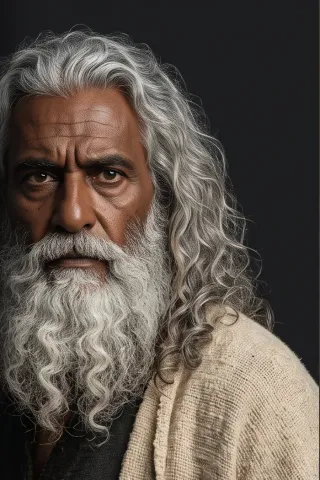
A Midianite priest who took in a fugitive, and later told the man who had seen the sea open that he was doing his job wrong.

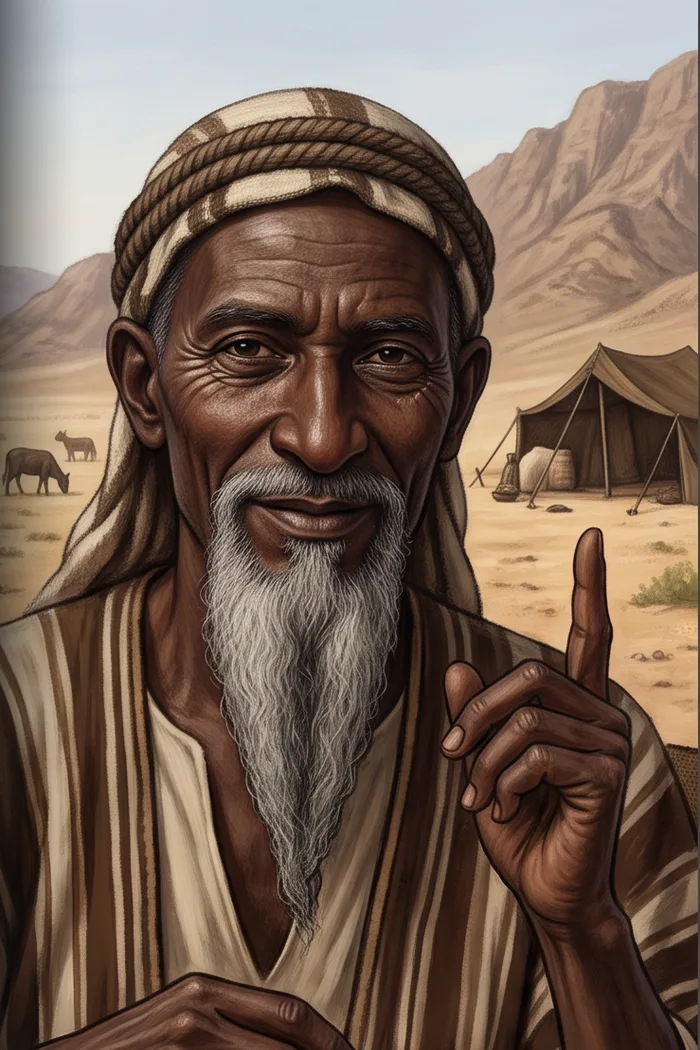
Jethro is a priest of Midian with seven daughters and a well that other shepherds keep taking. When a stranger drives them off and waters the flock, Jethro asks why the man has been left standing outside and gives him a home, a wife and forty years of work. Much later he comes out to the camp at the mountain bringing Moses’ wife and sons, hears the whole account, and says now I know the LORD is greater than all gods. The next morning he watches Moses judge from dawn to dusk and tells him plainly that it is not good.

Where he appearsExodus 2 to 4 · Exodus 18

Scroll down to the account
Jethro

The movements, in the order the text gives them.

The Account of Jethro

  1. 01

    Exodus 2:16-22

    Where is he, why did you leave him

    His daughters come home early because a stranger defended them. His first reaction is not suspicion but hospitality, and Moses stays.

    Seven daughters arrive home early, and their father notices. A man has rescued them from the shepherds and watered the flock, yet somehow the rescuer has been left at the well. Reuel's response has the briskness of somebody correcting a very obvious oversight. The man should at least have been offered bread. Hospitality begins here, not with a grand declaration, but with a missing guest at supper.

    The daughters call Moses an Egyptian. The Book of Exodus has just shown him identifying the oppressed Hebrews as his brethren, so the description catches the gap between how he is known and how he is seen. Their father does not require that gap to be resolved before opening his household. The fugitive becomes a resident, then a husband and father.

    Even so, Gershom's name keeps exile inside the new home. Moses can be content to dwell with this man and still call himself a stranger in a strange land. The welcome is real. It does not require the past to disappear.

    Verse by verse

    1. 2:18

      Here the father is called Reuel; Exodus 3:1 calls Moses' father-in-law Jethro. Readers commonly understand two names for one man, while Numbers 10:29 and Judges 4:11 make the wider family terminology more complicated.

    2. 2:19

      Egyptian is the daughters' identification of Moses. The passage does not specify whether clothing, speech or another feature prompted it.

    3. 2:21

      Was content translates a verb of willingness or agreement to stay; it is not a detailed description of Moses' inner emotional condition.

    4. 2:22

      The explanation of Gershom plays on the Hebrew ger, a sojourner or resident alien. Moses names displacement even within the household that welcomes him.

    Exodus 2:16-22

    King James Version · 7 verses

    2:16Now the priest of Midian had seven daughters: and they came and drew water, and filled the troughs to water their father’s flock.

    2:17And the shepherds came and drove them away: but Moses stood up and helped them, and watered their flock.

    2:18And when they came to Reuel their father, he said, How is it that ye are come so soon to day?

    2:19And they said, An Egyptian delivered us out of the hand of the shepherds, and also drew water enough for us, and watered the flock.

    2:20And he said unto his daughters, And where is he? why is it that ye have left the man? call him, that he may eat bread.

    2:21And Moses was content to dwell with the man: and he gave Moses Zipporah his daughter.

    2:22And she bare him a son, and he called his name Gershom: for he said, I have been a stranger in a strange land.

    Exodus 2:16-22: Where is he, why did you leave him
  2. 02

    Exodus 4:18-20

    Go in peace

    Moses asks leave to return to Egypt and does not explain about the bush. Jethro does not press him and sends him off with a blessing.

    Jethro needs only three words. Go in peace. The chapter has spent considerable time recording Moses' objections to God's commission; his father-in-law supplies no recorded objection at all. Moses asks leave to visit his brethren and discover whether they are still alive. The conversation is modest beside the commission, but the Book of Exodus does not turn that modesty into a charge of deception. It records permission.

    Two releases sit together. Jethro lets Moses leave the household that received him, and the LORD tells him that the men who sought his life are dead. The first is a family farewell; the second removes a stated danger from his return. Neither makes Jethro the source of the mission.

    The little travelling party is worth keeping in view: wife, sons, donkey, staff. The object previously introduced simply as a rod is now the rod of God. Nothing says the wood has changed. Its designation has. A man leaves his father-in-law's household with ordinary luggage and an extraordinary commission.

    Verse by verse

    1. 4:18

      Go in peace is a farewell blessing, not a prediction that the road will contain no danger.

    2. 4:19

      The death of those seeking Moses' life answers the threat recorded in Exodus 2:15 and the royal death reported in 2:23.

    3. 4:20

      Sons is plural, although only Gershom's birth has been recorded so far. Exodus 18:3-4 later supplies both names.

    Exodus 4:18-20

    King James Version · 3 verses

    4:18And Moses went and returned to Jethro his father in law, and said unto him, Let me go, I pray thee, and return unto my brethren which are in Egypt, and see whether they be yet alive. And Jethro said to Moses, Go in peace.

    4:19And the LORD said unto Moses in Midian, Go, return into Egypt: for all the men are dead which sought thy life.

    4:20And Moses took his wife and his sons, and set them upon an ass, and he returned to the land of Egypt: and Moses took the rod of God in his hand.

    Exodus 4:18-20: Go in peace
  3. 03

    Exodus 18:1-12

    Now I know

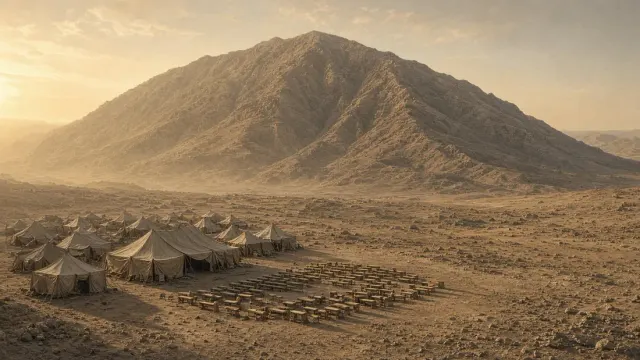
    He arrives at the mountain with Zipporah and the boys, hears everything the LORD had done, rejoices, and offers sacrifice while Aaron and the elders eat bread with him.

    Aaron and all the elders come to eat with a Midianite priest. Before God. The Book of Exodus does not apologize for that guest list. Jethro has heard the report of Israel's rescue, travelled to Moses, listened to its fuller account, and answered with blessing and sacrifice. The man from outside Israel's camp recognizes what Pharaoh resisted inside his palace.

    Moses' report includes all the travail as well as the deliverance. Jethro's joy is therefore not built on a version with the difficulties removed. The repeated language is rescue: from Pharaoh's sword in Eliezer's name, from Egyptian hands in the national account, and again in Jethro's blessing. A household memory and a people's freedom share the same vocabulary.

    Now I know marks an explicit acknowledgment that the LORD is greater than all gods. It does not provide a complete record of Jethro's earlier beliefs, and that missing record should stay missing. The movement the passage actually gives is sufficient: news heard, rescue explained, the LORD blessed, a meal shared. The outsider is not standing at the edge of it.

    Verse by verse

    1. 18:2

      The earlier sending back of Zipporah is reported here, but its date and reason are not supplied.

    2. 18:7

      Moses is the one who bows and kisses his father-in-law. His public role has not displaced the family gesture of respect.

    3. 18:11

      The confession states the LORD's supremacy; it does not document every belief Jethro held before this meeting.

    4. 18:12

      Before God gives the meal a sacred setting. The verse says Jethro brought offerings, but does not describe the officiating arrangements in detail.

    Exodus 18:1-12

    King James Version · 12 verses

    18:1When Jethro, the priest of Midian, Moses’ father in law, heard of all that God had done for Moses, and for Israel his people, and that the LORD had brought Israel out of Egypt;

    18:2Then Jethro, Moses’ father in law, took Zipporah, Moses’ wife, after he had sent her back,

    18:3And her two sons; of which the name of the one was Gershom; for he said, I have been an alien in a strange land:

    18:4And the name of the other was Eliezer; for the God of my father, said he, was mine help, and delivered me from the sword of Pharaoh:

    18:5And Jethro, Moses’ father in law, came with his sons and his wife unto Moses into the wilderness, where he encamped at the mount of God:

    18:6And he said unto Moses, I thy father in law Jethro am come unto thee, and thy wife, and her two sons with her.

    18:7And Moses went out to meet his father in law, and did obeisance, and kissed him; and they asked each other of their welfare; and they came into the tent.

    18:8And Moses told his father in law all that the LORD had done unto Pharaoh and to the Egyptians for Israel’s sake, and all the travail that had come upon them by the way, and how the LORD delivered them.

    18:9And Jethro rejoiced for all the goodness which the LORD had done to Israel, whom he had delivered out of the hand of the Egyptians.

    18:10And Jethro said, Blessed be the LORD, who hath delivered you out of the hand of the Egyptians, and out of the hand of Pharaoh, who hath delivered the people from under the hand of the Egyptians.

    18:11Now I know that the LORD is greater than all gods: for in the thing wherein they dealt proudly he was above them.

    18:12And Jethro, Moses’ father in law, took a burnt offering and sacrifices for God: and Aaron came, and all the elders of Israel, to eat bread with Moses’ father in law before God.

  4. 04

    Exodus 18:13-27

    The thing that you do is not good

    He watches one man absorb an entire nation’s disputes and says he will wear away, and the people with him. Then he proposes the structure, and leaves for his own country.

    The man who has seen the sea open still needs somebody to notice his queue. Moses sits; the people stand; morning becomes evening. Jethro does not challenge the need to enquire of God. He challenges the arrangement that makes one man the whole machinery of judgment. The thing that thou doest is not good is not a criticism of divine law. It is a criticism of an unworkable day.

    The warning includes both parties. Moses will wear away, and so will the people waiting for him. Jethro's proposal preserves Moses' teaching and his presentation of difficult matters to God, while placing ordinary disputes before other capable men. Their qualifications are not merely speed or influence: fear of God, truthfulness, and hatred of dishonest gain stand beside ability. A shorter queue is no improvement if judgments can be bought.

    Jethro also says, and God command thee so. The advice does not arrive pretending to overrule the God whose law Moses teaches. Moses listens, appoints judges, and keeps the hard cases. Jethro then goes home. He has changed the arrangement without installing himself at its centre.

    Verse by verse

    1. 18:18

      The Hebrew repeats the verb for wearing or withering to intensify the warning. Both Moses and the waiting people are named as its subjects.

    2. 18:21

      Hating covetousness concerns resistance to improper gain; it belongs among the qualifications for judging, not merely private generosity.

    3. 18:23

      And God command thee so makes Jethro's proposal explicitly conditional on divine authorization.

    4. 18:27

      Jethro returns to his own land. Judges 1:16 and 4:11 later preserve connections between Moses' marital family and the Kenites; these references do not require Jethro himself to remain in the camp.

    Exodus 18:13-27: The thing that you do is not good

    Exodus 18:13-27

    King James Version · 15 verses

    18:13And it came to pass on the morrow, that Moses sat to judge the people: and the people stood by Moses from the morning unto the evening.

    18:14And when Moses’ father in law saw all that he did to the people, he said, What is this thing that thou doest to the people? why sittest thou thyself alone, and all the people stand by thee from morning unto even?

    18:15And Moses said unto his father in law, Because the people come unto me to enquire of God:

    18:16When they have a matter, they come unto me; and I judge between one and another, and I do make them know the statutes of God, and his laws.

    18:17And Moses’ father in law said unto him, The thing that thou doest is not good.

    18:18Thou wilt surely wear away, both thou, and this people that is with thee: for this thing is too heavy for thee; thou art not able to perform it thyself alone.

    18:19Hearken now unto my voice, I will give thee counsel, and God shall be with thee: Be thou for the people to God-ward, that thou mayest bring the causes unto God:

    18:20And thou shalt teach them ordinances and laws, and shalt shew them the way wherein they must walk, and the work that they must do.

    18:21Moreover thou shalt provide out of all the people able men, such as fear God, men of truth, hating covetousness; and place such over them, to be rulers of thousands, and rulers of hundreds, rulers of fifties, and rulers of tens:

    18:22And let them judge the people at all seasons: and it shall be, that every great matter they shall bring unto thee, but every small matter they shall judge: so shall it be easier for thyself, and they shall bear the burden with thee.

    18:23If thou shalt do this thing, and God command thee so, then thou shalt be able to endure, and all this people shall also go to their place in peace.

    18:24So Moses hearkened to the voice of his father in law, and did all that he had said.

    18:25And Moses chose able men out of all Israel, and made them heads over the people, rulers of thousands, rulers of hundreds, rulers of fifties, and rulers of tens.

    18:26And they judged the people at all seasons: the hard causes they brought unto Moses, but every small matter they judged themselves.

    18:27And Moses let his father in law depart; and he went his way into his own land.

Why it matters

Jethro is an outsider who is right. He is not an Israelite, he is a priest of another people, and the administrative structure of the nation, the division into thousands and hundreds and fifties and tens, is his idea. Scripture records that Moses listened to his father in law and did everything he said. It is one of the few places where the man who spoke with God face to face takes instruction from someone else.

6 songs

The music

Every song in the catalogue whose passage falls inside these chapters.

  1. Exodus 1:1-2:10

    A Child Drawn from the River

  2. Exodus 1:1-2:10

    Drawn from the Water

  3. Exodus 2:11-4:17

    Fire in the Bush

  4. Exodus 2:11-4:17

    Fire That Would Not Burn Away

  5. Exodus 4:18-6:30

    Bricks Without Straw

  6. Exodus 18:1-20:26

    The Mountain Trembled

Nearby

All the people

Report an error on this page