New · FreePlay The Witnesses The in-depth puzzle battle quest through Bible history

People of the Bible

Zipporah

Took a flint knife at a lodging place on the road and did what her husband had not.

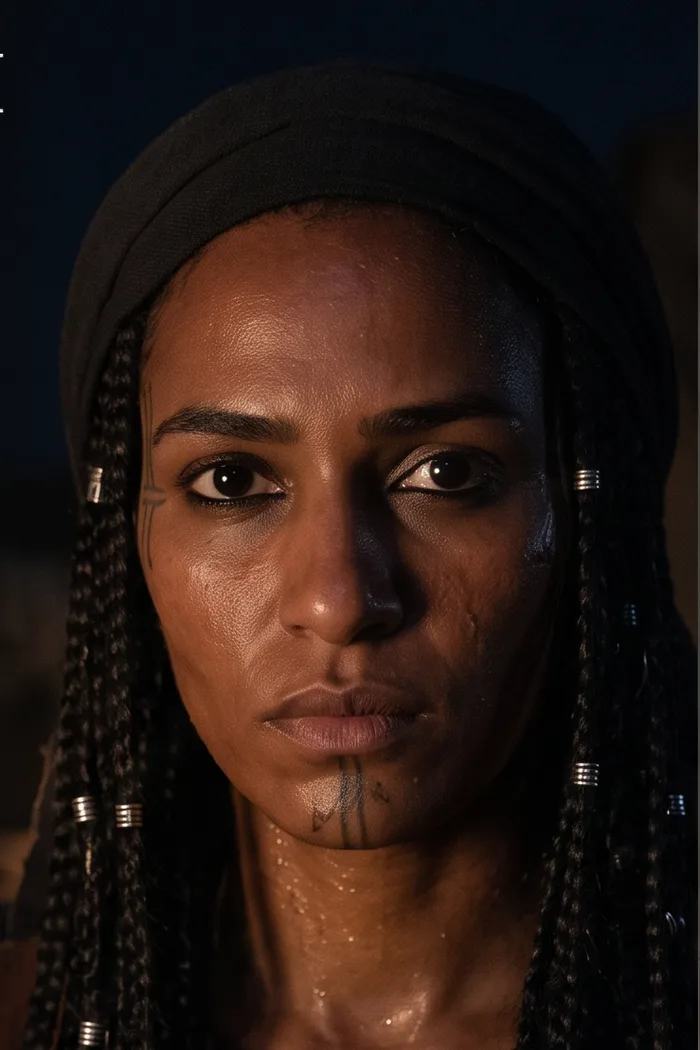
Zipporah is one of seven sisters at a well, given to Moses by her father, and the mother of Gershom, whose name means a stranger there. She appears three times and one of them is among the strangest passages in Exodus. On the road back to Egypt, at a place they stop for the night, the LORD meets Moses and seeks to kill him. Zipporah takes a flint, circumcises her son, touches it to Moses’ feet, and says you are a bridegroom of blood to me. Then it lets him go.

Where she appearsExodus 2 · Exodus 4 · Exodus 18

Scroll down to the account
Zipporah

The movements, in the order the text gives them.

The Account of Zipporah

  1. 01

    Exodus 2:16-22

    The well at Midian

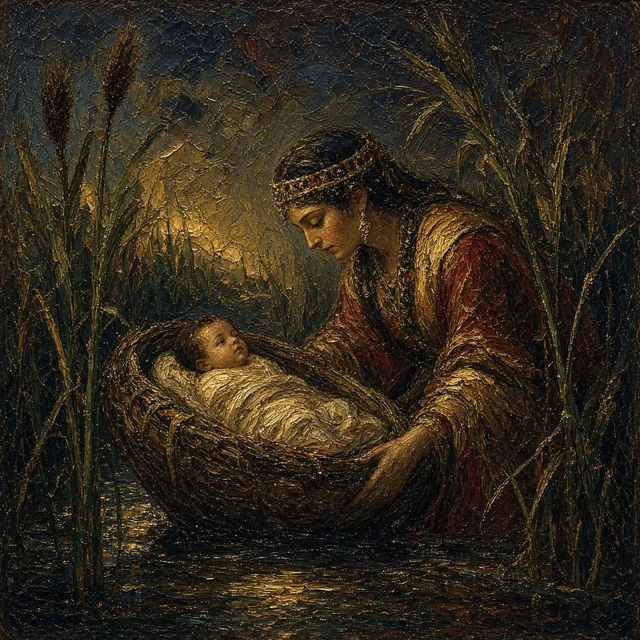
    One of the seven daughters driven off by shepherds until a stranger stands up for them. She is given to him, and their son is named for being a stranger in a foreign land.

    Before Zipporah is named, she is already at work. The seven daughters have drawn the water and filled the troughs before the shepherds drive them away. Their labor is ready to be stolen. Moses does not arrive to find seven women waiting decoratively beside a well; he interrupts an injustice and finishes watering their flock. The daughters tell their father about both things: the rescue and the work.

    Zipporah is not singled out from her sisters until the marriage in verse 21. There is no private conversation, no description of her appearance, no reported courtship. The Book of Exodus gives the household, the hospitality, and the marriage without supplying a romance between the lines. For Moses, this becomes a place to stay after Egypt has become a place to flee.

    Then their son's name carries his father's displacement into the new household. Gershom belongs to a family being established, yet his name speaks of being a stranger. Marriage has given Moses a home. It has not made the word exile disappear.

    Verse by verse

    1. 2:16

      The daughters have already drawn water and filled the troughs. The shepherds interrupt completed labor, not an attempt to begin it.

    2. 2:17

      The Hebrew verb behind helped them is from yasha, to save or deliver. Moses' action is a rescue, not merely an offer to carry water.

    3. 2:19

      An Egyptian is the daughters' identification of Moses. The passage does not explain whether they judged by his clothing, speech, or something else.

    4. 2:22

      Gershom is explained through ger, a stranger or resident alien. The explanation describes Moses' displacement, not his opinion of his wife.
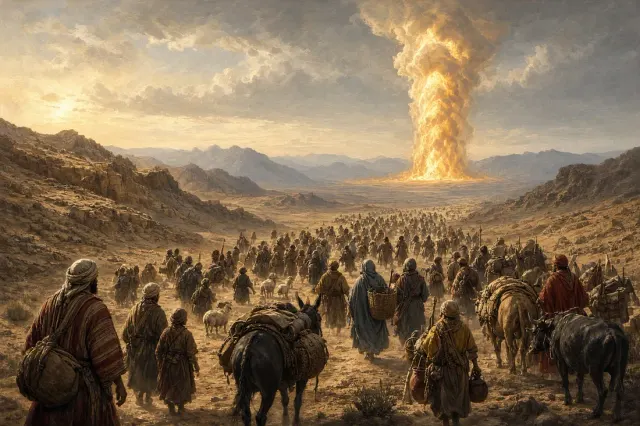
    Exodus 2:16-22

    King James Version · 7 verses

    2:16Now the priest of Midian had seven daughters: and they came and drew water, and filled the troughs to water their father’s flock.

    2:17And the shepherds came and drove them away: but Moses stood up and helped them, and watered their flock.

    2:18And when they came to Reuel their father, he said, How is it that ye are come so soon to day?

    2:19And they said, An Egyptian delivered us out of the hand of the shepherds, and also drew water enough for us, and watered the flock.

    2:20And he said unto his daughters, And where is he? why is it that ye have left the man? call him, that he may eat bread.

    2:21And Moses was content to dwell with the man: and he gave Moses Zipporah his daughter.

    2:22And she bare him a son, and he called his name Gershom: for he said, I have been a stranger in a strange land.

    Exodus 2:16-22: The well at Midian
  2. 02

    Exodus 4:24-26

    The flint at the lodging place

    On the road to Egypt something meets Moses and seeks his life. She acts without being asked, with a stone knife, and names what she has done in words nobody has fully explained since.

    Zipporah is the only human being named in these three verses. The threatened person is him. The feet are his. The child is her son. At the center of all those unresolved pronouns stands one unmistakable action: Zipporah takes the stone and performs the circumcision. The passage is difficult, but her intervention is not vague.

    The danger is more startling because of its source. Moses has just been commissioned to confront Pharaoh, yet at the lodging place it is the LORD who seeks to kill. The man usually understood to be threatened is Moses, though some readers understand the son. Neither the means of the attack nor the reason the circumcision had been delayed is supplied. Blaming Zipporah for preventing it earlier gives her a previous scene the Book of Exodus never writes.

    Genesis 17 makes circumcision a covenant obligation, so the act is not an unrelated emergency measure. It addresses the missing sign, and the threat ends. A bloody husband remains a compressed, disputed expression. Zipporah's tone is not transcribed. Her decisive action is.

    Verse by verse

    1. 4:24

      The Hebrew malon means a lodging place, not necessarily a commercial inn. The threatened him is commonly read as Moses, but identifying the son instead is a real interpretive alternative.

    2. 4:25

      The sharp stone is a flint or sharp-edged stone. Her son is not named, so identifying him as Gershom or Eliezer goes beyond these verses.

    3. 4:25

      The Hebrew verb behind cast it at his feet describes causing contact or touching. Whose feet are meant is disputed; the pronoun itself does not settle it.

    4. 4:25-26

      The Hebrew expression hatan damim is literally bridegroom of blood. Its precise force is disputed, and the text does not label Zipporah's words as anger or contempt.

    5. 4:26

      Genesis 17:10-14 supplies the covenant requirement of circumcision. Exodus records the release after Zipporah acts but does not explain who was responsible for the earlier omission.

    Exodus 4:24-26

    King James Version · 3 verses

    4:24And it came to pass by the way in the inn, that the LORD met him, and sought to kill him.

    4:25Then Zipporah took a sharp stone, and cut off the foreskin of her son, and cast it at his feet, and said, Surely a bloody husband art thou to me.

    4:26So he let him go: then she said, A bloody husband thou art, because of the circumcision.

    Exodus 4:24-26: The flint at the lodging place
  3. 03

    Exodus 18:1-6

    Sent back, and brought out

    At some point Moses sent her home to her father. Jethro brings her and the two boys out to the mountain, and sends word ahead so that Moses comes out to meet them.

    She is still called Moses' wife. That designation appears when Jethro takes her with him, and it appears again in his message announcing the family's arrival. Sent back does not, by itself, mean the marriage has ended. Whatever separation lies behind these verses, the Book of Exodus has not stopped calling her his wife.

    The dates and reasons are missing. The text does not say precisely when Moses sent Zipporah away, whether she had reached Egypt, or what explanation accompanied the decision. It would be easy to fill that silence with a quarrel or a protective farewell. Neither is recorded. Her return is concrete; the imagined conversation is not.

    The sons' names provide the words that the reunion itself does not. Gershom remembers a father living as a stranger; Eliezer remembers the God who delivered that father from Pharaoh's sword. A national rescue has just taken place, but this household carries an older, personal deliverance in one child's name. Jethro brings a wife and two sons, not merely an addition to Moses' public entourage. The names bring their family's history with them.

    Verse by verse

    1. 18:2

      The Hebrew expression describes her sending away or dismissal. These verses do not establish a divorce, and both 18:2 and 18:6 explicitly call her Moses' wife.

    2. 18:3-4

      Gershom is explained through being a stranger; Eliezer means my God is help. The second name recalls Moses' deliverance from Pharaoh's sword, not a statement that the child escaped a sword attack.

    3. 18:5

      The passage locates the family reunion in the wilderness at the mount of God. It does not place Zipporah among the witnesses of the plagues or the sea crossing.

    4. 18:6

      Numbers 12:1 later mentions Moses' Ethiopian or Cushite wife without naming her. Whether that woman is Zipporah is disputed and cannot be settled from this reunion passage.

    Exodus 18:1-6

    King James Version · 6 verses

    18:1When Jethro, the priest of Midian, Moses’ father in law, heard of all that God had done for Moses, and for Israel his people, and that the LORD had brought Israel out of Egypt;

    18:2Then Jethro, Moses’ father in law, took Zipporah, Moses’ wife, after he had sent her back,

    18:3And her two sons; of which the name of the one was Gershom; for he said, I have been an alien in a strange land:

    18:4And the name of the other was Eliezer; for the God of my father, said he, was mine help, and delivered me from the sword of Pharaoh:

    18:5And Jethro, Moses’ father in law, came with his sons and his wife unto Moses into the wilderness, where he encamped at the mount of God:

    18:6And he said unto Moses, I thy father in law Jethro am come unto thee, and thy wife, and her two sons with her.

    Exodus 18:1-6: Sent back, and brought out

Why it matters

Three verses that commentators have argued about for two thousand years, and the plain shape of them is this: a man is sent to demand that a nation keep covenant, and the sign of the covenant has not been kept in his own house, and his foreign wife is the one who acts. She is Midianite, not Israelite, and she is the one who understands what is required. The narrative gives her no explanation and no praise, only the act and the words.

6 songs

The music

Every song in the catalogue whose passage falls inside these chapters.

  1. Exodus 1:1-2:10

    A Child Drawn from the River

  2. Exodus 1:1-2:10

    Drawn from the Water

  3. Exodus 2:11-4:17

    Fire in the Bush

  4. Exodus 2:11-4:17

    Fire That Would Not Burn Away

  5. Exodus 4:18-6:30

    Bricks Without Straw

  6. Exodus 18:1-20:26

    The Mountain Trembled

Nearby

All the people

Report an error on this page