

Lyrics · Exodus
Make Me a Sanctuary
Exodus 25:1-31:18
Lyrics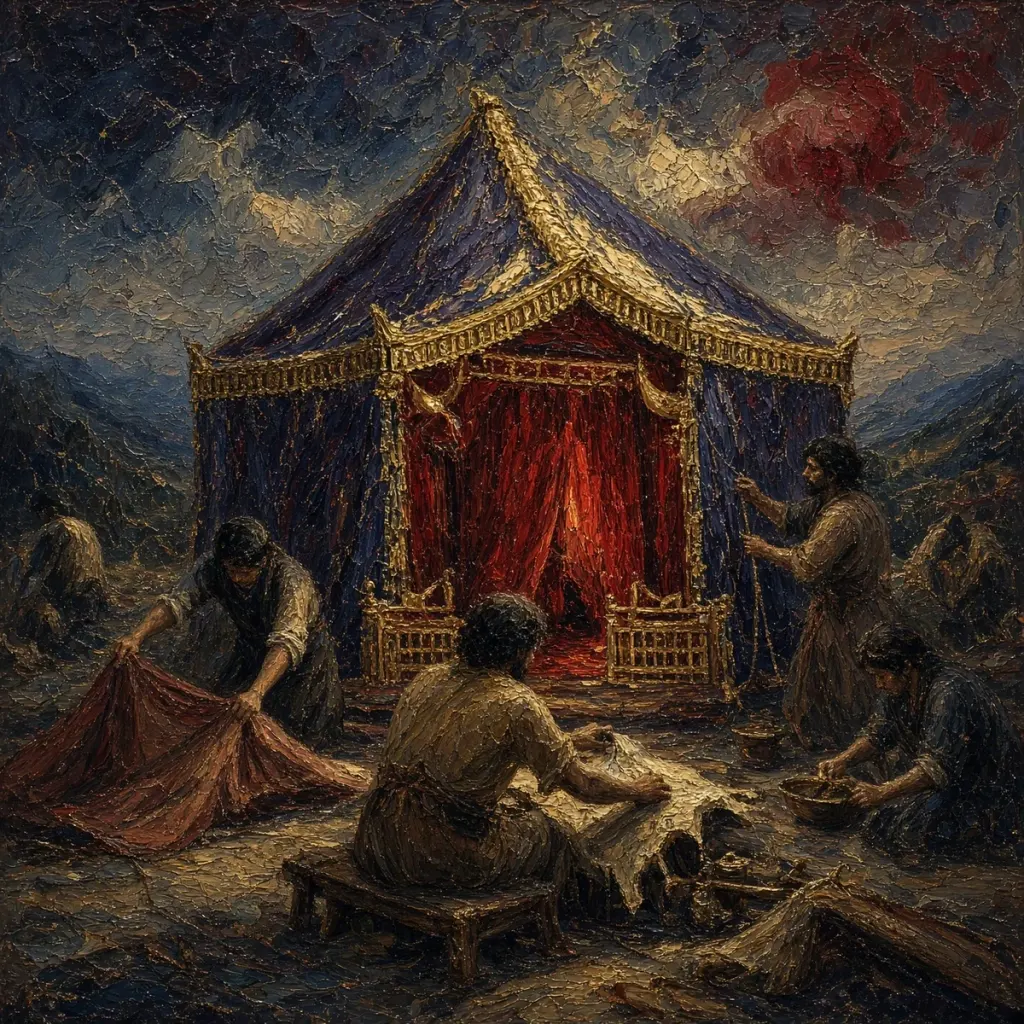
Playing next
About this song
About this song
This song belongs to the Exodus collection. One recording is available to play here, with the complete lyrics below.
- Bible book
- Exodus
- Collection
- Exodus
- Musical styles
- Uncategorized
Named in this songArkMercy seatAaronEphod
About the passage
Exodus 25: A dwelling begins with willing hands
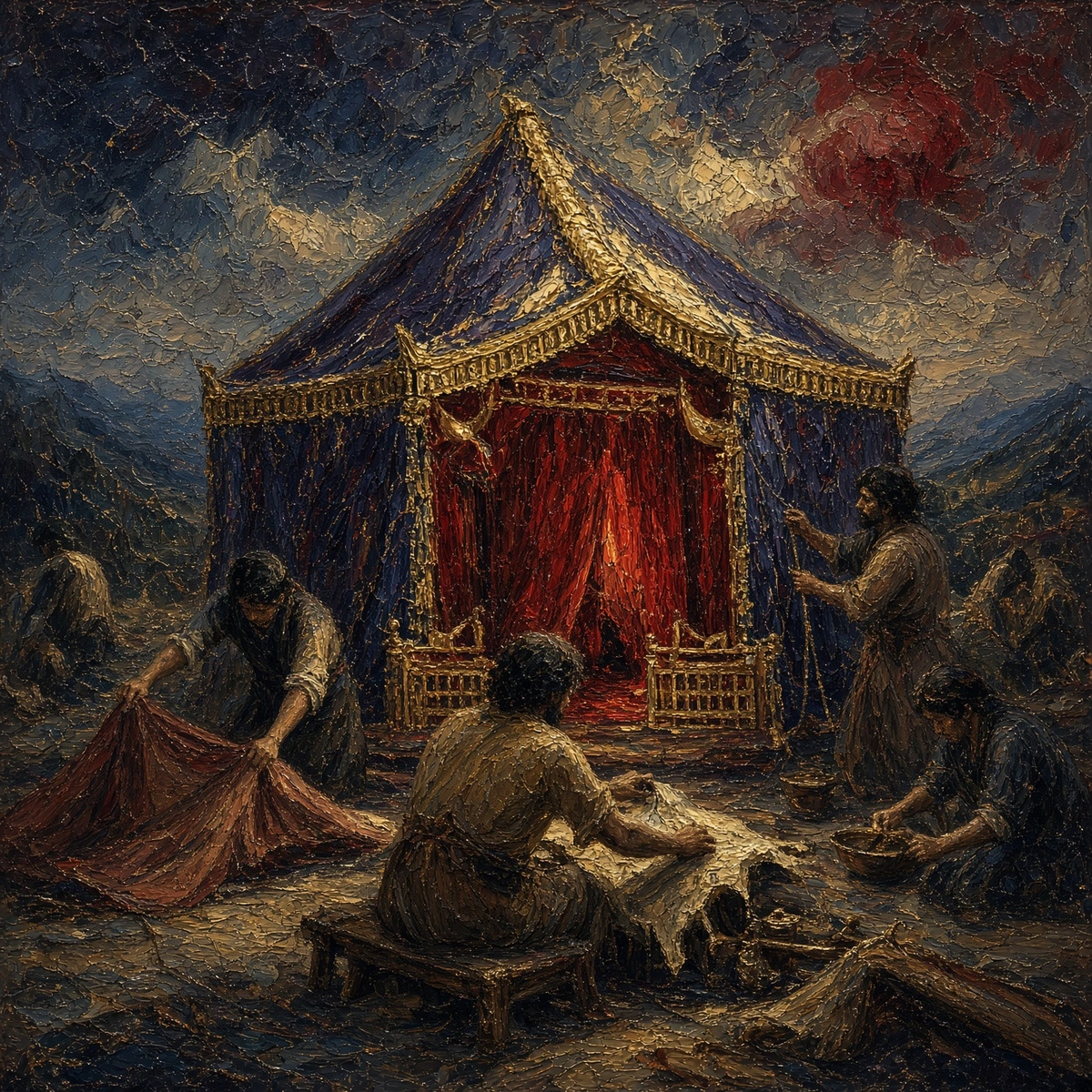
Exodus 25 begins the sanctuary instructions with the people’s offerings and the purpose behind them: “let them make me a sanctuary; that I may dwell among them.” Willing giving supplies the materials, but the form is governed by a pattern shown to Moses. The chapter then moves through the ark, mercy seat, table, and lampstand. Each object is beautiful, yet none is presented as beauty without function. The ark is built to carry the testimony and to travel. The mercy seat with cherubim marks the place from which God promises to meet and speak, while refusing to provide a manufactured portrait of the divine speaker. The table carries bread continually, and the lampstand turns pure gold into a branching form whose lamps must actually give light. Repeated references to rings, poles, vessels, and maintenance keep sacred furniture inside the practical world of a people on the move. Human workmanship is extensive, but the design and purpose are received rather than invented.
Study Exodus 25 in depthExodus 26: The dwelling is joined together and carefully divided
Exodus 26 builds the sanctuary around the furniture already described, moving through inner curtains, outer coverings, boards, bars, the veil, and the entrance screen. The chapter repeatedly combines many separate pieces into one dwelling while also creating deliberate divisions within it. Richly worked inner curtains are joined by matched loops and clasps; larger outer coverings protect them with practical overhangs. Upright boards stand in silver sockets and are stabilized by bars, producing a frame that can be assembled yet also travel. Inside, the veil separates the holy place from the most holy, placing the ark beyond a boundary while the table and lampstand remain outside it. A second hanging marks the tent’s entrance and is not identical to the inner veil. The sanctuary is therefore neither an open room nor a sealed container. It is a portable dwelling whose unity depends on precise joining and whose approach depends on equally precise distinctions of space.
Study Exodus 26 in depthExodus 27: An altar, a courtyard, and a light kept burning
Exodus 27 moves outward from the inner sanctuary to the bronze altar and the surrounding court, then ends with the recurring work required to keep the lamp burning. The altar is large, portable, and equipped not only for sacrifice but for the ash, tools, pans, hooks, and fire that sacrifice actually produces. The court defines a rectangular space around tent and altar with linen hangings, metal fittings, and a distinct eastern entrance. Even its pegs matter because a sacred enclosure still has to stand in the ground. The final verses then shift from construction to supply. Israel must bring pure beaten olive oil, and Aaron and his sons must tend the lamp from evening to morning. The chapter therefore closes by reminding the reader that the sanctuary is not finished simply because every object has been made. Worship requires continuing material service. A beautiful lampstand without oil goes dark, and an altar without tools cannot be tended.
Study Exodus 27 in depth