
Exodus 28:9-12
Stones of memorial upon his two shoulders
Two onyx stones carry six names each, engraved as a signet, and the purpose is stated as remembrance before the LORD.
Verse by verse
- 28:10
According to their birth specifies the ordering of the names on these shoulder stones.
- 28:11
Ouches are settings or mounts for the stones. The word does not describe a separate kind of jewel.
- 28:12
Memorial translates zikkaron; the same term returns for the names over Aaron's heart in verse 29.
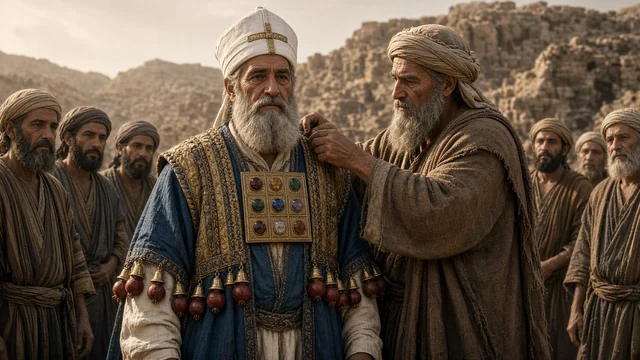
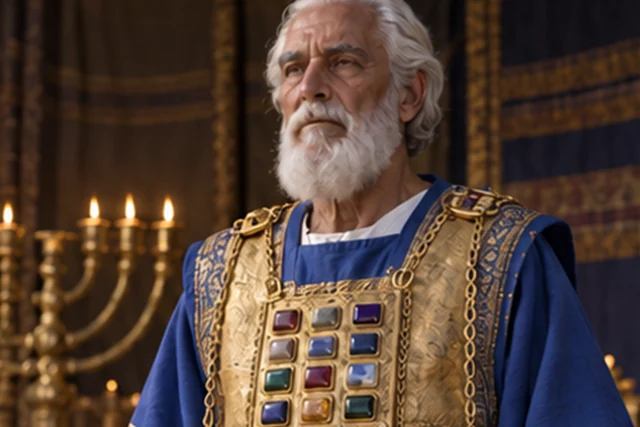
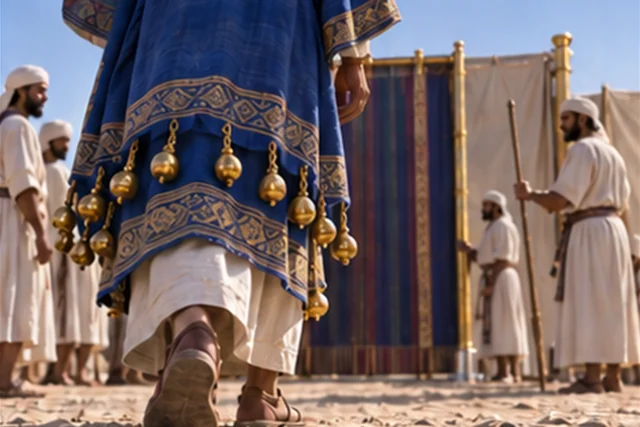

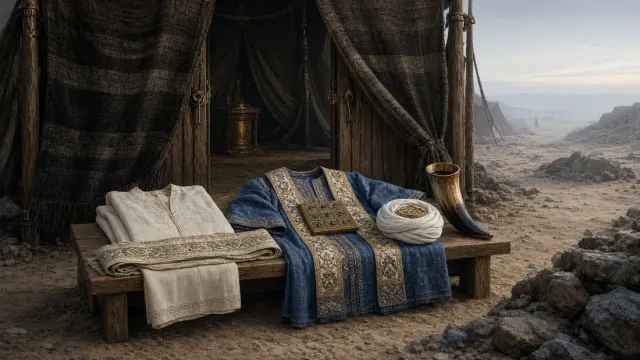
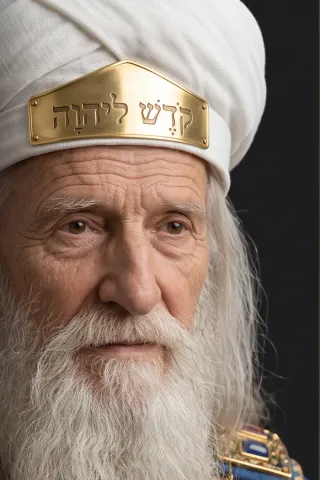

The names on the priest's shoulders are not his own. That is the first useful thing to notice about a garment made for glory and for beauty: its most carefully specified inscriptions identify other people. Aaron's distinction is inseparable from the people he represents. Six names on each stone, ordered by birth, make Israel's ancestry part of the clothing in which he approaches the LORD. The gold is splendid, but it holds a list of names.
The comparison with a signet adds precision. These are engraved identities, not a vague decorative suggestion of twelve tribes. The command specifies the inscription, its arrangement and its setting, then explains why it is there: for a memorial. That does not mean God needs help remembering who Israel is. In the language of worship, the people's identity is deliberately presented before him. Aaron bears the names physically as well as representatively. The shoulder stones give his office something more substantial than a title and something less private than personal religious achievement. He may be the man wearing the ephod, but he is not the whole subject of it. The garment will not let the nation disappear behind its priest.