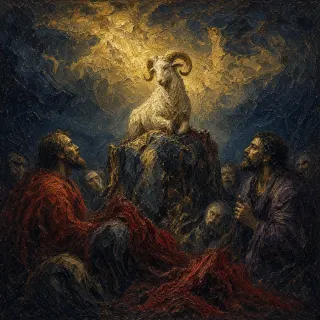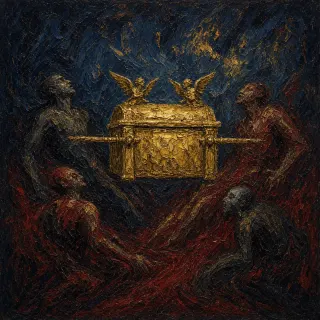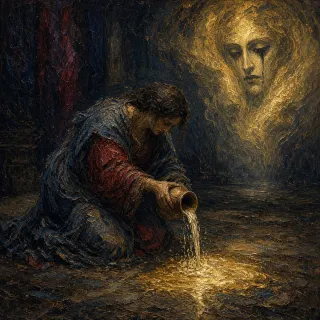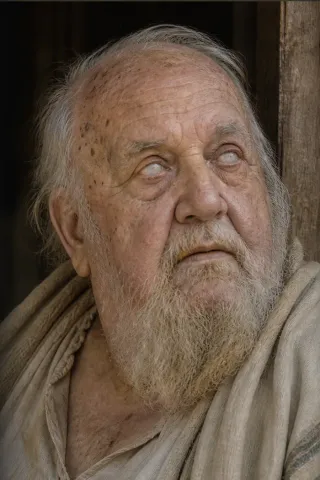

New · FreePlay The Witnesses The in-depth puzzle battle quest through Bible history

Places of the Bible

Shiloh

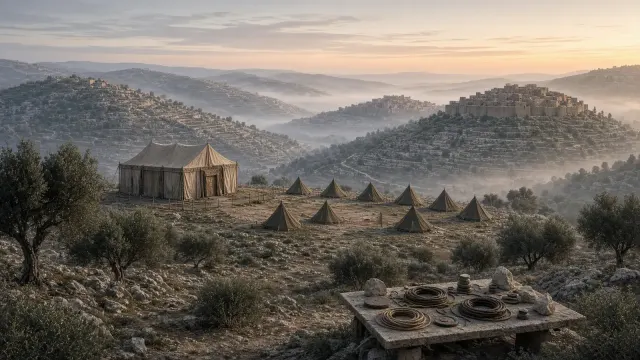
The tabernacle stood here for three centuries, and the prophets kept using the town as a warning.

Joshua sets up the tabernacle of the congregation at Shiloh while seven tribes still have no inheritance, and the rest of the land is divided by lot in front of it. It becomes the fixed point: the place where the whole congregation assembles, where the yearly feast is kept, and where a childless woman comes and prays so intensely that the priest at the door post assumes she is drunk.

Where it appearsJoshua 18 · Judges 21 · 1 Samuel 1 to 4

Scroll down to the account

The movements, in the order the text gives them.

The Account of Shiloh

  1. 01

    Joshua 18:1-10

    The whole congregation assembled together at Shiloh

    The tent is set up before the land is finished being divided, and the surveying of seven tribes is done in front of it.

    A subdued land can still contain seven tribes without an inheritance. Joshua puts those two facts beside each other, and the gap between them gives this passage its urgency. Victory has not automatically become settlement. The people have assembled the sanctuary; now they must stop delaying the work of taking possession.

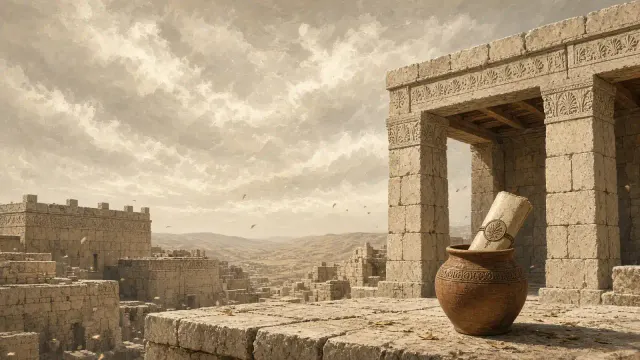
    The method is strikingly practical. Men walk the land, describe it by cities, divide it into seven portions, and return with a written record. Then Joshua casts lots before the LORD. Surveying and sacred decision are not rivals here. The lots do not relieve anyone of walking the ground or preparing the description. There is paperwork in the promised land.

    Shiloh becomes the meeting point of worship and distribution, but the distribution is not a fresh division of everything. Judah and Joseph retain their established positions; the eastern tribes already have their inheritance; Levi's priestly inheritance is distinguished from a tribal territory. Those details explain why seven portions are required. The repeated before the LORD gives the proceedings their setting and their authority. A community that has traveled together is being assigned places in which to remain, and the sanctuary stands at the center of that transition.

    Verse by verse

    1. 18:1

      Subdued describes the land's condition in relation to Israel; verse 2 immediately distinguishes that from every tribe having received its allotment.

    2. 18:5

      Coast means boundary or territory here, not necessarily a seashore.

    3. 18:7

      Levi's exclusion concerns a territorial share of this kind, not exclusion from Israel or from material support.

    4. 18:9-10

      The written description is arranged by cities. The passage does not specify a drawn map or the physical objects used as lots.

    Joshua 18:1-10

    King James Version · 10 verses

    18:1And the whole congregation of the children of Israel assembled together at Shiloh, and set up the tabernacle of the congregation there. And the land was subdued before them.

    18:2And there remained among the children of Israel seven tribes, which had not yet received their inheritance.

    18:3And Joshua said unto the children of Israel, How long are ye slack to go to possess the land, which the LORD God of your fathers hath given you?

    18:4Give out from among you three men for each tribe: and I will send them, and they shall rise, and go through the land, and describe it according to the inheritance of them; and they shall come again to me.

    18:5And they shall divide it into seven parts: Judah shall abide in their coast on the south, and the house of Joseph shall abide in their coasts on the north.

    18:6Ye shall therefore describe the land into seven parts, and bring the description hither to me, that I may cast lots for you here before the LORD our God.

    18:7But the Levites have no part among you; for the priesthood of the LORD is their inheritance: and Gad, and Reuben, and half the tribe of Manasseh, have received their inheritance beyond Jordan on the east, which Moses the servant of the LORD gave them.

    18:8And the men arose, and went away: and Joshua charged them that went to describe the land, saying, Go and walk through the land, and describe it, and come again to me, that I may here cast lots for you before the LORD in Shiloh.

    18:9And the men went and passed through the land, and described it by cities into seven parts in a book, and came again to Joshua to the host at Shiloh.

    18:10And Joshua cast lots for them in Shiloh before the LORD: and there Joshua divided the land unto the children of Israel according to their divisions.

  2. 02

    1 Samuel 1:9-18

    Eli thought she had been drunken

    Hannah prays silently with her lips moving and is accused by the priest sitting by the post of the temple. She answers him plainly and he blesses her.

    Eli watches Hannah's mouth and misses what it is doing. The chapter has already identified her grief, so his accusation arrives with a painful mismatch between what he sees and what the passage has made plain. Moving lips without an audible voice mean prayer here, not drunkenness. A seat beside the sanctuary door does not make the first judgment correct.

    Hannah answers with a precise reversal of the image. She has not poured wine into herself; she has poured out her soul before the LORD. Her distress is neither invented nor treated as embarrassment to be hurried past. Bitterness, tears, complaint, and grief are the chapter's own words. The vow also has a demanding shape: the son for whom she asks is the son she promises to give to the LORD for his whole life. The petition reaches beyond the relief of having a child.

    Eli changes his response and sends her away with a blessing. The final detail is deliberately modest. Hannah eats, and her face is no longer sad. No pregnancy has yet been reported. The first visible change is not a baby in her arms, but a woman able to return to the meal.

    Verse by verse

    1. 1:9

      Temple names the sanctuary here; it does not refer to Solomon's later temple in Jerusalem. The verse mentions a doorway post but does not give a complete building plan.

    2. 1:11

      The prohibition of a razor recalls the Nazirite language of Numbers 6:5, although this KJV passage does not explicitly call Samuel a Nazirite.

    3. 1:15

      Poured out my soul answers the accusation about drink with an image of prayer, not intoxication.

    4. 1:18

      The restored appetite and changed expression precede the conception reported in verse 19.

    1 Samuel 1:9-18

    King James Version · 10 verses

    1:9So Hannah rose up after they had eaten in Shiloh, and after they had drunk. Now Eli the priest sat upon a seat by a post of the temple of the LORD.

    1:10And she was in bitterness of soul, and prayed unto the LORD, and wept sore.

    1:11And she vowed a vow, and said, O LORD of hosts, if thou wilt indeed look on the affliction of thine handmaid, and remember me, and not forget thine handmaid, but wilt give unto thine handmaid a man child, then I will give him unto the LORD all the days of his life, and there shall no razor come upon his head.

    1:12And it came to pass, as she continued praying before the LORD, that Eli marked her mouth.

    1:13Now Hannah, she spake in her heart; only her lips moved, but her voice was not heard: therefore Eli thought she had been drunken.

    1:14And Eli said unto her, How long wilt thou be drunken? put away thy wine from thee.

    1:15And Hannah answered and said, No, my lord, I am a woman of a sorrowful spirit: I have drunk neither wine nor strong drink, but have poured out my soul before the LORD.

    1:16Count not thine handmaid for a daughter of Belial: for out of the abundance of my complaint and grief have I spoken hitherto.

    1:17Then Eli answered and said, Go in peace: and the God of Israel grant thee thy petition that thou hast asked of him.

    1:18And she said, Let thine handmaid find grace in thy sight. So the woman went her way, and did eat, and her countenance was no more sad.

  3. 03

    1 Samuel 2:12-17

    The sin of the young men was very great

    The priesthood at Shiloh takes meat with a fleshhook before the fat is burnt, and the account says men abhorred the offering of the LORD.

    The fork has three teeth, and the chapter makes sure that detail is not lost. Corruption at Shiloh is not an abstract stain on an institution. It has a utensil, a servant, a boiling pot, and a demand that can end in force. Whatever the fork catches becomes the priest's portion. The worshipper's offering has become somebody else's opportunity.

    The next demand makes the disorder sharper. Raw meat is required before the fat is burned, putting the priest's appetite ahead of the portion reserved for the LORD. The worshipper's reply is not an attempt to withhold everything from the priest. He asks that the proper order be respected, then permits a generous taking. Even that concession is refused. Now is the controlling word.

    The verdict reaches beyond greedy eating: men abhorred the offering of the LORD. The abuse damages the act the priests are appointed to serve. The chapter does not excuse them because their office is inherited or because sacrifices are still being performed. Sons of Eli and sons of Belial stand together in the opening sentence. Their family connection explains how they hold the position; it does not explain away what they do with it.

    Verse by verse

    1. 2:12

      Sons of Belial is an idiom for wicked or worthless men. Knew not the LORD characterizes their conduct and relationship to him, not ignorance of his name.

    2. 2:15

      Leviticus 7:31 places the burning of the fat on the altar alongside the priestly portion; the demand here deliberately disregards that priority.

    3. 2:16

      Presently means immediately in this KJV wording. The worshipper asks for the fat to be burned first, not for an indefinite postponement.

    4. 2:17

      The text calls their sin very great and names its effect on the offering itself. The condemnation is explicit, not supplied from outside the passage.

    1 Samuel 2:12-17

    King James Version · 6 verses

    2:12Now the sons of Eli were sons of Belial; they knew not the LORD.

    2:13And the priests’ custom with the people was, that, when any man offered sacrifice, the priest’s servant came, while the flesh was in seething, with a fleshhook of three teeth in his hand;

    2:14And he struck it into the pan, or kettle, or caldron, or pot; all that the fleshhook brought up the priest took for himself. So they did in Shiloh unto all the Israelites that came thither.

    2:15Also before they burnt the fat, the priest’s servant came, and said to the man that sacrificed, Give flesh to roast for the priest; for he will not have sodden flesh of thee, but raw.

    2:16And if any man said unto him, Let them not fail to burn the fat presently, and then take as much as thy soul desireth; then he would answer him, Nay; but thou shalt give it me now: and if not, I will take it by force.

    2:17Wherefore the sin of the young men was very great before the LORD: for men abhorred the offering of the LORD.

    1 Samuel 2:12-17: The sin of the young men was very great
  4. 04

    1 Samuel 3:1-10

    Speak, for thy servant heareth

    The word of the LORD was precious in those days, there was no open vision, and a boy sleeping near the ark is called by name four times.

    Samuel is quick to answer and slow to identify the caller. Those are different things. He runs to Eli at the first call, returns at the second, and goes again at the third. The repeated journeys are not a failure of willingness. The boy has not yet received the revelation that would let him recognize what is happening.

    Eli's role is more complicated than simple obstruction. His eyes are failing, and recognition takes time, but he eventually understands and gives Samuel the words with which to answer. The old priest helps the child attend to a voice that will announce judgment on the priest's own house in the verses that follow. The account grants him that real service without retracting its judgment on his failures.

    The setting is quiet and exact: the lamp has not gone out, the ark is present, and the word of the LORD has been rare. Against that scarcity comes a repeated, personal call. Samuel's final answer contains no request for status and no proposed message of his own. He is ready to hear. By the chapter's end, Shiloh is again named as a place where the LORD reveals himself through his word.

    Verse by verse

    1. 3:1

      Precious translates Hebrew yaqar, valuable or rare; no open vision makes the scarcity of revelation the point here.

    2. 3:3

      Exodus 27:20-21 prescribes tending the sanctuary lamp from evening to morning. The detail places this call during the night, without giving an exact hour.

    3. 3:10

      This is the fourth calling episode, after those in verses 4, 6, and 8. The doubled name belongs to this final call.

    1 Samuel 3:1-10

    King James Version · 10 verses

    3:1And the child Samuel ministered unto the LORD before Eli. And the word of the LORD was precious in those days; there was no open vision.

    3:2And it came to pass at that time, when Eli was laid down in his place, and his eyes began to wax dim, that he could not see;

    3:3And ere the lamp of God went out in the temple of the LORD, where the ark of God was, and Samuel was laid down to sleep;

    3:4That the LORD called Samuel: and he answered, Here am I.

    3:5And he ran unto Eli, and said, Here am I; for thou calledst me. And he said, I called not; lie down again. And he went and lay down.

    3:6And the LORD called yet again, Samuel. And Samuel arose and went to Eli, and said, Here am I; for thou didst call me. And he answered, I called not, my son; lie down again.

    3:7Now Samuel did not yet know the LORD, neither was the word of the LORD yet revealed unto him.

    3:8And the LORD called Samuel again the third time. And he arose and went to Eli, and said, Here am I; for thou didst call me. And Eli perceived that the LORD had called the child.

    3:9Therefore Eli said unto Samuel, Go, lie down: and it shall be, if he call thee, that thou shalt say, Speak, LORD; for thy servant heareth. So Samuel went and lay down in his place.

    3:10And the LORD came, and stood, and called as at other times, Samuel, Samuel. Then Samuel answered, Speak; for thy servant heareth.

  5. 05

    Jeremiah 7:12-14

    Go ye now unto my place which was in Shiloh

    Six centuries later the ruin is the argument. A place can carry the name and still be abandoned, and Jerusalem is told to look at it.

    Shiloh is not dismissed as a sanctuary that was never legitimate. The LORD calls it my place and says that his name was set there. That admission gives Jeremiah's warning its force. The argument is not that Jerusalem differs from a false holy site, but that a genuinely chosen sanctuary has already suffered judgment.

    The surrounding speech exposes the confidence being challenged. The people repeat the temple's name while stealing, shedding blood, and following other gods. Jeremiah directs them to an earlier place whose sacred history did not prevent its loss. The fault lies not in the absence of a divine name but in trusting that name as shelter for conduct the same God condemns.

    The middle verse explains why the comparison applies: repeated speaking met repeated refusal to hear. Rising up early is the language of persistent address, not a timetable for divine sleep. Shiloh has become evidence in a case Jerusalem refuses to recognize. First Samuel 4 records the ark's capture, not a detailed account of the town's destruction; Jeremiah supplies the explicit appeal to what happened to the place. The distinction matters. The warning is firm without invented flames or an invented siege report.

    Verse by verse

    1. 7:12

      Jeremiah 26:6-9 repeats the Shiloh comparison and records the hostile response it provoked; the place-name itself carried a severe warning.

    2. 7:13

      Rising up early and speaking emphasizes persistent warning. The accusation is refusal to hear, not lack of opportunity.

    3. 7:14

      The preceding den of robbers language in Jeremiah 7:11 is taken up by Jesus in Matthew 21:13. The Shiloh warning belongs to that same temple speech in Jeremiah.

    Jeremiah 7:12-14

    King James Version · 3 verses

    7:12But go ye now unto my place which was in Shiloh, where I set my name at the first, and see what I did to it for the wickedness of my people Israel.

    7:13And now, because ye have done all these works, saith the LORD, and I spake unto you, rising up early and speaking, but ye heard not; and I called you, but ye answered not;

    7:14Therefore will I do unto this house, which is called by my name, wherein ye trust, and unto the place which I gave to you and to your fathers, as I have done to Shiloh.

    Jeremiah 7:12-14: Go ye now unto my place which was in Shiloh

Why it matters

What happens to it is the argument. Eli is old and his sons are taking meat by force and sleeping with the women at the door, and a man of God comes with a sentence about a house being cut off. The ark goes out to battle from here and does not come back, and when the news reaches the town Eli falls backward and dies. Jeremiah, centuries later, stands in the temple at Jerusalem and tells a crowd relying on the building to go and see what I did to Shiloh, where I set my name at the first.

6 songs

The music

Every song in the catalogue whose passage falls inside these chapters.

  1. Judges 19:1-21:25

    No King in Israel

  2. 1 Samuel 1-2

    Hannah's Song

  3. 1 Samuel 1:1-2:11

    Poured Out Before the LORD

  4. 1 Samuel 1-2

    The Prayer of Hannah

  5. 1 Samuel 2:12-3:21

    Speak, for Thy Servant Heareth

  6. 1 Samuel 3

    Speak, Lord

Nearby

All the places

Report an error on this page