New · FreePlay The Witnesses The in-depth puzzle battle quest through Bible history

People of the Bible

Samuel

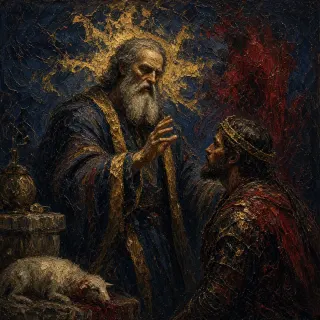
The last judge and the first kingmaker, who told the nation exactly what a king would cost and then gave them one.

Samuel grows up in the house at Shiloh wearing a little coat his mother makes for him a size larger every year. He is called in the night before he knows what the voice is, and the first message he is given is a judgment on the man who raised him. He judges Israel on a circuit for the rest of his life. When the elders ask for a king like the other nations, he takes it personally and is told it is not him they have rejected. So he warns them in detail, and then anoints Saul, and later anoints a boy nobody had bothered to call in from the sheep.

Where he appears1 Samuel 1 to 16 · 1 Samuel 25 · 1 Samuel 28

Scroll down to the account
Samuel

The movements, in the order the text gives them.

The Account of Samuel

  1. 01

    1 Samuel 3:1-21

    Speak, for your servant hears

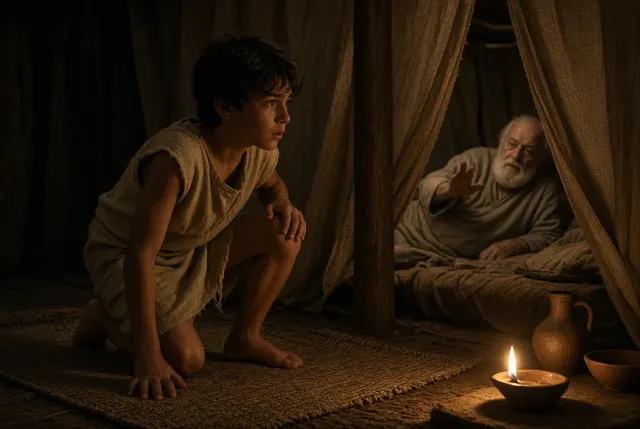
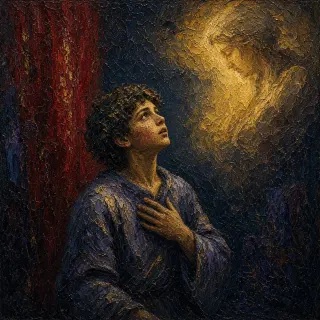
    The word of the LORD is rare in those days. A boy who does not yet know the LORD is called four times, and the first thing he is asked to do is tell Eli everything.

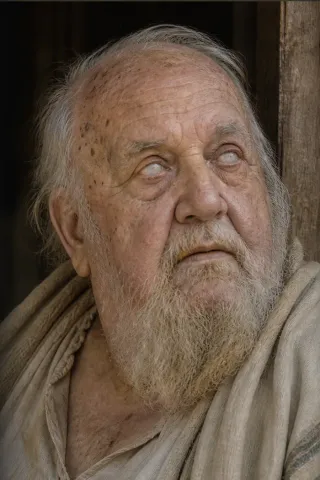
    Samuel keeps running to the wrong person, which is not quite the same thing as refusing to listen. His readiness is already there; recognition is not. The Book of First Samuel makes that distinction carefully. The boy who ministers before the LORD has not yet received the LORD's word, and the elderly priest whose house stands condemned can still recognize a divine call. Eli is neither a reliable father nor a useless teacher. Both facts belong in the room.

    The first message is not a comfortable introduction to prophecy. Samuel must tell the man who calls him my son that his family's judgment will not be canceled by the sacrifices that family administers. The child opens the sanctuary doors the next morning, as though an ordinary day's work could still follow that night. Then Eli calls again. This time Samuel knows precisely who is speaking, and the difficult part is answering without hiding anything. By the chapter's end, the word that was scarce at Shiloh has become a public certainty from Dan to Beersheba. The change begins with a boy who has to be taught to recognize it.

    Verse by verse

    1. 3:3

      Exodus 27:20-21 orders the sanctuary lamp to be tended from evening to morning. Its still burning places the call during the night; it does not establish Samuel's exact age.

    2. 3:7

      Samuel's not yet knowing the LORD is explained by the absence of revealed speech. This differs from the culpable ignorance of Eli's sons in 1 Samuel 2:12.

    3. 3:20

      Acts 3:24 names Samuel as a starting point for the succeeding prophets; Acts 13:20 places him at the transition from the judges.

    4. 3:21

      Hebrews 11:32 explicitly includes Samuel among the figures remembered for faith. The passage names him without supplying a separate account of this call.

    1 Samuel 3:1-21: Speak, for your servant hears

    1 Samuel 3:1-21

    King James Version · 21 verses

    3:1And the child Samuel ministered unto the LORD before Eli. And the word of the LORD was precious in those days; there was no open vision.

    3:2And it came to pass at that time, when Eli was laid down in his place, and his eyes began to wax dim, that he could not see;

    3:3And ere the lamp of God went out in the temple of the LORD, where the ark of God was, and Samuel was laid down to sleep;

    3:4That the LORD called Samuel: and he answered, Here am I.

    3:5And he ran unto Eli, and said, Here am I; for thou calledst me. And he said, I called not; lie down again. And he went and lay down.

    3:6And the LORD called yet again, Samuel. And Samuel arose and went to Eli, and said, Here am I; for thou didst call me. And he answered, I called not, my son; lie down again.

    3:7Now Samuel did not yet know the LORD, neither was the word of the LORD yet revealed unto him.

    3:8And the LORD called Samuel again the third time. And he arose and went to Eli, and said, Here am I; for thou didst call me. And Eli perceived that the LORD had called the child.

    3:9Therefore Eli said unto Samuel, Go, lie down: and it shall be, if he call thee, that thou shalt say, Speak, LORD; for thy servant heareth. So Samuel went and lay down in his place.

    3:10And the LORD came, and stood, and called as at other times, Samuel, Samuel. Then Samuel answered, Speak; for thy servant heareth.

    3:11And the LORD said to Samuel, Behold, I will do a thing in Israel, at which both the ears of every one that heareth it shall tingle.

    3:12In that day I will perform against Eli all things which I have spoken concerning his house: when I begin, I will also make an end.

    3:13For I have told him that I will judge his house for ever for the iniquity which he knoweth; because his sons made themselves vile, and he restrained them not.

    3:14And therefore I have sworn unto the house of Eli, that the iniquity of Eli’s house shall not be purged with sacrifice nor offering for ever.

    3:15And Samuel lay until the morning, and opened the doors of the house of the LORD. And Samuel feared to shew Eli the vision.

    3:16Then Eli called Samuel, and said, Samuel, my son. And he answered, Here am I.

    3:17And he said, What is the thing that the LORD hath said unto thee? I pray thee hide it not from me: God do so to thee, and more also, if thou hide any thing from me of all the things that he said unto thee.

    3:18And Samuel told him every whit, and hid nothing from him. And he said, It is the LORD: let him do what seemeth him good.

    3:19And Samuel grew, and the LORD was with him, and did let none of his words fall to the ground.

    3:20And all Israel from Dan even to Beer-sheba knew that Samuel was established to be a prophet of the LORD.

    3:21And the LORD appeared again in Shiloh: for the LORD revealed himself to Samuel in Shiloh by the word of the LORD.

  2. 02

    1 Samuel 7:3-17

    Hitherto the LORD has helped us

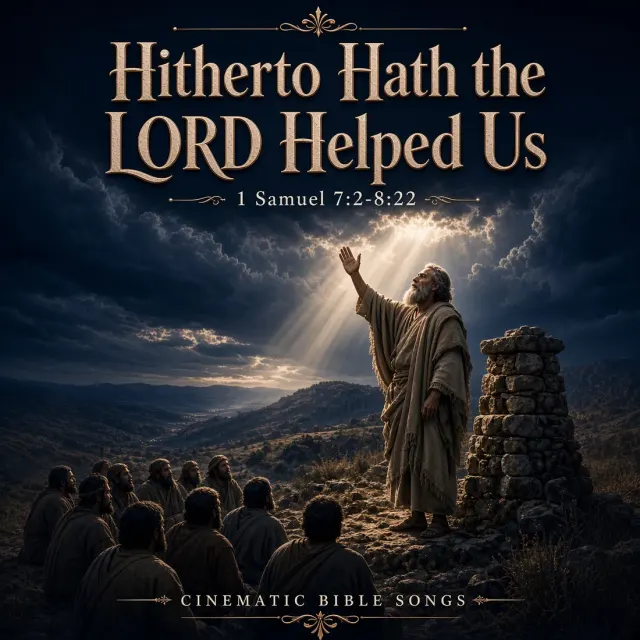
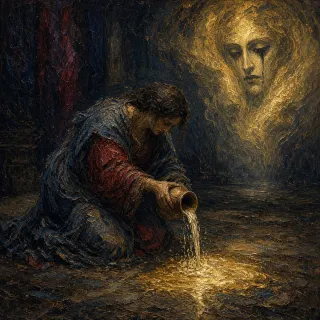
    He gathers the nation at Mizpah, they pour out water and fast, and the Philistines attack during the sacrifice. He sets up a stone afterwards and names it for how far they have come.

    The ark is not brought onto this battlefield. That absence matters after the disaster of chapter 4, when Israel fetched it into camp and still lost. At Mizpeh the people put away their gods, confess their sin, and ask Samuel to keep praying. The contrast is not between having and lacking a sacred object. It is between attempting to secure victory with the ark and appealing to the LORD whose ark it is.

    Samuel's hands hold a nursing lamb, not a sword. The Philistines approach while the offering is underway, and the decisive sound is thunder. Hannah had already spoken of the LORD thundering against his adversaries in 2:10; her son's ministry now stands inside that language. Israel does pursue the enemy, but the chapter puts the divine disruption first. Then comes the stone. Samuel does not put his own name on it. Ebenezer credits help received, and hitherto marks the distance already traveled without promising an effortless future. After the thunder and the memorial, the account settles into an annual circuit of judging. A victory has its day. Governing still requires the next visit.

    Verse by verse

    1. 7:6

      The water is poured out alongside fasting and confession. The passage does not explain the rite, so a detailed reconstruction of its meaning would go beyond the text.

    2. 7:8

      Psalm 99:6 remembers Samuel among those whose prayers God answered. Jeremiah 15:1 pairs him with Moses as an exceptional intercessor.

    3. 7:10

      The thunder repeats the language of Hannah's prayer in 1 Samuel 2:10. The connection is verbal and thematic, not a claim that she supplied a dated forecast of this battle.

    4. 7:13

      This is a summary of deliverance during Samuel's leadership. It should be read alongside, not substituted for, the renewed Philistine warfare recorded in 1 Samuel 13.

    1 Samuel 7:3-17: Hitherto the LORD has helped us

    1 Samuel 7:3-17

    King James Version · 15 verses

    7:3And Samuel spake unto all the house of Israel, saying, If ye do return unto the LORD with all your hearts, then put away the strange gods and Ashtaroth from among you, and prepare your hearts unto the LORD, and serve him only: and he will deliver you out of the hand of the Philistines.

    7:4Then the children of Israel did put away Baalim and Ashtaroth, and served the LORD only.

    7:5And Samuel said, Gather all Israel to Mizpeh, and I will pray for you unto the LORD.

    7:6And they gathered together to Mizpeh, and drew water, and poured it out before the LORD, and fasted on that day, and said there, We have sinned against the LORD. And Samuel judged the children of Israel in Mizpeh.

    7:7And when the Philistines heard that the children of Israel were gathered together to Mizpeh, the lords of the Philistines went up against Israel. And when the children of Israel heard it, they were afraid of the Philistines.

    7:8And the children of Israel said to Samuel, Cease not to cry unto the LORD our God for us, that he will save us out of the hand of the Philistines.

    7:9And Samuel took a sucking lamb, and offered it for a burnt offering wholly unto the LORD: and Samuel cried unto the LORD for Israel; and the LORD heard him.

    7:10And as Samuel was offering up the burnt offering, the Philistines drew near to battle against Israel: but the LORD thundered with a great thunder on that day upon the Philistines, and discomfited them; and they were smitten before Israel.

    7:11And the men of Israel went out of Mizpeh, and pursued the Philistines, and smote them, until they came under Beth-car.

    7:12Then Samuel took a stone, and set it between Mizpeh and Shen, and called the name of it Eben-ezer, saying, Hitherto hath the LORD helped us.

    7:13So the Philistines were subdued, and they came no more into the coast of Israel: and the hand of the LORD was against the Philistines all the days of Samuel.

    7:14And the cities which the Philistines had taken from Israel were restored to Israel, from Ekron even unto Gath; and the coasts thereof did Israel deliver out of the hands of the Philistines. And there was peace between Israel and the Amorites.

    7:15And Samuel judged Israel all the days of his life.

    7:16And he went from year to year in circuit to Beth-el, and Gilgal, and Mizpeh, and judged Israel in all those places.

    7:17And his return was to Ramah; for there was his house; and there he judged Israel; and there he built an altar unto the LORD.

  3. 03

    1 Samuel 8:1-22

    Give us a king

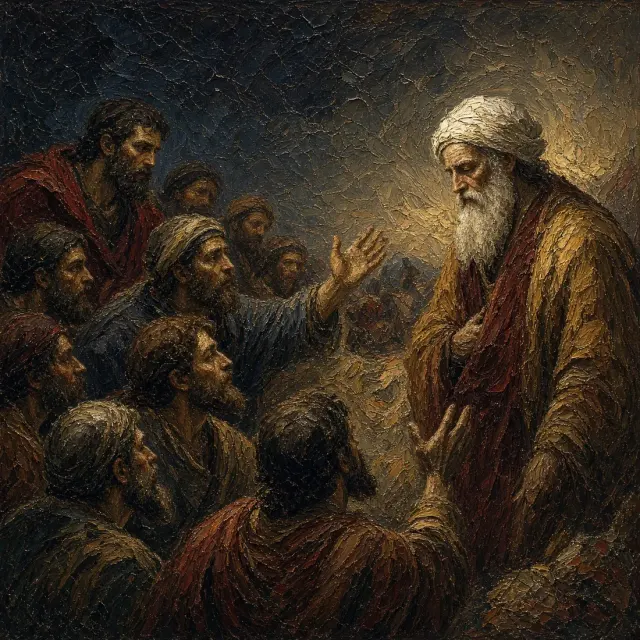
    His own sons take bribes, and the elders use it as the reason. He lays out what a king will take: sons, daughters, fields, a tenth, and yourselves. They say they want one anyway.

    The elders' complaint begins with something true. Samuel's sons take bribes and pervert judgment, and the Book of First Samuel states it before the elders do. Their demand cannot be dismissed as the invention of an ungrateful crowd. The fault lies in the proposed answer: a king like the other nations, desired in a way the LORD identifies as rejection of his own reign. Samuel has a real succession problem. Israel proposes a different master.

    He will take is the rhythm of Samuel's warning. Sons, daughters, fields, vineyards, servants, flocks: the household is dismantled item by item and reassembled around the royal household. The king will fight their battles, certainly, but their sons will be doing a considerable amount of the fighting. The warning ends beyond taxation, with the people themselves becoming his servants. Samuel then does something less dramatic than overruling the nation: he carries its answer back to the LORD and follows the instruction to appoint a king. His prophetic task is not to conceal the price, and it is not to seize the decision. The warning remains on the record even when the request is granted.

    Verse by verse

    1. 8:3

      The charge against Joel and Abiah is bribery and distorted justice. The chapter does not accuse Samuel himself of taking their bribes.

    2. 8:5

      Deuteronomy 17:14-20 already anticipates a king like the surrounding nations and places him under the law. This passage is not the Bible's first mention of human kingship for Israel.

    3. 8:13

      The KJV confectionaries represents a Hebrew term for makers of aromatic compounds, or perfumers, not simply makers of candy.

    4. 8:18

      The predicted unanswered cry reverses the answered cry at Mizpeh in 1 Samuel 7:8-9. The contrast belongs to these two passages, not to a general claim that prayer will cease to be heard.

    1 Samuel 8:1-22: Give us a king

    1 Samuel 8:1-22

    King James Version · 22 verses

    8:1And it came to pass, when Samuel was old, that he made his sons judges over Israel.

    8:2Now the name of his firstborn was Joel; and the name of his second, Abiah: they were judges in Beer-sheba.

    8:3And his sons walked not in his ways, but turned aside after lucre, and took bribes, and perverted judgment.

    8:4Then all the elders of Israel gathered themselves together, and came to Samuel unto Ramah,

    8:5And said unto him, Behold, thou art old, and thy sons walk not in thy ways: now make us a king to judge us like all the nations.

    8:6But the thing displeased Samuel, when they said, Give us a king to judge us. And Samuel prayed unto the LORD.

    8:7And the LORD said unto Samuel, Hearken unto the voice of the people in all that they say unto thee: for they have not rejected thee, but they have rejected me, that I should not reign over them.

    8:8According to all the works which they have done since the day that I brought them up out of Egypt even unto this day, wherewith they have forsaken me, and served other gods, so do they also unto thee.

    8:9Now therefore hearken unto their voice: howbeit yet protest solemnly unto them, and shew them the manner of the king that shall reign over them.

    8:10And Samuel told all the words of the LORD unto the people that asked of him a king.

    8:11And he said, This will be the manner of the king that shall reign over you: He will take your sons, and appoint them for himself, for his chariots, and to be his horsemen; and some shall run before his chariots.

    8:12And he will appoint him captains over thousands, and captains over fifties; and will set them to ear his ground, and to reap his harvest, and to make his instruments of war, and instruments of his chariots.

    8:13And he will take your daughters to be confectionaries, and to be cooks, and to be bakers.

    8:14And he will take your fields, and your vineyards, and your oliveyards, even the best of them, and give them to his servants.

    8:15And he will take the tenth of your seed, and of your vineyards, and give to his officers, and to his servants.

    8:16And he will take your menservants, and your maidservants, and your goodliest young men, and your asses, and put them to his work.

    8:17He will take the tenth of your sheep: and ye shall be his servants.

    8:18And ye shall cry out in that day because of your king which ye shall have chosen you; and the LORD will not hear you in that day.

    8:19Nevertheless the people refused to obey the voice of Samuel; and they said, Nay; but we will have a king over us;

    8:20That we also may be like all the nations; and that our king may judge us, and go out before us, and fight our battles.

    8:21And Samuel heard all the words of the people, and he rehearsed them in the ears of the LORD.

    8:22And the LORD said to Samuel, Hearken unto their voice, and make them a king. And Samuel said unto the men of Israel, Go ye every man unto his city.

  4. 04

    1 Samuel 15:10-35

    To obey is better than sacrifice

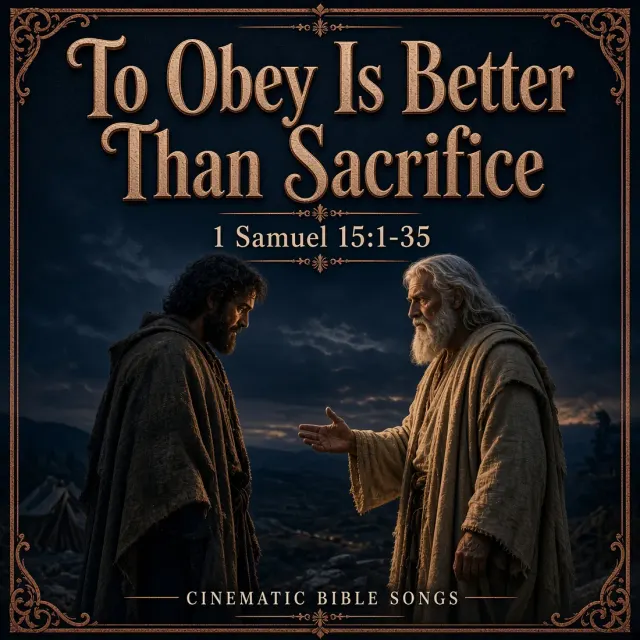
    Saul spares the best of the livestock and says it was for sacrifice. Samuel tears him off at the torn hem of a robe and never sees him again, and mourns for him.

    Saul announces complete obedience while the surviving livestock supply an audible objection. Samuel does not need a long investigation to find the crack in the announcement. The sheep are making it for him. Yet the sharpness of the confrontation must not erase its opening: Samuel has spent the night crying to the LORD. He does not approach Saul's rejection as a personal triumph.

    The dispute turns on whose voice Saul obeyed. He first blames the people, then admits that he feared them and obeyed their voice. Samuel's answer puts hearing above the expensive religious substitute Saul offers. The sacrifice is not objectionable because sacrifice is inherently worthless; Samuel himself offers one in chapter 7. It is objectionable as an attempted replacement for the command. When the mantle tears, the torn fabric gives the judgment a visible form. Saul then asks for public honor, and Samuel's return with him does not retract the sentence.

    Agag's execution prevents this scene from becoming a tidy debate about religious sincerity. Samuel hews a man in pieces and explicitly names the women Agag's sword has bereaved. The chapter leaves that violence in full view. It also leaves Samuel mourning for Saul. Neither the severity nor the grief cancels the other.

    Verse by verse

    1. 15:12

      The place Saul sets up at Carmel is a monument; the Hebrew literally uses hand. It is distinct from Mount Carmel in the Elijah passages.

    2. 15:22

      The Hebrew verb shama can mean hear or obey. Its recurrence links Saul's claim to have obeyed with his admission in 15:24 that he obeyed the people.

    3. 15:29

      The title translated Strength of Israel is netsach Yisrael, also rendered Glory of Israel. The immediate point is the reliability of the declared judgment.

    4. 15:33

      The command in 15:3 includes women and children as well as combatants. The account must not be softened into an instruction merely to defeat an army.

    5. 15:35

      Samuel ceases going to see Saul; 1 Samuel 19:24 later has Saul come into Samuel's presence. At Endor in chapter 28, the figure identified as Samuel repeats rather than reverses the rejection.

    1 Samuel 15:10-35: To obey is better than sacrifice

    1 Samuel 15:10-35

    King James Version · 26 verses

    15:10Then came the word of the LORD unto Samuel, saying,

    15:11It repenteth me that I have set up Saul to be king: for he is turned back from following me, and hath not performed my commandments. And it grieved Samuel; and he cried unto the LORD all night.

    15:12And when Samuel rose early to meet Saul in the morning, it was told Samuel, saying, Saul came to Carmel, and, behold, he set him up a place, and is gone about, and passed on, and gone down to Gilgal.

    15:13And Samuel came to Saul: and Saul said unto him, Blessed be thou of the LORD: I have performed the commandment of the LORD.

    15:14And Samuel said, What meaneth then this bleating of the sheep in mine ears, and the lowing of the oxen which I hear?

    15:15And Saul said, They have brought them from the Amalekites: for the people spared the best of the sheep and of the oxen, to sacrifice unto the LORD thy God; and the rest we have utterly destroyed.

    15:16Then Samuel said unto Saul, Stay, and I will tell thee what the LORD hath said to me this night. And he said unto him, Say on.

    15:17And Samuel said, When thou wast little in thine own sight, wast thou not made the head of the tribes of Israel, and the LORD anointed thee king over Israel?

    15:18And the LORD sent thee on a journey, and said, Go and utterly destroy the sinners the Amalekites, and fight against them until they be consumed.

    15:19Wherefore then didst thou not obey the voice of the LORD, but didst fly upon the spoil, and didst evil in the sight of the LORD?

    15:20And Saul said unto Samuel, Yea, I have obeyed the voice of the LORD, and have gone the way which the LORD sent me, and have brought Agag the king of Amalek, and have utterly destroyed the Amalekites.

    15:21But the people took of the spoil, sheep and oxen, the chief of the things which should have been utterly destroyed, to sacrifice unto the LORD thy God in Gilgal.

    15:22And Samuel said, Hath the LORD as great delight in burnt offerings and sacrifices, as in obeying the voice of the LORD? Behold, to obey is better than sacrifice, and to hearken than the fat of rams.

    15:23For rebellion is as the sin of witchcraft, and stubbornness is as iniquity and idolatry. Because thou hast rejected the word of the LORD, he hath also rejected thee from being king.

    15:24And Saul said unto Samuel, I have sinned: for I have transgressed the commandment of the LORD, and thy words: because I feared the people, and obeyed their voice.

    15:25Now therefore, I pray thee, pardon my sin, and turn again with me, that I may worship the LORD.

    15:26And Samuel said unto Saul, I will not return with thee: for thou hast rejected the word of the LORD, and the LORD hath rejected thee from being king over Israel.

    15:27And as Samuel turned about to go away, he laid hold upon the skirt of his mantle, and it rent.

    15:28And Samuel said unto him, The LORD hath rent the kingdom of Israel from thee this day, and hath given it to a neighbour of thine, that is better than thou.

    15:29And also the Strength of Israel will not lie nor repent: for he is not a man, that he should repent.

    15:30Then he said, I have sinned: yet honour me now, I pray thee, before the elders of my people, and before Israel, and turn again with me, that I may worship the LORD thy God.

    15:31So Samuel turned again after Saul; and Saul worshipped the LORD.

    15:32Then said Samuel, Bring ye hither to me Agag the king of the Amalekites. And Agag came unto him delicately. And Agag said, Surely the bitterness of death is past.

    15:33And Samuel said, As thy sword hath made women childless, so shall thy mother be childless among women. And Samuel hewed Agag in pieces before the LORD in Gilgal.

    15:34Then Samuel went to Ramah; and Saul went up to his house to Gibeah of Saul.

    15:35And Samuel came no more to see Saul until the day of his death: nevertheless Samuel mourned for Saul: and the LORD repented that he had made Saul king over Israel.


  5. 05

    1 Samuel 16:1-13

    The LORD looks on the heart

    Seven sons pass in front of him and he is wrong about the first one out loud. The eighth has to be sent for, and nobody sits down until he arrives.

    Samuel knows that Saul has been rejected and still finds height persuasive. Eliab appears, and the prophet immediately thinks he has found the anointed man. The correction is pointed because Saul's imposing stature had been so conspicuous at his own presentation in 10:23. Even the kingmaker needs his criteria interrupted.

    The passage does not turn this into a simple opposition between an unattractive good man and a handsome bad one. David is expressly goodly to look to. Beauty is not the fault; treating it as evidence of God's choice is. Nor does the Book of First Samuel open David's heart for inspection here. The LORD knows it, Samuel receives a command, and the household waits while someone fetches the son still minding the sheep. The delay is wonderfully concrete: the sacrificial gathering cannot settle down until the absent brother arrives.

    Samuel's part ends without a national proclamation. He anoints David among his brothers and goes home. The Spirit comes upon David, but Saul still occupies the throne. The chapter has distinguished divine designation from public possession of the office. The oil has been poured. The crown has not changed heads.

    Verse by verse

    1. 16:2

      Samuel explicitly fears that Saul will kill him. The sacrifice is an actual commanded activity, not an event the chapter says was merely pretended.

    2. 16:7

      Heart in this Hebrew setting includes thought, intention, and resolve, not only emotion. The verse does not disclose a catalog of David's private thoughts.

    3. 16:11

      The passage calls David the youngest but supplies no age. An exact teenage age here would be an estimate, not a stated fact.

    4. 16:13

      First Chronicles 29:29 names the book of Samuel the seer among the records of David's reign. Samuel's significance in the canon includes testimony to that reign as well as the anointing.

    1 Samuel 16:1-13

    King James Version · 13 verses

    16:1And the LORD said unto Samuel, How long wilt thou mourn for Saul, seeing I have rejected him from reigning over Israel? fill thine horn with oil, and go, I will send thee to Jesse the Beth-lehemite: for I have provided me a king among his sons.

    16:2And Samuel said, How can I go? if Saul hear it, he will kill me. And the LORD said, Take an heifer with thee, and say, I am come to sacrifice to the LORD.

    16:3And call Jesse to the sacrifice, and I will shew thee what thou shalt do: and thou shalt anoint unto me him whom I name unto thee.

    16:4And Samuel did that which the LORD spake, and came to Beth-lehem. And the elders of the town trembled at his coming, and said, Comest thou peaceably?

    16:5And he said, Peaceably: I am come to sacrifice unto the LORD: sanctify yourselves, and come with me to the sacrifice. And he sanctified Jesse and his sons, and called them to the sacrifice.

    16:6And it came to pass, when they were come, that he looked on Eliab, and said, Surely the LORD’s anointed is before him.

    16:7But the LORD said unto Samuel, Look not on his countenance, or on the height of his stature; because I have refused him: for the LORD seeth not as man seeth; for man looketh on the outward appearance, but the LORD looketh on the heart.

    16:8Then Jesse called Abinadab, and made him pass before Samuel. And he said, Neither hath the LORD chosen this.

    16:9Then Jesse made Shammah to pass by. And he said, Neither hath the LORD chosen this.

    16:10Again, Jesse made seven of his sons to pass before Samuel. And Samuel said unto Jesse, The LORD hath not chosen these.

    16:11And Samuel said unto Jesse, Are here all thy children? And he said, There remaineth yet the youngest, and, behold, he keepeth the sheep. And Samuel said unto Jesse, Send and fetch him: for we will not sit down till he come hither.

    16:12And he sent, and brought him in. Now he was ruddy, and withal of a beautiful countenance, and goodly to look to. And the LORD said, Arise, anoint him: for this is he.

    16:13Then Samuel took the horn of oil, and anointed him in the midst of his brethren: and the Spirit of the LORD came upon David from that day forward. So Samuel rose up, and went to Ramah.

Why it matters

Samuel stands at the hinge of the Old Testament. Everything before him is judges, everything after is kings, and he is the one who is asked to dismantle his own office and does it. He is also the first of the prophets in the sense the rest of the book means: a man whose words are said not to fall to the ground. His two great sentences shape what follows. To obey is better than sacrifice. And, man looks on the outward appearance, but the LORD looks on the heart.

20 songs

The music

Every song in the catalogue whose passage falls inside these chapters.

  1. 1 Samuel 1-2

    Hannah's Song

  2. 1 Samuel 1:1-2:11

    Poured Out Before the LORD

  3. 1 Samuel 1-2

    The Prayer of Hannah

  4. 1 Samuel 2:12-3:21

    Speak, for Thy Servant Heareth

  5. 1 Samuel 3

    Speak, Lord

  6. 1 Samuel 4-7

    Dagon Fell

  7. 1 Samuel 4:1-7:1

    No God Can Stand Before the Ark

  8. 1 Samuel 5:1-12

    Every Idol Falls

    Play here
    Open song pageRead lyrics
  9. 1 Samuel 7:2-8:22

    Hitherto Hath the LORD Helped Us

  10. 1 Samuel 8-10

    Give Us a King

  11. 1 Samuel 9:1-10:27

    Hidden Among the Baggage

  12. 1 Samuel 11:1-12:25

    Fear the LORD and Serve Him

  13. 1 Samuel 13; 15

    Better Than Sacrifice

  14. 1 Samuel 13:1-14:52

    There Is No Restraint to the LORD

  15. 1 Samuel 15:1-35

    To Obey Is Better Than Sacrifice

  16. 1 Samuel 16:1-23

    The LORD Looketh on the Heart

  17. 1 Samuel 16

    The Shepherd Anointed

  18. 1 Samuel 25:1-27:12

    Blessed Be Thy Advice

  19. 1 Samuel 28; 31

    The Last Night of Saul

  20. 1 Samuel 28

    The Witch of Endor

The videos

The videos

Every release whose passage falls inside these chapters, playing here.

Nearby

All the people

Report an error on this page