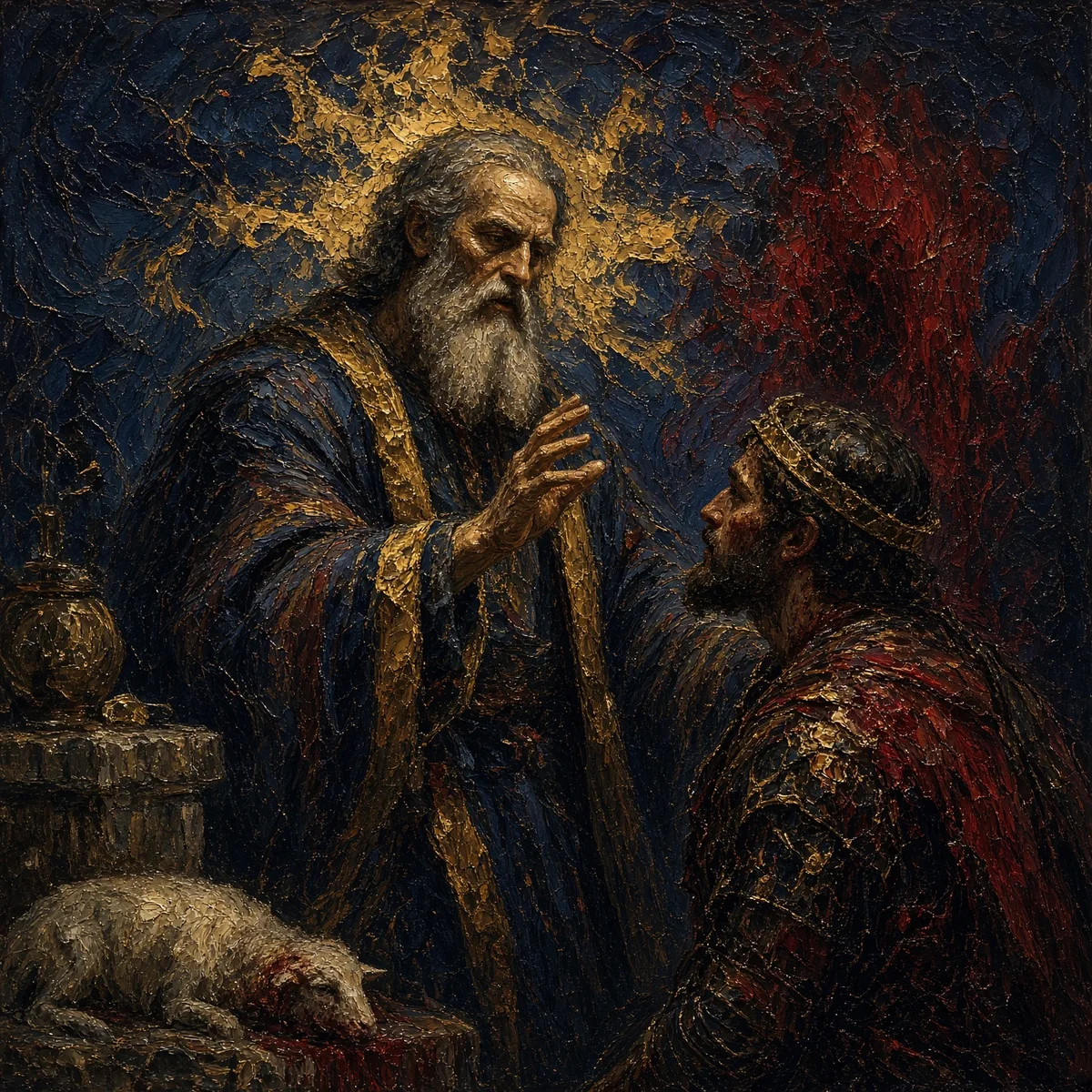
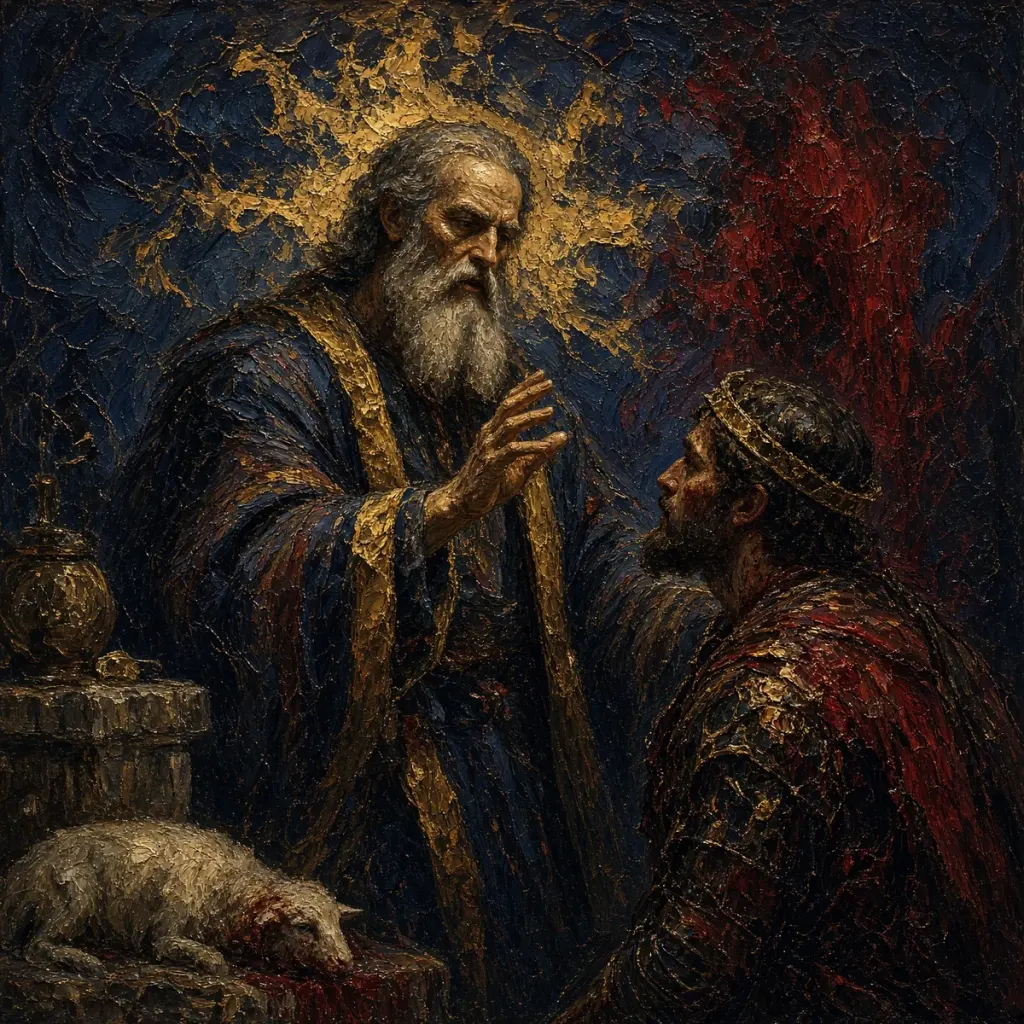
[Verse 1]
Samuel reminds Saul that God anointed him and commands attentive obedience.
Saul gathers the people and numbers the army at Telaim.
Saul strikes Amalek from Havilah toward Shur.
Saul and the people spare Agag and the best livestock.
[Pre-Chorus]
The warning stood where no one wished to see,
And every hidden root became a tree.
[Chorus]
To Obey Is Better Than Sacrifice, let the warning remain,
Hidden sin still flowers into pain.
The word of the LORD exposed what men concealed,
And judgment stood where every heart was revealed.
[Verse 2]
Saul greets Samuel with a claim that he has performed the command.
Samuel answers with the sound of sheep and oxen in his ears.
Saul blames the people and says the best animals were kept for sacrifice.
Saul again insists that he obeyed while acknowledging the spared king and spoil.
[Bridge]
Rebellion is compared with witchcraft, and Saul is rejected from being king.
Saul confesses that fear of the people led him to transgress.
The torn mantle becomes a sign that the kingdom is torn from Saul.
Samuel kills Agag, then separates from Saul and mourns him until death.
[Final Chorus]
To Obey Is Better Than Sacrifice, let the warning remain,
Hidden sin still flowers into pain.
The word of the LORD exposed what men concealed,
And judgment stood where every heart stood revealed.
[Outro]
The warning did not vanish with the dust.
The final line remembered judgment, fear, and trust.
1 Samuel 15: The sheep interrupt Saul's account of obedience
The Amalekite campaign turns on a clash between Saul's repeated claim that he obeyed and the visible, audible evidence that he altered the command. Agag lives, valuable livestock survives, and sheep are still bleating when Saul tells Samuel, “I have performed the commandment of the LORD.” The Book of 1 Samuel does not hide the severity of the original command, including its reach beyond combatants, but it is equally direct about what Saul and the people chose to spare. Samuel's confrontation moves beneath sacrifice to the issue of hearing: obedience cannot be manufactured afterward by giving a religious purpose to what was kept. Saul confesses, yet the rejection of his kingship stands. A torn mantle gives the verdict physical form. The chapter closes with separation rather than triumph, as Samuel mourns Saul and the LORD's regret frames the loss.