New · FreePlay The Witnesses The in-depth puzzle battle quest through Bible history

People of the Bible

Saul

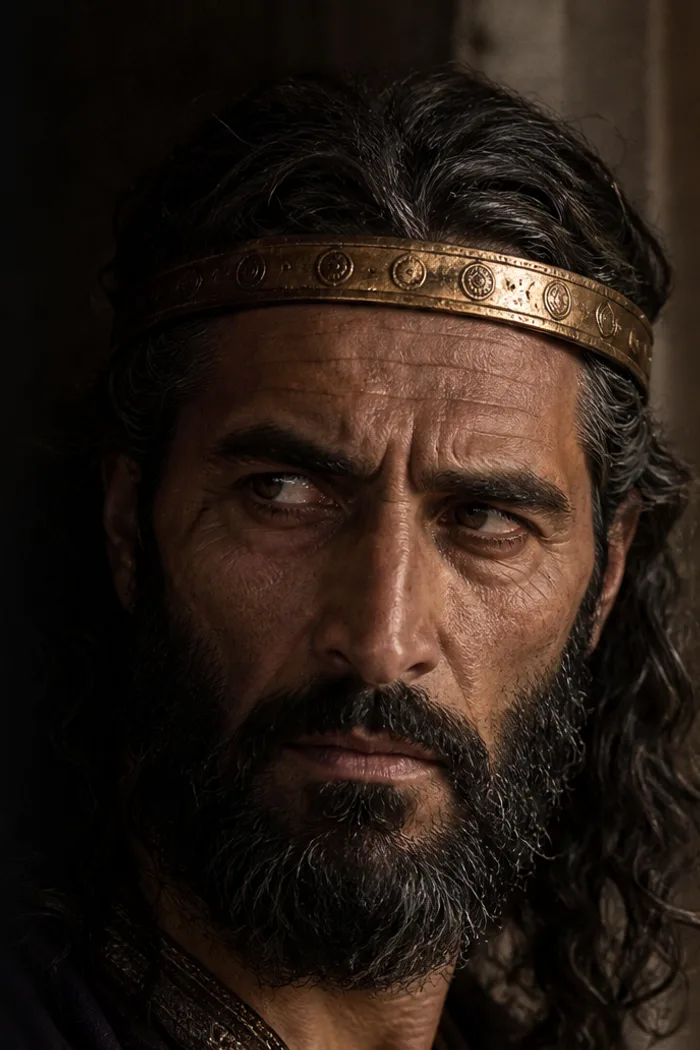
Was found hiding among the baggage on the day he was made king, and spent the rest of his reign unable to stop looking over his shoulder.

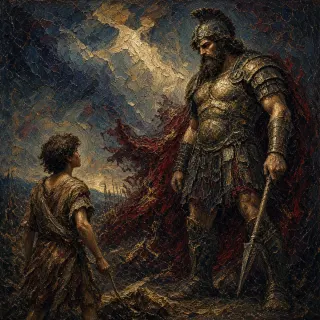
Saul is out looking for his father’s lost donkeys when he is anointed, and he goes home and tells nobody. At the public choosing he has to be fetched from where he is hiding. He begins well: he takes a national insult personally in the right way, wins, and refuses to execute the men who had opposed him. Then the unravelling starts, and every step of it is a small impatience. He offers the sacrifice himself rather than wait. He spares what he was told to destroy and explains it. And then a boy kills a giant, and Saul spends fourteen years hunting him.

Where he appears1 Samuel 9 to 31

Scroll down to the account
Saul

The movements, in the order the text gives them.

The Account of Saul

  1. 01

    1 Samuel 9:1-10:27

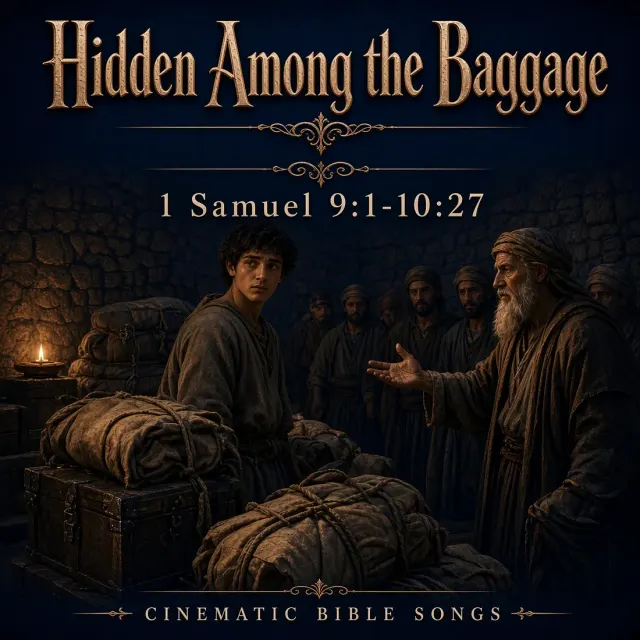
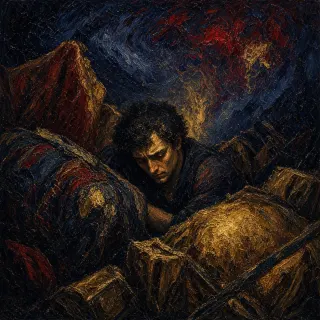
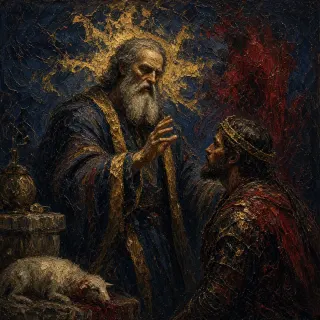
    Hidden among the baggage

    He is looking for donkeys and finds a kingdom. At the casting of lots he cannot be found, and has to be pointed out standing head and shoulders above the crowd once he is dragged out.

    The donkeys are found before Israel's king is. Saul begins by searching for his father's animals; when his own name is finally selected before the nation, he is the missing item, hidden among the baggage. The tallest man in the gathering has arranged not to be in it. The Book of First Samuel notices the incongruity without explaining the hiding as either admirable humility or a diagnosed fear.

    Between those two searches, the directions come from almost everyone but Saul: a servant with a little silver, women going to draw water, and Samuel, who has already been told to expect him. Saul's unproductive errand and the LORD's announcement, I will send thee a man, describe the same journey from different sides. He is concerned about his father's worry, invited to a meal already prepared for him, and anointed before the public assembly knows his name has been chosen.

    Nor is his elevation merely a matter of impressive shoulders. God gives him another heart; the signs occur; the Spirit comes upon him. Those are real gifts in the account, not appearances dismissed because of his later failures. Yet Samuel still tells the assembled people that their demand has rejected God. Divine provision and the rebuke of that demand stand together. Saul goes home with supporters whose hearts God has touched, opponents who despise him, and, for the moment, no reply to the insult.

    Verse by verse

    1. 9:5

      Saul explicitly worries that his father will stop worrying about the animals and worry about him and the servant. Indifference to his father is not part of this introduction.

    2. 9:9

      The verse itself explains the relation between the older designation seer and the designation prophet. This parenthesis is part of the biblical text, not a modern editorial note.

    3. 10:9

      Another heart describes an actual divine action in the account. The verse does not by itself settle later theological debates about regeneration or irreversible salvation.

    4. 10:22

      Stuff means baggage or equipment. The verse states Saul's hiding but supplies no explicit reason for it.

    5. 10:24

      Acts 13:21 names Saul, identifies his tribe as Benjamin, and assigns forty years to his reign. His prominence here is not the only account of his kingship in the canon.

    6. 10:25

      The manner of the kingdom is written down and placed before the LORD. Its complete contents are not reproduced here, so it cannot simply be equated word for word with the warning in chapter 8.

    1 Samuel 9:1-10:27: Hidden among the baggage

    1 Samuel 9:1-10:27

    King James Version · 54 verses

    9:1Now there was a man of Benjamin, whose name was Kish, the son of Abiel, the son of Zeror, the son of Bechorath, the son of Aphiah, a Benjamite, a mighty man of power.

    9:2And he had a son, whose name was Saul, a choice young man, and a goodly: and there was not among the children of Israel a goodlier person than he: from his shoulders and upward he was higher than any of the people.

    9:3And the asses of Kish Saul’s father were lost. And Kish said to Saul his son, Take now one of the servants with thee, and arise, go seek the asses.

    9:4And he passed through mount Ephraim, and passed through the land of Shalisha, but they found them not: then they passed through the land of Shalim, and there they were not: and he passed through the land of the Benjamites, but they found them not.

    9:5And when they were come to the land of Zuph, Saul said to his servant that was with him, Come, and let us return; lest my father leave caring for the asses, and take thought for us.

    9:6And he said unto him, Behold now, there is in this city a man of God, and he is an honourable man; all that he saith cometh surely to pass: now let us go thither; peradventure he can shew us our way that we should go.

    9:7Then said Saul to his servant, But, behold, if we go, what shall we bring the man? for the bread is spent in our vessels, and there is not a present to bring to the man of God: what have we?

    9:8And the servant answered Saul again, and said, Behold, I have here at hand the fourth part of a shekel of silver: that will I give to the man of God, to tell us our way.

    9:9(Beforetime in Israel, when a man went to enquire of God, thus he spake, Come, and let us go to the seer: for he that is now called a Prophet was beforetime called a Seer.)

    9:10Then said Saul to his servant, Well said; come, let us go. So they went unto the city where the man of God was.

    9:11And as they went up the hill to the city, they found young maidens going out to draw water, and said unto them, Is the seer here?

    9:12And they answered them, and said, He is; behold, he is before you: make haste now, for he came to day to the city; for there is a sacrifice of the people to day in the high place:

    9:13As soon as ye be come into the city, ye shall straightway find him, before he go up to the high place to eat: for the people will not eat until he come, because he doth bless the sacrifice; and afterwards they eat that be bidden. Now therefore get you up; for about this time ye shall find him.

    9:14And they went up into the city: and when they were come into the city, behold, Samuel came out against them, for to go up to the high place.

    9:15Now the LORD had told Samuel in his ear a day before Saul came, saying,

    9:16To morrow about this time I will send thee a man out of the land of Benjamin, and thou shalt anoint him to be captain over my people Israel, that he may save my people out of the hand of the Philistines: for I have looked upon my people, because their cry is come unto me.

    9:17And when Samuel saw Saul, the LORD said unto him, Behold the man whom I spake to thee of! this same shall reign over my people.

    9:18Then Saul drew near to Samuel in the gate, and said, Tell me, I pray thee, where the seer’s house is.

    9:19And Samuel answered Saul, and said, I am the seer: go up before me unto the high place; for ye shall eat with me to day, and to morrow I will let thee go, and will tell thee all that is in thine heart.

    9:20And as for thine asses that were lost three days ago, set not thy mind on them; for they are found. And on whom is all the desire of Israel? Is it not on thee, and on all thy father’s house?

    9:21And Saul answered and said, Am not I a Benjamite, of the smallest of the tribes of Israel? and my family the least of all the families of the tribe of Benjamin? wherefore then speakest thou so to me?

    9:22And Samuel took Saul and his servant, and brought them into the parlour, and made them sit in the chiefest place among them that were bidden, which were about thirty persons.

    9:23And Samuel said unto the cook, Bring the portion which I gave thee, of which I said unto thee, Set it by thee.

    9:24And the cook took up the shoulder, and that which was upon it, and set it before Saul. And Samuel said, Behold that which is left! set it before thee, and eat: for unto this time hath it been kept for thee since I said, I have invited the people. So Saul did eat with Samuel that day.

    9:25And when they were come down from the high place into the city, Samuel communed with Saul upon the top of the house.

    9:26And they arose early: and it came to pass about the spring of the day, that Samuel called Saul to the top of the house, saying, Up, that I may send thee away. And Saul arose, and they went out both of them, he and Samuel, abroad.

    9:27And as they were going down to the end of the city, Samuel said to Saul, Bid the servant pass on before us, (and he passed on,) but stand thou still a while, that I may shew thee the word of God.

    10:1Then Samuel took a vial of oil, and poured it upon his head, and kissed him, and said, Is it not because the LORD hath anointed thee to be captain over his inheritance?

    10:2When thou art departed from me to day, then thou shalt find two men by Rachel’s sepulchre in the border of Benjamin at Zelzah; and they will say unto thee, The asses which thou wentest to seek are found: and, lo, thy father hath left the care of the asses, and sorroweth for you, saying, What shall I do for my son?

    10:3Then shalt thou go on forward from thence, and thou shalt come to the plain of Tabor, and there shall meet thee three men going up to God to Beth-el, one carrying three kids, and another carrying three loaves of bread, and another carrying a bottle of wine:

    10:4And they will salute thee, and give thee two loaves of bread; which thou shalt receive of their hands.

    10:5After that thou shalt come to the hill of God, where is the garrison of the Philistines: and it shall come to pass, when thou art come thither to the city, that thou shalt meet a company of prophets coming down from the high place with a psaltery, and a tabret, and a pipe, and a harp, before them; and they shall prophesy:

    10:6And the Spirit of the LORD will come upon thee, and thou shalt prophesy with them, and shalt be turned into another man.

    10:7And let it be, when these signs are come unto thee, that thou do as occasion serve thee; for God is with thee.

    10:8And thou shalt go down before me to Gilgal; and, behold, I will come down unto thee, to offer burnt offerings, and to sacrifice sacrifices of peace offerings: seven days shalt thou tarry, till I come to thee, and shew thee what thou shalt do.

    10:9And it was so, that when he had turned his back to go from Samuel, God gave him another heart: and all those signs came to pass that day.

    10:10And when they came thither to the hill, behold, a company of prophets met him; and the Spirit of God came upon him, and he prophesied among them.

    10:11And it came to pass, when all that knew him beforetime saw that, behold, he prophesied among the prophets, then the people said one to another, What is this that is come unto the son of Kish? Is Saul also among the prophets?

    10:12And one of the same place answered and said, But who is their father? Therefore it became a proverb, Is Saul also among the prophets?

    10:13And when he had made an end of prophesying, he came to the high place.

    10:14And Saul’s uncle said unto him and to his servant, Whither went ye? And he said, To seek the asses: and when we saw that they were no where, we came to Samuel.

    10:15And Saul’s uncle said, Tell me, I pray thee, what Samuel said unto you.

    10:16And Saul said unto his uncle, He told us plainly that the asses were found. But of the matter of the kingdom, whereof Samuel spake, he told him not.

    10:17And Samuel called the people together unto the LORD to Mizpeh;

    10:18And said unto the children of Israel, Thus saith the LORD God of Israel, I brought up Israel out of Egypt, and delivered you out of the hand of the Egyptians, and out of the hand of all kingdoms, and of them that oppressed you:

    10:19And ye have this day rejected your God, who himself saved you out of all your adversities and your tribulations; and ye have said unto him, Nay, but set a king over us. Now therefore present yourselves before the LORD by your tribes, and by your thousands.

    10:20And when Samuel had caused all the tribes of Israel to come near, the tribe of Benjamin was taken.

    10:21When he had caused the tribe of Benjamin to come near by their families, the family of Matri was taken, and Saul the son of Kish was taken: and when they sought him, he could not be found.

    10:22Therefore they enquired of the LORD further, if the man should yet come thither. And the LORD answered, Behold, he hath hid himself among the stuff.

    10:23And they ran and fetched him thence: and when he stood among the people, he was higher than any of the people from his shoulders and upward.

    10:24And Samuel said to all the people, See ye him whom the LORD hath chosen, that there is none like him among all the people? And all the people shouted, and said, God save the king.

    10:25Then Samuel told the people the manner of the kingdom, and wrote it in a book, and laid it up before the LORD. And Samuel sent all the people away, every man to his house.

    10:26And Saul also went home to Gibeah; and there went with him a band of men, whose hearts God had touched.

    10:27But the children of Belial said, How shall this man save us? And they despised him, and brought him no presents. But he held his peace.


  2. 02

    1 Samuel 11:1-15

    The right kind of anger

    Jabesh-gilead is offered terms that involve losing an eye each. Saul cuts up oxen and sends the pieces through the country, wins, and refuses to let anyone be put to death for it.

    Saul's first great victory ends with a refusal to kill. Not the Ammonite force, which has been routed, but the Israelites who had doubted him. His supporters want names and executions. Saul answers that this is a day on which the LORD has wrought salvation. The rescued city is not to become the occasion for settling his private account.

    That restraint belongs beside the anger with which the passage began. Nahash proposes mutilation as a public disgrace upon Israel, and the Spirit of God comes upon Saul as he hears the news. He turns a weeping population into a gathered force. The severed oxen make his summons anything but gentle, yet the threat he sends concerns the livestock of those who refuse to come, not an order to execute dissenters. At the end, he restrains precisely that demand for blood.

    The king is introduced here coming from the field behind the herd, not receiving ambassadors on a throne. Royal recognition is becoming effective leadership in a particular emergency. Gilgal's renewal of the kingdom follows the rescue; it does not manufacture the rescue after the ceremony. The chapter allows Saul a genuine beginning worth remembering. His later record does not make this deliverance unreal.

    Verse by verse

    1. 11:2

      Nahash states his purpose as bringing reproach upon all Israel. The verse does not explain the demand by a particular shield design or archery technique.

    2. 11:6

      Saul's anger is explicitly linked in the sequence to the Spirit of God coming upon him. This does not make every later expression of Saul's anger equivalent to this one.

    3. 11:7

      The threatened penalty is the destruction of the absent men's oxen. The passage also states that the fear of the LORD falls on the people.

    4. 11:13

      The men Saul refuses to execute are the domestic opponents named in verse 12, not the Ammonites whose defeat has already been described.

    1 Samuel 11:1-15: The right kind of anger

    1 Samuel 11:1-15

    King James Version · 15 verses

    11:1Then Nahash the Ammonite came up, and encamped against Jabesh-gilead: and all the men of Jabesh said unto Nahash, Make a covenant with us, and we will serve thee.

    11:2And Nahash the Ammonite answered them, On this condition will I make a covenant with you, that I may thrust out all your right eyes, and lay it for a reproach upon all Israel.

    11:3And the elders of Jabesh said unto him, Give us seven days’ respite, that we may send messengers unto all the coasts of Israel: and then, if there be no man to save us, we will come out to thee.

    11:4Then came the messengers to Gibeah of Saul, and told the tidings in the ears of the people: and all the people lifted up their voices, and wept.

    11:5And, behold, Saul came after the herd out of the field; and Saul said, What aileth the people that they weep? And they told him the tidings of the men of Jabesh.

    11:6And the Spirit of God came upon Saul when he heard those tidings, and his anger was kindled greatly.

    11:7And he took a yoke of oxen, and hewed them in pieces, and sent them throughout all the coasts of Israel by the hands of messengers, saying, Whosoever cometh not forth after Saul and after Samuel, so shall it be done unto his oxen. And the fear of the LORD fell on the people, and they came out with one consent.

    11:8And when he numbered them in Bezek, the children of Israel were three hundred thousand, and the men of Judah thirty thousand.

    11:9And they said unto the messengers that came, Thus shall ye say unto the men of Jabesh-gilead, To morrow, by that time the sun be hot, ye shall have help. And the messengers came and shewed it to the men of Jabesh; and they were glad.

    11:10Therefore the men of Jabesh said, To morrow we will come out unto you, and ye shall do with us all that seemeth good unto you.

    11:11And it was so on the morrow, that Saul put the people in three companies; and they came into the midst of the host in the morning watch, and slew the Ammonites until the heat of the day: and it came to pass, that they which remained were scattered, so that two of them were not left together.

    11:12And the people said unto Samuel, Who is he that said, Shall Saul reign over us? bring the men, that we may put them to death.

    11:13And Saul said, There shall not a man be put to death this day: for to day the LORD hath wrought salvation in Israel.

    11:14Then said Samuel to the people, Come, and let us go to Gilgal, and renew the kingdom there.

    11:15And all the people went to Gilgal; and there they made Saul king before the LORD in Gilgal; and there they sacrificed sacrifices of peace offerings before the LORD; and there Saul and all the men of Israel rejoiced greatly.

  3. 03

    1 Samuel 13:5-14

    Seven days, and then he did it himself

    The army is scattering and Samuel has not come. He offers the burnt offering, and Samuel arrives as he finishes. You have done foolishly, and your kingdom shall not continue.

    Saul offers the sacrifice because he says he has not yet sought the LORD's favor. Samuel condemns the act because Saul has not kept the LORD's command. The collision is not between religion and irreligion. It is between a religious act Saul considers necessary and an instruction he has no authority to replace with that act.

    His circumstances are not imaginary. The enemy has gathered, his men are hiding or crossing the Jordan, and those who remain are trembling. He has waited seven days. The Book of First Samuel does not reduce this pressure to an easy little test that only an unreasonable man could fail. It does, however, place Samuel's arrival immediately after the offering. Saul's explanation lists the circumstances and ends with I forced myself. The king presents the decision as something necessity extracted from him. Samuel calls it disobedience.

    The judgment reaches beyond the afternoon at Gilgal. Thy kingdom shall not continue concerns the permanence of Saul's rule and house; he is not removed from the field at the end of this conversation. He still has men to count and a war before him. What is withdrawn is the enduring future he had not yet secured. The crown remains on a shortened horizon.

    Verse by verse

    1. 13:6

      In a strait means in severe difficulty, not in a narrow water passage. The hiding places make the military distress concrete.

    2. 13:8

      The earlier direction in 10:8 includes both seven days and waiting until Samuel comes to tell Saul what to do. No hour of arrival is supplied in either passage.

    3. 13:9

      Samuel's stated charge in verses 13-14 is failure to keep the commandment. The passage does not explicitly formulate the offense as a general ban on every royal involvement in sacrifice.

    4. 13:14

      The man after the LORD's own heart is not named in this sentence. Acts 13:22 identifies David with that description; it does not claim David never sinned.

    1 Samuel 13:5-14

    King James Version · 10 verses

    13:5And the Philistines gathered themselves together to fight with Israel, thirty thousand chariots, and six thousand horsemen, and people as the sand which is on the sea shore in multitude: and they came up, and pitched in Michmash, eastward from Beth-aven.

    13:6When the men of Israel saw that they were in a strait, (for the people were distressed,) then the people did hide themselves in caves, and in thickets, and in rocks, and in high places, and in pits.

    13:7And some of the Hebrews went over Jordan to the land of Gad and Gilead. As for Saul, he was yet in Gilgal, and all the people followed him trembling.

    13:8And he tarried seven days, according to the set time that Samuel had appointed: but Samuel came not to Gilgal; and the people were scattered from him.

    13:9And Saul said, Bring hither a burnt offering to me, and peace offerings. And he offered the burnt offering.

    13:10And it came to pass, that as soon as he had made an end of offering the burnt offering, behold, Samuel came; and Saul went out to meet him, that he might salute him.

    13:11And Samuel said, What hast thou done? And Saul said, Because I saw that the people were scattered from me, and that thou camest not within the days appointed, and that the Philistines gathered themselves together at Michmash;

    13:12Therefore said I, The Philistines will come down now upon me to Gilgal, and I have not made supplication unto the LORD: I forced myself therefore, and offered a burnt offering.

    13:13And Samuel said to Saul, Thou hast done foolishly: thou hast not kept the commandment of the LORD thy God, which he commanded thee: for now would the LORD have established thy kingdom upon Israel for ever.

    13:14But now thy kingdom shall not continue: the LORD hath sought him a man after his own heart, and the LORD hath commanded him to be captain over his people, because thou hast not kept that which the LORD commanded thee.

  4. 04

    1 Samuel 15:1-23

    The people spared the best

    Told to devote Amalek to destruction, he keeps the king and the best animals, and greets Samuel by saying he has performed the commandment. The bleating of sheep answers him.

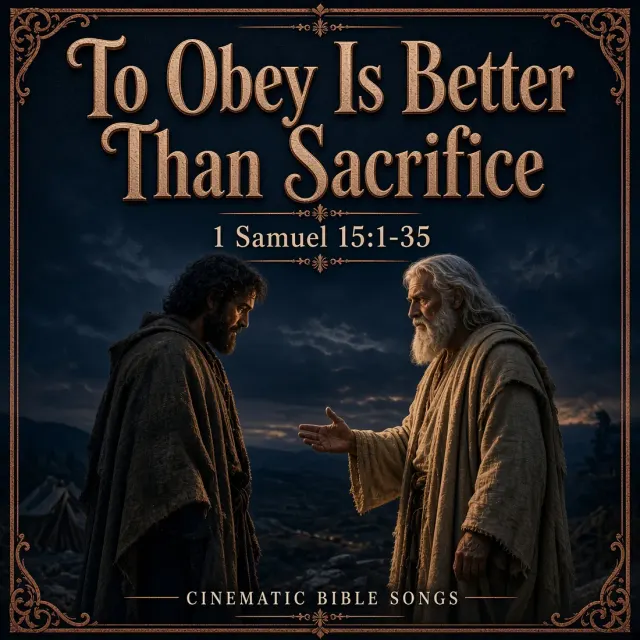
    Saul's obedience has kept the best things alive and destroyed the things nobody wanted. That is the distinction verse 9 actually gives. The passage does not describe an indiscriminate refusal to kill on grounds of compassion. Agag and the valuable livestock survive; the destruction proceeds elsewhere. The command itself includes women and children. Its severity is part of the text, not something the account hides behind the word battle.

    Saul nevertheless greets Samuel with a declaration of completed obedience. When the animals become the subject, the grammar shifts: they have brought them; the people spared them. He claims the fulfilled mission and assigns the disputed exception elsewhere. Samuel brings the issue back to the king who received the commission. The accusation is not that the proposed sacrifice uses inferior animals. It is that Saul has decided which parts of the command may be exchanged for a more attractive religious result.

    The speech about obedience is therefore not a dismissal of sacrifice as such. It denies sacrifice the power to rename disobedience. Samuel's final sentence turns Saul's rejection of the LORD's word into the announced rejection of Saul as king. The man who has sorted the spoil by value is not permitted to sort the command in the same way.

    Verse by verse

    1. 15:1

      Hearken unto the voice frames the commission as an obligation to hear and obey. The same concern governs Samuel's speech in verses 22-23.

    2. 15:3

      The command names men, women, infants, and sucklings as well as animals. The passage does not present their deaths as accidental casualties.

    3. 15:6

      The Kenites are told to separate from the Amalekites because of their earlier kindness to Israel. The text explicitly distinguishes these groups.

    4. 15:9

      Saul and the people are named together as sparing Agag and the best livestock. His later explanation cannot remove him from the action the verse records.

    5. 15:23

      Samuel compares rebellion with witchcraft and stubbornness with idolatry. The comparison concerns their rejection of the LORD's authority, not an assertion that Saul has already conducted the consultation recorded in chapter 28.

    1 Samuel 15:1-23: The people spared the best

    1 Samuel 15:1-23

    King James Version · 23 verses

    15:1Samuel also said unto Saul, The LORD sent me to anoint thee to be king over his people, over Israel: now therefore hearken thou unto the voice of the words of the LORD.

    15:2Thus saith the LORD of hosts, I remember that which Amalek did to Israel, how he laid wait for him in the way, when he came up from Egypt.

    15:3Now go and smite Amalek, and utterly destroy all that they have, and spare them not; but slay both man and woman, infant and suckling, ox and sheep, camel and ass.

    15:4And Saul gathered the people together, and numbered them in Telaim, two hundred thousand footmen, and ten thousand men of Judah.

    15:5And Saul came to a city of Amalek, and laid wait in the valley.

    15:6And Saul said unto the Kenites, Go, depart, get you down from among the Amalekites, lest I destroy you with them: for ye shewed kindness to all the children of Israel, when they came up out of Egypt. So the Kenites departed from among the Amalekites.

    15:7And Saul smote the Amalekites from Havilah until thou comest to Shur, that is over against Egypt.

    15:8And he took Agag the king of the Amalekites alive, and utterly destroyed all the people with the edge of the sword.

    15:9But Saul and the people spared Agag, and the best of the sheep, and of the oxen, and of the fatlings, and the lambs, and all that was good, and would not utterly destroy them: but every thing that was vile and refuse, that they destroyed utterly.

    15:10Then came the word of the LORD unto Samuel, saying,

    15:11It repenteth me that I have set up Saul to be king: for he is turned back from following me, and hath not performed my commandments. And it grieved Samuel; and he cried unto the LORD all night.

    15:12And when Samuel rose early to meet Saul in the morning, it was told Samuel, saying, Saul came to Carmel, and, behold, he set him up a place, and is gone about, and passed on, and gone down to Gilgal.

    15:13And Samuel came to Saul: and Saul said unto him, Blessed be thou of the LORD: I have performed the commandment of the LORD.

    15:14And Samuel said, What meaneth then this bleating of the sheep in mine ears, and the lowing of the oxen which I hear?

    15:15And Saul said, They have brought them from the Amalekites: for the people spared the best of the sheep and of the oxen, to sacrifice unto the LORD thy God; and the rest we have utterly destroyed.

    15:16Then Samuel said unto Saul, Stay, and I will tell thee what the LORD hath said to me this night. And he said unto him, Say on.

    15:17And Samuel said, When thou wast little in thine own sight, wast thou not made the head of the tribes of Israel, and the LORD anointed thee king over Israel?

    15:18And the LORD sent thee on a journey, and said, Go and utterly destroy the sinners the Amalekites, and fight against them until they be consumed.

    15:19Wherefore then didst thou not obey the voice of the LORD, but didst fly upon the spoil, and didst evil in the sight of the LORD?

    15:20And Saul said unto Samuel, Yea, I have obeyed the voice of the LORD, and have gone the way which the LORD sent me, and have brought Agag the king of Amalek, and have utterly destroyed the Amalekites.

    15:21But the people took of the spoil, sheep and oxen, the chief of the things which should have been utterly destroyed, to sacrifice unto the LORD thy God in Gilgal.

    15:22And Samuel said, Hath the LORD as great delight in burnt offerings and sacrifices, as in obeying the voice of the LORD? Behold, to obey is better than sacrifice, and to hearken than the fat of rams.

    15:23For rebellion is as the sin of witchcraft, and stubbornness is as iniquity and idolatry. Because thou hast rejected the word of the LORD, he hath also rejected thee from being king.

  5. 05

    1 Samuel 18:6-16

    What can he have more but the kingdom

    Women sing thousands for Saul and ten thousands for David, and from that day he eyes him. He throws the spear twice, then makes him a commander, hoping the Philistines will do it for him.

    The women have come to meet king Saul. That opening detail matters: the song he hears as a threat is sung within his own victory welcome. It credits him with thousands. Saul hears the larger number attached to David and supplies the next word himself: kingdom. The singers do not announce a coup. The king interprets the comparison in terms of succession.

    The next scene puts two hands side by side. David played with his hand; there was a javelin in Saul's hand. One man is performing the service that brought him into the royal household, while the other voices his intention to pin that man to the wall. The physical contrast is enough. A diagnosis from outside the passage would not explain the scene more faithfully than the intention Saul states.

    Sending David away does not remove the difficulty. His command places him before the people, and the public loves the man whose success frightens the king. The Book of First Samuel repeats that the LORD is with David, while stating that he has departed from Saul. What Saul treats as a threat to be managed is also a distinction he cannot reverse by rearranging military appointments. Distance from the palace is not distance from the people's regard.

    Verse by verse

    1. 18:7

      The thousands and ten thousands belong to a sung comparison, not an itemized military casualty register. Both men receive praise in its wording.

    2. 18:8

      The connection between the song and the kingdom is explicitly Saul's own statement. The women are not said to have demanded David's coronation.

    3. 18:10

      Prophesied is the KJV wording here as in Saul's earlier prophetic episode, though this verse describes a different spiritual circumstance. The passage supplies no modern medical diagnosis.

    4. 18:14

      Behaved himself wisely describes David's prudent and successful conduct in this setting. It is not a declaration that every action of his later life will be blameless.

    1 Samuel 18:6-16

    King James Version · 11 verses

    18:6And it came to pass as they came, when David was returned from the slaughter of the Philistine, that the women came out of all cities of Israel, singing and dancing, to meet king Saul, with tabrets, with joy, and with instruments of musick.

    18:7And the women answered one another as they played, and said, Saul hath slain his thousands, and David his ten thousands.

    18:8And Saul was very wroth, and the saying displeased him; and he said, They have ascribed unto David ten thousands, and to me they have ascribed but thousands: and what can he have more but the kingdom?

    18:9And Saul eyed David from that day and forward.

    18:10And it came to pass on the morrow, that the evil spirit from God came upon Saul, and he prophesied in the midst of the house: and David played with his hand, as at other times: and there was a javelin in Saul’s hand.

    18:11And Saul cast the javelin; for he said, I will smite David even to the wall with it. And David avoided out of his presence twice.

    18:12And Saul was afraid of David, because the LORD was with him, and was departed from Saul.

    18:13Therefore Saul removed him from him, and made him his captain over a thousand; and he went out and came in before the people.

    18:14And David behaved himself wisely in all his ways; and the LORD was with him.

    18:15Wherefore when Saul saw that he behaved himself very wisely, he was afraid of him.

    18:16But all Israel and Judah loved David, because he went out and came in before them.

    1 Samuel 18:6-16: What can he have more but the kingdom
  6. 06

    1 Samuel 28:3-25

    The night at Endor

    He has expelled the mediums himself, and goes to one in disguise because nothing answers him any more. The woman is more frightened than he is, and afterwards she makes him eat.

    Saul swears by the LORD that a forbidden consultation will go unpunished. The oath is one of the night's sharpest contradictions. He has removed practitioners from the land, yet now needs a woman who has survived that removal; he disguises himself, then guarantees her safety by the God whose answer he has not received. His royal authority can promise protection from punishment. It cannot produce a favorable word from God.

    The appearance is called Samuel in the account, and the mantle recalls the prophet whose torn garment had already accompanied the sentence against Saul in 15:27-28. The message is not a new strategy for the battle. It repeats the old judgment and names David. Changing the means of consultation has not changed what Saul is told. His refusal to obey over Amalek remains in the answer.

    Then the king lies full length on the floor, without strength. The woman whose life his policy threatened urges him to eat and prepares the calf and bread. Her practical care is recorded without making her forbidden practice acceptable. The account ends not with a spectacular display but with a meal and a departure into the same night. Saul receives enough strength to leave. He does not receive a different verdict.

    Verse by verse

    1. 28:6

      Dreams, Urim, and prophets are the three channels named as giving Saul no answer. The verse does not explain the physical procedure used for the Urim on this occasion.

    2. 28:12

      Early Christian readings differed: Justin Martyr, Dialogue with Trypho 105, treated the appearance as Samuel, while Tertullian, On the Soul 57, argued for a deceptive impersonation. The biblical account itself names Samuel.

    3. 28:14

      Saul recognizes Samuel from the woman's description of an old man in a mantle. The verse does not explicitly say that Saul sees the figure himself.

    4. 28:18

      The message specifically recalls the disobedience concerning Amalek in chapter 15. It is not an unrelated new accusation.

    5. 28:19

      Be with me announces the approaching deaths in the context of Samuel's death. It does not expressly define Saul's eternal destination or say that every son he ever fathered will die the next day.

    6. 28:25

      First Chronicles 10:13-14 condemns this consultation and describes Saul as not inquiring of the LORD. First Samuel 28:6 does record an unanswered inquiry; the two formulations are not identical.

    1 Samuel 28:3-25: The night at Endor

    1 Samuel 28:3-25

    King James Version · 23 verses

    28:3Now Samuel was dead, and all Israel had lamented him, and buried him in Ramah, even in his own city. And Saul had put away those that had familiar spirits, and the wizards, out of the land.

    28:4And the Philistines gathered themselves together, and came and pitched in Shunem: and Saul gathered all Israel together, and they pitched in Gilboa.

    28:5And when Saul saw the host of the Philistines, he was afraid, and his heart greatly trembled.

    28:6And when Saul enquired of the LORD, the LORD answered him not, neither by dreams, nor by Urim, nor by prophets.

    28:7Then said Saul unto his servants, Seek me a woman that hath a familiar spirit, that I may go to her, and enquire of her. And his servants said to him, Behold, there is a woman that hath a familiar spirit at Endor.

    28:8And Saul disguised himself, and put on other raiment, and he went, and two men with him, and they came to the woman by night: and he said, I pray thee, divine unto me by the familiar spirit, and bring me him up, whom I shall name unto thee.

    28:9And the woman said unto him, Behold, thou knowest what Saul hath done, how he hath cut off those that have familiar spirits, and the wizards, out of the land: wherefore then layest thou a snare for my life, to cause me to die?

    28:10And Saul sware to her by the LORD, saying, As the LORD liveth, there shall no punishment happen to thee for this thing.

    28:11Then said the woman, Whom shall I bring up unto thee? And he said, Bring me up Samuel.

    28:12And when the woman saw Samuel, she cried with a loud voice: and the woman spake to Saul, saying, Why hast thou deceived me? for thou art Saul.

    28:13And the king said unto her, Be not afraid: for what sawest thou? And the woman said unto Saul, I saw gods ascending out of the earth.

    28:14And he said unto her, What form is he of? And she said, An old man cometh up; and he is covered with a mantle. And Saul perceived that it was Samuel, and he stooped with his face to the ground, and bowed himself.

    28:15And Samuel said to Saul, Why hast thou disquieted me, to bring me up? And Saul answered, I am sore distressed; for the Philistines make war against me, and God is departed from me, and answereth me no more, neither by prophets, nor by dreams: therefore I have called thee, that thou mayest make known unto me what I shall do.

    28:16Then said Samuel, Wherefore then dost thou ask of me, seeing the LORD is departed from thee, and is become thine enemy?

    28:17And the LORD hath done to him, as he spake by me: for the LORD hath rent the kingdom out of thine hand, and given it to thy neighbour, even to David:

    28:18Because thou obeyedst not the voice of the LORD, nor executedst his fierce wrath upon Amalek, therefore hath the LORD done this thing unto thee this day.

    28:19Moreover the LORD will also deliver Israel with thee into the hand of the Philistines: and to morrow shalt thou and thy sons be with me: the LORD also shall deliver the host of Israel into the hand of the Philistines.

    28:20Then Saul fell straightway all along on the earth, and was sore afraid, because of the words of Samuel: and there was no strength in him; for he had eaten no bread all the day, nor all the night.

    28:21And the woman came unto Saul, and saw that he was sore troubled, and said unto him, Behold, thine handmaid hath obeyed thy voice, and I have put my life in my hand, and have hearkened unto thy words which thou spakest unto me.

    28:22Now therefore, I pray thee, hearken thou also unto the voice of thine handmaid, and let me set a morsel of bread before thee; and eat, that thou mayest have strength, when thou goest on thy way.

    28:23But he refused, and said, I will not eat. But his servants, together with the woman, compelled him; and he hearkened unto their voice. So he arose from the earth, and sat upon the bed.

    28:24And the woman had a fat calf in the house; and she hasted, and killed it, and took flour, and kneaded it, and did bake unleavened bread thereof:

    28:25And she brought it before Saul, and before his servants; and they did eat. Then they rose up, and went away that night.

Why it matters

Saul is the answer to the request in chapter eight. Israel asked for a king like the nations, and got one who looked exactly right, a head taller than anyone else, and whose defining trait turns out to be fear of what people think. The account is not a caricature. He prophesies, he loves his son, he is genuinely brave at the end, and he goes to his death on Gilboa fighting. David, who had every reason to hate him, composes the lament.

21 songs

The music

Every song in the catalogue whose passage falls inside these chapters.

  1. 1 Samuel 8-10

    Give Us a King

  2. 1 Samuel 9:1-10:27

    Hidden Among the Baggage

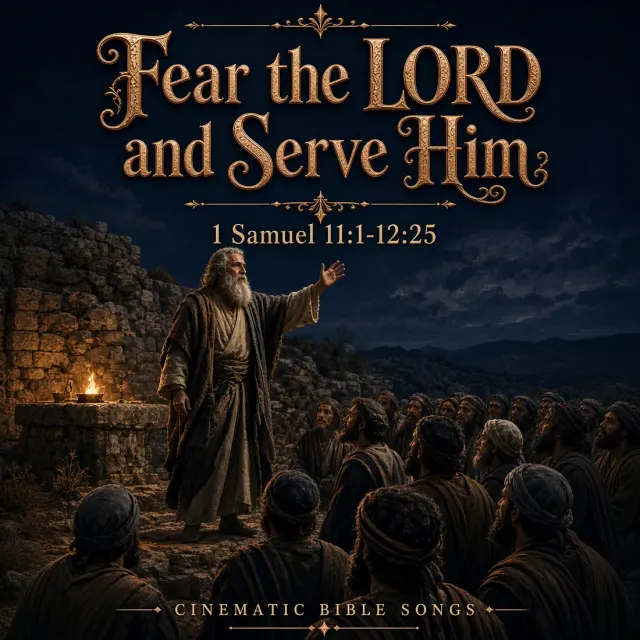
  3. 1 Samuel 11:1-12:25

    Fear the LORD and Serve Him

  4. 1 Samuel 13; 15

    Better Than Sacrifice

  5. 1 Samuel 13:1-14:52

    There Is No Restraint to the LORD

  6. 1 Samuel 15:1-35

    To Obey Is Better Than Sacrifice

  7. 1 Samuel 16:1-23

    The LORD Looketh on the Heart

  8. 1 Samuel 16

    The Shepherd Anointed

  9. 1 Samuel 17:40-49

    Run at the Giant

  10. 1 Samuel 17

    The Giant Fell

  11. 1 Samuel 17:1-58

    Who Is This Uncircumcised Philistine?

    Play hereOpen song pageRead lyrics
  12. 1 Samuel 18-23

    Covenant of Brothers

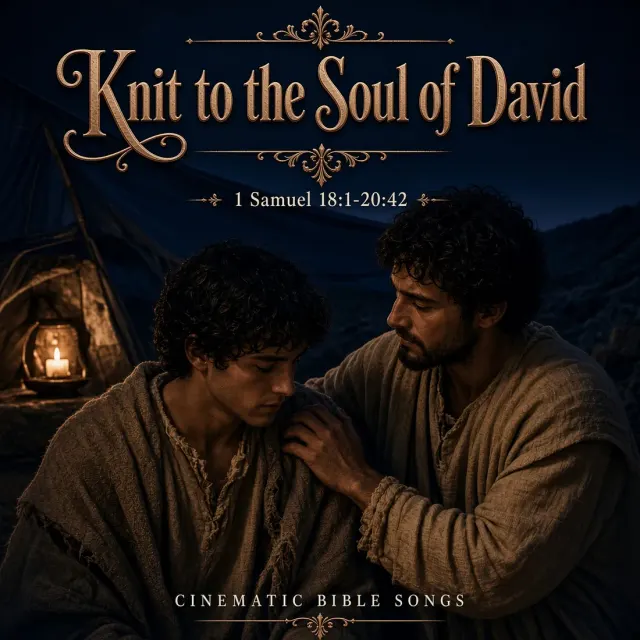
  13. 1 Samuel 18:1-20:42

    Knit to the Soul of David

  14. 1 Samuel 21:1-22:23

    Bread, Sword, and the Cave

  15. 1 Samuel 23:1-24:22

    I Will Not Stretch Forth My Hand

  16. 1 Samuel 24; 26

    I Will Not Touch the Lord's Anointed

  17. 1 Samuel 25:1-27:12

    Blessed Be Thy Advice

  18. 1 Samuel 28:1-31:13

    The Glory of Israel upon Gilboa

  19. 1 Samuel 28; 31

    The Last Night of Saul

  20. 1 Samuel 28

    The Witch of Endor

  21. 1 Samuel 30

    David Recovered All

The videos

The videos

Every release whose passage falls inside these chapters, playing here.

Nearby

All the people

Report an error on this page