


Lyrics · Ezekiel
Wheels Within Wheels
Ezekiel 1-3
Lyrics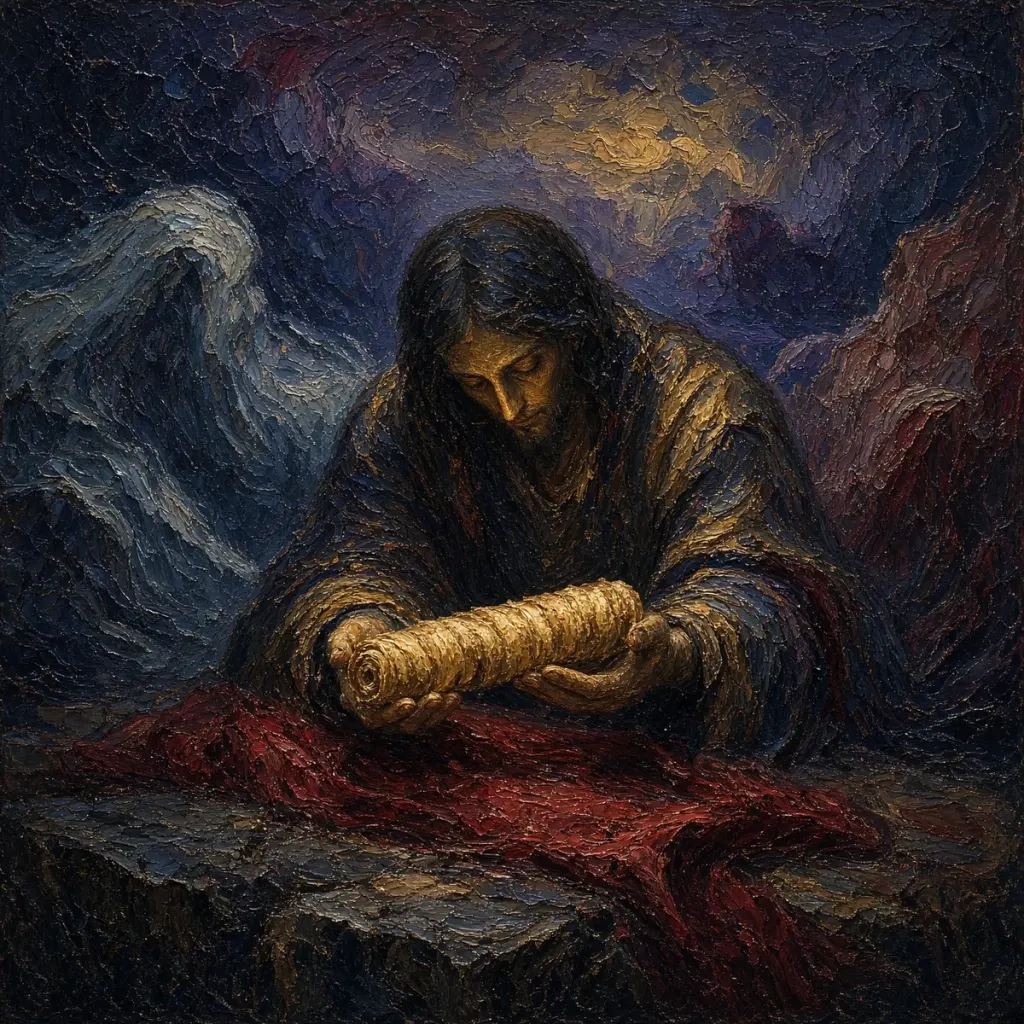
About this song
About this song
This song belongs to the Ezekiel collection. 8 recordings are available to play here, with the complete lyrics below.
- Bible book
- Ezekiel
- Collection
- Ezekiel
Named in this songEzekiel
About the passage
Ezekiel 1: A throne appears where the captives are
The Book of Ezekiel opens among captives, not in Jerusalem, and the location matters before the vision even begins. The hand of the LORD reaches Ezekiel beside Chebar, where a storm of cloud, fire, brightness, living creatures, and impossible wheels gathers into ordered movement rather than chaos. Every strange feature points upward. Wings thunder and then become still. An expanse separates the creatures from what stands above them. There a sapphire-like throne and a human-like appearance blaze within fire and rainbow brightness. Ezekiel's careful language keeps saying "likeness" and "appearance," refusing to turn the vision into a diagram of God. The chapter's great reveal is not merely spectacle but presence: "the appearance of the likeness of the glory of the LORD" has appeared in exile, and the prophet falls before the voice that follows.
Study Ezekiel 1 in depthEzekiel 2: A commission without a promise of applause
The glory that put Ezekiel on his face now gives him work to do, and the first act of the commission is to set him back on his feet. The Book of Ezekiel separates authorization from reception from the beginning. Israel is called rebellious, hardhearted, and resistant, yet Ezekiel is not promised that better delivery will make the people listen. His responsibility is to speak the words given to him whether they hear or refuse. Briers, thorns, scorpions, hostile words, and intimidating looks describe a genuinely painful audience without making that audience the source of the message. The commission then turns inward. Before Ezekiel can expose rebellion, he is warned not to become rebellious himself. A scroll written within and without, full of lamentation, mourning, and woe, is placed before him. The messenger must hear and receive before he speaks.
Study Ezekiel 2 in depthEzekiel 3: A sweet scroll and a silent watchman
A scroll full of lamentation becomes sweet in Ezekiel's mouth without becoming a pleasant message. That tension shapes the chapter. The Book of Ezekiel gives its prophet a strong face and a forehead harder than flint, but pairs that toughness with commands to receive God's words in his heart and hear them with his ears. Carried to Tel-abib in bitterness, Ezekiel spends seven astonished days sitting where the captives sit before the watchman's charge defines his responsibility. He must warn, while the hearer remains accountable for the response. Silence where warning is required brings guilt on the watchman; a delivered warning does not make him sovereign over another person's choice. The chapter then closes on a strange restriction. Ezekiel, commissioned to speak, is confined and made mute except when God opens his mouth. Even prophetic boldness remains governed by a received word.
Study Ezekiel 3 in depth