[Messenger Motif]
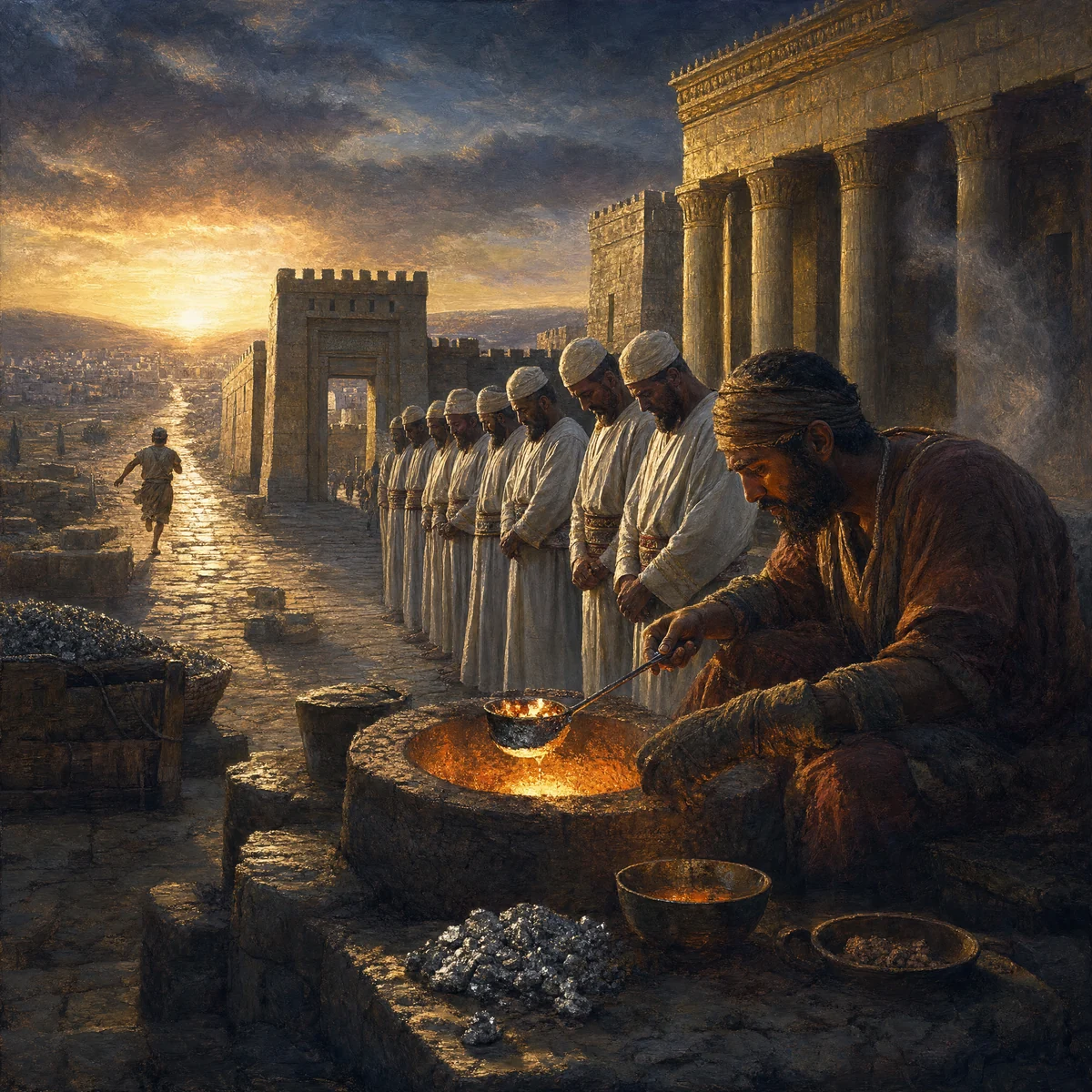
A messenger goes before the face,
Clearing stones from the ancient way.
The Lord whom the people claim to seek
Comes to the temple without delay.
[Question]
But who can bear the day of coming?
Who can stand when he appears?
Not because his purpose wanders,
But because his holiness draws near.
[Chorus]
The Lord shall suddenly come to his temple,
Like a refiner's fire, like cleansing soap.
He sits where silver loses dross,
He works through heat without losing hope.
The Lord shall suddenly come to his temple,
Sons of Levi purified.
Then offerings rise in righteousness,
And worship leaves its fraud behind.
[Verse II]
The Judge comes near to hidden sorcery,
Adultery and falsely sworn word,
Wages held from hired labor,
Widow, orphan, stranger unheard.
[Refrain]
He does not change;
Therefore Jacob is not consumed.
Return from fathers' old departures;
Let the covenant be resumed.
[Bridge]
The refiner watches every moment,
Never leaves the silver in the flame.
Purity is not destruction;
It restores the offering to the Name.
[Final Chorus]
The Lord shall suddenly come to his temple,
Every shallow confidence tried.
He cleans the priest and weighs the nation,
Brings the secret wrong outside.
The Lord shall suddenly come to his temple,
Yet the call still says, “Return.”
Mercy stands beside the furnace,
While the holy fire must burn.
[Outro]
The messenger cleared the road;
The Refiner took his seat.
Malachi 3: The judge they asked for comes to his own house
Chapter 3 answers the question “Where is the God of judgment?” with an arrival that immediately complicates the people’s expectations. A messenger prepares the way, and the Lord comes suddenly to his temple, but his presence is like refiner’s fire and fullers’ soap. Priests are purified, offerings are restored, and specific wrongs are named, from false swearing and adultery to withheld wages and oppression of the vulnerable. The chapter then turns again to Malachi’s familiar dispute form. God’s unchanging character explains why Jacob’s descendants are not consumed, while their departure from his ordinances still requires a return. That return becomes concrete in withheld tithes and offerings, with promised blessing described through storehouse food, rain, vines, and crops. Finally, two conversations are set beside each other: one calls service to God useless because the proud seem to prosper, while those who fear the LORD speak together and are remembered as his treasured possession.