
New · FreePlay The Witnesses The in-depth puzzle battle quest through Bible history
Back to all lyrics
Artwork for The Eleventh Hour

Matthew 20:1-16

The Eleventh Hour

Lyrics · Matthew

The Eleventh Hour

Matthew 20:1-16

Lyrics
About this song

About this song

This song belongs to the Matthew collection. One recording is available to play here, with the complete lyrics below.

Bible book
Matthew
Collection
Matthew
Musical styles
Acoustic
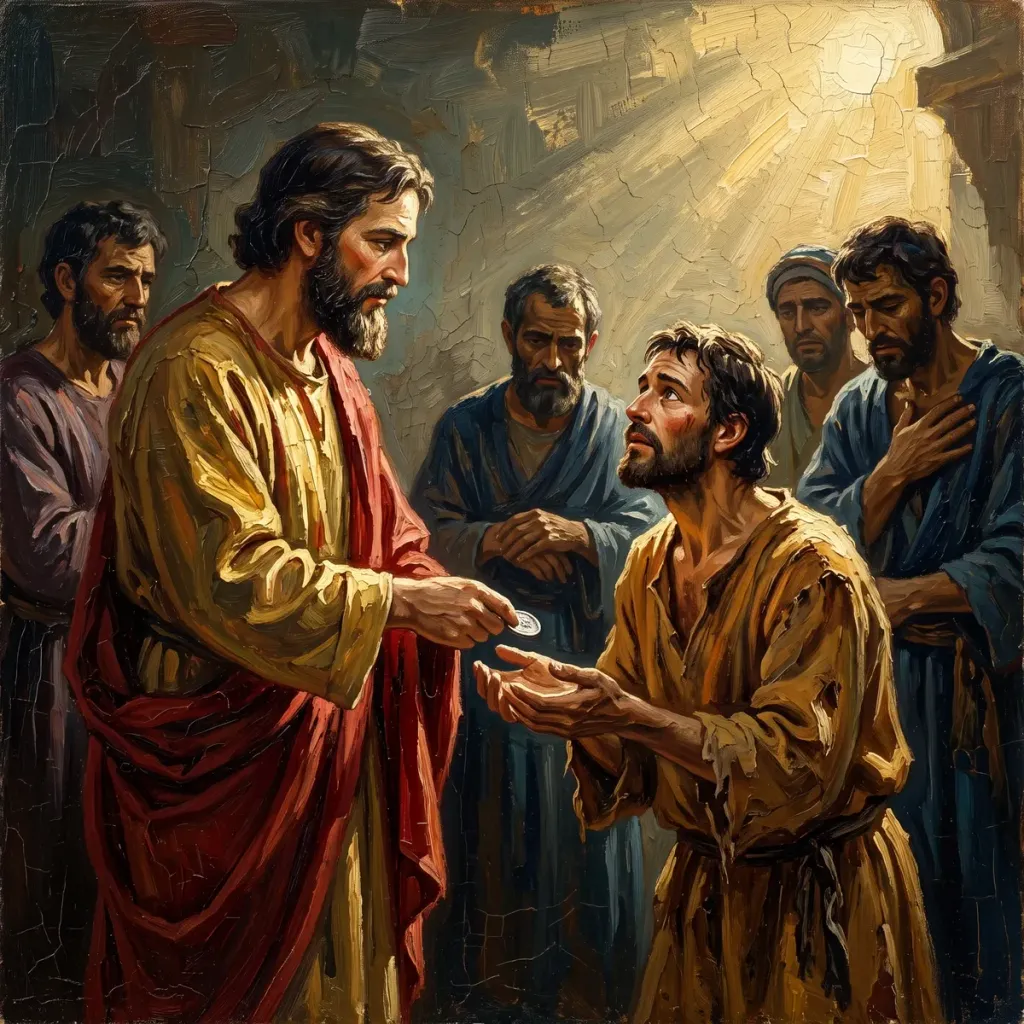
[Verse 1 - early morning] The kingdom is like a householder Who went at dawn to hire labourers. For a penny a day they entered the vineyard, And morning opened over every row. [Refrain - the hours] At the third hour, Go ye also. At the sixth and ninth, Go ye also. At the eleventh he found men standing idle: Whatsoever is right, that shall ye receive. [Verse 2 - evening reckoning] When even was come, the lord called his steward: Pay them their hire, beginning from the last. Each man of the eleventh hour received a penny; The first came forward expecting more. [Breakdown - the murmur] These last have wrought but one hour, Yet thou hast made them equal unto us. Friend, I do thee no wrong; Didst not thou agree with me for a penny? [Chorus - the master's answer] Take that thine is, and go thy way. I will give unto this last even as unto thee. Is it not lawful to do what I will with mine own? Is thine eye evil because I am good? [Outro] So the last shall be first, and the first last; For many be called, but few chosen.

About the passage

Matthew 20: The last payment and the lowest place

The first and last saying becomes a vineyard in which the earliest workers receive exactly the wage they agreed to, yet resent the owner because late arrivals receive the same amount. The offence is not broken contract but generosity shown to someone else. From there, Jesus gives the twelve his clearest description yet of what awaits in Jerusalem: condemnation, delivery to the Gentiles, mockery, scourging, crucifixion, and resurrection. The next request makes the contrast almost painful. The mother of Zebedee’s sons asks for places of honour, the ten become indignant, and Jesus redefines greatness through service rather than dominion. His own life, given as a ransom for many, becomes the measure. The chapter ends with two blind men by the road asking not for thrones but for sight. The crowd tries to silence them, Jesus stops, compassion is named, their eyes are opened, and they follow him toward the city whose suffering he has just described.

Study Matthew 20 in depth