


Lyrics · Romans
All Israel Shall Be Saved
Romans 9:1-11:36
Lyrics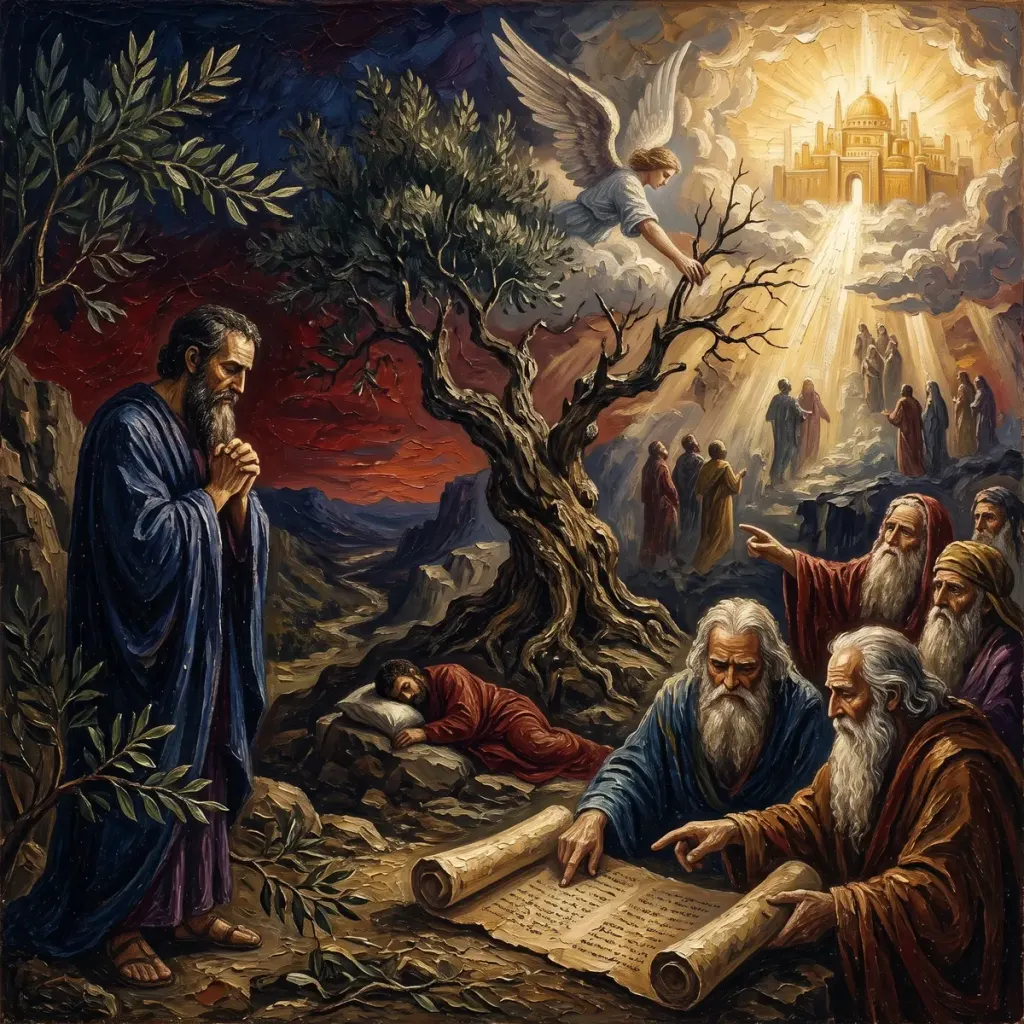
Playing next
About this song
About this song
This song belongs to the Romans collection. One recording is available to play here, with the complete lyrics below.
- Bible book
- Romans
- Collection
- Romans
- Musical styles
- Uncategorized
About the passage
Romans 9: Israel's promises and the freedom of mercy
Romans 9 begins with sorrow rather than abstraction. Paul names Israel's adoption, covenants, law, worship, promises, fathers, and the human descent of Christ before asking whether God's word has failed. His answer turns to Isaac and Jacob, where promise and calling have never been reducible to physical descent alone. Moses and Pharaoh then bring mercy and hardening into view, and the potter image presses the creature's claim to place the Creator in the dock. Yet the paragraph also speaks of longsuffering and prepares the inclusion of Gentiles. Hosea and Isaiah supply the closing scriptural voices: people once called "not my people" receive a new name, while Israel is preserved as a remnant rather than secured by numbers alone. The chapter ends by bringing divine purpose and human response together at the stumblingstone, where righteousness pursued as though by works misses what faith receives.
Study Romans 9 in depthRomans 10: A near word for every people
Romans 10 keeps Israel in view through prayer rather than resignation. Paul acknowledges zeal for God but distinguishes zeal from accurate knowledge of God's righteousness in Christ. He then rereads the nearness language of Deuteronomy through the accomplished descent and resurrection of Christ: salvation does not await a heroic expedition into heaven or the deep. The word is near, and heart-belief and spoken confession belong together. That nearness widens through "whosoever" without dissolving the concrete response of believing and calling on the Lord. Paul then works backward through proclamation: calling requires belief, belief hearing, hearing a herald, and the herald a sending. Yet hearing is not an automatic machine, because Isaiah already knows a report can be refused. The chapter closes with Israel described not as wholly uninformed, but as a people before whom God has held out his hands while resistance continued.
Study Romans 10 in depthRomans 11: The branches do not support the root
Romans 11 asks the question chapter 10 leaves hanging: has God cast away his people? Paul answers "God forbid" and points first to himself, then to Elijah's overlooked remnant. Israel's present condition therefore includes both grace-preserved belief and real hardening. The argument then refuses to make stumbling the last movement. Gentile salvation has entered the picture, yet Paul's Gentile ministry still aims toward Israel's response. The olive tree makes the warning concrete. Wild branches share a root they did not grow, so Gentile inclusion provides no basis for boasting over Jewish branches. Unbelief can break branches, faith sustains standing, and natural branches can be grafted in again. The mystery of partial hardening and "all Israel shall be saved" remains debated, but Paul states its practical purpose clearly: Gentile conceit must stop. Both groups have known disobedience, both depend on mercy, and the chapter ends with God as debtor to none.
Study Romans 11 in depth